Hanbok in 2026 Fashion Media: Editorial Styling & Sourcing
The 2026 Haute Hanbok Movement in Global Media
In the landscape of 2026 global fashion media, the traditional Korean hanbok has transcended its status as a regional cultural garment to become a cornerstone of avant-garde editorial styling and haute couture. Over the past decade, we witnessed the initial integration of Eastern silhouettes into Western fashion capitals. However, the Spring and Summer 2026 editorial spreads in publications like Vogue, Harper's Bazaar, and Numéro have marked a definitive shift. Today, global stylists and creative directors are no longer merely borrowing the hanbok's aesthetic; they are deeply engaging with its structural philosophy, volumetric draping, and historical significance.
The global fascination, which was notably catalyzed by major institutional showcases like the Victoria and Albert Museum's Hallyu exhibition, has now fully permeated the high-fashion consciousness. In 2026, the narrative surrounding the hanbok in fashion media is one of respectful collaboration and structural innovation. Editors are highlighting the garment's inherent sustainability, its zero-waste cutting techniques, and its masterful use of 'yeobaek'—the traditional Korean concept of empty space, which translates into the breathtaking, voluminous silhouettes seen on modern runways and in high-end editorial campaigns.
Deconstructing the Editorial Silhouette
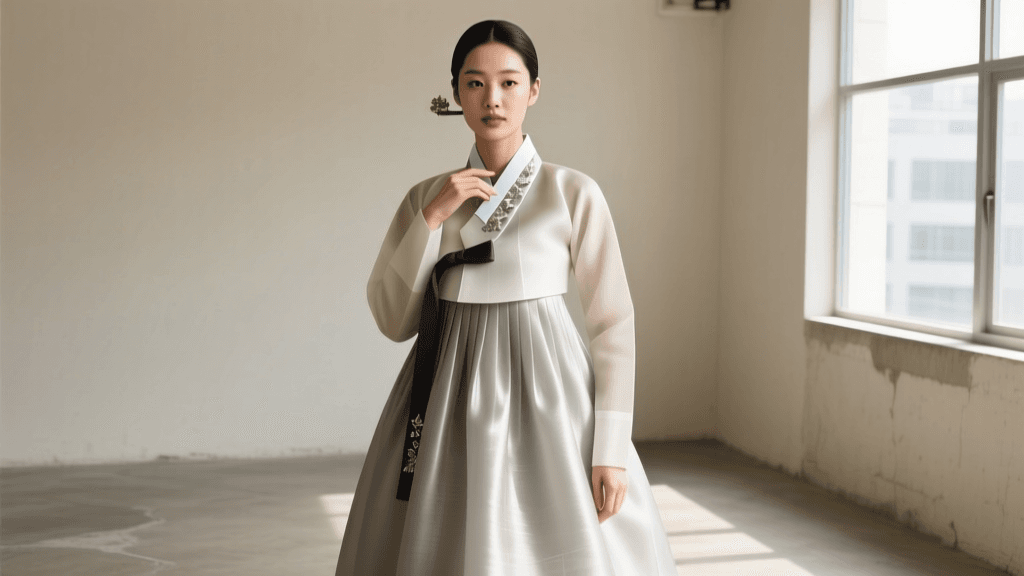
To understand how the hanbok is being styled in 2026 editorials, one must first deconstruct its primary components: the 'jeogori' (the cropped upper garment) and the 'chima' (the full, wrap-around skirt) for women, or the 'baji' (trousers) for men. Historically, the jeogori was designed to sit high on the chest, creating a distinct, elevated waistline that elongates the lower body. In contemporary 2026 fashion media, this exaggerated proportion is being utilized to challenge Western tailoring norms.
Global fashion directors are currently obsessed with the 'goreum'—the long, flowing ribbon used to tie the jeogori. In recent Paris and Milan editorial shoots, the goreum has been reimagined as an asymmetrical belt, a detached neckpiece, or an avant-garde trailing accessory that adds kinetic movement to static photographs. Furthermore, the use of traditional textiles like 'mosi' (fine ramie) and 'gongdan' (heavy, lustrous silk) is being heavily featured in 2026 sustainability-focused fashion editorials. According to cultural heritage initiatives highlighted by Korea.net, the revival of these indigenous, naturally dyed fabrics aligns perfectly with the luxury sector's 2026 mandate for traceable, artisanal, and eco-conscious material sourcing.
Traditional vs. 2026 Editorial Hanbok Elements
The table below illustrates how global fashion media has adapted the core elements of the hanbok for high-fashion editorials and red-carpet events in 2026, contrasting them with their traditional counterparts.
| Garment Element | Traditional Hanbok (Historical/Ceremonial) | 2026 Editorial / Haute Hanbok Adaptation |
|---|---|---|
| Jeogori (Jacket) | Modest length, curved sleeves (baerae), tied with long goreum. | Cropped to the ribcage, structured shoulders, goreum used as detached belts or chokers. |
| Chima (Skirt) | High-waisted, voluminous wrap skirt, floor-length, often layered. | Asymmetrical hems, structured corset-waistbands, sheer organza overlays, slit for mobility. |
| Textiles & Colors | Vibrant natural dyes (safflower, indigo), opaque silks and ramie. | Monochromatic palettes, metallic thread weaving, sheer silk organza, upcycled deadstock. |
| Footwear & Styling | Hwa (silk boots) or kkotsin (leather shoes), minimal jewelry. | Architectural heels, combat boots, layered pearl and jade body chains. |
Actionable Styling for High-Fashion Events
For stylists, fashion enthusiasts, and collectors looking to incorporate the modern hanbok into their 2026 gala, premiere, or editorial wardrobe, the key is juxtaposition. The most compelling editorial images this year rely on the tension between the hanbok's historical romanticism and sharp, contemporary tailoring. Here are three actionable styling frameworks currently dominating global fashion media.
1. The Avant-Garde Gala Look
For black-tie events or high-profile premieres, the 2026 trend dictates pairing a heavily structured, silk-brocade jeogori with wide-leg, high-waisted wool tuxedo trousers. By removing the traditional chima and replacing it with sharp menswear-inspired tailoring, you create a striking gender-fluid silhouette that photographs beautifully. Opt for a jeogori in a deep, monochromatic shade like oxblood or midnight blue, and leave the goreum untied so it trails dramatically behind you on the red carpet. This look has been a staple in 2026 Vanity Fair Oscar party editorials.
2. The High-Fashion Street Style
Street style photographers in 2026 are captivated by the 'mosi' ramie chima styled with unexpected outerwear. Ramie is highly breathable and possesses a crisp, paper-like texture that holds its bell-shape perfectly. For an editorial street-style look, pair a mid-calf length, natural-undyed ramie chima with an oversized, distressed leather moto jacket and chunky, architectural boots. The contrast between the delicate, translucent heritage fabric and the aggressive, modern leather creates a visual narrative that fashion editors are actively seeking for digital covers.
3. The Ethereal Layered Editorial
For studio editorials focused on movement and light, the 2026 technique involves 'sheer stacking.' Stylists are layering three to four translucent silk-organza chimas in varying, closely related hues (e.g., pale celadon, mint, and deep jade). The modernized jeogori in this context is often backless or features exaggerated, elongated sleeves that pool around the hands. This technique pays homage to the traditional Korean layering of undergarments (sokgot) but elevates it into a visible, high-fashion statement of depth and color theory.
Sourcing Guide: Where to Buy Haute Hanbok in 2026
Sourcing authentic, high-quality, and editorial-ready hanbok requires navigating a mix of established global luxury brands and specialized Seoul-based ateliers. As of 2026, the market for 'Haute Hanbok' has matured, offering reliable international shipping, bespoke consultations, and ready-to-wear collections that cater to global fashion professionals. Below is a curated guide to sourcing the best pieces for your editorial or personal collection.
Danha (Danha Kim)
Arguably the most globally recognized name in the modern hanbok movement, Danha has successfully bridged the gap between traditional Korean dress and Western luxury fashion. Known for dressing global pop icons and featuring prominently in 2026 Vogue Korea editorials, Danha's ready-to-wear pieces are characterized by bold, contemporary prints, modernized goreum, and accessible silhouettes. Price Range: $800 to $2,500 for ready-to-wear jeogori and chima sets. Sourcing: Available via their official Seoul flagship, select global luxury retailers like Dover Street Market, and direct international order through their digital boutique.
Tchai Kim
Tchai Kim is the pioneer of the 'Tchai' dress—a modernized, one-piece adaptation of the hanbok that cinches at the waist and incorporates the V-shaped neckline of the traditional jeogori. For 2026 fashion media, Tchai Kim's pieces are the go-to for 'smart-casual' editorial features and high-end resort wear. Their use of lightweight, washable silks and subtle, modern embroidery makes their garments highly practical for on-location editorial shoots. Price Range: $400 to $1,200. Sourcing: Direct via the Tchai Kim website with reliable DHL global shipping, or at their boutique in the Bukchon Hanok Village in Seoul.
Bespoke Ateliers in Bukchon and Insadong
For true haute couture editorials, Met Gala styling, or museum-quality archival pieces, global stylists are commissioning bespoke garments from master artisans in Seoul's Bukchon district. Institutions like the National Museum of Korea frequently collaborate with these master weavers and dyers to preserve historical techniques, and many of these artisans take private commissions. Bespoke pieces utilizing traditional 'geumbak' (gold leaf imprinting) and natural persimmon tannin dyeing require a lead time of 8 to 12 weeks. Price Range: Starting at $3,500 and exceeding $10,000 for fully hand-woven, historically accurate, yet custom-fitted editorial masterpieces. Sourcing: Requires a local Seoul-based fashion fixer or direct consultation via the Korea Craft & Design Foundation (KCDF) directory.
Conclusion
The integration of the hanbok into 2026 global fashion media represents a triumph of cultural appreciation and structural innovation. By understanding the historical significance of the garment's volumetric shapes, utilizing traditional textiles like mosi and gongdan, and applying modern styling juxtapositions, fashion professionals can create breathtaking editorial narratives. Whether you are sourcing a ready-to-wear piece from Danha for a digital cover or commissioning a bespoke silk-brocade jeogori for a red-carpet premiere, the haute hanbok stands as one of the most compelling, dynamic, and culturally rich garments in the contemporary fashion landscape.