Medieval Burgundian Houppelande Tailoring Guide 2026
The Anatomy of the Burgundian Houppelande
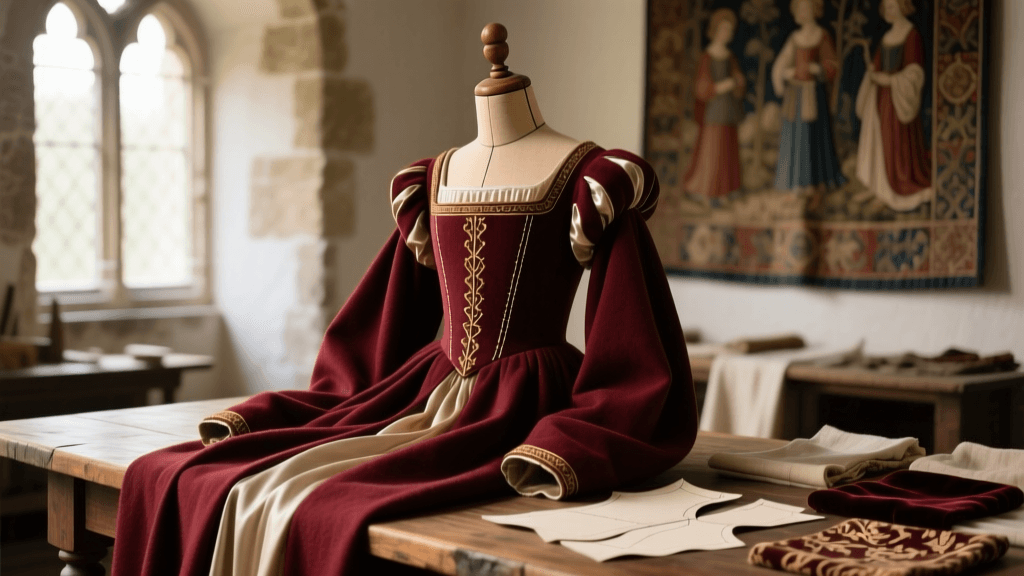
The Burgundian houppelande stands as one of the most iconic and visually striking garments of the late medieval period. Emerging in the late 14th century and reaching its zenith in the 15th century, this voluminous outer garment was worn by both men and women of the nobility. As we navigate the historical reenactment and heritage festival landscape in 2026, the demand for meticulously researched, authentically constructed medieval clothing has never been higher. Modern makers and costumers are moving away from the theatrical interpretations of the past, focusing instead on the precise tailoring, drape, and textile choices documented in period art and surviving fragments.
According to the extensive archives at the Victoria and Albert Museum, the houppelande is characterized by its immense volume, high standing collar, and deeply pleated or tubular sleeves. For women, the garment was typically floor-length, often featuring a high empire waistline just below the bust, secured with an ornate belt. For men, the length varied from floor-length for ceremonial occasions to mid-thigh for active courtly pursuits. Understanding these foundational silhouettes is the first step in recreating a garment that moves and drapes with historical accuracy.
Sourcing Period-Accurate Textiles in 2026
The most significant challenge for modern historical tailors is sourcing fabrics that mimic the weight, weave, and finish of 15th-century textiles. As of 2026, the global textile market has seen a resurgence in heritage weaving, making it easier than ever to acquire period-correct materials, provided you know where to look and what to ask for.
Wool Melton and Broadcloth
The foundation of most winter and mid-season houppelandes was heavy wool. In the 15th century, wool broadcloth was heavily milled (fulled) to create a dense, weather-resistant fabric that did not fray when cut. Today, you should seek out heavyweight wool melton or heavily fulled wool coatings. Avoid modern suit wools, which are too light and lack the structural integrity required to support the deep pleats of the houppelande's collar and sleeves. Expect to pay between $45 and $85 per yard for premium heritage wool in 2026.
Silk Velvet and Brocade
For the upper nobility, silk velvet and woven brocades were the fabrics of choice. The Morgan Library & Museum houses numerous illuminated manuscripts that vividly depict the rich, light-catching pile of Italian silk velvets worn at the Burgundian court. When sourcing velvet today, strictly avoid synthetic rayon or polyester blends. These modern synthetics collapse under their own weight and lack the stiff, luxurious drape of period silk velvet. Look for 100% silk velvet with a cotton or silk backing. Due to the specialized nature of velvet weaving mills in Italy and France, authentic silk velvet currently retails between $120 and $200 per yard in the 2026 market.
Linings and Interlinings
A houppelande was rarely unlined. Fur (such as vair, ermine, or lamb) was the ultimate status symbol, but for modern ethical and practical recreations, heavy linen or wool flannel linings are the standard. To achieve the stiff, gravity-defying standing collar, you must use an interlining of heavy canvas or multiple layers of pad-stitched linen.
Drafting the Pattern: Circular vs. Gored Construction
When approaching the construction of a houppelande, tailors generally choose between two historical drafting methods: the circular cut and the gored cut. Both are well-documented in the Textile Research Centre digital archives, and your choice will depend on your fabric width and desired volume.
- The Circular Cut: This method involves cutting the body of the garment from a massive half-circle or full-circle of fabric. It provides incredible sweep and volume at the hem but requires an enormous amount of fabric and results in significant waste. It is best suited for lighter wools or silks where the drape is paramount.
- The Gored Cut: This is the more fabric-efficient and historically common method for heavy wools. The body is constructed from multiple triangular panels (gores) sewn together to create the conical shape. This method allows the tailor to manipulate the grainline of the fabric, placing the straight grain down the center front and back for stability, while the bias-cut side gores provide fluid movement.
For a standard women's floor-length houppelande using 60-inch wide fabric, you will need approximately 8 to 10 yards for a gored construction, and up to 14 yards for a circular cut. Always pre-wash or steam-press your wool heavily before cutting to prevent future shrinkage.
Tailoring Techniques: The Collar and Sleeves
The true hallmark of the Burgundian houppelande lies in its dramatic collar and sleeves. Mastering these elements separates a novice costume from a masterwork of historical tailoring.
The Standing Collar
The high, flaring collar (often called a 'carcan' or 'collet') must stand away from the neck and frame the face. To achieve this in 2026 without relying on modern plastic boning, you must use traditional pad stitching. Cut your collar interlining from heavy hair canvas or stiff linen. Using a heavy silk or linen thread, sew thousands of tiny, diagonal stitches (pad stitching) through the interlining and the fashion fabric. This technique permanently rolls and stiffens the fabric, allowing it to stand proudly while still moving organically with the wearer.
The Bombard and Bag Sleeves
The sleeves of a houppelande are famously voluminous. The 'bombard' sleeve is cut in a massive curve, creating a long, trailing point that nearly touches the floor, while the arm exits through a slit higher up. The 'bag' sleeve is gathered into a tight cuff at the wrist but balloons out massively at the forearm. Setting these sleeves into the armscye requires deep, structured pleats. Do not use modern gathering stitches; instead, mark your pleats with chalk, press them sharply with a heavy tailor's clapper, and whip-stitch the pleat folds to the armscye seam allowance to lock them in place.
Essential Accessories: The Chaperon and Hennin
No houppelande ensemble is complete without the proper headwear. For men, the chaperon—a complex turban-like headdress evolved from the humble hood—was ubiquitous. By the mid-15th century, the chaperon was heavily structured, with the 'cornette' (tail) and 'patte' (brim) artfully twisted and pinned into sculptural shapes. For women, the conical hennin or the heart-shaped bourrelet headdress provided the necessary verticality to balance the wide shoulders of the gown. In 2026, milliners specializing in historical recreation recommend using lightweight buckram and millinery wire to frame these headdresses, covering them in silk taffeta and sheer linen veils.
2026 Material Cost Breakdown
Building a complete, high-end Burgundian ensemble is an investment. Below is a realistic breakdown of material costs based on the 2026 heritage textile market for a single, high-quality women's houppelande with a lined bodice and silk trim.
| Material / Component | Quantity Needed | Estimated 2026 Cost (USD) |
|---|---|---|
| Heavyweight Wool Melton (Outer) | 9 Yards | $540.00 |
| 100% Silk Velvet (Sleeves/Trim) | 3 Yards | $450.00 |
| Heavy Linen (Lining) | 10 Yards | $200.00 |
| Hair Canvas (Collar Interlining) | 1 Yard | $35.00 |
| Silk Thread & Linen Sewing Thread | Assorted | $60.00 |
| Cast Bronze Belt Buckle & Fittings | 1 Set | $120.00 |
| Total Estimated Material Cost | $1,405.00 |
Final Thoughts on Historical Accuracy
Creating a 15th-century Burgundian houppelande is a journey into the heart of medieval luxury and tailoring ingenuity. By prioritizing period-correct textiles, utilizing traditional pad-stitching and pleating techniques, and studying the primary source manuscripts available through global heritage institutions, modern makers can achieve breathtaking results. As the historical dress community continues to elevate its standards in 2026, the dedication to authentic construction not only honors the artisans of the past but ensures that these magnificent garments will endure for generations to come.