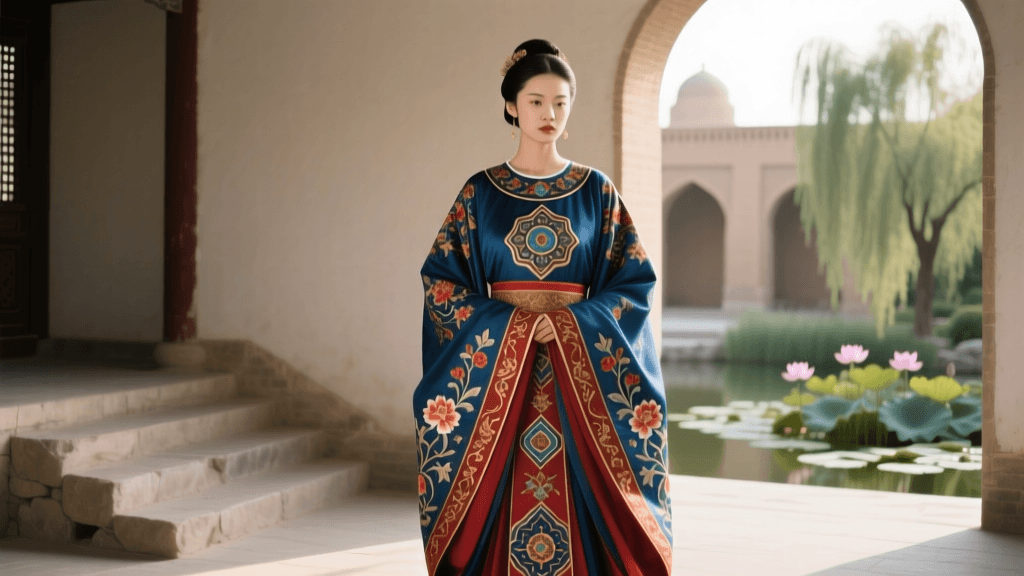
Chinese Fashion History Research: 3D Textile Tools 2026
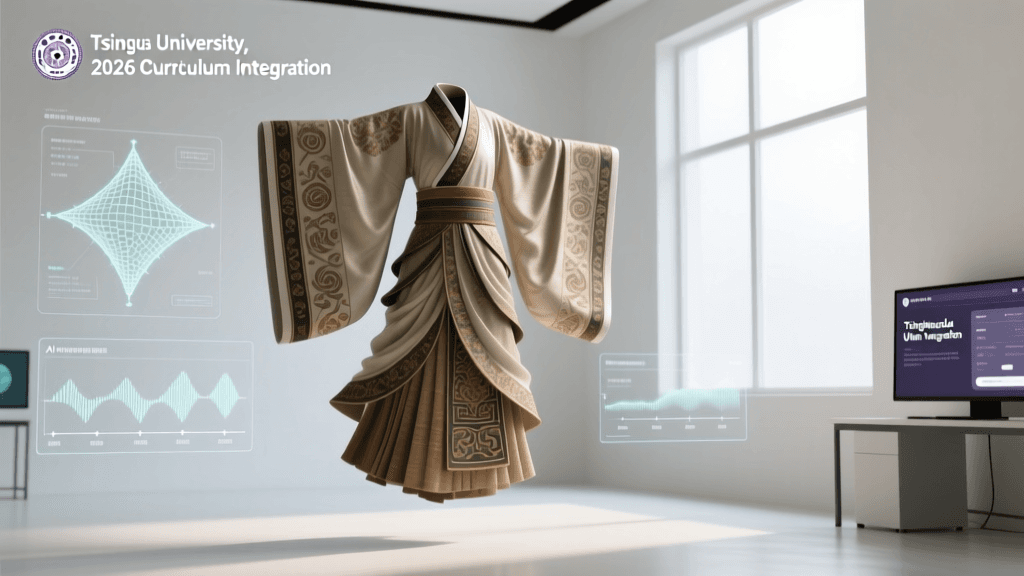
The Dawn of Digital Sartorial Archaeology in 2026
The academic study of Chinese fashion history has undergone a radical transformation by the spring 2026 semester. For decades, researchers and students relied on fragile, two-dimensional archival sketches, static museum displays, and heavily restricted physical handling of ancient garments. Today, the integration of advanced 3D textile simulation, AI-driven fabric physics, and virtual reality has birthed a new discipline: digital sartorial archaeology. Universities across the globe are now leveraging these tools to reconstruct, analyze, and teach the complex drape and weave of historical Chinese clothing, from the ethereal silk gauzes of the Han Dynasty to the heavy, intricate brocades of the Ming era.
As outlined in foundational resources like the Metropolitan Museum of Art's Heilbrunn Timeline of Art History, the historical weight and technological mastery of Chinese silk cannot be overstated. However, understanding how these textiles actually moved, draped, and interacted with the human body in antiquity requires more than static observation. In 2026, academic curriculums demand interactive, physics-accurate 3D models that allow students to manipulate historical garments in virtual space, testing how a Tang Dynasty robe would behave under different gravitational and environmental conditions.
Core Technologies Driving Academic Research
The standard software stack for Chinese fashion history researchers in 2026 revolves around specialized 3D fashion design engines equipped with AI-enhanced material libraries. While generalist 3D modeling tools exist, academic rigor requires software that understands the distinct warp and weft tensions of historical weaves.
CLO 3D and Style3D: The Academic Standards
CLO 3D remains a powerhouse in university labs, particularly for its robust academic licensing and precise particle-based cloth simulation. However, 2026 has seen a massive surge in the adoption of Style3D within Asian fashion history departments. Style3D's latest 2026 update introduced an AI-driven 'Heritage Weave' engine, which includes pre-calibrated physics presets for specific historical Chinese textiles, such as Luo (leno-weave gauze), Jin (polychrome brocade), and Kesi (silk tapestry). This allows graduate students to bypass hours of manual tension mapping and immediately begin testing historical drape theories.
KES-FB Data Integration
To ensure academic accuracy, digital reconstructions must be grounded in empirical data. Students are trained to use the Kawabata Evaluation System for Fabrics (KES-FB) to measure the physical properties of modern, historically accurate reproduction silks. Metrics such as bending rigidity (measured in gf·cm²/cm), shear stiffness, and surface friction are then manually inputted into the 3D software's custom material editor. This ensures that the digital Mawangdui silk gown behaves exactly like its physical counterpart would have over two millennia ago.
Methodology: Reconstructing the Mawangdui Silk Garments
One of the most prominent case studies in 2026 graduate seminars is the digital reconstruction of the garments found in the Mawangdui Han Dynasty tombs. Because the physical artifacts are incredibly fragile and highly sensitive to light and humidity, digital reconstruction is the only viable method for detailed structural analysis.
- Pattern Extraction via Photogrammetry: Students begin by analyzing high-resolution, multi-spectral scans of the flattened artifacts. Using AI-assisted edge detection, they extrapolate the original 2D cutting patterns, accounting for the shrinkage and distortion that occurred over 2,000 years.
- Digital Material Assignment: The Mawangdui plain-weave silk gauze is notoriously lightweight. Students set the digital fabric weight to approximately 12 grams per square meter (gsm), adjusting the structural damping to mimic the low-twist silk filaments characteristic of Han Dynasty weaving.
- Avatar Calibration and Draping: Using osteological data from the tomb, researchers create a historically accurate 3D avatar of Lady Dai. The digital garment is then draped using a gravity simulator set to standard Earth gravity, allowing students to observe how the ultra-light silk pooled at the hem and clung to the body's contours.
Software Comparison for Historical Textile Simulation
Choosing the right tool is critical for academic research. Below is a comparison of the leading 3D simulation engines used in Chinese fashion history labs as of 2026.
| Software Engine | Historical Weave Accuracy | AI Physics Integration | 2026 Academic License Cost (Annual) | Best Use Case |
|---|---|---|---|---|
| CLO 3D Enterprise | High (Manual Input) | Moderate | $450 / seat | Complex multi-layered Ming Dynasty court robes |
| Style3D Studio | Exceptional (Native Presets) | Advanced (Heritage Engine) | $380 / seat | Han and Tang Dynasty lightweight silks and gauzes |
| Blender (Cloth Sim) | Low (Requires Coding) | Low | Free (Open Source) | Rendering cinematic VR museum exhibitions |
| Marvelous Designer | Moderate | Moderate | $600 / seat | Conceptualizing historical garments for digital media |
Case Study: The Tang Dynasty Banbi and Drape Analysis
The Banbi (half-sleeve jacket) of the Tang Dynasty presents a unique challenge in drape analysis due to its stiff, heavily patterned silk brocade construction. When referencing physical artifacts housed in institutions like the Victoria and Albert Museum's Asian collections, students note that the garment holds a distinct, sculptural shape rather than flowing softly against the body.
In 2026 lab environments, students simulate the Banbi by utilizing multi-layer yarn mapping. Instead of treating the fabric as a single flat plane, the software calculates the thickness and stiffness of the warp-weighted brocade structure. By adjusting the digital 'buckling stiffness' parameters, students can accurately reproduce the pronounced, angular folds seen in Tang Dynasty murals and ceramic figurines. This research has debunked older, 20th-century theories that suggested the Banbi was made of softer, lighter materials, proving through physics simulation that only a heavy, structured brocade could achieve the iconic silhouette depicted in historical art.
Overcoming the 'Digital Stiffness' of Ancient Brocades
A persistent challenge in digital fashion history is the 'cardboard effect'—a phenomenon where heavy historical textiles like Song Dynasty Jin brocades look unnaturally rigid in 3D space. In the past, simulating the micro-drape of a heavy brocade required computing power that university labs simply did not possess.
The introduction of NVIDIA RTX 50-series GPUs in 2026 academic labs has solved this bottleneck. With real-time ray tracing and AI-accelerated physics calculations, students can now increase the particle mesh density of a digital garment from the standard 20mm to an ultra-fine 2mm. This allows the software to calculate the micro-folds that occur between the heavy, metallic threads of a brocade, resulting in a digital render that captures the luxurious, fluid weight of the historical textile without sacrificing its structural integrity.
Academic Licensing and Lab Setup Guide
For university departments looking to establish a digital Chinese fashion history lab in 2026, hardware and software procurement must be carefully planned. A standard research station requires a workstation equipped with at least an Intel Core i9-14900K processor, 64GB of DDR5 RAM, and an NVIDIA RTX 5080 or higher GPU to handle the dense particle calculations of historical silk weaves.
Software procurement should be directed through official academic channels. Institutions can apply for bulk educational licenses, which often include access to proprietary digital material libraries and cloud-based rendering farms. Department heads can initiate this process by visiting CLO Virtual Fashion's academic licensing portal or contacting Style3D's enterprise education division directly for regional university grants.
The Future of Haptic Feedback in Textile History
As we look toward the latter half of the 2020s, the frontier of Chinese fashion history education lies in haptic technology. Pilot programs at leading textile universities are currently testing haptic feedback gloves integrated with 3D simulation software. These gloves use micro-fluidic actuators to simulate the surface friction and compressibility of digital fabrics. Soon, a student studying a digital reconstruction of a Qing Dynasty dragon robe will not only see the intricate Kesi tapestry weave but will physically feel the raised texture of the metallic gold threads against their fingertips.
This synthesis of ancient craftsmanship and cutting-edge 2026 technology ensures that the rich, tactile history of Chinese fashion is preserved not just as a visual record, but as a living, interactive experience for the next generation of scholars and designers.