Best Hanfu Education Workshops & Certifications 2026
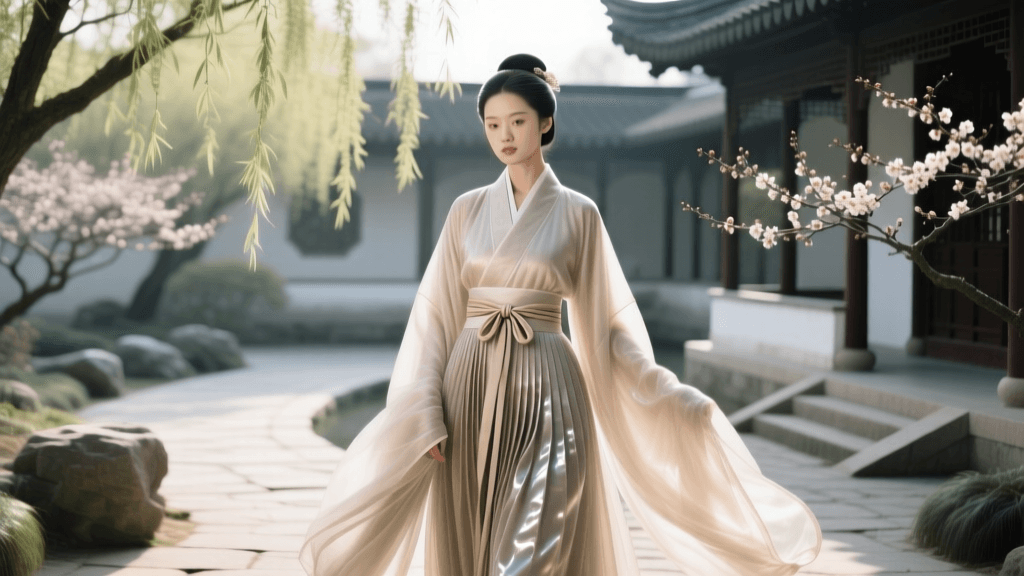
The Rise of Professional Hanfu Education in 2026
The global resurgence of traditional Chinese clothing has transitioned from a passionate subculture into a highly professionalized industry. As we navigate 2026, the demand for historical accuracy, master-level craftsmanship, and certified expertise in Hanfu styling has never been higher. No longer is it sufficient to simply wear a Mamianqun (horse-face skirt) or a Ruqun; today's cultural ambassadors, film costumers, and boutique owners are seeking formal validation of their skills. Hanfu education workshops and certification programs have emerged as the gold standard for practitioners who wish to bridge the gap between ancient textile traditions and modern sartorial excellence.
Whether you are a fashion designer looking to integrate traditional flat-cutting techniques into your 2026 collections, or a cultural historian aiming to authenticate museum replicas, securing a recognized certification provides a distinct competitive edge. This comprehensive guide explores the most prestigious Hanfu education workshops, certification pathways, and essential toolkits available this year.
Why Pursue a Hanfu Certification in 2026?
The Hanfu market has matured significantly. According to recent cultural industry reports, the commercial ecosystem surrounding traditional Chinese dress now encompasses high-end bespoke tailoring, immersive cultural tourism, and international fashion consultancy. Certification programs validate a practitioner's understanding of complex historical concepts, such as the strict geometric rules of Jiaoling Youren (cross-collar, right lapel) and the mathematical precision required for dynastic pleating. Furthermore, institutions recognized by bodies like the UNESCO Intangible Cultural Heritage framework are increasingly prioritizing formally trained artisans for grants, exhibitions, and preservation projects.
Top Hanfu Education Workshops & Certification Programs
1. China National Silk Museum: Historical Textile & Draping Certificate
Located in Hangzhou, the China National Silk Museum offers an unparalleled, intensive certification program focusing on the materiality and draping of historical garments. The 2026 cohort places a heavy emphasis on the Song and Ming dynasties, utilizing the museum's vast archive of excavated textiles. Students learn to identify weave structures, replicate natural dyeing processes, and master the zero-waste flat-cutting methods that define traditional Chinese tailoring. The certification requires a final thesis project where students must reconstruct a fragmented historical garment using period-accurate loom widths and stitching techniques.
2. Beijing Institute of Fashion Technology (BIFT): Traditional Garment Structural Design
For those seeking an academic and highly technical approach, the Beijing Institute of Fashion Technology offers a continuing education certification in Traditional Garment Structural Design. This program is ideal for modern fashion designers who want to understand the engineering behind Hanfu. The 2026 curriculum integrates 3D digital sampling alongside physical draping. Students learn how the absence of darts and the reliance on fabric grain and tie-fastenings create the fluid, volumetric silhouettes characteristic of the Tang and Wei-Jin periods. Graduates receive a professional diploma recognized across Asia's top fashion and film production houses.
3. Global Online Cohort: The Hanfu Styling & Etiquette Masterclass
For international practitioners unable to travel to mainland China, several accredited cultural exchange organizations now offer hybrid certification programs. These 12-week online intensives focus on the practical application of Hanfu in contemporary ceremonial settings. Modules cover the correct layering of undergarments (Zhongyi), the seasonal appropriateness of specific fabrics, and the intricate art of historical hairpin placement. The 2026 syllabus has been updated to include virtual reality (VR) fittings, allowing remote students to test the drape and movement of digital Hanfu assets before cutting physical silk.
Curriculum Deep-Dive: What You Will Master
A rigorous 2026 certification program goes far beyond basic sewing. Expect to immerse yourself in the following core competencies:
- Dynastic Silhouette Analysis: Understanding the socio-political influences that dictated the width of sleeves, the height of collars, and the length of skirts across the Han, Tang, Song, and Ming dynasties.
- Advanced Pleating Mathematics: The Mamianqun requires precise calculations to ensure the overlapping front and back panels remain modest during movement while maintaining a flawless structural drape.
- Traditional Embroidery Integration: Learning how to stabilize heavy silk brocades and gauze fabrics to accommodate dense metallic thread embroidery without warping the garment's natural hang.
- Historical Fastening Systems: Mastering the creation of structural ties, jade toggles, and hidden inner loops that replace modern buttons and zippers.
2026 Program Comparison Chart
| Institution | Format | Duration | 2026 Tuition (Approx.) | Best For |
|---|---|---|---|---|
| China National Silk Museum | In-Person (Hangzhou) | 8 Weeks | ¥28,000 RMB | Textile Historians & Conservators |
| BIFT | Hybrid (Beijing/Online) | 16 Weeks | ¥35,000 RMB | Fashion Designers & Pattern Makers |
| Global Online Masterclass | 100% Online + VR | 12 Weeks | $1,200 USD | Stylists, Planners & Enthusiasts |
Essential Tools for the 2026 Hanfu Practitioner
To succeed in these rigorous certification programs, students must equip themselves with specialized tools that cater to the unique demands of traditional Chinese garment construction.
Digital Pattern Drafting Software
The 2026 releases of CLO 3D and Marvelous Designer now feature dedicated 'Traditional Flat-Cut' physics engines. These updates allow designers to simulate the behavior of historic silk weights—such as Luo (gauze) and Jin (brocade)—without the interference of modern Western darting algorithms. Mastery of these digital tools is now a mandatory module in most advanced certification programs.
Specialized Measuring & Cutting Implements
Unlike Western tailoring, which relies heavily on contouring to the body's curves, Hanfu construction is based on a 2D geometric grid. Practitioners require extra-long traditional wooden rulers, heavy brass tailor's squares, and specialized fabric weights to ensure that the straight grain lines remain perfectly perpendicular during the cutting of massive yardages of silk.
Custom Historical Dress Forms
Standard Western dress forms are contoured for bust darts and cinched waists, making them useless for draping Hanfu. Certified practitioners invest in adjustable, straight-torso wooden dress forms that mimic the historical posture and layering requirements of traditional Chinese dress, allowing for accurate testing of sleeve drop and collar overlap.
Career Paths After Certification
Earning a Hanfu styling and construction certification in 2026 opens doors to a variety of lucrative and culturally significant career paths. Film and Television Costuming remains a massive sector, with historical dramas demanding unprecedented levels of authenticity from their wardrobe departments. Cultural Tourism and Hospitality is another booming field; luxury resorts and immersive historical parks are hiring certified Hanfu stylists to curate authentic guest experiences and manage high-end rental wardrobes. Additionally, Bespoke Bridal Styling for traditional Chinese weddings has become a highly sought-after niche, with couples willing to pay a premium for certified experts who can correctly execute complex ceremonial layering and ancestral etiquette.
Final Thoughts
The professionalization of Hanfu is a testament to the enduring power of Asian sartorial traditions. By investing in a recognized education workshop or certification program in 2026, you are not merely learning to sew; you are becoming a custodian of history. Whether you are draping a Tang dynasty sleeve or engineering a Ming dynasty skirt, the expertise you gain will position you at the forefront of the global traditional fashion renaissance.