2026 Guide to Preserving Vintage Silk Kimonos & Hanboks
The Evolution of Heritage Garment Care in 2026
Asian traditional garments, particularly vintage silk kimonos from the Taisho and early Showa periods, as well as antique silk hanboks from the late Joseon dynasty, represent profound cultural heritage and masterful textile artistry. As we navigate the shifting environmental challenges of 2026, including fluctuating global humidity levels and increased UV exposure, the intersection of advanced archival science and accessible eco-friendly products has revolutionized how collectors, museums, and families preserve these delicate protein fibers at home. Preserving these garments is no longer just about keeping them in a cedar chest; it requires a proactive, scientifically backed approach to micro-climate control, pH-neutral cleaning, and structural support.
Step 1: Condition Assessment of Vintage Silk
Before any cleaning or storage begins, a thorough condition assessment is critical. Vintage Asian silks, especially those from the early 20th century, were often treated with metallic salts (a process known as 'weighting') to make the fabric feel heavier and more luxurious. Over decades, these salts cause the silk fibers to become brittle and crack, a phenomenon known as 'silk shattering.' Inspect your kimono or hanbok under bright, indirect LED lighting. Gently run your fingers over the fabric; if you hear a distinct, crisp crunching sound or notice fine, powdery dust on your fingertips, the silk is shattering. Shattered silk cannot be washed or aggressively folded. It must be stored completely flat, padded with acid-free tissue, and handled only by professional textile conservators.
Step 2: Eco-Friendly Cleaning Protocols
If the silk is stable and requires cleaning, the 2026 standard strictly forbids harsh dry-cleaning chemicals like perchloroethylene, which can strip natural sericin from the silk fibers and degrade delicate metallic embroidery. Instead, heritage garment specialists now rely on advanced eco-friendly wet cleaning or specialized spot treatments. For overall freshening, conservators recommend using a pH-neutral, non-ionic detergent such as Orvus WA Paste or Eucalan Fine Fabric Wash. These formulas do not contain optical brighteners or enzymes that break down protein structures.
However, immersion washing is highly risky for antique garments. The safest approach for home preservation is surface cleaning and aeration. Lay the garment flat on a clean, white cotton sheet in a shaded, well-ventilated room for 48 hours to allow trapped odors and moisture to dissipate. For localized stains, consult the Victoria and Albert Museum's textile care guidelines, which emphasize that aggressive rubbing can permanently distort the weave of delicate damasks and brocades. When in doubt, seek a conservator certified in heritage wet-cleaning techniques.
Step 3: Selecting Archival Storage Materials
The cornerstone of 2026 preservation is the elimination of acidic off-gassing. Traditional wooden chests, while culturally significant and aesthetically pleasing, contain natural acids and lignins that will yellow and degrade silk over time. If you must use a family heirloom wooden chest, the interior must be completely lined with an archival barrier film, such as Marvelseal, to prevent acid migration.
For optimal preservation, museum-grade corrugated plastic or acid-free textile boxes are the gold standard. Below is a comparison of the primary storage materials recommended for Asian heritage garments this year:
| Material | Best Use Case | 2026 Average Cost | Pros & Cons |
|---|---|---|---|
| Gaylord Blue/Grey Archival Boxes | Long-term storage of folded kimonos and hanbok skirts | $85 - $120 per box | Pros: Acid-free, lignin-free, buffered. Cons: Bulky, requires shelf space. |
| Unbleached Cotton Muslin | Dust covers and outer wrapping | $12 per yard | Pros: Breathable, washable. Cons: Does not block light or acid. |
| Buffered Acid-Free Tissue | Padding folds and stuffing sleeves | $25 for 100 sheets | Pros: Prevents sharp creases. Cons: Must be replaced every 3-5 years. |
| Archival Polyester (Melinex) | Viewing windows and barrier layers | $40 per roll | Pros: Chemically inert, crystal clear. Cons: Non-breathable, traps moisture. |
Step 4: The Art of Folding and Padding
Improper folding is the leading cause of structural failure in stored silk garments. Sharp creases act as stress points where fibers will eventually snap. The goal of archival folding is to distribute the weight of the garment and pad every fold with unbuffered, acid-free tissue paper (unbuffered is preferred for silk, as the alkaline buffer in buffered tissue can sometimes react with certain natural dyes).
Folding the Kimono
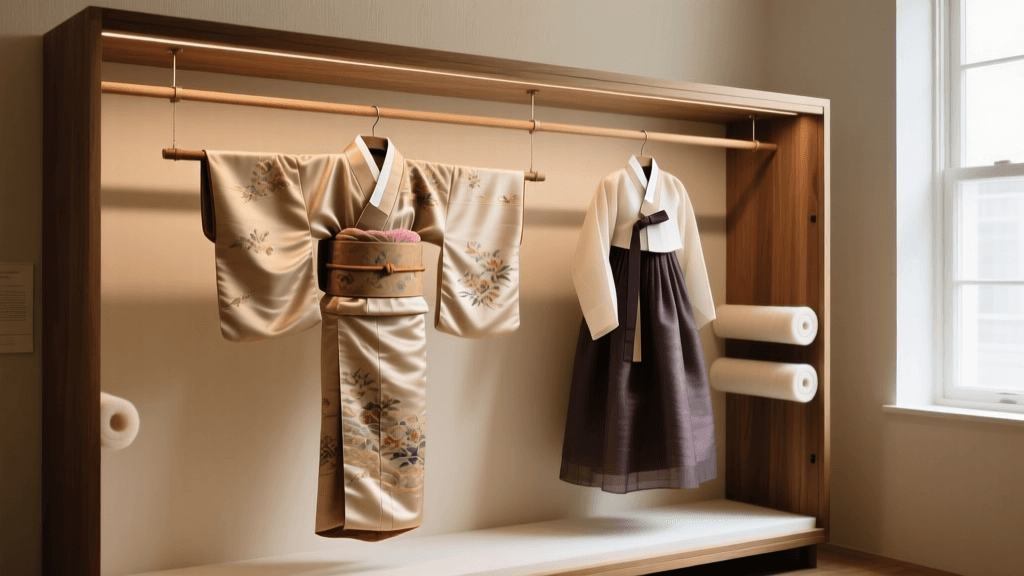
Traditional kimono folding, known as tatami-sode or hondatami, is designed to align the seams and minimize stress on the fabric. When storing a kimono long-term, follow the traditional folding method, but introduce 'rolls' of acid-free tissue at every fold line. Place a snake-like roll of tissue inside the sleeve folds, along the collar, and at the hem. Once folded, wrap the kimono in a clean sheet of unbleached muslin or an acid-free textile folder. Never use plastic dry-cleaning bags, as these trap moisture and emit harmful plasticizers that will fuse to the silk.
Storing the Hanbok
The hanbok presents unique storage challenges due to the voluminous chima (skirt) and the structured jeogori (jacket). The chima should never be folded tightly. In 2026, conservators recommend gently gathering the pleats of the chima and laying it flat in a wide archival box, padding the gathers with tissue to maintain their rounded shape without creating hard creases. The jeogori should be laid flat with the sleeves folded gently across the chest, padded with tissue at the armpits and elbows. The goreum (ties) should be laid flat and never tied in a knot during storage, as this permanently stretches the silk bias.
Step 5: Climate Control and Pest Deterrence
Silk is a protein fiber, making it highly susceptible to both mold in humid environments and keratin-eating pests like webbing clothes moths and carpet beetles. According to the Canadian Conservation Institute, the ideal storage environment for historic textiles is a stable temperature of 65°F to 68°F (18°C to 20°C) with a relative humidity (RH) strictly maintained between 45% and 55%.
To achieve this micro-climate inside an archival box, utilize conditioned silica gel cassettes, such as Prosorb or Art-Sorb. These cassettes are pre-conditioned to maintain exactly 50% RH, absorbing excess moisture during humid summers and releasing it during dry winters. Place one cassette in the corner of your archival box and monitor it with a digital hygrometer.
For pest management, the use of naphthalene mothballs and paradichlorobenzene (PDB) crystals is entirely obsolete and highly dangerous to both human health and silk fibers. Modern 2026 protocols rely on pheromone traps to monitor for moth activity in the broader room, while utilizing natural cedar oil blocks or lavender sachets wrapped in muslin inside the storage room (never directly touching the silk) to deter pests. Regular vacuuming of the storage area with a HEPA-filter vacuum is your best defense against microscopic larvae.
Conclusion
Preserving vintage silk kimonos and hanboks is a profound act of cultural stewardship. By adopting the 2026 standards of eco-friendly cleaning, acid-free archival housing, meticulous fold-padding, and strict micro-climate control, you ensure that these masterpieces of Asian textile heritage will survive for future generations to study, admire, and cherish. Treat your garments not merely as clothing, but as living historical documents that require a stable, respectful environment to endure the test of time.