Mastering Xiangyunsha: China's Intangible Silk Craft
The Origins and Heritage of Gambiered Canton Gauze
In the humid, sun-drenched river deltas of Guangdong Province, a centuries-old textile alchemy takes place. Xiangyunsha, also known as Gambiered Canton Gauze, is widely considered one of the most luxurious and complex silk fabrics in the world. Originating in the Shunde district of Foshan during the Ming Dynasty, this unique textile was historically reserved for royalty and the ultra-wealthy due to its painstaking production process. Today, it stands as a shining example of Chinese traditional crafts, officially recognized on China's National Intangible Cultural Heritage list in 2008.
The broader context of this craft is deeply tied to the historical mastery of Chinese textiles. As noted by The Metropolitan Museum of Art, China's sericulture and silk craftsmanship have shaped global trade and cultural exchange for millennia. Xiangyunsha represents a highly specialized, regional evolution of this legacy, combining elite silk weaving with indigenous botanical dyeing and mineral treatments. Furthermore, the overarching traditions of Chinese silk production were inscribed on the UNESCO Representative List of the Intangible Cultural Heritage of Humanity, highlighting the global importance of preserving these artisanal techniques.
The Alchemy of River Mud and Botanical Dyes
What separates Xiangyunsha from standard mulberry silk is its extraordinary finishing process. The creation of authentic Gambiered Canton Gauze involves a grueling 14-step process that relies entirely on natural elements and the intuitive expertise of master artisans. The transformation of plain white silk into the dark, lustrous fabric requires two primary natural ingredients: the juice of the gambier plant (Dioscorea cirrhosa) and iron-rich river mud.
The Dyeing and Mud-Coating Process
- Gambier Extraction: Artisans crush the tubers of the gambier plant and boil them to extract a rich, astringent, reddish-brown juice. This juice is high in tannins.
- Repeated Dipping: The raw silk gauze is dipped into the gambier juice, wrung out by hand, and laid on the grass to dry in the sun. This dipping and drying cycle is repeated up to 30 times over several days until the silk absorbs a deep, uniform amber hue.
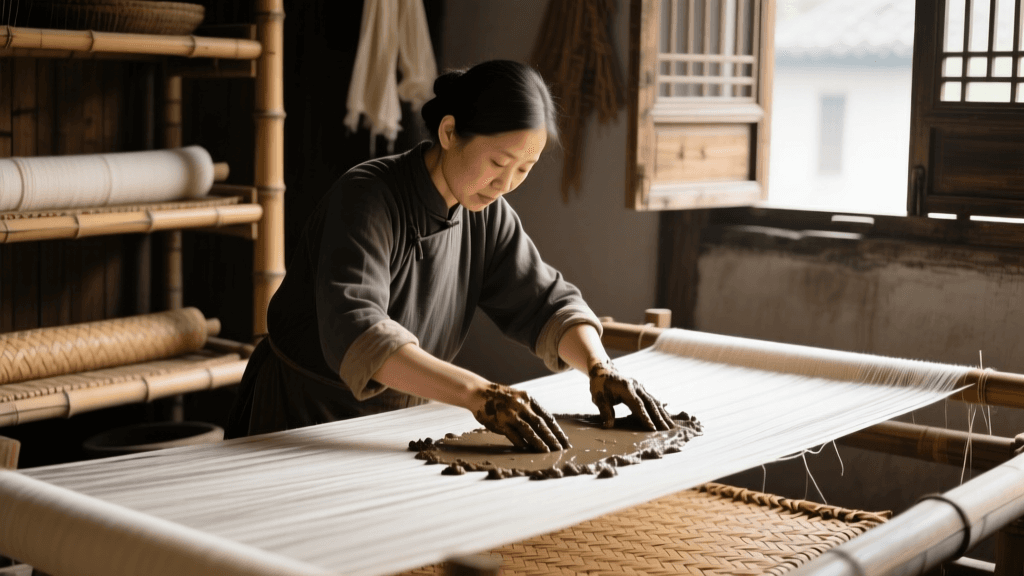
- The Mud Application: This is the most critical and closely guarded step. Artisans harvest dark, unpolluted mud from specific riverbeds in the early morning. This mud is rich in iron ions. The dyed silk is laid flat, and the mud is evenly smeared across one side of the fabric.
- Chemical Reaction: As the mud sits on the silk, a chemical reaction occurs between the iron ions in the mud and the tannins in the gambier juice. This creates a dark, almost black, metallic-looking coating on one side of the fabric, while the reverse side remains a warm, reddish-brown.
- Washing and Final Drying: After exactly 45 minutes, the mud is washed off in the river, revealing the signature dual-toned finish. The fabric is then stretched and dried one final time.
Timing, Climate, and the Artisan’s Calendar
Authentic Xiangyunsha cannot be manufactured in a climate-controlled factory; it is entirely at the mercy of the weather. The production season is strictly limited to the months between April and October. Artisans require intense, direct sunlight to properly bake the gambier tannins into the silk fibers, and a specific level of humidity to ensure the river mud reacts correctly without cracking or washing away prematurely.
'The silk must drink the sun and breathe the river wind. If the light is weak, the color will not hold. If the wind is too harsh, the mud will dry before the iron can bind with the tannin.' — Master Dyer, Shunde Workshop.
Because of these strict environmental constraints, a single workshop can only produce a limited yardage each year, making genuine Xiangyunsha a rare and highly sought-after commodity in the world of traditional Asian garments.
Material Comparison: Xiangyunsha vs. Traditional Silks
For collectors, designers, and enthusiasts of Hanfu and traditional Chinese clothing, understanding the physical properties of Xiangyunsha is essential. Below is a comparison chart detailing how Gambiered Canton Gauze stacks up against other premium fabrics used in heritage garments.
| Characteristic | Xiangyunsha (Gambiered Silk) | Standard Mulberry Silk (Charmeuse) | Traditional Ramie/Linen |
|---|---|---|---|
| Texture & Drape | Crisp, structured, with a subtle 'crackling' sound when moved. | Fluid, highly drapey, smooth and silent. | Stiff, textured, prone to wrinkling. |
| Breathability | Exceptional; the gauze weave and mud coating wick moisture and repel heat. | Moderate; can cling to the skin in high humidity. | Excellent; highly breathable but lacks luster. |
| Durability | Very High; the tannin-iron coating acts as a natural shield against UV and moths. | Delicate; prone to snagging, water spotting, and UV degradation. | High; very strong fibers but can fray at seams. |
| Average Cost (per meter) | $80 - $250+ USD (depending on base silk weight and artisan pedigree). | $20 - $60 USD. | $15 - $40 USD. |
A Buyer’s Guide to Authentic Xiangyunsha
As the demand for high-quality Hanfu and traditional Chinese fashion has surged, so has the market for counterfeit Xiangyunsha. Mass-produced imitations often use chemical dyes and synthetic coatings to mimic the dual-toned look of the heritage fabric. When sourcing Xiangyunsha for your own garments or collection, use the following actionable criteria to verify authenticity:
1. The 'Singing' Sound
Authentic Xiangyunsha is colloquially known as 'singing silk' or 'crackling silk.' When you rub the fabric between your fingers or walk in a garment made from it, it should produce a distinct, crisp, rustling sound. Chemically coated imitations will feel plasticky and remain silent.
2. Visual and Tactile Inspection
Examine the fabric under natural light. The dark side should not be a flat, synthetic black; it should possess a deep, complex, earthy brownish-black with a subtle, organic luster. The reverse side should be a rich, warm amber or reddish-brown. Furthermore, authentic Xiangyunsha feels cool to the touch and has a slightly textured, papery hand-feel that softens beautifully against the skin over time.
3. The Scent Test
Because it is dyed with plant tubers and river mud, genuine Xiangyunsha carries a faint, natural earthy and herbal scent, especially when first unpacked or slightly dampened. Chemical imitations will smell of synthetic dyes, formaldehyde, or have no scent at all.
4. Sizing and Tailoring Considerations
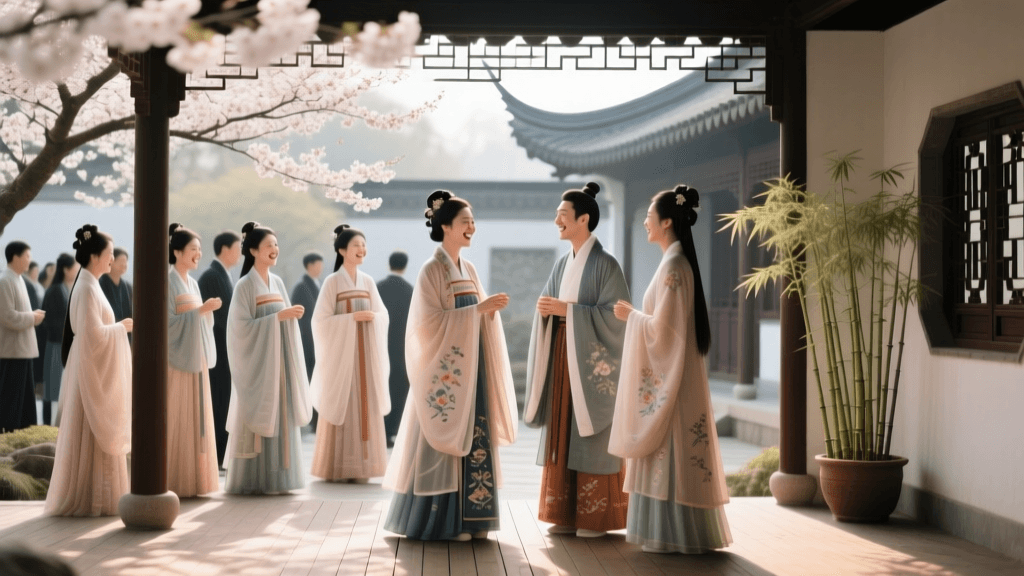
When commissioning a Hanfu or traditional garment from Xiangyunsha, keep in mind that the fabric has a crisp drape. It is best suited for structured garments like the Mamianqun (horse-face skirt), Beizi (traditional jackets), or formal outer robes. It is not recommended for flowing, clingy undergarments. Standard authentic bolts are usually 1.4 meters (approx. 55 inches) wide. For a standard two-piece Hanfu set, you will need to purchase between 4 to 6 meters of fabric, factoring in pattern matching and hem allowances.
Care and Maintenance of Heritage Silk
To preserve the intangible heritage woven into your garments, proper care is non-negotiable. The tannin-iron coating is durable but sensitive to alkaline substances.
- Washing: Never machine wash. Hand wash gently in cool water (below 30°C or 86°F) using a pH-neutral silk detergent or plain baby shampoo. Never use alkaline soaps, bleach, or enzymatic stain removers, as they will strip the gambier tannins and ruin the color.
- Drying: Do not wring the fabric. Press out excess water gently between two clean towels and hang to dry in a well-ventilated, shaded area. Direct sunlight during the drying phase of a finished garment can cause the dark side to fade unevenly.
- Storage: Store in a breathable cotton garment bag. Avoid plastic covers, which can trap moisture and cause the natural fibers to mildew. The fabric's natural tannin content makes it highly resistant to moths, so chemical mothballs are unnecessary and will taint the fabric's natural scent.
Preserving the Craft for Future Generations
Despite its prestige, the Xiangyunsha craft faces severe existential threats. The grueling nature of the work, combined with the intense heat of the Guangdong summers, has led to an aging demographic of master dyers. Younger generations are often reluctant to take up the physically demanding mantle of mud-dyeing. However, a modern revival is underway. A new wave of Hanfu enthusiasts, sustainable fashion advocates, and cultural preservationists are driving up the market value of authentic, ethically produced Xiangyunsha, providing the economic incentive needed to keep these historic Shunde workshops operational. By choosing to invest in genuine, artisan-crafted heritage textiles, collectors and consumers play a direct role in ensuring that this magnificent Chinese intangible heritage continues to thrive in the modern era.