Haori Jackets in Pop Culture: From Anime to Streetwear
The Haori's Journey from Feudal Japan to Global Screens
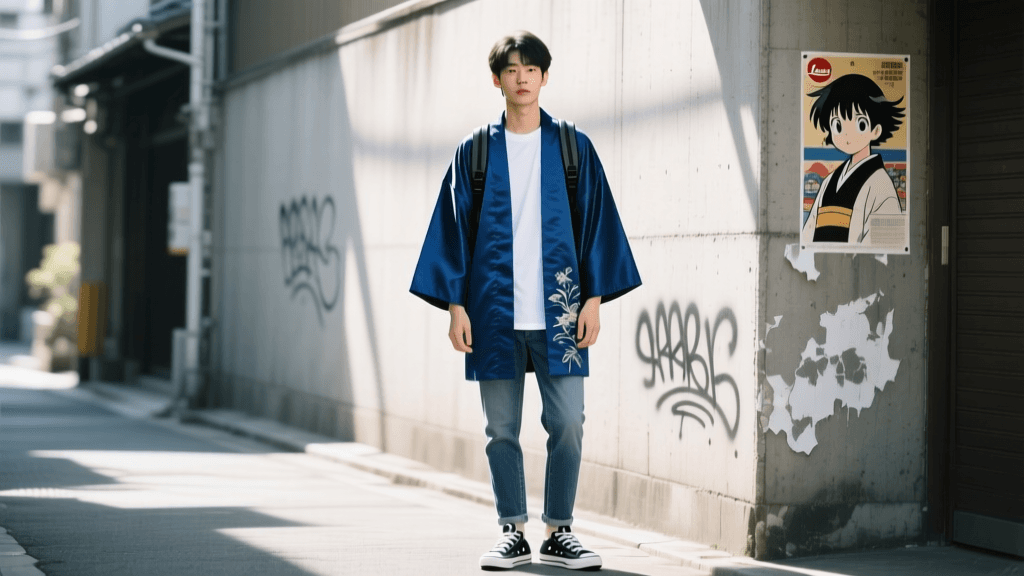
The traditional Japanese haori is a hip- or thigh-length, T-shaped jacket worn over a kimono. Historically, it was designed to provide warmth and denote social status, but today, it has transcended its origins to become a globally recognized symbol of Japanese aesthetics. Unlike the tightly wrapped and structured kimono, the haori is designed to be worn open, allowing for fluid movement and a striking visual silhouette. This inherent versatility is precisely what has made it a favorite among costume designers, anime creators, and high-fashion couturiers alike.
According to The Metropolitan Museum of Art's Heilbrunn Timeline of Art History, the evolution of Japanese outerwear reflects centuries of shifting social classes, sumptuary laws, and artistic innovation. During the Edo period (1603–1867), the haori was heavily regulated, often featuring subdued exterior colors to comply with strict merchant-class dress codes, while the interior linings (hiyoku) were lavishly hand-painted with hidden luxury. This duality of modest exterior and vibrant interior continues to captivate modern global audiences and designers.
Pop Culture Catalysts: Anime, Cinema, and Gaming
In recent years, the haori has experienced a massive resurgence in global visibility, largely driven by Japanese pop culture exports. The most prominent catalyst is the blockbuster anime and manga franchise Demon Slayer: Kimetsu no Yaiba. The protagonist, Tanjiro Kamado, wears a striking black-and-green ichimatsu (checkerboard) patterned haori, while his companion Zenitsu Agatsuma sports a white uroko (scale) triangle pattern. These specific, historically rooted motifs have sparked a global retail phenomenon, with fans seeking out authentic vintage pieces or modern replicas to emulate their favorite characters.
Beyond anime, cinema has long utilized the haori to convey power, mystery, and martial prowess. In Quentin Tarantino's Kill Bill: Volume 1, the Yakuza boss O-Ren Ishii and her elite squad don stark, uniform haori jackets during the climatic snow-garden duel, using the garment's flowing sleeves to accentuate the choreography of swordplay. Similarly, in Memoirs of a Geisha, the haori is used to signify the transition of the protagonist into a fully realized, high-status geisha, draped elegantly over the shoulders to frame the intricate obi of the kimono beneath.
High Fashion Meets Traditional Silhouettes
The crossover from screen to the runway is well-documented. The Victoria and Albert Museum's landmark exhibition 'Kimono: Kyoto to Catwalk' extensively detailed how the T-shaped silhouette and wide, draping sleeves of traditional Japanese garments dismantled Western tailoring norms. Designers like Alexander McQueen, Maison Margiela, and Comme des Garçons have repeatedly deconstructed the haori, utilizing its boxy, gender-neutral proportions to create avant-garde outerwear. The modern streetwear scene has adopted these high-fashion cues, embracing the haori as an alternative to the standard denim jacket or trench coat.
Practical Guide: Sourcing and Styling Your Own Haori
For enthusiasts looking to incorporate a haori into their daily wardrobe, understanding the difference between authentic vintage garments and commercial replicas is crucial. Here is an actionable guide to sourcing and styling.
Sourcing Authentic vs. Commercial Haori
If you want an authentic piece with historical weight, vintage silk haori are surprisingly accessible and affordable due to the massive secondhand market in Japan.
- Where to Buy: In Tokyo, vintage chains like Chicago in Harajuku or Shimokitazawa offer racks of silk haori. Online, platforms like Etsy, eBay, and specialized vendors such as Kimono-Ya or The Kimono Lady ship globally.
- Cost Expectations: A standard vintage silk haori from the 1970s–1990s typically costs between $60 and $150 USD. Pieces featuring hand-painted linings, rare shibori dyeing techniques, or three to five family crests (kamon) can range from $200 to $400+ USD.
- Measurements: Unlike Western jackets, haori are sized by length and sleeve drop. A standard women's haori is 80–90 cm (31–35 inches) long, while men's are 90–105 cm (35–41 inches). The sleeve drop (sodeguchi) usually measures 30–40 cm, allowing for layering over thick sweaters.
Styling for Everyday Streetwear
The key to wearing a haori in a modern context without looking like you are in a cosplay or theatrical production is contrast and grounding. Treat the haori as a statement outerwear piece, similar to a longline cardigan or a duster coat.
- The Urban Minimalist: Pair a dark, solid-colored vintage silk haori with a fitted black turtleneck, straight-leg selvedge denim, and leather Chelsea boots. The sleek, modern base allows the drape and subtle sheen of the silk to stand out.
- Streetwear Edge: Wear a patterned haori (such as a subtle floral or geometric kasuri) open over a heavyweight graphic hoodie and wide-leg cargo pants. Finish the look with chunky sneakers. The juxtaposition of traditional silk with heavy cotton and technical fabrics creates a striking, contemporary silhouette.
- Waist Definition: While traditionally worn open, modern styling allows for belting. Use a thin leather belt or a braided cord over the haori to cinch the waist, transforming the boxy T-shape into a structured, tunic-like dress or jacket.
Comparison Chart: Authentic Vintage vs. Modern Commercial Haori
| Feature | Authentic Vintage Silk Haori | Modern Commercial / Cosplay Haori |
|---|---|---|
| Material | 100% Silk (Chirimen, Rinzu, or Tsumugi) | Polyester blends, lightweight cotton |
| Cost | $60 – $300+ USD | $30 – $70 USD |
| Lining | Often features exquisite hand-painted or dyed silk linings | Unlined or basic solid synthetic lining |
| Hardware | Includes traditional braided ties (haori himo) | Rarely includes ties; meant to be worn purely open |
| Best Use Case | High-fashion streetwear, cultural events, collecting | Cosplay, anime conventions, casual summer layering |
Cultural Appreciation vs. Appropriation in Media
As traditional garments become global fashion staples, the line between appreciation and appropriation is frequently debated. The haori, by its very nature as an outer garment, is historically one of the most forgiving and accessible pieces of Japanese clothing for non-Japanese wearers. It does not require the complex, restrictive wrapping of a kimono, nor does it carry the strict formality rules of ceremonial wear.
'True appreciation begins with education. Understanding the craftsmanship behind a garment's weave, the meaning of its motifs, and its historical context transforms a simple fashion choice into an act of cultural respect.'
When sourcing your haori, take the time to learn about the specific textile arts involved. For instance, recognizing the difference between yuzen (resist-dyeing with rice paste) and shibori (intricate tie-dyeing) not only deepens your personal connection to the garment but also allows you to support specialized artisans and reputable vintage dealers who preserve these textile histories.
Wardrobe Organization and Care for Silk Haori
Because authentic haori are crafted from delicate silks, proper storage is essential to maintain their structural integrity and vibrant dyes.
- Airing Out: After wearing, hang the haori in a well-ventilated, shaded area for 24 hours to allow moisture and odors to dissipate. Never expose silk to direct sunlight, as UV rays will rapidly degrade the fibers and fade the dyes.
- Folding vs. Hanging: While short-term hanging on wide, padded hangers is acceptable, long-term storage should mimic traditional Japanese methods. Fold the haori along its natural seams and store it flat in a breathable cotton garment bag or a traditional wooden drawer (tansu).
- Moisture Control: Include silica gel packets or traditional Japanese camphor wood blocks in your storage area to prevent humidity buildup and deter silverfish, which are notoriously attracted to silk proteins and the starches used in vintage linings.
Conclusion
The haori's journey from the restricted streets of Edo-period Japan to the global stages of anime, cinema, and high fashion is a testament to the timelessness of its design. By understanding its history, sourcing authentic pieces, and styling them with modern intentionality, you can seamlessly integrate this masterpiece of Asian traditional garment culture into your contemporary wardrobe. Whether you are drawn to the cinematic drama of a flowing silk sleeve or the subtle luxury of a hidden hand-painted lining, the haori offers a unique bridge between ancient craftsmanship and modern global expression.