Viral Hanfu Trends: Mastering the Douyin Mamianqun Transition
The Rise of the Hanfu Transition on TikTok and Douyin
Social media platforms like TikTok and its Chinese counterpart, Douyin, have fundamentally transformed how we consume, create, and participate in fashion. Among the most captivating and culturally significant movements to emerge from these platforms is the Hanfu revival. What started as a niche historical appreciation society has exploded into a multi-billion dollar industry, driven largely by the visual storytelling of short-form video. According to BBC News, millions of young people are actively participating in this cultural renaissance, using social media to showcase traditional Chinese garments in modern, dynamic contexts. The Hanfu transition video—where a creator snaps their fingers or spins, instantly transforming from everyday streetwear into elaborate, flowing historical attire—has become a staple of viral content, garnering billions of cumulative views under hashtags like #Hanfu.
The Star of the Show: The Mamianqun (Horse-Face Skirt)
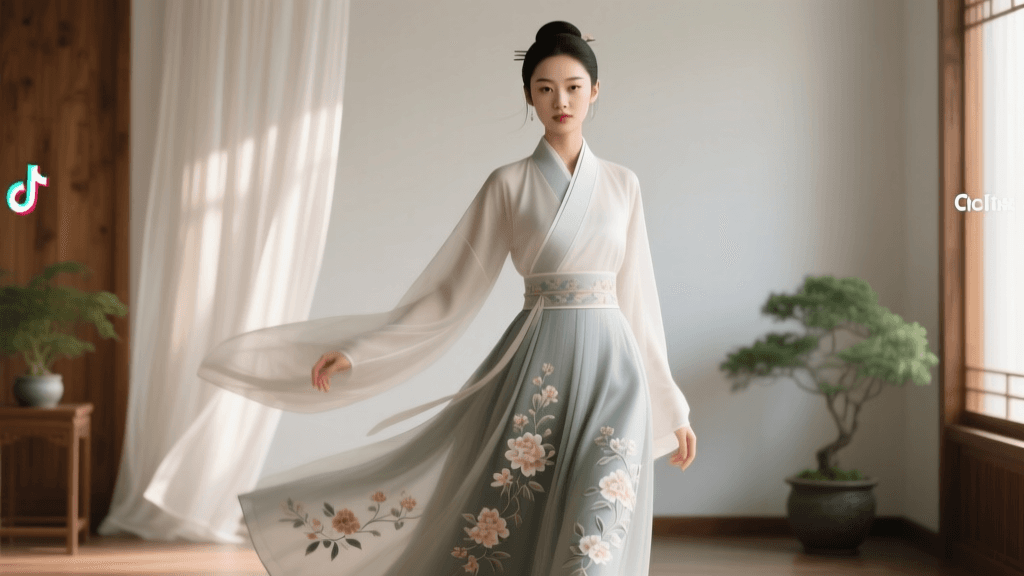
While flowing robes and intricate hairpieces are common in these transitions, the undisputed star of recent viral Hanfu trends is the Mamianqun, or horse-face skirt. Originating in the Song and Ming dynasties, this wrap-around skirt features flat front and back panels with deeply pleated sides. As noted in historical archives regarding the Mamianqun, the design was originally created to facilitate horseback riding while maintaining an elegant, structured silhouette.
The Mamianqun experienced a massive surge in global internet fame in 2022. A Reuters report highlighted a major controversy when French luxury house Dior released a mid-length skirt that bore a striking resemblance to the traditional Mamianqun structure, without crediting the Chinese heritage. This sparked a fierce cultural reclamation movement on Douyin and TikTok. Creators began wearing authentic Mamianqun skirts in front of Dior boutiques and in viral street-style videos, pairing them with modern blouses, leather jackets, and even combat boots. This fusion of historical garment and modern streetwear—often dubbed New Chinese Style or Xin Zhongshi—proved that traditional Hanfu elements could be seamlessly integrated into daily, contemporary wardrobes.
Choreographing the Perfect Douyin Transition Video
Creating a viral Hanfu transition video requires more than just beautiful clothing; it demands precise choreography, lighting, and editing. The most successful Douyin creators utilize a few specific techniques to maximize the visual impact of the garment's drape and movement.
First, the lens cover transition remains a classic. The creator starts in modern clothing, walking toward the camera until their hand or the fabric completely covers the lens. The camera is then stopped, the creator changes into their full Hanfu ensemble, and the video resumes with the hand or fabric pulling away to reveal the new look.
Second, utilizing the environment is crucial. Filming in locations with natural wind, such as mountain peaks, ancient architectural sites, or even using a high-powered studio fan, allows the Mamianqun pleats and the flowing sleeves of the upper garment to billow dramatically.
Third, the audio choice dictates the edit. Trending Douyin audios often feature a slow, traditional instrumental intro that suddenly drops into a heavy, modern bass beat. The transition must hit exactly on the beat drop to maximize viewer retention and algorithmic push.
Fabric Selection for Maximum Visual Impact
The fabric of your Hanfu dictates how it moves on camera. For viral videos, the spin and the drape are your most important metrics.
- Jacquard Woven Polyester: The most popular choice for everyday Mamianqun. It holds pleats exceptionally well, has a subtle metallic or textured sheen that catches ring lights beautifully, and is relatively affordable.
- Silk Brocade: Used for high-end, luxury Hanfu. It is heavy, meaning the skirt will swing with a luxurious, weighted momentum during a spin. However, it requires careful steaming and is less forgiving in outdoor wind.
- Chiffon and Organza: Often used for the upper garments or summer skirts. These fabrics catch the wind effortlessly, creating an ethereal, fairy-like aesthetic that is highly favored in fantasy-themed transitions.
Buying Guide: Sourcing Authentic Pieces Globally
For international enthusiasts looking to replicate these viral trends, sourcing authentic Hanfu can be daunting. The market is flooded with cheap, mass-produced costumes that lack the structural integrity of true Hanfu. Here is a comparison of the primary purchasing channels for international buyers.
| Purchasing Channel | Price Range (USD) | Shipping Time | Authenticity and Quality |
|---|---|---|---|
| Taobao (Direct) | $30 - $150 | 2 - 4 Weeks | Highest (Official Brand Stores) |
| AliExpress | $20 - $80 | 2 - 6 Weeks | Mixed (Risk of mass-produced copies) |
| Western Hanfu Boutiques | $80 - $250+ | 1 - 2 Weeks | High (Curated, but marked up) |
When buying from Taobao, look for established brands like Shisanyu, Minghuatang, or Tingyue Ten. These brands invest heavily in historical research and fabric quality, ensuring your garment drapes correctly on camera.
Sizing, Pleat Care, and Maintenance
Unlike Western skirts that zip up, the Mamianqun is a wrap skirt secured by ties. Proper sizing is critical to ensure the flat horse face panels align correctly and do not gap open during a video spin.
- Measuring: Your waist measurement should be taken at the natural waist or slightly higher, depending on where you want the skirt to sit. The skirt length should be measured from the waist down to your ankle bone. Most Taobao sellers offer custom length adjustments for an additional fee, which is highly recommended to avoid tripping during complex transition choreography.
- The Overlap: A proper Mamianqun requires a minimum overlap of 15 to 20 centimeters at the waist to prevent the skirt from flying open when you twirl for the camera.
- Pleat Maintenance: The side pleats are the soul of the Mamianqun. Never wring the skirt in a washing machine. Instead, hand wash in cold water with a mild detergent, or use a garment steamer to refresh the fabric. After washing, lay the skirt flat, realign the pleats by hand, and use specialized pleat clips or heavy books to press them while drying. Store the skirt hanging in a breathable garment bag to maintain the structural integrity of the folds.
The Hanfu movement is not merely about cosplay or historical reenactment; it is a living, breathing fashion evolution. When a young creator pairs a Ming dynasty Mamianqun with a modern turtleneck and sneakers on TikTok, they are redefining what traditional dress means in the 21st century.
By understanding the history, mastering the camera techniques, and sourcing high-quality garments, anyone can participate in this vibrant digital renaissance and create their own viral Hanfu moments.