Mastering Kimono Layering: A Seasonal Guide to Japanese Dress
The Philosophy of Kisetsukan in Japanese Dress
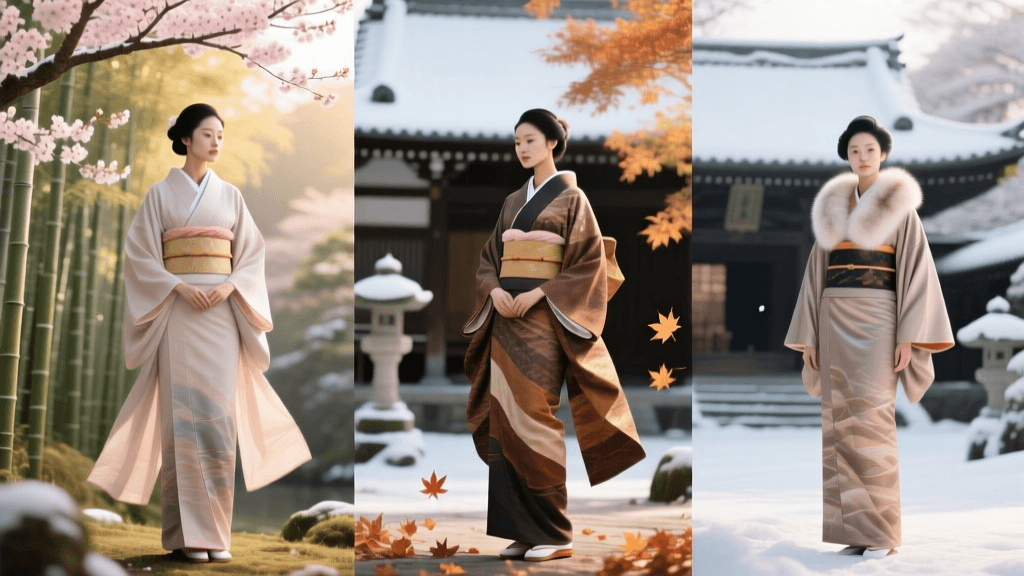
In the realm of traditional Japanese clothing, seasonality is not merely a matter of comfort; it is a profound aesthetic philosophy known as kisetsukan (seasonal feeling). The practice of dressing in a kimono requires a deep awareness of the natural world, dictating not only the motifs embroidered on the silk but the very structure, weight, and layering of the garments themselves. As noted by The Metropolitan Museum of Art, the Japanese textile tradition has long been intrinsically linked to the changing seasons, with garments serving as a canvas for nature's fleeting moments. To wear a kimono correctly is to anticipate the season, often transitioning to lighter or heavier weaves slightly before the weather officially shifts, demonstrating an elegant preparedness and respect for the calendar.
The Core Layers: Anatomy of the Silhouette
Before addressing seasonal variations, one must understand the foundational layers that create the iconic kimono silhouette. Unlike Western tailoring, which relies on darts and seams to contour the body, the kimono is a flat, T-shaped garment that requires strategic layering and padding to achieve a smooth, cylindrical form.
- Hadajuban: The innermost layer, a thin cotton or silk camisole and wrap skirt worn directly against the skin to protect the outer silk layers from sweat and oils.
- Nagajuban: The under-kimono. This is a crucial layer that provides the visible collar (han-eri) at the neckline and adds necessary volume to the hips and chest.
- Han-eri: A decorative, detachable collar sewn onto the nagajuban. It is highly seasonal; heavy, embroidered crepe silk is used in winter, while sheer, lightweight linen or ro weave is utilized in summer.
- Susuyoke: A half-slip worn under the nagajuban to prevent the legs from tangling in the fabric and to ensure the kimono skirt drapes smoothly.
The Seasonal Calendar: When to Wear What
The traditional kimono calendar is rigidly divided into three primary dressing seasons based on the garment's lining and weave. While modern climate control has blurred these lines slightly, traditionalists and practitioners of tea ceremony (chado) still adhere strictly to this schedule.
| Time of Year | Garment Type | Lining | Fabric & Weave Characteristics |
|---|---|---|---|
| October 1 – May 31 | Awase | Fully Lined | Rinzu (satin damask), Chirimen (crepe), Tsumugi (pongee) |
| June 1 – June 30 | Hitoe | Unlined | Lightweight Chirimen, Ro-chirimen, Shioze (habutae silk) |
| July 1 – August 31 | Natsu-gi | Unlined / Sheer | Ro (leno weave), Sha (gauze), Komon (stencil dyed) |
| September 1 – September 30 | Hitoe | Unlined | Autumn motifs on unlined crepe or pongee silk |
Awase: The Lined Kimono (Winter, Spring, Autumn)
The awase is the workhorse of the kimono wardrobe, worn for eight months of the year. It consists of an outer silk layer and a lining, typically made of habutae (plain weave silk) or yuzen-dyed silk. The lining is not merely functional; it is an opportunity for hidden luxury. A common practice is to use a vibrant, contrasting color for the lining, such as a deep crimson (momi) beneath a subdued grey outer layer, which flashes subtly when the wearer moves or sits. When dressing in an awase during the depths of winter (January and February), practitioners may also add a haramaki (belly warmer) or wear a padded han-eri to retain heat without disrupting the external silhouette.
Hitoe: The Unlined Transition (Early Summer & Early Autumn)
June and September are transitional months in Japan, characterized by high humidity or lingering warmth. The hitoe is an unlined kimono. Because it lacks a lining, the inside seams must be finished meticulously, often with decorative silk binding. Wearing a lined awase in June is considered a sartorial faux pas, as it visually communicates a heaviness that contradicts the humid rainy season (tsuyu). The hitoe allows for breathability while maintaining the formal opacity required for tea ceremonies and official visits.
Ro and Sha: The Sheer Weaves of High Summer
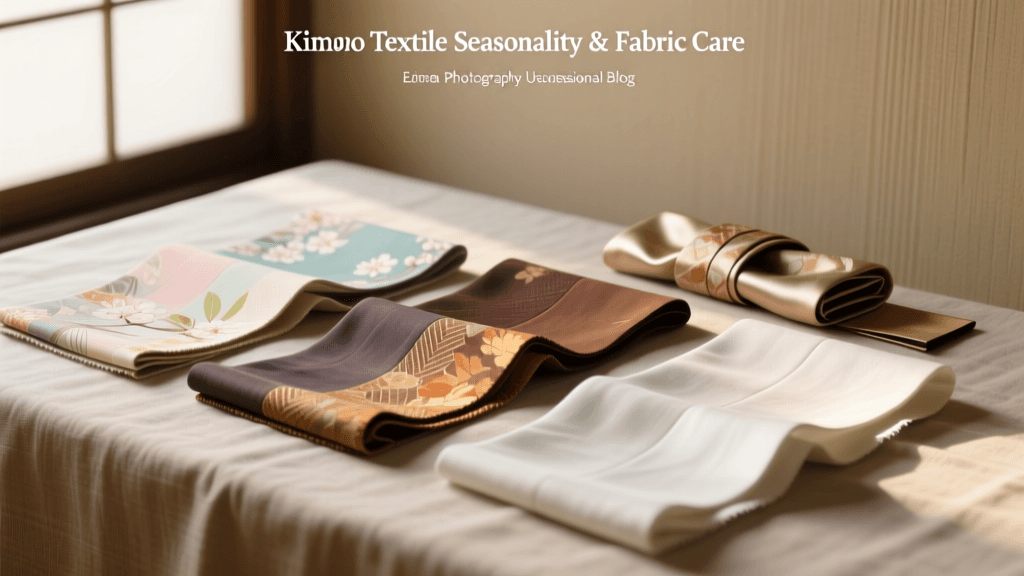
During July and August, the kimono becomes a vehicle for cooling the senses. Garments are woven using ro (a leno weave that creates horizontal sheer stripes) or sha (a loose gauze weave). The Victoria and Albert Museum highlights how these sheer textiles were historically prized for their ability to catch the breeze while providing a visual illusion of coolness. When wearing ro or sha, the nagajuban underneath must also be made of sheer fabric, and the han-eri should be a transparent linen or ro silk. The visual layering of sheer fabrics creates a delicate, watery depth that is the pinnacle of summer elegance.
Practical Dressing Techniques: Achieving the Perfect Proportions
Unlike Western clothing, a kimono is one-size-fits-most, requiring the wearer to adjust the garment to their specific body measurements through folding and tying. The most critical adjustment is the ohashori—the waist fold that allows the hem to fall perfectly at the ankles while accommodating different torso lengths.
Key Measurements and Adjustments
- Yuki (Sleeve Length): Measured from the center back of the neck, over the shoulder, to the wrist bone. Standard modern yuki is between 62cm and 68cm. If the sleeves are too long, the excess is folded inward at the shoulder seam and pinned temporarily before dressing.
- Mitake (Back Length): The total length of the kimono from the base of the neck to the hem. For an average height of 155cm-160cm, a mitake of 120cm-125cm is ideal.
- Eri-nuki (Collar Gap): The space between the nape of the neck and the collar. A proper eri-nuki should be wide enough to fit a closed fist (approximately 8cm). This gap is considered highly elegant and prevents the collar from choking the wearer.
Step-by-Step: Tying the Ohashori
- Align the Seams: Hold the kimono open and align the center back seam with your spine. Ensure the side seams fall straight down the sides of your body.
- Set the Hem: Bring the front panels together. The right panel goes under the left. Adjust the hem so it grazes the top of your ankle bones.
- Create the Fold: Tie a temporary cotton cord (koshihimo, typically 110cm long) tightly around the waist to hold the hem in place. The excess fabric above the cord will naturally drape over it.
- Smooth the Ohashori: Fold the excess fabric down over the cord to create the ohashori. The visible drop of this fold should be exactly 5cm to 7cm. Smooth out any wrinkles horizontally.
- Secure the Torso: Tie a second koshihimo just below the bust to secure the upper body, followed by a wide silk sash (datejime, usually 130cm long) to flatten the torso and provide a stable base for the obi.
"In Japanese aesthetics, wearing a garment slightly ahead of the actual season is considered more elegant than wearing it during or after. Anticipation is the essence of style."
Sourcing and Costs: Building a Seasonal Wardrobe
Building a functional, year-round kimono wardrobe requires strategic sourcing. While Japan Guide's comprehensive overview of traditional clothing notes that renting is popular for tourists, serious enthusiasts and practitioners must invest in personal garments to ensure proper hygiene, fit, and seasonal accuracy.
Vintage vs. Bespoke Pricing
The most cost-effective way to acquire seasonal garments is through Japan's thriving vintage (recycle) market. Flea markets like the Oedo Antique Market in Tokyo or the Toji Temple market in Kyoto offer excellent opportunities.
- Vintage Awase (Lined): ¥5,000 to ¥20,000 ($35 - $140 USD). These are abundant, as they are the most common type of kimono. Look for pristine linings and absence of sweat stains at the collar.
- Vintage Hitoe (Unlined): ¥8,000 to ¥25,000 ($55 - $175 USD). Slightly rarer in good condition, as the unlined silk is more delicate and prone to seam fraying.
- Vintage Ro/Sha (Summer): ¥10,000 to ¥30,000 ($70 - $210 USD). Summer silks are fragile. Always inspect the sheer weaves for snags or tears before purchasing.
- Bespoke/Modern Silk: Commissioning a new, custom-tailored awase or hitoe from a gofukuya (kimono shop) typically starts at ¥150,000 ($1,000 USD) and can easily exceed ¥500,000 ($3,500 USD) depending on the dyeing technique (e.g., Yuzen or Edo Komon) and the quality of the silk base.
Essential Dressing Tools to Budget For
Beyond the garments themselves, a practitioner must budget for the internal architecture of the kimono. A complete set of dressing tools (kitsuke gu) costs approximately ¥10,000 to ¥15,000 ($70 - $100 USD). This includes three cotton koshihimo (¥2,500), two silk or polyester datejime (¥4,000), an obi-ita ( obi board to prevent wrinkling, ¥1,500), and an obi-age and obi-jime (decorative sash accessories, ¥5,000). Investing in high-quality, breathable summer-specific datejime made of hemp or cooling synthetic meshes is highly recommended for July and August wear.
Conclusion
Mastering the seasonal wear and dressing techniques of the kimono is a lifelong pursuit of elegance, discipline, and cultural appreciation. By understanding the structural differences between the awase, hitoe, and ro weaves, and by meticulously executing the ohashori and eri-nuki, the wearer transforms flat pieces of silk into a living, breathing sculpture. Whether you are sourcing vintage treasures or investing in bespoke tailoring, respecting the traditional calendar ensures that your silhouette remains in perfect harmony with the turning of the seasons.