Kimono Fabric Seasonality And Yearly Care Calendar
The Intersection of Shun and Textile Preservation
In Japanese culture, the concept of shun (seasonality) dictates not only the visual motifs worn on a kimono but also the physical weight, weave, and layering of the garment. Traditional Japanese clothing is inherently tied to the natural world, requiring a meticulous wardrobe rotation that aligns with shifting temperatures and humidity levels. However, owning and wearing silk, hemp, and cotton kimono is only half the equation; preserving these delicate textiles requires a rigorous, year-round fabric care calendar. Because Japan's climate—and indeed many global climates—features extreme fluctuations in humidity, improper storage can lead to catastrophic mold growth, permanent creasing, and fiber degradation within a matter of weeks.
According to preservation guidelines highlighted by the Victoria and Albert Museum's Asian collections, historical silk textiles require strict environmental controls to maintain their structural integrity and dye vibrancy. This guide breaks down the foundational rules of kimono textile weight seasonality and provides a comprehensive, actionable care calendar to ensure your garments survive for generations.
Understanding Kimono Textile Weights and Seasonality
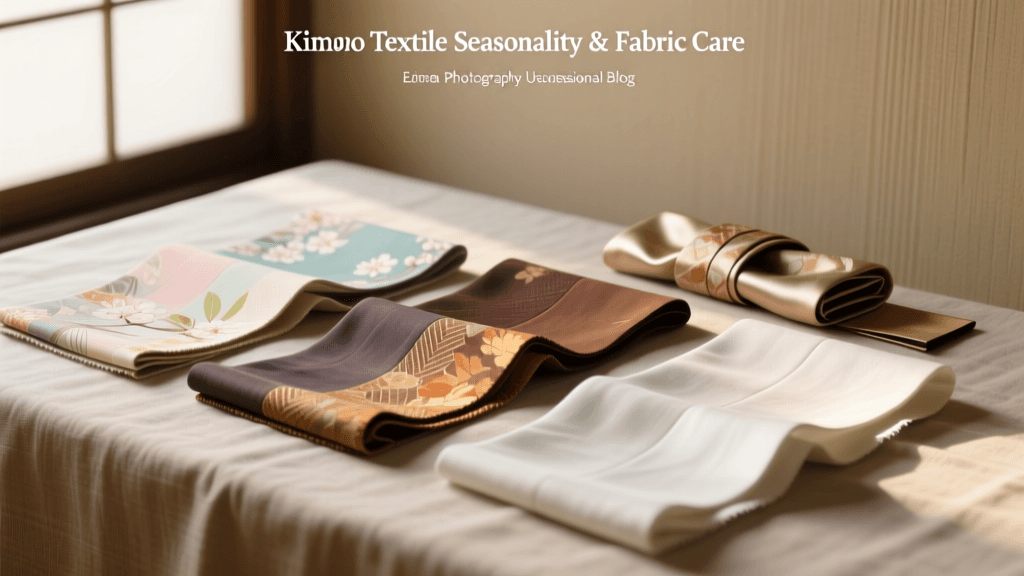
The kimono wardrobe is divided into distinct categories based on lining, weave, and weight. Wearing the correct weight at the correct time of year is a matter of both physical comfort and strict cultural etiquette. The transition between these weights is known as koromogae (the changing of clothes).
1. Awase (Lined Kimono)
Worn from October through May, the awase is the standard, most versatile kimono. It features a lining (hakkake and susomawashi) that provides insulation. The outer fabric is typically a medium-to-heavy silk crepe (chirimen) or pongee (tsumugi), weighing between 800 and 1,000 grams in total. The lining adds structural weight, allowing the garment to drape heavily and elegantly in cooler weather.
2. Hitoe (Unlined Kimono)
Worn exclusively in June and September, the hitoe is constructed from a single layer of fabric with no lining. Weighing approximately 500 to 600 grams, it is designed for the transitional shoulder seasons where a lined garment would cause overheating, but sheer summer weaves would be too cold. The interior seams are finished with meticulous hand-stitching to hide raw edges, as the inside of the garment is visible when moving.
3. Usumono (Sheer Summer Kimono)
Reserved for the peak heat and humidity of July and August, usumono are ultra-lightweight garments weighing a mere 300 to 400 grams. They are woven using specialized techniques such as ro (leno weave with horizontal striped gaps) or sha (gauze weave). These textiles are highly breathable and semi-transparent, requiring a specialized, lightweight summer undergarment (hadajuban) to maintain modesty.
| Month | Garment Type | Textile Weave / Weight | Lining Status | Visual Motif Rule |
|---|---|---|---|---|
| Oct - May | Awase | Chirimen / Tsumugi (800-1000g) | Fully Lined | Anticipate upcoming season by 2 weeks |
| June & Sept | Hitoe | Ro-Komi / Shioze (500-600g) | Unlined | Early summer or early autumn flora |
| July - Aug | Usumono | Ro / Sha / Hemp (300-400g) | Unlined & Sheer | Cooling motifs (water, fish, ice) |
As noted by the Metropolitan Museum of Art's Asian Art department, the seasonal motifs woven or dyed into these varying textile weights are just as critical as the fabric itself, creating a multi-sensory experience of the passing year.
The Annual Kimono Care and Maintenance Calendar
Silk is a protein fiber highly susceptible to moisture, pests, and acidic off-gassing. To prevent damage, kimono collectors and practitioners follow a strict annual maintenance schedule known broadly as mushi-boshi (insect airing) and seasonal rotation.
Spring (March - May): Airing and Transition
As winter ends, it is time to transition from heavy awase to hitoe. Before storing winter garments, they must be aired. Choose a dry, breezy day with low humidity (below 50%). Hang the kimono on specialized wide wooden hangers (emono-kake) in a shaded, well-ventilated room for 3 to 4 hours. Never expose silk to direct sunlight, as UV rays will rapidly fade natural dyes and weaken the protein bonds of the silk.
Summer (June - August): Humidity Control and Sweat Stains
Summer is the most dangerous season for kimono preservation due to the tsuyu (plum rain) season and high ambient humidity.
- Climate Control: Maintain your storage room at a strict 45-55% relative humidity (RH) and a temperature of 18-22°C (64-72°F). Use an electric dehumidifier rather than chemical desiccants, which can over-dry the air and make silk brittle.
- Sweat Management: After wearing a summer usumono or yukata, inspect the underarms, collar, and lower back for sweat. Sweat contains salts and urea that will permanently stain and rot silk. Use a damp, lint-free microfiber cloth to gently dab (never rub) the affected areas, then air dry immediately.
Autumn (September - November): Deep Cleaning and Mushi-Boshi
Late October and November offer the crisp, dry air necessary for the annual mushi-boshi. This is the time to air out the entire wardrobe, inspect for silverfish or carpet beetles, and prepare garments for professional cleaning if necessary. This is also the time to rotate your summer garments into deep storage and bring your awase out for the upcoming winter season.
Winter (December - February): Climate Control and Storage
Winter air is dry, but indoor heating can cause drastic humidity drops. Ensure your storage chests are not placed against exterior walls where condensation can form and trigger localized mold blooms. Keep garments wrapped in acid-free paper and sealed in their designated storage boxes.
Actionable Fabric Care: Products, Costs, and Measurements
Proper kimono care requires specific, traditional tools and modern environmental monitors. Below is a breakdown of essential products, their approximate costs, and how to use them effectively.
1. Kiribako (Paulownia Wood Storage Boxes)
Cost: $150 - $400 per box.
Measurements: Standard size is approximately 36cm x 32cm x 15cm (14" x 12.5" x 6").
Usage: Paulownia wood (kiri) is naturally hygroscopic. It swells when humidity rises, creating an airtight seal that locks moisture out, and shrinks when the air is dry, allowing the wood to breathe. Always store folded kimono flat inside a kiribako. Never use plastic bins, which trap moisture and encourage catastrophic mold growth.
2. Tatou-shi (Acid-Free Wrapping Paper)
Cost: $15 - $25 per pack of 10 sheets.
Usage: Wrap each folded kimono in a sheet of tatou-shi before placing it in the kiribako. This protects the silk from the natural acids and tannins present in the wood, preventing yellowing over decades of storage.
3. Shounou (Natural Camphor) vs. Chemical Mothballs
Cost: $15 - $30 for natural camphor blocks.
Usage: Place natural camphor in the corners of the storage box to deter silverfish and moths. Warning: Never use synthetic chemical mothballs (like naphthalene or paradichlorobenzene). The chemical off-gassing will react with the metallic threads (kinran) and gold leaf used in formal kimono, turning the gold black and permanently ruining the garment.
4. Arai-Hari (Traditional Wet Cleaning)
Cost: $100 - $250 per garment.
Frequency: Every 3 to 5 years for frequently worn garments, or immediately if heavily soiled.
Process: Unlike Western dry cleaning, which uses harsh chemical solvents that strip silk of its natural sericin proteins, arai-hari involves completely unsewing the kimono into flat fabric panels. The panels are stretched onto wooden boards and washed with mild, natural soap and water, then re-starched and hand-sewn back together. This process removes deep-seated dirt and restores the fabric's original drape and tension.
Conclusion
Maintaining a traditional kimono wardrobe is an exercise in discipline, observation, and respect for natural materials. By adhering to the seasonal rules of awase, hitoe, and usumono, you participate in a centuries-old aesthetic dialogue with the environment. Furthermore, by strictly following the annual care calendar—monitoring humidity, utilizing kiribako, and committing to traditional arai-hari cleaning when necessary—you ensure that these masterpieces of Asian textile heritage remain vibrant, wearable, and structurally sound for generations to come.