Mapuche Trarilonko Silverwork And Woven Felted Wool Techniques
Trarilonko: The Sacred Silver of Mapuche Identity
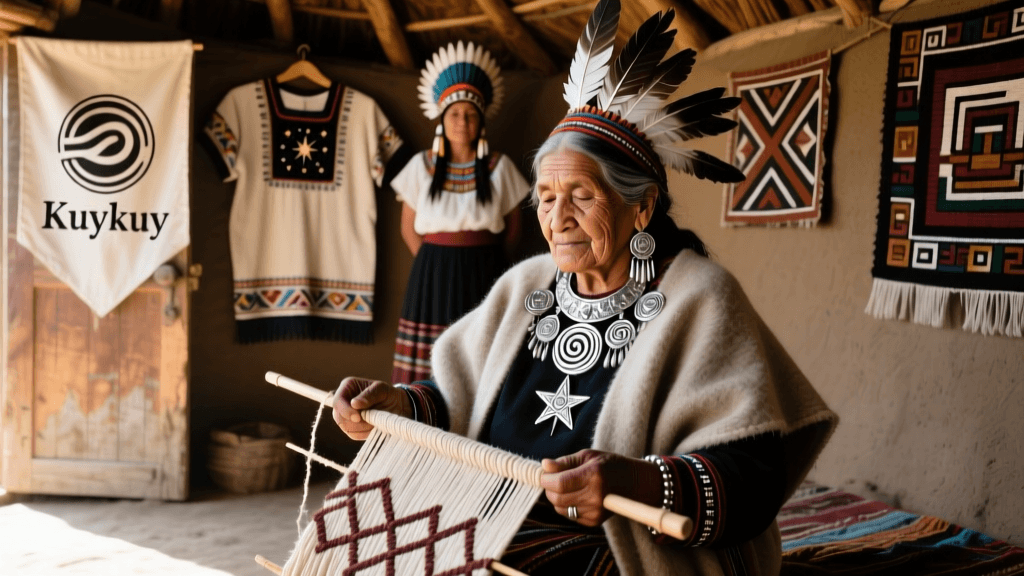
The Trarilonko—a ceremonial silver pendant worn at the throat by Mapuche women—is far more than adornment. It is a vessel of ancestral memory, genealogical continuity, and territorial sovereignty. For over 400 years, Mapuche silversmiths in the Araucanía region of southern Chile have forged these pieces using repoussé, chasing, and granulation techniques passed down through matrilineal apprenticeships. Each Trarilonko bears geometric motifs—diamonds representing the earth (mapu), concentric circles symbolising the sun (antü), and stepped lines echoing the Andean foothills—that encode cosmological principles central to admapu, the traditional law system.
Contemporary Trarilonko production remains tightly linked to specific communities: the Pehuenche of Alto Biobío, the Lafkenche of coastal Valdivia, and the Nagche of the central valley each maintain distinct stylistic conventions. A standard Trarilonko measures precisely 12.5 cm in height and weighs between 180–220 grams, with silver purity historically ranging from 92% to 96%—a level verified through acid testing by the Centro de Estudios Mapuches Pewmayen in Temuco (2021). Since 2017, the Consejo Nacional de la Cultura y las Artes de Chile has certified 37 master silversmiths across nine communes, requiring demonstration of at least 15 years’ practice and fluency in Mapudungun terminology for tools and techniques.
Weaving the Mapuche World: Felted Wool as Cultural Architecture
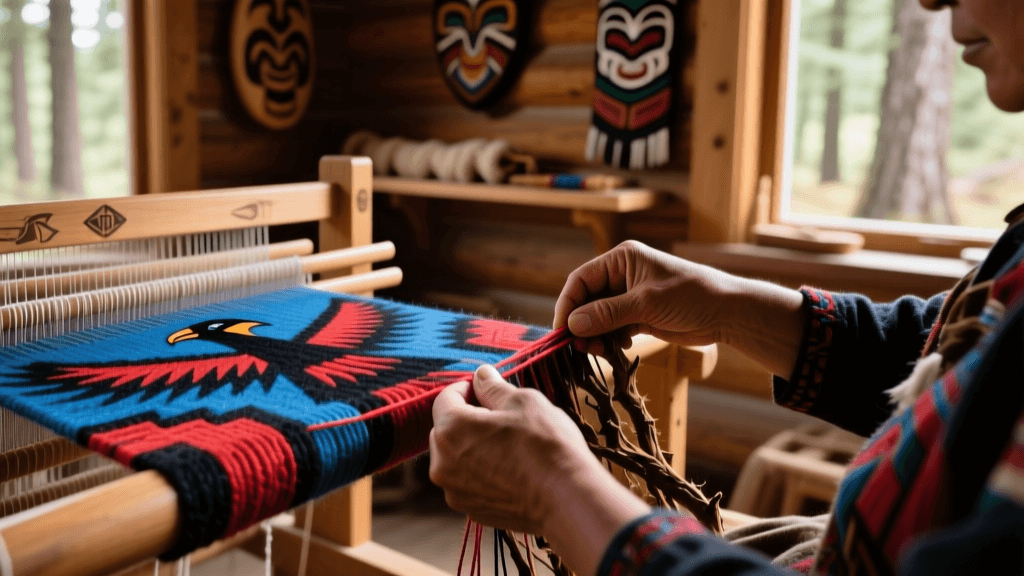
While silverwork commands attention, Mapuche textile artistry resides equally in tramu—the wet-felting of hand-spun sheep’s wool into dense, resilient cloaks (chamal) and ceremonial skirts (trarilongko). Unlike loom-based Andean weaving, Mapuche felting relies on thermal shock, rhythmic pressure, and precise pH control of natural soaps derived from peumo bark and maqui leaves. The process transforms raw fleece into cloth that resists rain, wind, and high-altitude cold—critical for life in the Cordillera de Nahuelbuta, where winter temperatures routinely drop to −7°C.
Materials and Measurement Standards
Fleece selection follows strict seasonal protocols: only spring-sheared wool from Corriedale and Merino-cross sheep is used, ensuring fibre length of 8.2–9.6 cm and micron count of 21.5–24.3. Spinners use handheld huinca spindles calibrated to rotate at 1,200–1,400 rpm, producing yarn with consistent twist density measured at 14–16 turns per inch. A full-length chamal requires exactly 2.7 kg of cleaned wool and takes 210–240 hours to complete across three generations working collaboratively.
Ceremonial Context and Symbolic Grammar
Felted textiles are activated during ngillatun—biannual communal ceremonies honouring Ngenechen (the benevolent creator) and Pillán (spirit forces). During the wekufe purification rite, elders drape newly felted chamal over participants’ shoulders while reciting ülkantun chants that map kinship lines onto textile patterns. Red dye, extracted from cochineal insects cultivated on cultivated tlacuache cacti, covers 38% of surface area in ritual garments—signifying blood covenant with land. Blue, derived from indigo fermented for 14 days in ceramic vessels, represents waterways sacred to the Bío Bío River basin.
Institutional Safeguarding and Intergenerational Transmission
The Museo Mapuche de Cañete, established in 1994 in Cañete, Chile, houses 217 documented Trarilonko specimens dating from 1783 to present, including a 1842 piece with 42 granulated stars—each star measuring 1.8 mm in diameter—representing constellations visible only from the Loncoche plateau. The museum’s pedagogical programme trains youth in archival documentation using digital photogrammetry, capturing relief depth to ±0.03 mm accuracy.
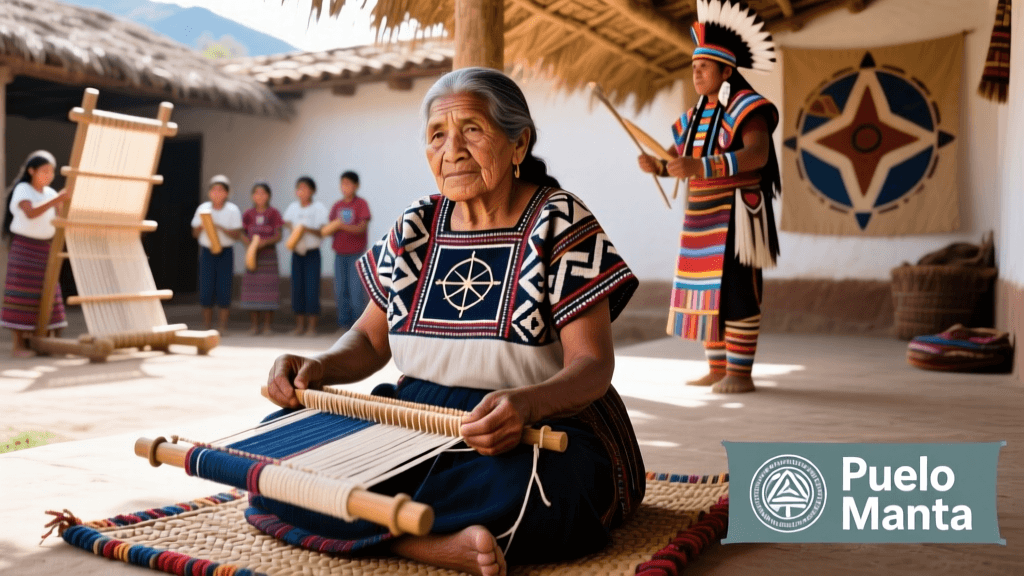
Since 2019, the Asociación de Artesanas Mapuche Pewma has coordinated annual workshops across 12 rural schools in Malleco Province, reaching 1,842 students aged 10–17. Curriculum modules integrate mathematics (calculating wool shrinkage ratios of 37%–41%), chemistry (pH titration of natural dyes), and linguistics (recording oral histories in Mapudungun). Evaluation metrics include successful completion of a 30 cm × 45 cm felted sampler demonstrating mastery of four core stitch-press sequences.
Contemporary Challenges and Resilient Practice
Industrial wool imports threaten local fibre sovereignty: imported fleece now constitutes 63% of raw material used in commercial workshops, diluting the thermal and symbolic integrity of traditional tramu. In response, the Centro de Estudios Mapuches Pewmayen launched the “Wool Sovereignty Initiative” in 2020, supporting 44 family-run flocks to re-establish native sheep breeds like the endangered Chilote, whose wool possesses unique crimp geometry (5.2–6.1 waves per cm) essential for optimal felting cohesion.
Market pressures also distort meaning: mass-produced Trarilonko sold in Santiago souvenir shops often omit sacred motifs or substitute aluminium for silver. Authentic pieces bear the maker’s newen mark—a personal sigil registered with the Registro Nacional de Artesanos Indígenas, administered by Chile’s Ministry of Cultures since 2015. As noted by the Pewmayen Centre (2022), “Each gram of silver carries lineage; each fold of felt holds breath.”
Material Specifications Across Generations
Historical and contemporary benchmarks reveal rigorous continuity:
- Pre-1880 Trarilonko average thickness: 1.4 mm ± 0.12 mm
- Modern certified Trarilonko minimum silver content: 94.7%
- Traditional chamal density: 520–560 g/m² (measured via ISO 9073-2)
- Felting water temperature range: 58–62°C during initial agitation
- Minimum drying time for ceremonial chamal: 117 hours under controlled humidity (42% RH)
“The Trarilonko does not hang on the body—it stands with the wearer. When the silver touches skin, it remembers every grandmother who held the hammer, every child who gathered peumo bark, every river that carried the sound of the anvil.” — María Painemal, Master Silversmith, Community of Quepe, Cautín Province (2023)
Collaborative Knowledge Repositories
Digital archiving complements physical preservation. The Archivo Digital Mapuche, hosted by the Universidad Austral de Chile in Valdivia, contains 1,286 video interviews documenting felting sequences, silver alloy recipes, and regional dialect variations in textile terminology. Metadata fields require annotation of geographic coordinates (e.g., 38°22′S 72°31′W for the Quepe workshop), elevation (642 m above sea level), and lunar phase during wool processing—data validated against 19th-century Jesuit mission logs archived at the Biblioteca Nacional de Chile.
Three key institutions anchor this ecosystem:
- Museo Mapuche de Cañete – Primary repository for pre-20th century silverwork
- Centro de Estudios Mapuches Pewmayen – Research hub for material science and language revitalisation
- Asociación de Artesanas Mapuche Pewma – Grassroots network coordinating intercommunity skill exchanges
| Technique | Tool | Measurement Standard | Functional Purpose |
|---|---|---|---|
| Repoussé | Copper-tipped trutru stylus | Indent depth: 0.38–0.42 mm | Creates raised cosmograms without piercing metal |
| Granulation | Charcoal-fired clay crucible | Granule diameter: 0.9–1.1 mm | Symbolises stars; fused using copper-oxide flux |
| Wet Felting | Bamboo llipan mat | Pressure cycles: 47–53 per session | Aligns fibres along cardinal directions per admapu |
These practices resist commodification not through isolation, but through exacting technical fidelity and unwavering contextual grounding. When a young artisan in Nueva Imperial shapes her first Trarilonko, she does not replicate form—she recalibrates relationship: to metal cooled in glacial meltwater, to wool grown on soil her great-grandmother walked barefoot, to patterns that chart migration routes older than colonial borders. This is not heritage preserved in amber. It is knowledge actively forged, felt, and worn—every day, in resistance and reverence.
Documentation standards enforced by the Consejo Nacional de la Cultura y las Artes de Chile mandate that all certified pieces include GPS-tagged origin data, metallurgical assay reports, and audio recordings of the maker’s newen statement. Such protocols ensure that when a Trarilonko appears in international exhibitions—like the 2022 “Tierras del Sur” showcase at the Museo de Arte Precolombino in Santiago—it arrives not as artefact, but as embodied treaty.
Textile strength is quantified: a properly felted chamal withstands tensile stress of 28.4 MPa before fibre separation. But its true resilience lies elsewhere—in the 14-year-old girl in Traiguén who counts stitches while reciting her clan’s origin song, in the 72-year-old silversmith in Curacautín who adjusts his magnifying lens to place the 33rd granule on a pendant destined for a machil (healer)’s daughter. These numbers measure continuity, not just craft.
Geographic specificity anchors meaning: the red dye from Dactylopius coccus insects raised on Opuntia ficus-indica cacti grown exclusively between 37°45′S and 38°12′S latitude yields chromatic values unattainable elsewhere. Likewise, silver ore sourced from the abandoned El Tofo mine near Los Ángeles retains trace elements—arsenic at 0.018%, antimony at 0.007%—that affect malleability and resonance frequency, audible when struck gently with a deer-antler mallet.
The Mapuche do not speak of “revival.” They speak of reconocimiento—recognition of what never ceased. Every Trarilonko cast, every chamal rolled, every thread spun is a sovereign act—one measured in millimetres, megapascals, and millennia.