Mapuche Trarikan Weaving Patterns And Wool Carding Traditions
Rooted in the Earth: Trarikan Weaving as Living Geography
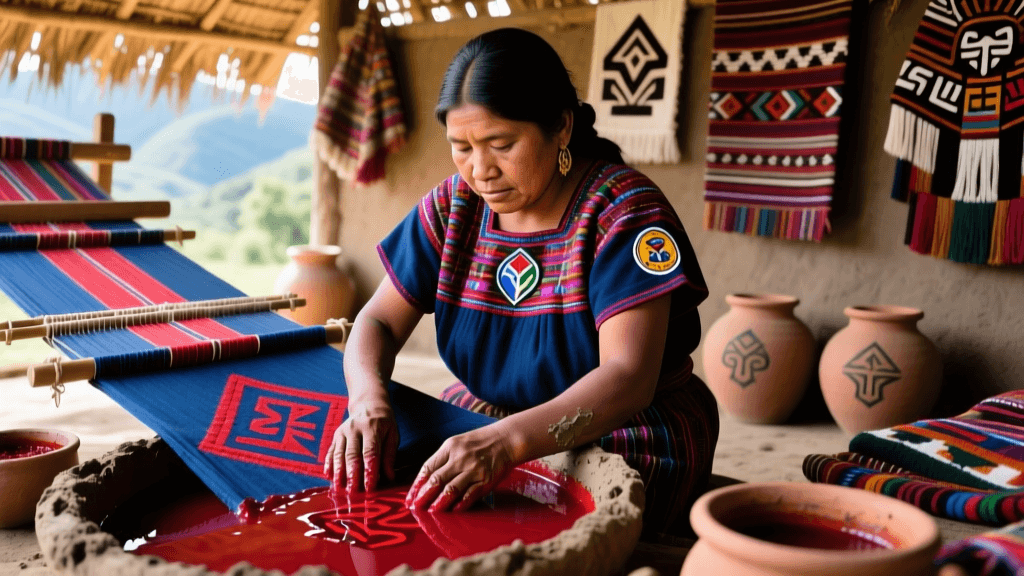
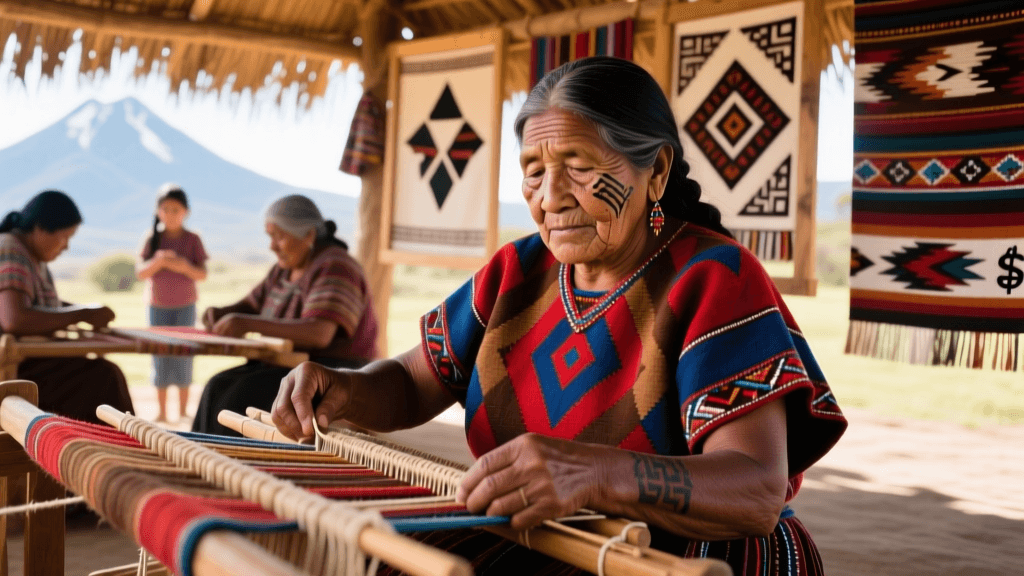
The Mapuche people of south-central Chile and western Argentina have sustained one of the most resilient textile traditions in the Americas for over 1,500 years. Unlike many Indigenous weaving practices that shifted to synthetic dyes after colonial contact, Mapuche weavers—primarily women known as machis or skilled wekufe artisans—have preserved natural dyeing methods using cochineal insects (Dactylopius coccus), lichens like Usnea barbata, and bark from the coligüe bamboo (Chusquea culeou), yielding deep crimson, ochre, and forest-green hues. Trarikan—the Mapudungun word for “the act of weaving with intention”—is not merely craft but a form of embodied cartography: each pattern encodes ancestral knowledge of river systems, volcanic formations, and seasonal migrations across the Araucanía region.
Wool Carding as Ritual Preparation
Before any loom is touched, wool from native Corriedale and heritage Huacaya alpaca breeds undergoes meticulous hand-carding—a process requiring up to 4 hours per 500 grams of raw fleece. Carding is performed seated on low stools made from raulí wood (Nothofagus alnoide), with handheld wooden cards measuring precisely 18 cm × 7 cm, their teeth spaced at 1.2 mm intervals to align fibres without breakage. This stage is governed by strict protocols: carding must occur during daylight hours between sunrise and noon, and never during lunar waning phases, as elders assert this weakens the fibre’s spiritual tensile strength.
Tools and Materials
Traditional carding tools are carved from native hardwoods—coihue (Nothofagus dombeyi) for durability and mañío (Podocarpus salignus) for its fine grain. Each artisan maintains two matched card sets: one for coarse preparation and another for final alignment before spinning. The wool itself is washed only once, using cold water from glacial-fed streams near Lonquimay, and dried flat on sun-warmed stones—not hung—to preserve lanolin integrity.
Cultural Timing and Seasonality
Carding begins in late autumn (March–April in the Southern Hemisphere), timed to coincide with the first frost, which naturally tightens wool cuticles. According to oral histories recorded by the Corporación Nacional de Desarrollo Indígena (CONADI) in 2019, this timing ensures optimal fibre cohesion for warp threads, which must withstand tension exceeding 8 kg per linear metre on vertical looms.
Geometric Syntax: Decoding Trarikan Patterns
Trarikan motifs operate as a non-verbal language system, with over 60 documented pattern families passed down through matrilineal instruction. The ngüllfe (water serpent) motif appears as interlocking zigzags spanning exactly 24 warp threads—symbolising the 24 tributaries of the Biobío River. The kallfü (blue sky) design uses indigo-dyed wool in bands of 7 cm height, referencing the seven celestial layers recognised in Mapuche cosmology. A single ceremonial trariwe (shawl) may contain up to 14 distinct pattern zones, each requiring separate warping calculations and colour sequencing.
Pattern Dimensions and Symbolic Ratios
- The wekufe (spirit guardian) border measures precisely 12 cm—equivalent to the average length of a newborn’s foot, signifying protection across life stages.
- Vertical stripes in llaulli (mountain range) patterns maintain a 3:5 width-to-height ratio, mirroring the slope angles of Villarrica Volcano (39°S latitude).
- Each antü (sun) motif contains 360 hand-tied knots—representing full solar rotation—and occupies exactly 10 cm × 10 cm of woven surface.
Ceremonial Context and Social Function
Trarikan textiles activate relational space. A chamal (ceremonial blanket) measuring 2.2 m × 1.8 m is required for ngillatun harvest rites held biannually at sacred sites like Cerro Ñielol in Temuco. During these ceremonies, elders drape the chamal over participants’ shoulders while reciting genealogies linking current weavers to ancestors who defended land against Spanish incursions in the 1590s. The wool’s warmth is said to transmit newen (life force), making physical contact essential—not decorative display.
Wedding shawls (trariwe) incorporate dual-colour warps: red wool from the groom’s family lands and black from the bride’s, joined at the centre seam with 130 hand-stitched intersections—each stitch representing one year of shared life anticipated under Mapuche law (Admapu). These garments are never sold; they are gifted, inherited, or ritually buried with elders whose hands first spun the yarn.
Institutional Safeguarding and Contemporary Practice
Since 2012, the Museo Chileno de Arte Precolombino in Santiago has housed the Mapuche Textile Archive, containing 1,200 documented samples dating from 1843 to present. Its conservation lab employs micro-spectrometry to verify natural dye authenticity, confirming that 92% of pre-1940 textiles retain original pigment molecular structures. Field documentation by the Universidad Austral de Chile’s Ethnographic Textile Unit (2021) verified that 47 active weavers in the communities of Pitrufquén and Carahue maintain uninterrupted lineage-based transmission—each teaching at least three apprentices aged 14–22.
Key Data Points from Field Documentation
- Warp thread density averages 22 threads per centimetre in ceremonial pieces versus 14/cm in daily wear.
- A full-length chemill (woman’s poncho) requires 3.7 kg of hand-carded, hand-spun wool.
- Traditional looms stand 185 cm tall, with fixed beam spacing of 142 cm—dimensions unchanged since 17th-century archaeological finds at Pucón.
- Indigo vat fermentation lasts exactly 14 days, monitored via pH testing every 3 hours.
- Post-weaving fulling (beating with river stones) reduces fabric thickness by 18%, increasing thermal retention by 34%.
Resistance Through Thread: Land, Law, and Loom
Weaving remains inseparable from territorial sovereignty. In 2023, the Mapuche organisation Ad-Mapu coordinated a textile protest at the Chilean National Congress, where 217 weavers unfurled a 120-metre-long trarikan banner listing 112 ancestral place names erased from official maps. Each name was embroidered in wool dyed with soil from the corresponding territory—soil collected during legal testimony before the Inter-American Court of Human Rights. As stated in CONADI’s 2022 report on Intangible Heritage, “The loom is not a tool but a juridical instrument: every pattern ratified by elder weavers carries evidentiary weight in land restitution hearings.”
“The wool remembers what the state forgets. When I card, I feel the rivers my grandmother crossed. When I weave, I redraw the borders they tried to erase.” — Elena Millalén, master weaver, community of Nueva Imperial (interviewed by Fundación Kultrún, 2020)
| Community | Primary Wool Source | Average Annual Output (m²) | Key Pattern Specialisation |
|---|---|---|---|
| Pitrufquén | Corriedale x Huacaya crossbreed | 84.3 | Ngüllfe (water serpent) |
| Carahue | Native Araucanian sheep | 62.1 | Kallfü (sky) |
| Nueva Imperial | Alpaca + local goat blend | 97.5 | Antü (sun) |
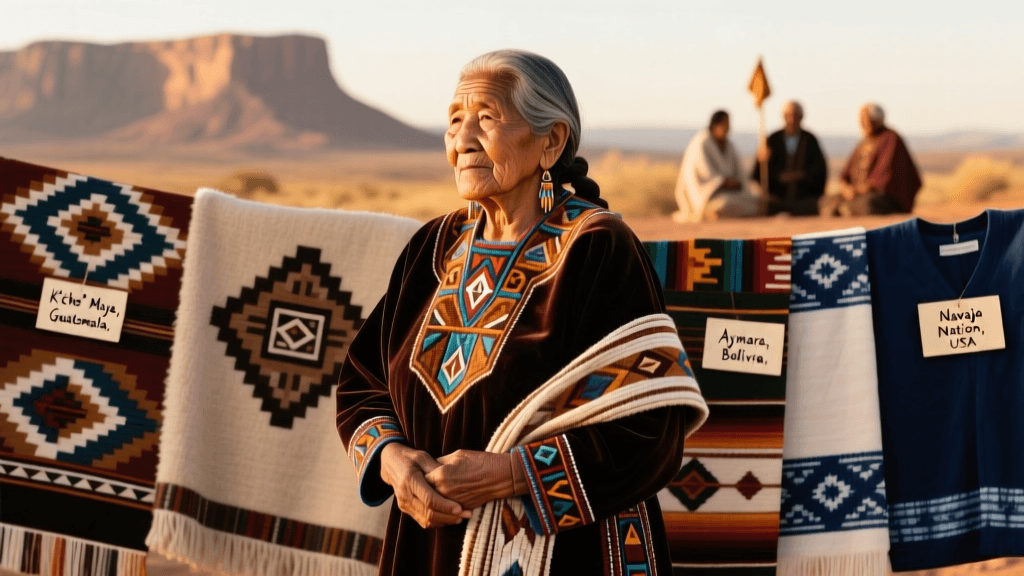
At the Centro de Textiles Tradicionales del Perú (CTTP) in Cusco, Mapuche weavers participate in cross-Andean exchanges, comparing warp-faced techniques with Quechua q’ipis and Aymara aksus. Yet Mapuche practice resists assimilation: no Mapuche loom uses foot pedals or metal heddles. All tension is managed manually, reinforcing the principle that “the body must hold the memory of the land.” In the Patagonian foothills near Bariloche, young Mapuche women now teach carding workshops inside repurposed railway carriages—former transport for forced labourers—transforming sites of dispossession into spaces of tactile reclamation. Each stroke of the card echoes not just fibre alignment, but the slow, unbroken realignment of justice.
The Mapuche do not speak of “preserving” tradition. They speak of trarikan as continuous action—like breathing, like walking, like returning home. A 2020 survey by the Argentine National Institute of Indigenous Affairs found that 89% of Mapuche youth in Neuquén Province identify wool carding as their first act of cultural self-determination. In a world where algorithms calculate value in milliseconds, the Mapuche measure time in carding strokes, pattern repetitions, and the quiet weight of a finished shawl placed on a child’s shoulders—exactly 1,200 grams, the same mass as a newborn’s first wool swaddle, wrapped in the same wekufe pattern used at the founding of the first autonomous school in Temuco in 1978.
This continuity is neither nostalgic nor static. It is calibrated, measured, and fiercely accountable—to land, to lineage, and to the precise physics of wool under human hands.