Maori Korowai Feather Weaving And Taniko Border Patterns New Zealand
Feathered Elegance: The Living Legacy of Māori Korowai
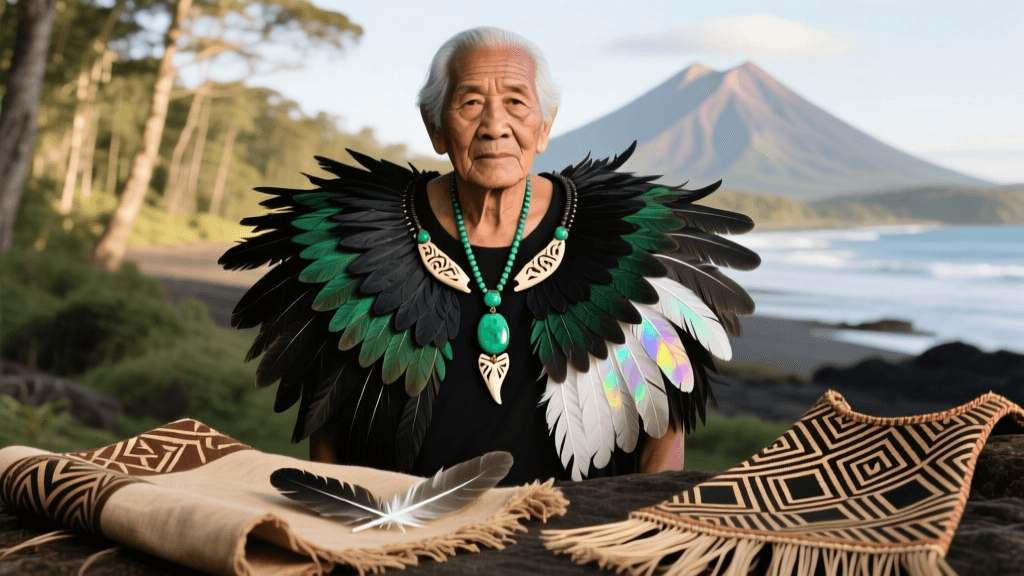
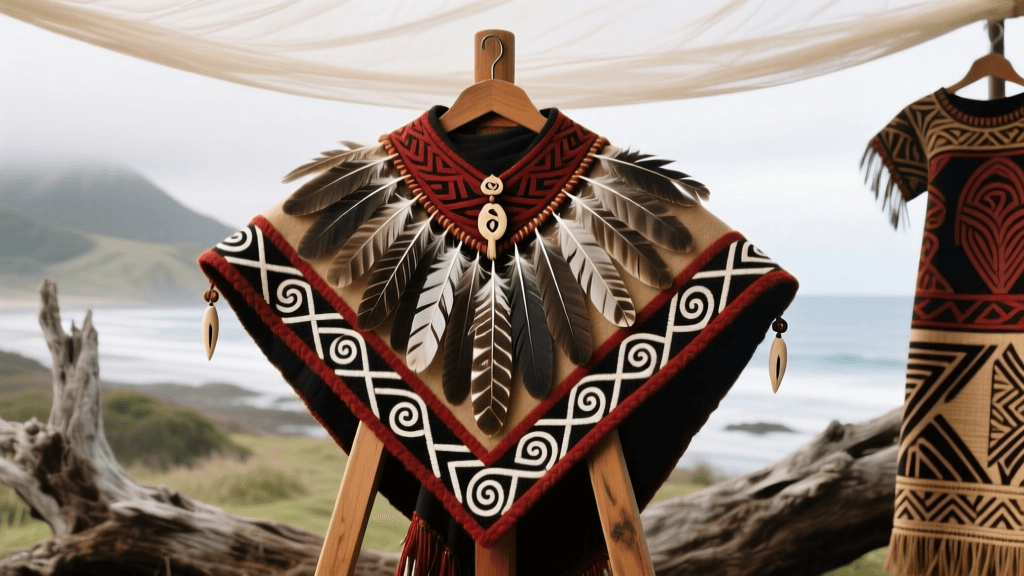
The korowai—a finely woven, black-dyed flax cloak adorned with intricately tied muka (prepared harakeke fibre) tassels and often embellished with feathers—is far more than ceremonial attire. It is a genealogical map rendered in fibre, a vessel for mana (spiritual authority), and a living expression of whakapapa (kinship). Worn by rangatira (chiefs), tohunga (experts), and esteemed guests at hui (gatherings), the korowai carries layered protocols: it must never touch the ground, is removed before entering certain sacred spaces like urupā (burial grounds), and is traditionally gifted—not sold—as an act of deep respect. Its creation demands over 200 hours of meticulous work for a single garment, with each tassel individually knotted using the traditional *tāniko* technique. This practice is not static; contemporary weavers at Te Kōhanga Reo National Trust continue to adapt patterns while upholding ancestral knowledge frameworks.
Taniko: Geometry as Genealogy
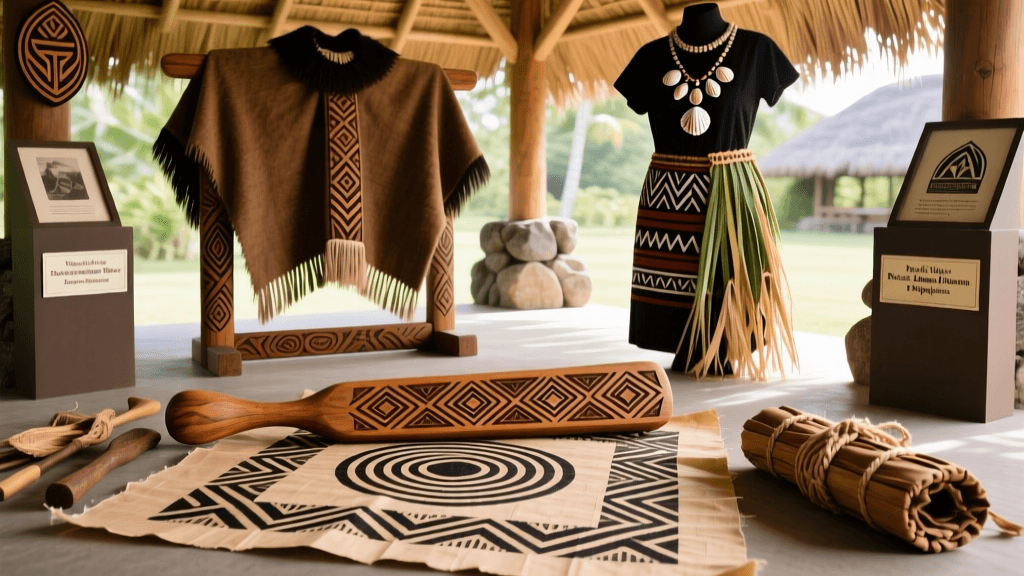
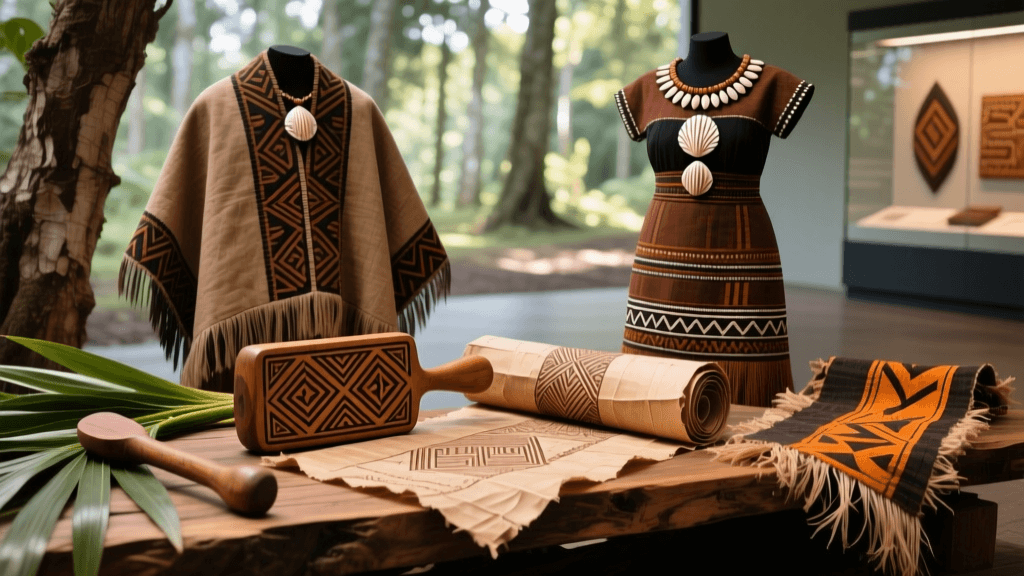
Taniko refers specifically to the narrow, decorative border bands that frame many kākahu, including korowai, kaitaka, and pākē. Unlike the flowing tassels of the korowai body, taniko is a rigid, geometric band created through finger-weaving—no loom required. Weavers use dyed muka, often in natural pigments: paru (iron-rich mud) for deep black (requiring up to seven dye baths), kōwhai bark for golden yellow, and mānuka ash for soft grey. Each pattern holds meaning: the *niho taniwha* (taniwha’s teeth) motif signifies protection and strength, while *pātikitiki* (lizard scales) reflects adaptability and survival. These motifs are not decorative flourishes but encoded narratives passed down through generations.
Materials Sourced from Whenua
Harakeke (New Zealand flax, Phormium tenax) is the foundational material. Its leaves are harvested following strict tikanga: only outer leaves are taken, never from the same plant twice in one season, and karakia (prayers) accompany each harvest. After stripping, the fibres undergo a laborious process—beating, soaking, drying, and rolling—to produce supple, lustrous muka. Feathers used in korowai come exclusively from native birds under strict kaitiakitanga (guardianship) protocols: kererū (wood pigeon) wing feathers (measuring 25–32 cm long), kiwi breast feathers (dense, hair-like, 4–6 cm), and historically, huia tail feathers (now protected and never harvested). No synthetic dyes are permitted in authentic taniko or korowai production.
Transmission Through Whānau and Institutions
Weaving knowledge is transmitted intergenerationally within whānau and through formal institutions. At Te Puia in Rotorua, master weavers teach taniko techniques in daily demonstrations, preserving patterns such as *arohia* (interlocking diamonds, symbolising unity) and *whakarare* (zigzag, representing mountain ranges). The New Zealand Māori Arts and Crafts Institute (NZMACI), housed within Te Puia, maintains a rigorous three-year wānanga (learning programme) where students complete at least 12 taniko bands—each measuring precisely 8–10 cm wide and 1.2–1.5 metres long—before graduating. Students must also demonstrate fluency in te reo Māori and tikanga surrounding weaving tools and spaces.
Protocols Governing Creation and Use
A korowai is never woven during periods of tangi (mourning) or on days associated with death in the lunar calendar. The weaving space itself is sanctified: no food is consumed there, and tools—including the wooden comb (*tīhore*) and bone needle (*whakamā*)—are stored separately from everyday items. When worn, the korowai is draped so the taniko border rests across the shoulders, its symmetry aligned with the wearer’s posture. During pōwhiri (formal welcome ceremonies), the korowai is placed over the shoulders of visitors only after the completion of the karanga (call) and hongi (pressing of noses), signifying acceptance into the community. According to the Museum of New Zealand Te Papa Tongarewa (2021), “The moment a korowai touches the shoulders of a guest, it creates a binding relationship between hosts and visitors that endures beyond the event.”
Contemporary Practice and Institutional Stewardship
While rooted in tradition, korowai and taniko remain vibrant and evolving. Contemporary artists like Christina Hurihia Wirihana integrate recycled materials—such as stainless-steel wire for structural support in large-scale installations—while maintaining strict adherence to pattern grammar and cultural intent. The Auckland War Memorial Museum Tāmaki Paenga Hira holds over 327 documented historic kākahu, including a 19th-century korowai with 1,842 individually tied tassels, each averaging 12 cm in length. Their conservation team follows guidelines co-developed with iwi representatives, ensuring humidity remains at 55% ± 5% and light exposure stays below 50 lux for all textile displays.
Measurable Standards in Authentic Production
Authentic korowai and taniko adhere to quantifiable benchmarks established by Te Roopu Raranga Whatu o Aotearoa (the national Māori weavers’ collective):
- Minimum 800 tassels per korowai, each hand-tied with 3–5 full rotations around the base
- Taniko bands must contain no fewer than 12 distinct pattern repeats per metre
- Muka fibre diameter must measure between 0.2–0.4 mm when fully processed
- Traditional paru dye requires immersion for a minimum of 48 hours, followed by oxidation in air for 72 hours
- Korowai cloaks intended for formal use must weigh between 1.8–2.3 kg when dry
The revitalisation of these practices is institutionally anchored. At Waipapa Marae, University of Auckland, weekly weaving hui bring together elders and students to replicate historic taniko bands from museum archives. Similarly, the Otago Museum in Ōtepoti Dunedin curates the 1890s *Te Whare Pora* collection—a set of 14 taniko samples documenting regional variations across Te Tai Tokerau, Taranaki, and Te Waipounamu. As noted by the National Library of New Zealand (2019), “These samples are not merely artefacts; they are active pedagogical tools used in current wānanga to verify colour fidelity and motif alignment against original standards.”
One korowai held at Te Papa Tongarewa exemplifies this continuity: acquired in 1938 from Ngāti Porou, it features taniko with 17 pattern units per 10 cm, uses exclusively paru-dyed muka, and retains original kererū feathers measuring exactly 28.3 cm. Its accompanying provenance record includes oral testimony from the weaver’s granddaughter, recorded in 1972, affirming the cloak’s role in sealing a land agreement between two iwi. Such documentation underscores how measurement, materiality, and memory converge in every thread.
“A korowai is not finished when the last tassel is tied. It is completed when the first story is told about it—and then retold, across decades, across marae, across generations.” — Te Roopu Raranga Whatu o Aotearoa, 2020
Across Aotearoa, the practice resists commodification. The Māori Arts Board (Toi Māori Aotearoa) enforces ethical guidelines prohibiting mass production or digital replication of taniko motifs without explicit iwi consent. In 2023, the Waitangi Tribunal issued a directive reinforcing that commercial use of specific patterns—such as the *tauhou* (new arrival) motif associated with Te Arawa—requires written authorisation from the relevant hapū. This legal recognition affirms what weavers have always known: that geometry is governance, fibre is philosophy, and every centimetre of taniko carries the weight of centuries.
The korowai does not hang in isolation. It exists in dialogue with other Pacific garments: the intricate tapa cloth of Tonga and Fiji, the feathered cloaks of Hawai‘i (‘ahu ‘ula), and the shell-and-feather adornments of Torres Strait Islander dancers. Yet its distinctiveness lies in the inseparability of structure, symbolism, and sanction—where a 12-cm tassel is not just ornament, but obligation; where a 10-cm taniko band is not just border, but boundary; and where every measured, dyed, and knotted element affirms that culture is not preserved in glass cases, but lived, worn, and woven anew.
| Institution | Location | Key Role in Korowai/Taniko Continuity |
|---|---|---|
| New Zealand Māori Arts and Crafts Institute (NZMACI) | Rotorua | Delivers formal wānanga; maintains archive of 47 historic taniko pattern templates |
| Auckland War Memorial Museum Tāmaki Paenga Hira | Tāmaki Makaurau Auckland | Holds 327 kākahu; digitised 112 korowai for public access via Mana Taonga platform |
| Otago Museum | Ōtepoti Dunedin | Custodians of Te Whare Pora collection (14 taniko samples, 1890s); used in regional curriculum development |
At its core, the korowai is a covenant. Between weaver and ancestor. Between wearer and community. Between land and lineage. Its weight, its width, its weave—all calibrated not by market demand or aesthetic trend, but by the enduring mathematics of belonging.