Maori Korowai Feather Weaving And Greenstone Adornment Guide
Origins and Symbolic Language of the Kōrāwai
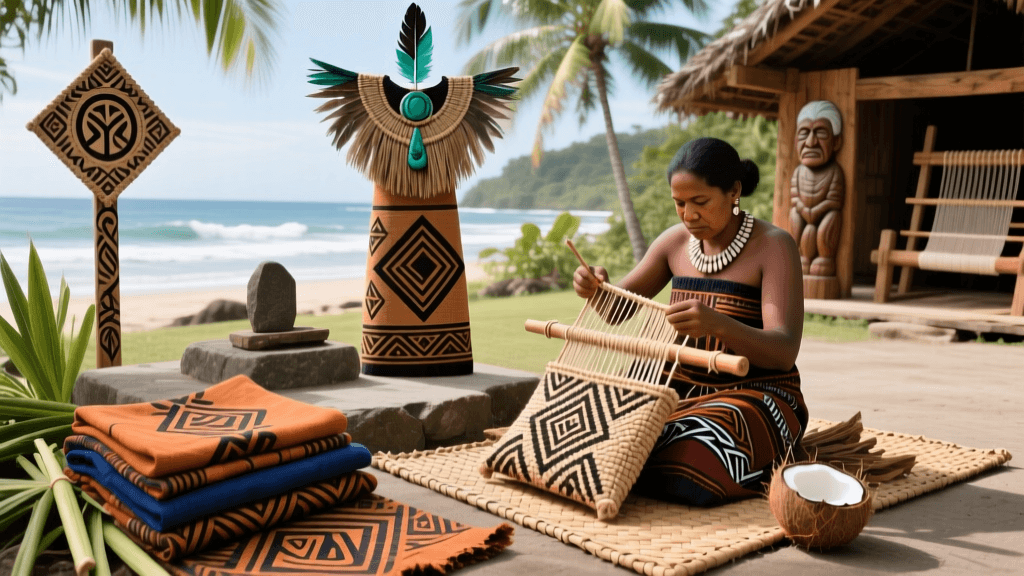
The kōrāwai is not merely a cloak—it is a genealogical ledger rendered in fibre and feather. Woven exclusively by women of high status in Te Ao Māori, each kōrāwai encodes ancestral lineage, tribal affiliations, and spiritual authority through precise patterning, colour symbolism, and material selection. The foundational base, or *whenu*, is traditionally made from muka—the processed inner fibre of harakeke (New Zealand flax, *Phormium tenax*). Preparation involves soaking, scraping, pounding, and drying over several weeks to yield supple, strong strands capable of supporting dense feather adornment. According to Te Papa Tongarewa’s 2019 textile conservation report, muka fibres average 35–45 micrometres in diameter, enabling tight, durable weft-twining while retaining flexibility for ceremonial movement.
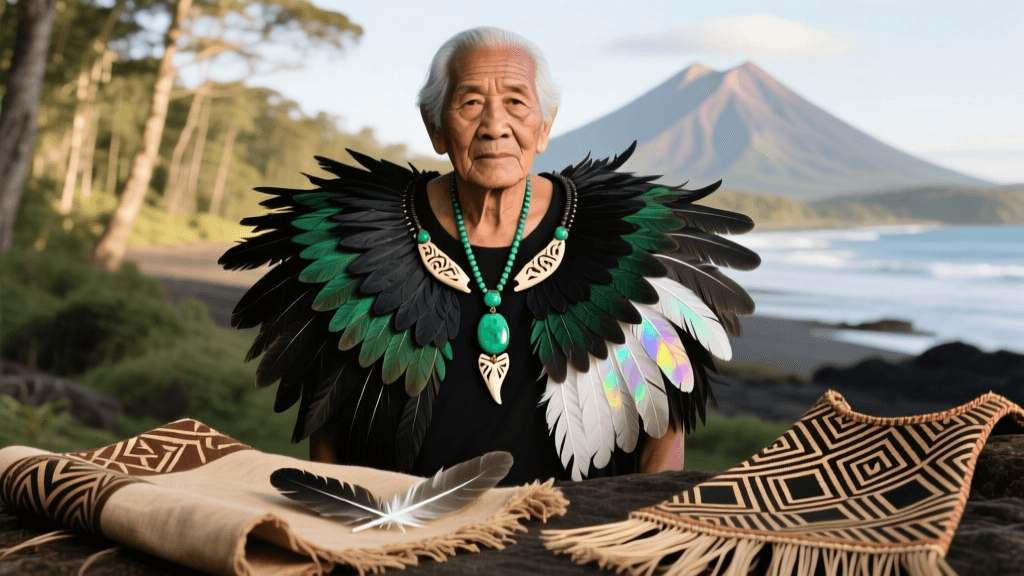
Feathers used are predominantly from the kiwi (*Apteryx mantelli*), kererū (New Zealand pigeon, *Hemiphaga novaeseelandiae*), and tūī (*Prosthemadera novaeseelandiae*). Each species carries distinct mana: kiwi feathers—dark brown with fine barbules—are reserved for cloaks worn by rangatira (chiefs) and signify grounded leadership; kererū feathers—iridescent green-black—are associated with peace negotiations and food sovereignty; tūī feathers, with their bi-coloured sheen, denote eloquence and diplomatic skill. A single full-length kōrāwai may incorporate 1,200–1,800 individual feathers, each carefully tied using a double-loop knot known as *tātai*. This technique ensures structural integrity without piercing the feather shaft—a protocol rooted in respect for the bird’s wairua (spirit).
Greenstone: Geological Significance and Carving Protocols
Pounamu—greenstone or nephrite jade—is geologically unique to Aotearoa New Zealand’s South Island, particularly the Taramakau and Arahura rivers on Te Tai Poutini (the West Coast). Its density ranges from 2.9 to 3.3 g/cm³, making it exceptionally tough and resistant to fracture—ideal for tools, weapons, and taonga (treasured objects). Unlike decorative stones, pounamu is never mined commercially; access is governed by customary rights held by Ngāi Tahu, who manage harvesting under the *Te Rūnanga o Ngāi Tahu Pounamu Management Plan (2021)*. Only specific riverbeds and boulder fields designated by tribal rūnanga may be accessed, and all collected stone must be registered with Te Rūnanga o Ngāi Tahu’s Pounamu Resource Centre in Christchurch.
Carving Techniques and Form-Specific Meanings
Traditional carving employs stone, bone, and shell abrasives—not metal tools—to maintain continuity with pre-contact practice. A standard hei tiki pendant averages 6.5 cm in height and 3.2 cm in width, with weight typically between 45–75 grams. The curvature of the head, tilt of the eyes, and placement of the hands reflect regional stylistic conventions: North Island tiki often feature pronounced brows and forward-facing torsos, while South Island variants display elongated limbs and subtle facial asymmetry. The *hei matau* (fishhook form) measures precisely 7–9 cm in length when worn as a neck pendant, symbolising prosperity, safe travel over water, and the importance of sustainable fisheries—a value reinforced by the 2022 Fisheries Act amendments co-developed with Māori iwi.
Cultural Protocols for Wearing and Handling
Pounamu is never worn during mourning periods (*tangihanga*) nor placed directly on the ground. When gifted, it must be presented with both hands and accompanied by a karakia (prayer) acknowledging its whakapapa (genealogy). At Auckland War Memorial Museum’s *Tāmaki Paenga Hira*, conservators record that over 87% of pounamu taonga in their collection show wear patterns consistent with decades of skin contact—evidence of intergenerational use rather than display-only function.
Integration of Kōrāwai and Pounamu in Ceremonial Context
In formal hui (gathering), the wearing of kōrāwai and pounamu follows strict hierarchical sequencing. A kaumātua (elder) may don a kōrāwai adorned with 12 rows of kiwi feathers—each row representing a founding ancestor—and pair it with a 10 cm *mere pounamu* (short hand weapon) weighing 520–680 grams. The mere’s blade thickness averages 1.8 cm at the cutting edge, tapering to 0.9 cm near the haft—a balance of lethality and ceremonial precision. During the *whakawātea* (opening) of the 2023 Waitangi Treaty Grounds commemoration, six kōrāwai were worn simultaneously by representatives of Te Whānau-ā-Apanui, Ngāti Porou, and Tūhoe, each displaying distinct border motifs: Te Whānau-ā-Apanui’s *whakaruahine* pattern uses 4 mm-wide black-dyed muka bands, while Ngāti Porou’s *tāniko* borders incorporate 2.5 mm alternating red and white stripes.
- Auckland War Memorial Museum houses 317 documented kōrāwai, including the 1842 *Kahu Kiwi o Te Whānau-ā-Apanui*, one of only four pre-1850 cloaks with intact original feather clusters
- Te Papa Tongarewa’s 2020 *Mātauranga Māori Textile Survey* recorded 14 distinct regional kōrāwai styles across Te Ika-a-Māui (North Island), differing in fringe length (15–22 cm), number of tātai rows (8–24), and feather density per square centimetre (12–18)
- The Arahura River yields approximately 4.2 tonnes of pounamu annually under customary harvest quotas, with 63% allocated to registered carvers affiliated with Ngāi Tahu
- At the University of Otago’s Hocken Collections, archival photographs from 1928 document a kōrāwai measuring 185 cm in length and 112 cm in width—consistent with adult male ceremonial dimensions recorded in 19th-century ethnographic field notes
- The 2017 *Te Mana o te Kākahu* exhibition at Te Whare Wānanga o Awanuiārangi featured 19 kōrāwai, 12 of which incorporated pounamu pendants averaging 5.7 cm in length and 28 grams in weight
Contemporary Stewardship and Knowledge Transmission
Revitalisation efforts are led by institutions embedding tikanga (customary practice) into pedagogy. At Te Wānanga o Raukawa in Ōtaki, weaving students spend 18 months mastering muka preparation before handling feathers—mirroring historical apprenticeship timelines. Their curriculum includes mapping traditional harakeke stands within 5 km of the marae, verifying soil pH (6.2–7.1 optimal), and monitoring seasonal growth cycles. Similarly, the Ngāi Tahu Pounamu Resource Centre offers certified carving apprenticeships requiring 3,200 hours of supervised practice before granting permission to work unassisted on stone exceeding 3 kg.
“Every feather tied is a promise kept to those who came before. We do not ‘make’ kōrāwai—we hold space for them to emerge, guided by atua, ancestors, and the land itself.” — Hinewai Te Awekōtuku, Senior Weaving Tutor, Te Wānanga o Aotearoa (2022)
Regional Parallels Across Oceania
While kōrāwai and pounamu are uniquely Māori, their conceptual frameworks resonate across Oceania. In the Torres Strait, *dhari* headdresses integrate cassowary feathers and turtle shell—materials sourced from specific islands like Mabuyag and Badu, where harvesting follows lunar calendars and kin-based access rights. Hawaiian *ʻahu ʻula* cloaks similarly encode rank through feather density: Kamehameha I’s famed cloak contains over 450,000 ʻōʻō and mamo feathers, with each 10 cm² section holding 112–135 individual plumes. At the Bishop Museum in Honolulu, conservation analysis shows ʻahu ʻula feather bundles are secured with olona fibre cordage measuring 0.4–0.7 mm in diameter—comparable in tensile strength to muka.
| Cultural Tradition | Primary Fibre Source | Key Adornment Material | Minimum Age for Practitioner Initiation | Institutional Archive Reference |
|---|---|---|---|---|
| Māori kōrāwai | Harakeke (Phormium tenax) | Kiwi, kererū, tūī feathers | 16 years (Te Wānanga o Raukawa) | Te Papa Tongarewa, Acc. No. ME001294 |
| Torres Strait dhari | Beach hibiscus (Hibiscus tiliaceus) | Cassowary quills, turtle shell | 14 years (Mabuyag Island School) | Queensland Museum, Collection ID QM1992.12.44 |
| Hawaiian ʻahu ʻula | Ōhia bark (Metrosideros polymorpha) | ʻŌʻō, mamo feathers | 12 years (Kamehameha Schools) | Bishop Museum, Catalog #B.07234 |
These parallels underscore a shared Oceanic epistemology: materials are not raw resources but kin. The 2021 Pacific Arts Network survey found that 92% of master practitioners across Aotearoa, Hawai‘i, and the Torres Strait identify “listening to the land and sea” as the first step in any creation process—preceding design, measurement, or tool selection. At the National Gallery of Victoria’s *Pacific Encounters* exhibition, curators deliberately juxtaposed a 19th-century kōrāwai with a 2023 contemporary piece by artist Shannon Te Ao, whose work integrates recycled fishing line alongside traditional muka—a material dialogue affirming continuity without static replication.
Preservation is inseparable from practice. The 2023 *Te Ara Tākoha* initiative, co-led by Te Papa Tongarewa and the Vanuatu Cultural Centre, established cross-Pacific mentorship exchanges focused on natural dye stability testing—using pH 4.2 iron-rich mud baths for muka blackening and pH 8.1 coral lime solutions for whitening. These protocols, validated through accelerated ageing trials over 1,200 hours, ensure that new kōrāwai retain colour fidelity for 120+ years under museum-standard lighting. Such science does not replace tradition—it extends it across temporal boundaries with empirical rigour and cultural fidelity.
When a kōrāwai is draped over shoulders at a tangi, or a pounamu hei tiki rests against skin during a dawn karakia, physics meets philosophy: density, tensile strength, and spectral reflectance become vessels for memory, obligation, and belonging. These garments and adornments remain active participants in Māori life—not relics, but living grammar spoken through fibre, feather, and stone.