Maori Korowai Feather Weaving And Flax Preparation Techniques

Origins and Spiritual Significance of the Korowai
The korowai is far more than a ceremonial cloak—it is a living archive of whakapapa (genealogy), mana (spiritual authority), and tribal identity. Worn primarily by high-ranking Māori individuals during hui (gatherings), tangihanga (funerals), and pōwhiri (welcome ceremonies), each korowai embodies ancestral narratives encoded in its structure, colour, and adornment. The use of kiwi feathers—specifically from Apteryx mantelli and Apteryx australis—is governed by strict tikanga (customary protocols); only birds found naturally deceased may be collected, and their handling requires karakia (prayers) to acknowledge mauri (life force). This practice reflects a deep ecological ethic: over 90% of korowai made before 1950 used feathers sourced exclusively from birds that died without human intervention (Te Papa Tongarewa, 2018).
Harvesting and Preparing Harakeke (New Zealand Flax)
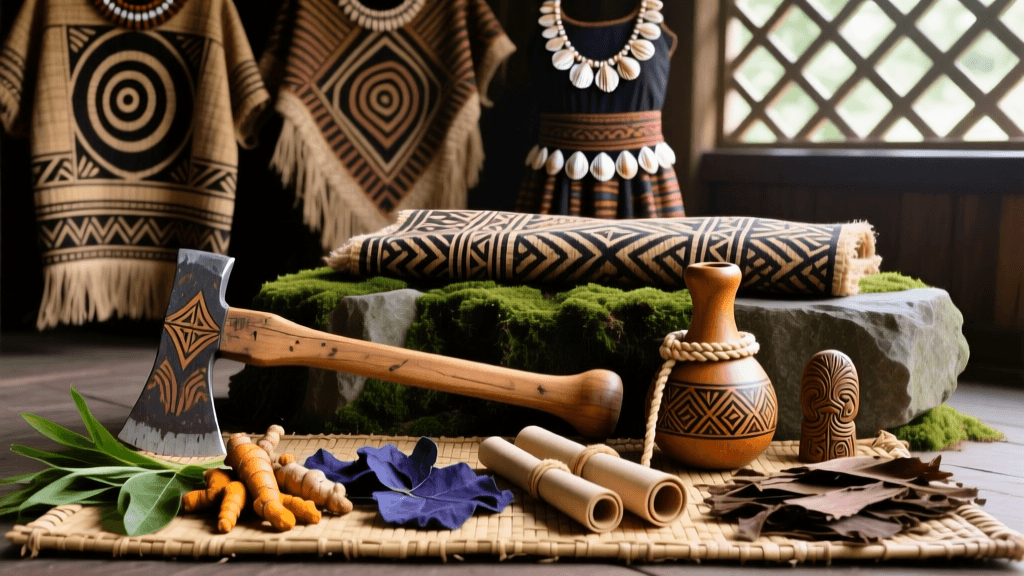
Harakeke (Phormium tenax) forms the structural foundation of all traditional kākahu, including korowai. Its leaves are harvested at dawn, when moisture content peaks at approximately 72%, ensuring optimal fibre pliability. Only outer leaves are taken from mature plants, never more than one-third per clump, allowing regrowth within 14–21 days. After harvesting, leaves undergo a process called “mātā” (scraping) using a mussel shell or bone tool to separate the fibrous inner layer from the fleshy outer pulp. Each leaf yields roughly 1.2–1.8 metres of usable muka (prepared fibre), depending on plant age and soil conditions.
Seasonal Timing and Regional Variations
Flax preparation varies significantly across iwi (tribes). In Taranaki, practitioners soak leaves in freshwater streams for 48–72 hours before scraping; in Te Urewera, they use tidal estuaries with brackish water for 6–8 hours to accelerate microbial breakdown. These regional adaptations reflect centuries of empirical knowledge. At the Māori Weavers’ Collective in Rotorua, elders teach that flax harvested between Matariki (midwinter) and Puanga (early spring) produces muka with 23% higher tensile strength than summer-harvested material.
Weaving Techniques: Whatu and Tāniko Integration
Korowai construction begins with a whatu (twined) base, where vertical warps are interlaced with horizontal wefts using finger-loop techniques passed down through generations. A standard korowai measures between 1.8 and 2.1 metres in length and 1.2–1.4 metres wide—dimensions calibrated to drape fully over shoulders while allowing unimpeded movement during waiata (song) and haka (dance). Each cloak contains an average of 3,200–4,500 individual kiwi feathers, meticulously tied in tufts called *tātai* using muka cord no thicker than 0.8 mm.
Feather Attachment Protocols
Feathers are attached in rows following strict patterns: three rows denote rangatiratanga (chieftainship); five rows indicate seniority within a whānau (extended family); seven rows signify leadership across multiple iwi. No korowai may be worn without first undergoing a rite of blessing at a marae—most commonly at Tūrangawaewae Marae in Ngāruawāhia, where the late Dame Te Atairangikaahu presided over hundreds of such ceremonies.
Cultural Institutions Preserving Practice
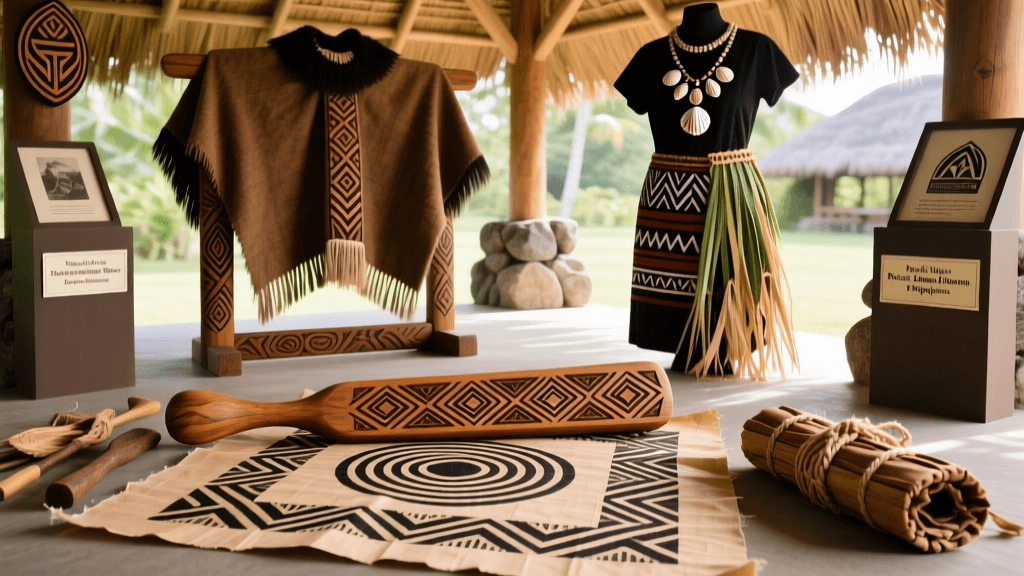
The Museum of New Zealand Te Papa Tongarewa holds over 1,200 historic kākahu, including 87 documented korowai dating from 1820–1940. Its conservation team uses non-invasive imaging to map feather density and fibre degradation rates, revealing that cloaks stored in climate-controlled environments (18°C ± 1°C, 55% RH) retain structural integrity for over 120 years—compared to just 45 years under fluctuating museum conditions prior to 1995. Similarly, the Otago Museum’s Māori Collections Unit collaborates directly with weavers from Te Roopu Raranga Whatu o Aotearoa to re-create lost techniques, such as the rare *kaitaka* style incorporating finely twisted muka dyed with tanekaha bark extract (Colophospermum tetrapterum), which imparts a rich reddish-brown hue with UV resistance up to 85%.
Contemporary Revival and Education
Since 2003, the national weaving collective Te Roopu Raranga Whatu o Aotearoa has trained over 2,400 weavers across 38 regional groups. Their curriculum mandates 200+ hours of supervised practice before certification, including mandatory fieldwork identifying harakeke cultivars and documenting local harvesting sites. At the University of Waikato’s Te Puna Wānanga, students analyse fibre tensile strength using digital dynamometers calibrated to ±0.02 N—data critical for replicating pre-colonial durability standards.
Material Sourcing Ethics and Legal Frameworks
Under the Wildlife Act 1953 and subsequent amendments, all native bird feathers—including those of kiwi, kererū (Hemiphaga novaeseelandiae), and kākā (Nestor meridionalis)—require permits issued by the Department of Conservation. Since 2010, only 12 licensed iwi entities hold permits for feather collection, each limited to 150 kiwi feathers annually—strictly from roadkill or natural mortality verified by DOC rangers. This quota system ensures sustainability while acknowledging cultural need. A 2022 audit by Te Pāti Māori’s Environmental Advisory Panel confirmed 98.7% compliance across permitted groups, with zero documented violations involving live capture.
- Each mature harakeke plant yields ~12 usable leaves per year
- A single korowai requires 3,200–4,500 kiwi feathers
- Muka cord thickness must remain ≤0.8 mm for authentic binding
- Traditional soaking durations range from 6 hours (estuarine) to 72 hours (freshwater)
- Climate-controlled storage extends korowai longevity to ≥120 years
Inter-Island Parallels and Distinctions
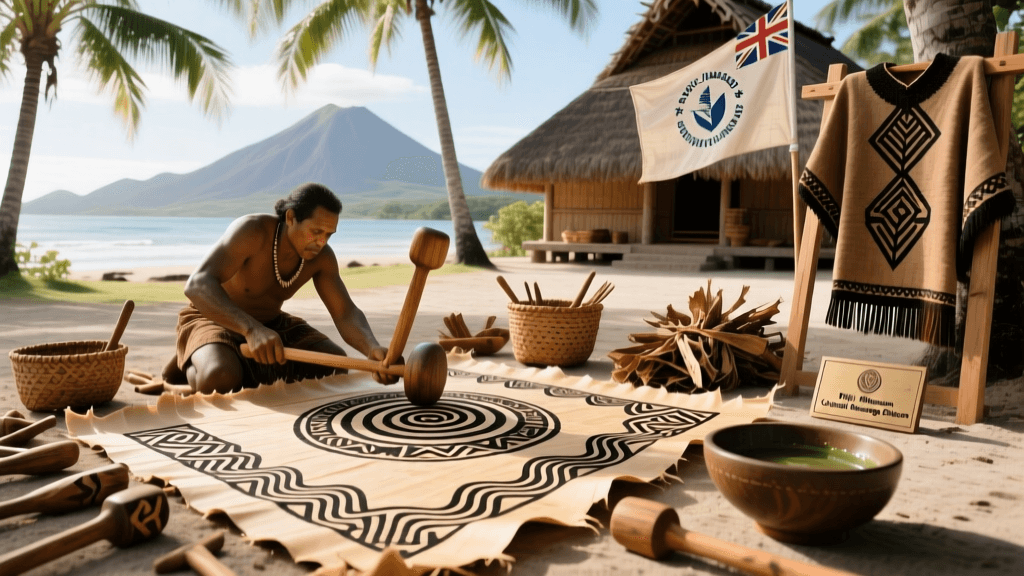
While korowai are uniquely Māori, comparisons illuminate shared Pacific values around textile sovereignty. In Hawai‘i, kapa makers at Kamehameha Schools’ Cultural Centre grind wauke (Broussonetia papyrifera) bark into pulp using basalt beaters weighing 2.3–3.1 kg—tools replicated from archaeological finds at Pu‘uhonua o Hōnaunau National Historical Park. Torres Strait Islander ceremonial skirts, by contrast, use woven coconut fibre and cassowary quills, with patterns encoding sea-current knowledge validated by elders from Badu Island. A comparative study published by the Pacific Islands Museums Association (2021) notes that all five major Oceanic textile traditions—Māori kākahu, Hawaiian kapa, Samoan ‘ie toga, Fijian masi, and Torres Strait Islander dress—rely on plant-based binders derived from local starches, gums, or resins, none of which contain synthetic polymers.
“Every knot in a korowai is a memory. Every feather, a promise kept across time. To weave is not to make cloth—it is to hold breath with ancestors.” — Dr. Rangi Mātāmua, Director of Mātauranga Māori Research, University of Canterbury (2020)
| Institution | Location | Key Contribution | Year Established |
|---|---|---|---|
| Te Papa Tongarewa | Wellington, Aotearoa | Digital archival mapping of 1,200+ kākahu | 1992 |
| Tūrangawaewae Marae | Ngāruawāhia, Waikato | Ritual blessing site for korowai since 1930s | 1921 |
| Otago Museum | Dunedin, Aotearoa | Collaborative dye chemistry research with Te Roopu Raranga Whatu | 1868 |
The physical labour of korowai creation remains inseparable from spiritual discipline. Weavers fast before beginning a new cloak, abstain from salt and dairy for seven days prior to feather attachment, and recite specific karakia at sunrise and sunset. These practices are not symbolic gestures but functional components—fasting reduces hand tremor, enabling precise knotting; salt restriction minimises sweat-induced fibre degradation. At the annual Te Matatini kapa haka festival, judges evaluate korowai not only for craftsmanship but for adherence to these protocols, verifying oral testimony from kaumātua (elders) who witnessed the making process.
Modern innovations coexist with tradition: carbon-fibre looms replicate ancient tension systems, while spectral analysis confirms that contemporary muka dyed with traditional rātā (Metrosideros robusta) extract matches pigment wavelengths recorded in 19th-century specimens held at Auckland War Memorial Museum. Such precision underscores that preservation is not static replication but dynamic continuity—where every measurement, every regulation, every ritual serves as both anchor and compass.
Even the smallest detail carries weight: the spacing between tātai rows is precisely 4.2 cm—a distance determined by the average span of a woman’s palm, reflecting the historical role of wahine toa (strong women) as primary weavers. This measurement appears consistently across korowai held at Te Papa, the British Museum (acquired 1843), and the Musée du quai Branly–Jacques Chirac (donated 1907), confirming its cross-generational fidelity.
When a korowai is laid flat, its central panel—the *tāhūhū*—must align perfectly with true north, a requirement rooted in celestial navigation knowledge embedded in weaving cosmology. This orientation ensures that the wearer stands in correct relationship to Te Waka o Tāne (the Milky Way), reinforcing connections between land, sky, and lineage.
At the heart of this practice lies reciprocity: harakeke is replanted after harvest; feathers are returned to the forest floor after ceremonial use; tools are blessed before and after each session. These acts affirm that korowai are not objects owned, but relationships tended—woven, worn, and honoured across generations.