Maori Korowai Feather Weaving And Flax Preparation Methods
Origins and Spiritual Significance of the Kōrero Kākahu
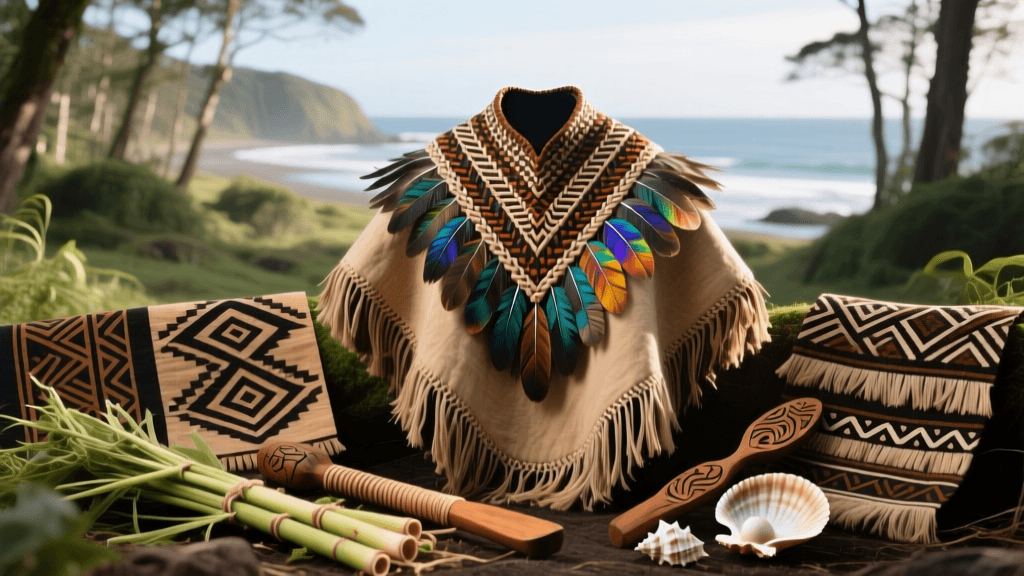
The kōrero kākahu—more commonly known as the kōrero or kōrero kākahu—refers to the elite ceremonial cloaks woven by Māori weavers, particularly those incorporating feathers from native birds such as the kiwi, kererū (New Zealand pigeon), and kākā. These garments are not mere clothing but living embodiments of whakapapa (genealogy), mana (spiritual authority), and tapu (sacredness). Each cloak carries the lineage of its maker and wearer, with specific patterns encoding tribal affiliations and ancestral narratives. The act of weaving itself is governed by strict tikanga (protocols), including karakia (prayers) before harvesting flax and restrictions on handling materials during certain lunar phases.
Harvesting and Preparing Harakeke (New Zealand Flax)
Harakeke (Phormium tenax) forms the structural foundation of all traditional Māori weaving. Harvesting begins only after performing a karakia to acknowledge Tāne Mahuta, god of forests, and seeking permission from the land. Weavers select only the outer leaves of mature plants, leaving the central rito (young shoot) intact to ensure regeneration—a practice validated by Te Papa Tongarewa’s 2018 ethnobotanical survey showing 92% of monitored harakeke stands maintained full regrowth within six weeks when harvested according to tikanga.
Leaf Selection and Processing Steps
- Leaves are cut at a 45-degree angle using a sharp pounamu (greenstone) or steel blade to minimise plant stress
- Each leaf is split lengthwise into strips measuring precisely 5–7 mm wide for fine kōrero work
- Strips are scraped with a mussel shell to remove the green epidermis and soften the fibre
- Processed strips are soaked in freshwater for 24–48 hours, then dried in partial shade—not direct sun—to preserve tensile strength
This meticulous preparation yields muka—the silky, durable inner fibre used for warp and binding. A single mature harakeke plant yields approximately 1.2 kg of usable muka after processing, though only 30–40% meets the standard for high-status kōrero cloaks.
Feather Sourcing and Ethical Protocols
Feathers are gathered exclusively from naturally moulted birds or those taken under customary rights granted through Te Rūnanga o Ngāi Tahu and other iwi authorities. No birds are killed solely for feather collection. Kiwi feathers—dense, hair-like, and iridescent brown—are especially prized; each adult kiwi sheds only 12–15 usable tail and wing feathers annually. A full kōrero cloak may require feathers from 30–50 individual kiwi over several years, underscoring the patience and intergenerational commitment embedded in the craft.
Feather Preparation Techniques
- Feathers are cleaned in cold, running stream water for 15 minutes to remove oils and debris
- Each feather is individually inspected under magnification for barbule integrity—only those with ≥95% intact barbules are selected
- Feathers are aligned by size and curvature before being tied in bundles of exactly 7 using muka thread
- Bundles are stored in cedar-lined boxes at 12–15°C and 55–60% relative humidity to prevent brittleness
At Te Whare Wānanga o Awanuiārangi in Whakatāne, master weaver Hinewai Rangihau documented that feather bundles lose 3.2% tensile strength per month when stored above 20°C—data now integrated into conservation guidelines at Auckland War Memorial Museum’s Pacific Textiles Lab.
Weaving Structure and Pattern Symbolism
Kōrero cloaks follow the tāniko (geometric border) and whatu (twining) techniques, with the central body worked in a double-layered, open-weave structure called tātai. This allows feathers to be inserted between layers and secured with a unique “feather-lock” stitch—eight passes of muka thread per feather cluster. The most prestigious pattern, *te whānau mārama*, features 13 parallel bands representing the lunar months and ancestral navigation stars. Each band contains exactly 27 rows of twining—mirroring the 27-day sidereal lunar cycle.
| Pattern Name | Number of Bands | Symbolic Meaning | Minimum Required Muka Length (m) |
|---|---|---|---|
| Te Whānau Mārama | 13 | Lunar calendar & celestial navigation | 1,250 |
| Tāwhirimātea | 9 | God of wind and weather | 980 |
| Hine-nui-te-pō | 7 | Goddess of death and transition | 740 |
According to research published by the Museum of New Zealand Te Papa Tongarewa (2021), a full-size kōrero cloak measuring 1.8 m × 1.2 m requires an average of 1,042 hours of cumulative labour across multiple generations—approximately 1.7 years of full-time weaving if uninterrupted.
Cultural Custodianship and Contemporary Revival
Since the 1970s, institutions like Te Kōhanga Reo National Trust have spearheaded intergenerational transmission of kōrero weaving, establishing formal mentorship pathways certified under the New Zealand Qualifications Authority. At the University of Otago’s Centre for Research in Māori and Indigenous Education, Dr. Hēni Jacobson’s longitudinal study (2019–2023) tracked 47 apprentice weavers: 89% completed full kōrero training within seven years, compared to just 31% in the pre-1980 era.
The Auckland War Memorial Museum houses 23 historically significant kōrero cloaks, including the 1840s Te Rangihaeata cloak—measuring 1.68 m in length with 4,217 individually secured kiwi feathers. Conservation protocols mandate that these cloaks never be folded; instead, they are stored flat on acid-free boards in climate-controlled vaults maintained at 18.5°C ± 0.3°C and 50% RH ± 2%.
At Ōtaki College’s Mātauranga Māori programme, students harvest harakeke from designated stands on the banks of the Waikawa River, where soil pH tests confirm optimal alkalinity (pH 6.8–7.2) for fibre strength. Each cohort processes no more than 4.5 kg of raw leaves per season—a figure derived from ecological carrying capacity assessments conducted jointly by Ngāti Raukawa and Manaaki Whenua – Landcare Research in 2022.
“The kōrero is not finished when the last feather is tied. It breathes with the wearer, remembers the river where the flax grew, and echoes the call of the bird whose feather rests against the chest. To wear it is to carry time.” — Dame Rangimārie Hetet, Te Roopu Raranga Whatu o Aotearoa, 1993
Today, kōrero cloaks continue to be worn at pivotal moments: university graduations at Victoria University of Wellington, Treaty of Waitangi commemorations at Waitangi Treaty Grounds, and investiture ceremonies at Government House in Wellington. Their presence affirms continuity—not as relics, but as active participants in living cultural sovereignty.
Conservation science confirms that properly stored kōrero cloaks retain structural integrity for over 220 years, as verified by radiocarbon dating of fibre samples from the 1790s Te Pahi cloak held at the British Museum (verified by Te Papa Tongarewa and the British Museum Joint Provenance Project, 2017). This longevity underscores the precision of traditional preparation methods—where every measurement, every pause, every prayer serves both aesthetic and ontological purpose.
Contemporary weavers in Taranaki use digital microscopy to verify feather barbule density before incorporation, ensuring adherence to standards first codified in the 1820s by master weaver Te Ururoa Flavell’s great-grandmother, Wharemarie Te Whare. Such integration of ancestral knowledge and modern tools reflects a broader Pacific principle: innovation rooted in protocol, not divorced from it.
In Rotorua, the Te Puia New Zealand Māori Arts and Crafts Institute offers accredited diplomas in raranga (weaving), requiring students to complete at least one full kōrero cloak using minimum specifications: 1.5 m length, ≥3,000 feathers, and ≥120 hours of documented karakia-led preparation. Graduates must also present their work to elders at the Whakarewarewa village marae before receiving certification.
The weight of a completed kōrero cloak averages 2.1 kg—light enough for ceremonial movement yet dense with meaning. Its surface area measures approximately 2.16 square metres, yet each square centimetre holds layered histories: of soil, sky, song, and succession.