Hanfu Storage Rotation & Seasonal Care Guide 2026: Silk & Linen
Introduction to Hanfu Preservation in 2026
As the global appreciation for traditional Chinese clothing continues to evolve in 2026, the modern Hanfu wardrobe has become a sophisticated blend of historical accuracy and contemporary wearability. However, owning a diverse collection of Mamianqun (horse-face skirts), Ruqun (blouse and skirt ensembles), and Yuanlingpao (round-collar robes) brings a unique set of preservation challenges. Unlike modern fast fashion, traditional Hanfu relies heavily on natural protein and cellulose fibers—such as mulberry silk, ramie, and linen—as well as intricate weaving techniques like Zhuanghua (brocade) and mud-dyed Xiangyunsha.
Proper seasonal rotation and climate-controlled storage are no longer just museum practices; they are essential routines for any dedicated Hanfu enthusiast. According to the American Institute for Conservation (AIC), natural fibers are highly susceptible to environmental fluctuations, light exposure, and biological pests. This comprehensive 2026 guide will walk you through the exact protocols for cleaning, rotating, and storing your Hanfu garments to ensure they remain pristine for generations.
The 2026 Seasonal Rotation Calendar
Rotating your Hanfu wardrobe is not merely about swapping heavy fabrics for light ones; it is about giving your textiles a 'rest period' to recover their structural integrity. Continuous hanging can cause irreversible stretching in heavy silk brocades, while improper folding can permanently crush delicate gauze pleats.
| Season | Primary Fabrics | Garment Focus | Recommended Storage Method |
|---|---|---|---|
| Spring | Linen, Cotton, Light Silk | Ruqun, Beizi (open-front coats) | Hanging on wide, padded hangers |
| Summer | Gauze (Sha), Ramie, Luo | Tank tops, Light Skirts, Doushan (fans) | Flat archival boxes with tissue interleaving |
| Autumn | Medium Silk, Jacquard, Brocade | Ming Dynasty Aoqun, Pifeng | Rolled with acid-free tissue on archival tubes |
| Winter | Zhuanghua, Wool, Velvet, Faux Fur | Mamianqun, Yuanlingpao, Cloaks | Climate-controlled closet, breathable cotton bags |
Pre-Storage Cleaning Protocols
Never store a worn Hanfu garment, even if it appears clean. Invisible residues from perspiration, skincare products, and environmental pollutants will oxidize over time, leading to stubborn yellow stains and fiber degradation. In 2026, the market offers advanced, pH-neutral enzyme cleaners specifically formulated for heritage textiles, but the application method remains critical.
Handwashing vs. Professional Conservation Cleaning
- Cellulose Fibers (Linen, Ramie, Cotton): These can generally be hand-washed in cool water (below 30°C) using a mild, pH-neutral detergent. Avoid wringing; instead, press the water out by rolling the garment in a clean, dry microfiber towel.
- Protein Fibers (Mulberry Silk, Xiangyunsha): Standard silks should be hand-washed with specialized silk washes. However, Xiangyunsha (gambiered silk) requires extreme care. The iron-rich mud dye reacts poorly to alkaline substances. Use only distilled water and specialized Xiangyunsha cleansers, and never soak for more than three minutes.
- Brocades and Metallic Threads: Garments featuring Zhuanghua weaving or gold/silver metallic threads should never be submerged in water. The metallic strips can tarnish, and the complex weave can warp. The Victoria and Albert Museum (V&A) strongly recommends seeking professional textile conservation services for heavily embroidered or metallic-woven historical garments.
Advanced Storage Solutions: Archival vs. Standard
The materials you use to store your Hanfu dictate its lifespan. Standard plastic bins and wire hangers are the enemies of traditional textiles. Plastic traps moisture and off-gases volatile organic compounds (VOCs) that yellow silk, while wire hangers create stress points that tear heavy skirts.
The Archival Material Checklist
- Unbuffered Acid-Free Tissue Paper: Essential for protein fibers like silk. Buffered tissue (which contains an alkaline reserve) is safe for cellulose fibers like linen but can damage silk over time.
- Archival Coroplast Boxes: Fluted polypropylene boxes are the 2026 gold standard. They are lightweight, water-resistant, and chemically inert. Look for boxes measuring at least 60x40x15 cm to minimize folding.
- Unbleached Muslin Garment Bags: For garments that must remain in the closet, use 100% unbleached cotton muslin bags. They allow the fabric to breathe while protecting against dust and light.
- Padded Hangers: Carve or purchase wide wooden hangers and wrap them in layers of unbuffered tissue and unbleached cotton to support the weight of heavy Mamianqun without creating shoulder dimples.
Mastering the Mamianqun Pleat Preservation Technique
The Mamianqun is iconic, but its sharp, knife-edge pleats are notoriously difficult to maintain during off-season storage. Hanging a heavy brocade Mamianqun for six months will cause the pleats to stretch and fall out at the hem. Folding it tightly in a drawer will crush the pleats beyond repair.
The Rolling Method
Textile conservators universally recommend rolling over folding for pleated and heavily embroidered garments. The Canadian Conservation Institute outlines that rolling distributes tension evenly across the textile.
- Lay the Mamianqun flat on a clean, padded surface, ensuring the pleats are perfectly aligned and lying flat.
- Place a sheet of unbuffered acid-free tissue paper over the skirt.
- Using an archival-grade honeycomb cardboard tube (wrapped in washed muslin to prevent acid transfer), begin rolling the skirt from the hem upward toward the waistband.
- Roll gently but firmly to prevent shifting, which can cause creasing.
- Once rolled, wrap the exterior in a muslin cloth and secure it with unbleached cotton twill tape. Never use rubber bands or synthetic ties.
- Store the tube horizontally on a shelf, ensuring the weight of the skirt is supported along the entire length of the tube.
Climate Control and Smart Monitoring in 2026
Temperature and relative humidity (RH) are the invisible variables that can destroy a Hanfu collection. High humidity invites mold and silverfish, while low humidity makes silk brittle and prone to shattering.
Optimal Environmental Parameters
- Temperature: Maintain a stable environment between 18°C and 21°C (65°F - 70°F).
- Relative Humidity: Keep RH between 45% and 55%. Fluctuations are more damaging than a slightly suboptimal steady state, as fibers expand and contract, causing structural fatigue.
Integrating Smart Home Technology
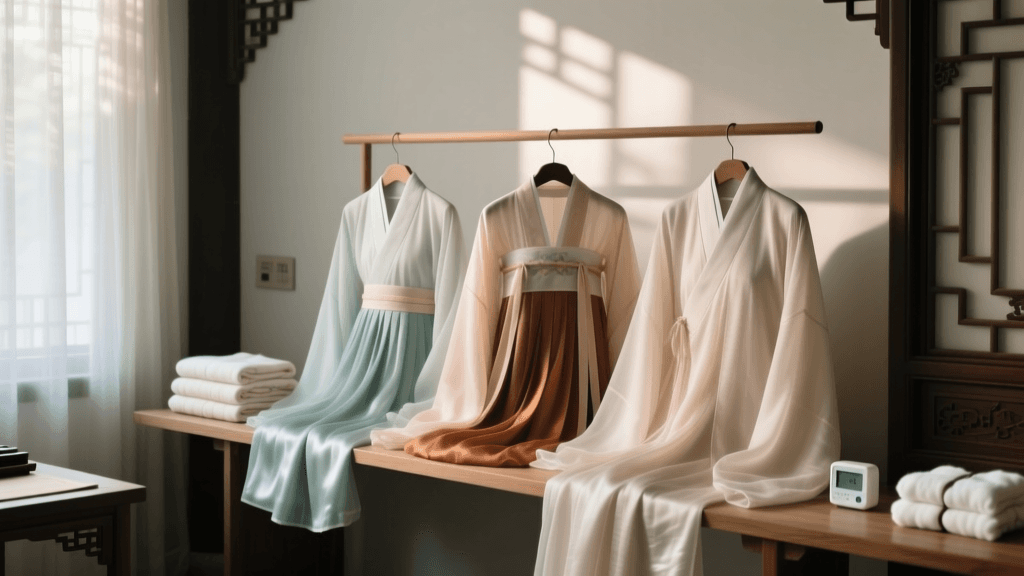
In 2026, maintaining these parameters is easier than ever thanks to advanced IoT (Internet of Things) sensors. Devices like the Temp Stick 3 or SensorPush can be placed directly inside your archival boxes or storage closets. These sensors connect to your smartphone, sending instant alerts if the humidity spikes above 60% or drops below 40%. For dedicated collectors, integrating these sensors with smart dehumidifiers and humidifiers ensures your Hanfu storage environment remains perfectly calibrated year-round, regardless of the weather outside.
Pest Prevention: Natural and Safe Repellents
Silverfish, carpet beetles, and clothes moths are drawn to the starches and proteins in natural fibers. While traditional mothballs (naphthalene or paradichlorobenzene) are effective against pests, they are highly toxic to humans and can chemically alter the dyes in your Hanfu, causing irreversible discoloration.
Instead, rely on modern, safe pest management strategies:
- Cedarwood Blocks and Rings: Sand them lightly every few months to release the natural oils that repel insects.
- Lavender and Neem Sachets: Place them in the corners of your storage closet. Ensure the herbs are enclosed in breathable cotton bags so they never directly touch the silk, which could cause oil stains.
- Routine Inspections: Every three months, unroll a few garments and inspect the seams and waistbands—the favorite hiding spots for moth larvae.
Conclusion
Preserving a Hanfu wardrobe in 2026 requires a blend of historical reverence and modern conservation science. By adhering to a strict seasonal rotation calendar, utilizing archival-grade storage materials, and leveraging smart climate monitoring, you protect not just the fabric, but the cultural heritage woven into every thread. Whether you are storing a delicate summer Luo gauze robe or a heavy winter Zhuanghua brocade skirt, treating your garments with the care of a museum conservator will ensure they remain vibrant, structurally sound, and ready to be worn for years to come.