Mamianqun Skirts & Mandarin Jackets: 2026 Style Guide
The Neo-Asian Wardrobe: Blending Heritage with 2026 Aesthetics
The landscape of global fashion in 2026 has fully embraced the Neo-Asian aesthetic, moving far beyond mere costume appreciation into the realm of everyday, functional wardrobe integration. Today, mixing traditional Asian pieces with modern wardrobes is less about juxtaposition and more about seamless harmony. Two garments, in particular, have dominated the transitional styling space this year: the Mamianqun (horse-face skirt) and the modern Mandarin collar jacket. Once reserved for ceremonial occasions, historical reenactments, or Lunar New Year festivities, these pieces have been re-engineered for the contemporary pace of life. Whether you are navigating a corporate environment or exploring urban streetwear culture, understanding how to proportion, layer, and source these garments is essential for the modern wardrobe curator.
Historical Roots and Modern Revival
To style these garments with respect and intention, one must understand their origins. The Mamianqun, characterized by its flat front and back panels flanked by intricate side pleats, originated during the Song and Ming dynasties. Its structural brilliance lies in its wrap-around design, which allows for ease of movement while maintaining a striking, architectural silhouette. According to the Victoria and Albert Museum's Asian collections, historical Chinese garments frequently utilized complex pleating and weaving techniques to denote status and provide functional mobility for women across different social strata. The preservation of these textile structures provides the blueprint for today's designers.
Similarly, the Mandarin collar (often associated with the Tangzhuang or the Zhongshan suit) has deep historical roots in Qing dynasty menswear and early 20th-century political dress. The structural integrity of these garments, particularly the use of silk and structured brocades, is well-documented by institutions like The Metropolitan Museum of Art, which highlights the historical significance of silk weaving and textile structures in East Asian sartorial history. In 2026, however, the heavy, ornate brocades of the past have been largely replaced by breathable, sustainable, and tech-infused fabrics, making these heritage pieces viable for year-round wear.
Styling the Mamianqun (Horse-Face Skirt) in 2026
Office Wear: The Structured Midi
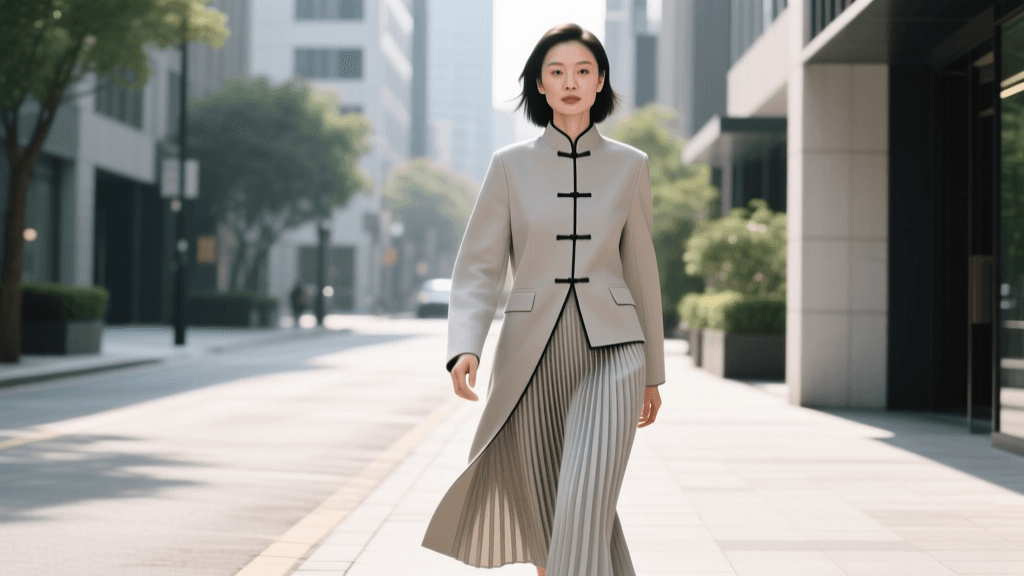
The modern office dress code in 2026 heavily favors "structured comfort," making the midi-length Mamianqun an ideal cornerstone for professional attire. For the workplace, opt for a skirt with a 75cm drop-length crafted from matte, heavy-weight Tencel blends or worsted wool. The 2026 iteration of the office-appropriate Mamianqun features subdued, tonal weaving patterns rather than high-contrast gold or silver embroidery. Pair a charcoal or navy wool-blend Mamianqun with a crisp, oversized white poplin button-down shirt, leaving the top two buttons undone to soften the formality. Cinch the waist with a minimalist leather belt over the skirt's flat front panel to create a defined silhouette, and finish the look with pointed-toe ankle boots. The flat front panel mimics the clean lines of a traditional pencil skirt, while the side pleats offer dynamic movement during commutes and presentations.
Streetwear: Tech-Fabrics and Maxi Lengths
Streetwear in 2026 has seen a massive surge in "tech-heritage" styling. For urban environments, the maxi-length Mamianqun (measuring 90cm to 100cm) constructed from ripstop nylon, water-resistant polyester, or upcycled parachute materials is the garment of choice. These modern fabrics allow the pleats to hold their razor-sharp edges even in high winds or rainy weather. Style a black or olive-drab tech-nylon Mamianqun with a cropped, distressed leather moto jacket and a fitted ribbed turtleneck. Footwear should lean into the utilitarian trend: chunky, lug-sole combat boots or high-top technical sneakers. The contrast between the ancient pleating structure and hyper-modern, synthetic streetwear fabrics creates a visually arresting silhouette that defines the 2026 Neo-Asian street style.
The Mandarin Collar Jacket: Beyond the Brocade
Smart Casual Layering
The Mandarin collar jacket has shed its reputation as a stiff, festive-only garment. In 2026, the most sought-after variations are the "unstructured shirt-jack" and the "matte wool chore coat," both featuring the signature stand collar. For a smart-casual office or dinner setting, choose a jacket in a breathable cotton-linen blend with a collar height of exactly 2.5cm to 3cm. This lower collar height prevents the garment from feeling restrictive and avoids digging into the jawline. Instead of traditional, highly visible pankou (frog knot buttons), 2026 designs favor hidden magnetic plackets or matte horn buttons, offering a sleek, minimalist profile. Wear this jacket over a fine-gauge merino wool turtleneck and tailored wide-leg trousers. The jacket acts as a sophisticated alternative to the standard blazer, providing cultural resonance without sacrificing modern minimalism.
Streetwear Edge
For streetwear applications, the Mandarin collar jacket is being reimagined as an oversized, drop-shoulder outerwear piece. Designers are utilizing heavy denim, corduroy, and even technical fleece. The key to pulling off an oversized Mandarin collar jacket in 2026 is proportion balancing. If the jacket features a dramatic drop-shoulder and a boxy, cropped hem, pair it with high-waisted, straight-leg denim or cargo trousers. Layer a simple, heavyweight graphic tee underneath, allowing the collar to frame the neckline. The absence of lapels on a Mandarin collar jacket naturally draws the eye upward, making it an excellent canvas for layered necklaces or bold, structural eyewear.
Comparison: Traditional vs. 2026 Modern Adaptations
| Feature | Traditional Garment (Historical) | 2026 Modern Adaptation |
|---|---|---|
| Mamianqun Fabric | Heavy silk brocade, satin, damask | Matte Tencel, worsted wool, tech-nylon |
| Mamianqun Closure | Fabric ties, simple hooks | Hidden side zippers, magnetic snaps |
| Mandarin Collar Height | Often 5cm+, stiffened with interfacing | 2.5cm - 4cm, soft or unstructured |
| Jacket Fasteners | Ornate Pankou (frog knots) | Hidden plackets, magnetic closures, matte buttons |
| Primary Use Case | Ceremonial, festive, formal events | Daily office wear, streetwear, smart-casual |
Proportions, Measurements, and Fit Guide
Integrating these pieces requires an understanding of modern proportions. Traditional garments were often designed to obscure the body's natural shape, favoring a flowing, continuous line. Modern styling relies on intentional contrast.
- The Waistline Rule: When wearing a Mamianqun, always define the waist. Because the skirt is voluminous at the sides due to the pleats, failing to tuck in your top or add a belt will result in a shapeless silhouette. Ensure the flat front panel sits directly over your navel.
- Jacket Hemlines: For 2026, the ideal hemline for a Mandarin collar shirt-jack is right at the mid-fly of your trousers. This creates a balanced torso-to-leg ratio. Cropped jackets should hit exactly at the natural waistband of high-rise bottoms.
- Collar Clearance: When purchasing a Mandarin collar jacket, ensure there is enough room to fit two fingers comfortably between the collar and your neck. In 2026, the trend is "relaxed heritage," meaning stiff, choking collars are entirely out of favor.
- Pleat Maintenance: Modern tech-fabric Mamianqun skirts feature heat-set pleats. Ensure the hem falls at least 3cm above the ground when wearing your intended footwear to prevent the pleats from fraying against pavement.
Fabric Care for Mixed-Textile Garments
The shift toward sustainable and technical fabrics in 2026 has changed how we care for traditional Asian garments. While historical silks required meticulous dry-cleaning and climate-controlled storage, modern adaptations are far more forgiving, provided you follow specific care protocols.
For Tencel and cotton-linen blend Mandarin jackets, machine washing on a delicate cycle with cold water is generally acceptable, but they must be laid flat to dry to prevent the collar interfacing from warping. Never tumble dry these pieces, as the heat will degrade the structural integrity of the stand collar. For tech-nylon Mamianqun skirts, spot cleaning with a damp microfiber cloth is usually sufficient for urban grime. If a full wash is required, use a garment bag, wash on cold, and hang dry; the synthetic fibers will naturally shed wrinkles, and the heat-set pleats will remain perfectly intact without the need for ironing. Conversely, if you invest in a worsted wool Mamianqun for the office, dry cleaning once a season is recommended, supplemented by regular steaming to refresh the wool fibers and eliminate odors without stripping the natural lanolin.
Final Thoughts on Neo-Asian Styling
The integration of the Mamianqun and the Mandarin collar jacket into the 2026 wardrobe represents a maturation of global fashion. It is no longer about treating traditional Asian garments as novelties or temporary trends, but rather recognizing them as masterclasses in textile engineering and silhouette design. By respecting the historical architecture of the pleats and the collar, while embracing modern fabrics and contemporary proportions, you can build a wardrobe that is deeply rooted in heritage yet entirely relevant to the modern world.