Chinese Natural Dye Plants: Eco-Friendly Dyeing Guide 2026
The Renaissance of Caomu Ran in 2026
As the global fashion industry faces intense scrutiny over its environmental footprint in 2026, traditional textile arts are offering a proven, sustainable path forward. Among the most celebrated of these is Caomu Ran (草木染), the ancient Chinese art of natural plant dyeing. Unlike synthetic dyes, which rely on petrochemicals and release toxic heavy metals into waterways, Chinese natural dye plants utilize renewable botanical resources, biodegradable mordants, and closed-loop water systems. According to the Ellen MacArthur Foundation, transitioning to regenerative and natural textile processes is one of the most critical steps the industry must take to achieve circularity by the end of the decade.
In 2026, modern eco-conscious designers and artisanal dyers are combining ancient wisdom with new green technologies. Solar-assisted extraction vats, bio-enzyme fabric scouring, and AI-driven color matching for natural pigments have made Caomu Ran more accessible, consistent, and scalable than ever before. This guide explores the most vital Chinese natural dye plants, their eco-friendly extraction methods, and how you can implement these sustainable techniques in your own studio or wardrobe.
Top Chinese Natural Dye Plants for Eco-Friendly Color
The botanical diversity of China provides a vast palette of colors. The following plants are the cornerstones of traditional Chinese dyeing, prized for their color fastness, cultural significance, and low environmental impact.
1. Persicaria tinctoria (Chinese Indigo / 蓝草 - Lán Cǎo)
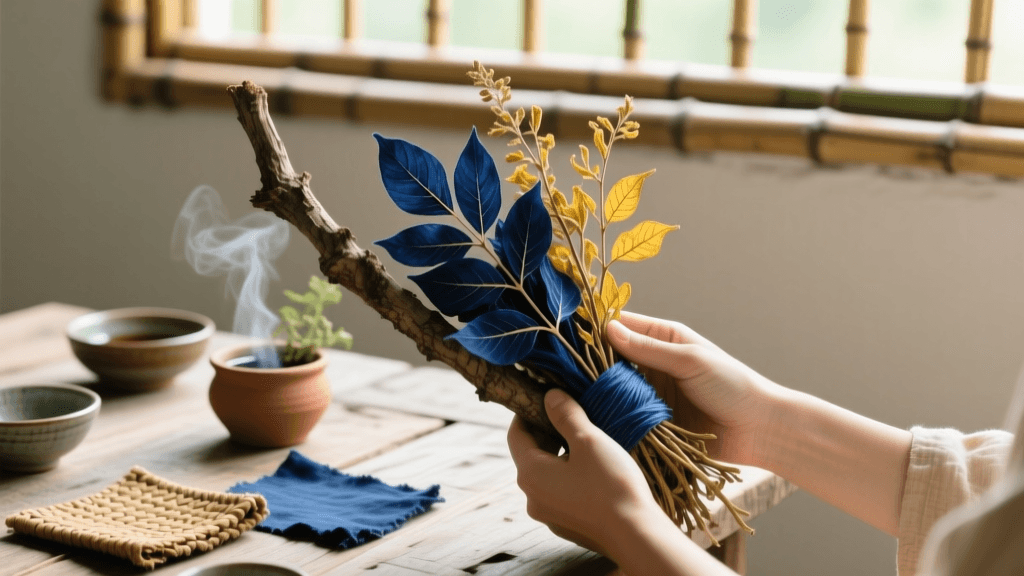
Chinese indigo, derived primarily from the leaves of Persicaria tinctoria (also known as Polygonum tinctorium), is the undisputed king of natural blue dyes. Unlike synthetic indigo, which requires sodium dithionite (a harsh, polluting reducing agent) to become water-soluble, traditional Chinese indigo vats in 2026 utilize natural fermentation. By feeding the vat with rice wine, wheat bran, and natural wood ash lye, dyers create a living, breathing microbiome that reduces the indigotin pigment without toxic chemicals. The resulting blue ranges from pale sky to deep, midnight navy, and it possesses natural antibacterial and UV-resistant properties, making it highly sought after for sustainable summer wear and travel wardrobes.
2. Sophora japonica (Pagoda Tree / 槐花 - Huái Huā)
The unopened flower buds of the Pagoda tree, known as Huai Mi, yield a brilliant, warm yellow. Rich in the flavonoid rutin, Sophora japonica is one of the most lightfast natural yellow dyes available. In traditional Chinese medicine and dyeing, it is revered for its dual purpose. In 2026, sustainable studios harvest these buds in late summer, drying them for year-round use. The extraction process is remarkably low-energy: the buds simply require a gentle simmer at 80°C for 45 minutes to release their vibrant pigments, making it an ideal dye for delicate peace silks and organic cottons that cannot withstand high heat.
3. Rubia cordifolia (Madder / 茜草 - Qiàn Cǎo)
Chinese madder root provides a spectrum of reds, oranges, and terracottas. The roots contain alizarin and purpurin, which bind beautifully to protein fibers like silk and wool, and to cellulose fibers when properly mordanted. Historically, madder was used to dye the ceremonial garments of the Han and Tang dynasties. Today, eco-friendly dyers source organically cultivated madder from cooperatives in Yunnan and Guizhou provinces. To maximize yield and minimize water usage, modern dyers use a multi-bath extraction method, reusing the same root material up to three times until the water runs clear, ensuring zero botanical waste.
4. Galla chinensis (Gallnut / 五倍子 - Wǔ Bèi Zǐ)
Gallnuts are not a plant itself, but rather the tannin-rich galls formed on the leaves of the Chinese sumac tree (Rhus chinensis) in response to aphid activity. They are incredibly high in tannic acid and serve a dual purpose in natural dyeing: as a substantive dye that yields soft greys and tans, and as a powerful natural mordant. When combined with an iron modifier (such as rust water made from upcycled scrap metal), gallnut produces deep, colorfast blacks and charcoal greys. This completely eliminates the need for toxic synthetic black dyes, which are notoriously difficult to treat in wastewater facilities.
Comparison Chart: Yield, Mordants, and Lightfastness
Understanding the technical properties of these plants is essential for achieving professional, long-lasting results. Below is a comparative analysis of the four primary Chinese dye plants based on 2026 studio standards.
| Botanical Source | Primary Color | Recommended Eco-Mordant | Lightfastness (1-8) | Optimal Extraction Temp |
|---|---|---|---|---|
| Persicaria tinctoria (Indigo) | Blue / Navy | None (Vat Dye) | 7 - 8 | 25°C - 30°C (Fermentation) |
| Sophora japonica (Pagoda) | Warm Yellow | Alum or Soy Milk | 6 - 7 | 80°C (Simmer) |
| Rubia cordifolia (Madder) | Red / Terracotta | Alum + Cream of Tartar | 6 - 7 | 70°C - 85°C (Avoid boiling) |
| Galla chinensis (Gallnut) | Grey / Black | Iron (Rust Water) | 7 - 8 | 90°C (Boil) |
Eco-Friendly Mordanting: Moving Beyond Heavy Metals
Historically, some natural dyeing traditions relied on heavy metals like chrome and tin to fix colors. In 2026, these are universally recognized as environmental hazards and are strictly avoided in sustainable practices. Modern Caomu Ran relies on three eco-friendly mordanting strategies:
- Alum (Potassium Aluminum Sulfate): The safest and most common metallic mordant. When used in controlled, low concentrations (8% to 15% Weight of Fabric), it is non-toxic and can be safely disposed of in municipal water systems or garden soil.
- Soy Milk (Protein Binder): A traditional Chinese technique where fabric is soaked in diluted, unflavored soy milk. The plant proteins bind to cellulose fibers (like cotton and hemp), creating a receptive surface for natural dyes without any metals.
- Iron (Ferrous Sulfate / Rust Water): Sourced from upcycled iron scraps soaked in water and vinegar. Iron acts as a 'saddening' agent, darkening colors and shifting yellows to olives and tans to deep blacks. It must be used sparingly (under 2% WOF) to prevent fiber degradation.
Step-by-Step Eco-Friendly Dyeing Process (2026 Standards)
Whether you are dyeing a vintage silk scarf or a bolt of organic hemp, following a standardized, low-impact process ensures brilliant results while respecting the environment.
Step 1: Bio-Enzyme Scouring
Before dyeing, all natural fibers must be scoured to remove waxes, oils, and sizing. Instead of using harsh sodium carbonate or synthetic detergents, 2026 best practices utilize bio-enzyme scouring agents derived from fermented plant matter. Soak your fabric in a warm bath (50°C) with a bio-enzyme solution for 2 hours. This gently opens the fiber cuticles without damaging the structural integrity of the cloth or polluting the effluent.
Step 2: Eco-Mordanting
For cellulose fibers, begin with a tannin bath (using gallnut or pomegranate rind extract) for 12 hours, followed by an alum bath. For protein fibers like silk, a single bath of alum and soy milk is sufficient. Maintain the mordant bath at 60°C for one hour, then let the fabric cool in the bath to maximize absorption. This slow-cooling method reduces the need for continuous energy input.
Step 3: Solar-Assisted Extraction
To extract the dye, place your plant material in a stainless steel pot. In 2026, many eco-studios utilize solar-thermal water heaters to bring the extraction bath to the target temperature, drastically reducing reliance on the electrical grid. Simmer the plant material for 60 minutes, strain the liquid, and repeat the process to create a strong, concentrated dye liquor.
Step 4: Dyeing and Oxidation
Submerge your pre-mordanted, wet fabric into the warm dye bath. Gently agitate for the first 15 minutes to ensure even penetration, then leave it to steep for 4 to 12 hours depending on the desired depth of color. For vat dyes like indigo, the process is different: dip the fabric for 3 minutes, remove it, and allow it to oxidize in the air. The color will magically shift from yellow-green to deep blue as it reacts with oxygen. Repeat this dip-and-oxidize cycle 5 to 10 times to build a rich, colorfast shade.
Step 5: pH-Neutral Washing and Composting
Rinse the dyed fabric in cool water until it runs clear. Use a pH-neutral, biodegradable botanical soap for the final wash. The leftover plant matter from the extraction process should be composted, returning vital nutrients to the soil, while the spent dye water can be neutralized and used to irrigate non-edible garden plants.
Sourcing Sustainable Materials and Ethical Supply Chains
The sustainability of natural dyeing extends beyond the dye pot; it encompasses the entire supply chain. When sourcing fabrics in 2026, look for GOTS-certified organic cotton, regenerative hemp, and Ahimsa (peace) silk, which allows the silkworm to emerge from the cocoon naturally. For the dye plants themselves, support agricultural cooperatives in regions like Guizhou and Yunnan, where indigenous communities practice agroforestry and wild-harvesting techniques that preserve local biodiversity.
Organizations like the UNESCO Intangible Cultural Heritage program have been instrumental in protecting and promoting these traditional craftsmanship skills, ensuring that the indigenous knowledge required to cultivate and process these plants is passed down to future generations rather than lost to industrialization.
Environmental Impact and the Future of Sustainable Fashion
The shift toward natural dyes is not merely an aesthetic choice; it is an environmental imperative. The World Wildlife Fund (WWF) notes that the textile industry is one of the largest consumers of fresh water and a primary contributor to global water pollution. By adopting Caomu Ran, designers and hobbyists actively reduce the chemical oxygen demand (COD) and biological oxygen demand (BOD) in wastewater.
'True sustainability in fashion requires us to look backward to move forward. The ancient Chinese mastery of plant dyes offers a blueprint for a regenerative textile industry that works in harmony with nature, rather than depleting it.'
As we progress through 2026, the integration of traditional Chinese natural dyeing with modern eco-technology proves that luxury, durability, and environmental stewardship can coexist. Whether you are reviving a vintage garment or creating a new heirloom, the plants of the Chinese landscape offer a vibrant, non-toxic, and deeply meaningful palette for the future of fashion.