Mamianqun Construction: Pleating & Seaming Techniques 2026
The Engineering of Elegance: Mamianqun Construction in 2026
The Mamianqun, widely known in English as the "horse-face skirt," stands as one of the most structurally fascinating garments in Asian dress history. Originating in the Song Dynasty and reaching its zenith during the Ming Dynasty, this iconic Chinese skirt is defined by its flat, overlapping front and back panels (the "horse faces") flanked by deeply pleated sides. As the global Hanfu revival movement continues to accelerate in 2026, the Mamianqun has transcended historical reenactment to become a staple of modern, everyday fashion. However, the true beauty of this garment lies not just in its lavish silk brocades, but in its brilliant, zero-waste flat-pattern construction and kinetic pleating techniques.
For modern tailors, fashion students, and heritage enthusiasts, understanding the precise construction techniques of the Mamianqun is essential. The Metropolitan Museum of Art's Heilbrunn Timeline on the Ming Dynasty highlights how textile craftsmanship during this era reached unprecedented levels of sophistication, a legacy that modern 2026 makers strive to replicate and innovate upon. This comprehensive guide breaks down the anatomy, mathematical calculations, pleating methods, and structural seaming required to construct an authentic, high-quality Mamianqun today.
Anatomy of the Mamianqun
Before cutting into expensive silk brocade, a maker must understand the architectural components of the skirt. Unlike Western skirts that rely on darts and curved seams to fit the hips, the Mamianqun is entirely flat-patterned, wrapping around the body and securing via a structured waistband and ties.
- Qunmen (Skirt Doors): The flat, unpleated panels at the front and back. A traditional skirt has two overlapping doors, allowing for ease of movement while maintaining modesty. These panels are often heavily decorated with woven motifs or embroidery.
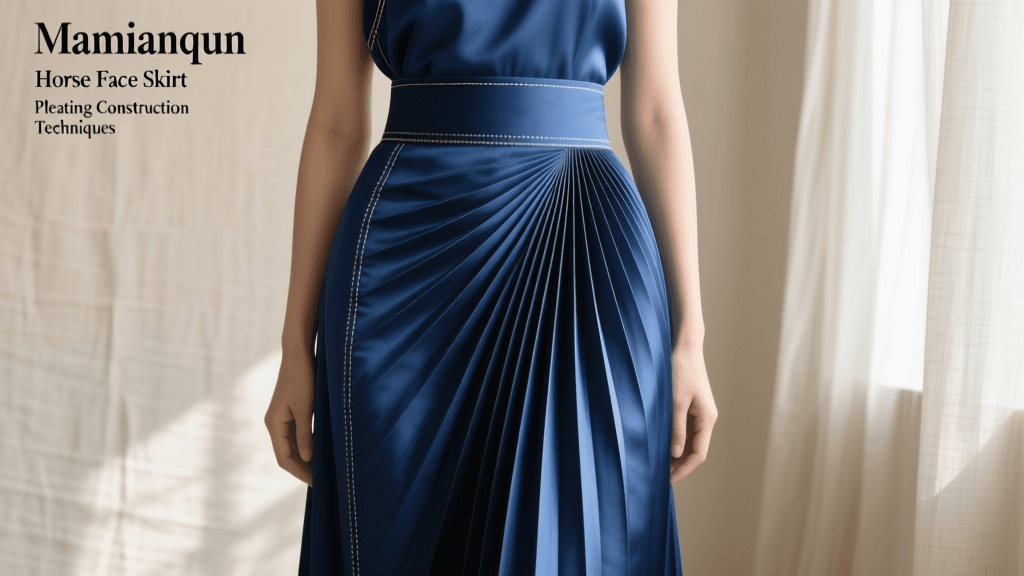
- Qunbai (Pleated Sides): The side sections featuring deep, structured knife pleats (da zhe). These pleats provide the garment's volume and create a stunning kinetic effect when the wearer walks.
- Yaotou (Waistband): A separate band, traditionally made of white cotton or linen, that anchors the heavy silk skirt to the body.
- Qunyao (Skirt Ties): Long, wide fabric ties attached to the waistband used to secure the skirt in place.
Fabric Selection and Yardage Calculations
In 2026, the market for Hanfu textiles has expanded dramatically. While traditionalists still seek out authentic Song Brocade or Yun Brocade—weaving techniques recognized for their cultural importance by UNESCO's Intangible Cultural Heritage lists—modern makers also utilize high-quality polyester-blend jacquards for daily wear. Regardless of the fiber content, the yardage requirements remain dictated by the skirt's unique overlapping geometry.
The standard rule of thumb for a Mamianqun is that the total waist circumference of the constructed skirt must be at least 1.5 to 2 times the wearer's actual waist measurement to allow for the overlapping front and back doors. Below is a standard fabric calculation chart for a 1.5-meter wide bolt of fabric, based on a standard wearer waist of 70 cm.
| Skirt Length | Qunmen Width (Each) | Qunbai Width (Each Side) | Total Fabric Required (1.5m Width) | Estimated 2026 Material Cost (Silk Blend) |
|---|---|---|---|---|
| 85 cm (Ankle) | 35 cm | 60 cm (Pre-pleat) | 3.2 meters | $120 - $180 USD |
| 95 cm (Floor) | 35 cm | 65 cm (Pre-pleat) | 3.6 meters | $140 - $210 USD |
| 105 cm (Tall/Trailing) | 38 cm | 70 cm (Pre-pleat) | 4.2 meters | $180 - $260 USD |
The Zero-Waste Cutting Layout
Traditional Asian garment construction is renowned for its respect for the textile. The Mamianqun is cut entirely in straight lines. In 2026, avant-garde Hanfu studios in Hangzhou utilize AI-driven nesting software to map out the cutting layout, ensuring that the intricate woven borders of the brocade align perfectly at the hemline of the qunmen while generating virtually zero fabric waste.
Mastering the Knife-Pleating Technique (Da Zhe)
The most technically demanding aspect of Mamianqun construction is the pleating of the qunbai. The traditional method utilizes uniform knife pleats, all facing in the same direction on each side panel, which meet at the center back and center front seams.
Step 1: Marking and Sizing the Pleats
A standard Mamianqun features between 5 to 7 pairs of pleats per side panel. For a side panel that is 60 cm wide, a tailor might calculate 6 pleats, each taking up 5 cm of fabric, with a 2 cm visible face. Precision is paramount; a deviation of just 2 millimeters per pleat will result in asymmetrical skirt doors that fail to overlap correctly.
Step 2: Folding and Basting
Using a specialized pleating board or a laser-guided cutting mat (a common tool in 2026 tailoring studios), the fabric is folded sequentially. Each fold is immediately secured with silk pins and hand-basted using a contrasting thread. This basting line must run exactly 1.5 cm below the top edge to ensure the pleats remain perfectly aligned when the waistband is attached.
Step 3: Setting the Pleats
Historically, pleats were set using heavy wooden blocks, damp cloths, and a natural vinegar-water solution to relax the silk fibers. Today, professional Hanfu makers use Teflon-coated industrial steam irons combined with specialized textile-setting sprays that are safe for delicate metallic brocade threads. According to preservation guidelines noted by the Victoria and Albert Museum's Asian Collections, the structural integrity of historical pleats relied heavily on the weight and memory of the silk; modern 2026 makers must artificially recreate this "memory" in lighter synthetic blends using controlled heat and rapid cooling techniques.
Waistband Attachment and Structural Seaming
The yaotou (waistband) is the structural anchor of the Mamianqun. It is almost always constructed from white cotton or linen, even if the rest of the skirt is made of vibrant, expensive silk. This is a deliberate construction choice: cotton provides friction against the wearer's undergarments, preventing the heavy skirt from slipping, while also absorbing sweat and protecting the delicate silk from body oils.
The Wrapping Sequence
The waistband is cut to the exact measurement of the wearer's waist plus a 15 cm overlap. The attachment process follows a strict sequence:
- Alignment: The basted top edge of the skirt panels is aligned with the bottom edge of the waistband.
- Seaming: A straight stitch is applied, followed by a secondary reinforcing stitch. Because the pleated sections contain multiple layers of thick brocade, a heavy-duty walking foot on the sewing machine is required to prevent fabric shifting.
- Binding (Bao): The raw edge is encased in a thin silk bias tape, hand-stitched to the inside of the waistband for a clean, comfortable finish against the skin.
Skirt Door Hemming and Side Seams
The overlapping qunmen require meticulous hemming. Traditional construction avoids machine top-stitching on the visible front panels. Instead, makers use a blind catch-stitch, folding the hem allowance twice (usually 2 cm to 3 cm) to add weight to the bottom of the skirt doors. This added weight is crucial; it acts as a plumb line, ensuring the flat doors hang perfectly straight and do not flap open awkwardly when the wearer moves.
2026 Innovations in Traditional Construction
While the geometry of the Mamianqun remains unchanged from the Ming Dynasty, the tools and finishing techniques have evolved significantly by 2026. Modern Hanfu brands are integrating cutting-edge technology to solve historical pain points, such as fraying brocades and pleat loss during washing.
- Ultrasonic Seam Sealing: To prevent the metallic threads in modern Song Brocade replicas from unraveling, high-end studios now use ultrasonic welding on the internal side seams. This melts the synthetic fibers slightly, creating a bonded edge that requires no bulky overlocking.
- Laser-Cut Hemming: For skirts made of poly-blend jacquards, laser cutting is used to seal the raw edges of the inner pleat folds, reducing the bulk that traditionally made the side panels stiff and unyielding.
- 3D Drape Simulation: Before cutting into $200-per-meter silk, 2026 patternmakers use software like CLO3D to simulate the kinetic swing of the qunbai. By adjusting the digital weight and bias of the fabric, they can calculate the exact pleat depth needed to achieve the perfect "bloom" when the wearer spins, ensuring the structural math translates flawlessly to the physical garment.
Conclusion
Constructing a Mamianqun is a masterclass in traditional Asian garment engineering. It requires a deep understanding of geometry, fabric behavior, and historical aesthetics. As the appreciation for Hanfu continues to grow globally in 2026, the meticulous techniques of knife-pleating, zero-waste cutting, and structural waistband seaming remain vital skills. Whether you are a heritage tailor preserving ancient methods or a modern designer integrating 2026 textile technologies, the horse-face skirt offers endless lessons in the perfect marriage of form, function, and cultural identity.