Mamianqun Styling Guide 2026: Mix Hanfu Skirts & Modern Tops
The Neo-Heritage Revolution: Mamianqun in 2026
The Mamianqun, historically known as the 'horse-face skirt,' has entirely transcended its Ming Dynasty origins to become a cornerstone of the 2026 global neo-heritage wardrobe. No longer confined to historical reenactments, cosplay, or ceremonial Hanfu gatherings, this architectural marvel of traditional Asian tailoring is now a verified staple in contemporary streetwear, corporate fashion, and evening wear. As we navigate the fashion landscape of 2026, the integration of traditional Asian garments into everyday modern wardrobes is not just a fleeting trend—it is a permanent shift toward culturally rich, sustainable, and deeply personal dressing.
According to Wikipedia's historical archive on the Mamianqun, the skirt's design was originally engineered for ease of movement, particularly for horseback riding, while maintaining a dignified, columnar silhouette when standing still. Today, that exact same structural brilliance provides a unique alternative to the standard Western pencil skirt or pleated midi, offering unparalleled versatility. In this comprehensive guide, we will explore how to seamlessly blend the Mamianqun with your modern 2026 tops, outerwear, and footwear, creating looks that honor Asian heritage while embracing contemporary aesthetics.
The Architectural Brilliance of the Mamianqun
Before mixing this piece with your modern wardrobe, it is crucial to understand its unique anatomy. Unlike a standard gathered or wrap skirt, the Mamianqun consists of two overlapping flat panels (the 'horse faces' or mamian) at the front and back, connected by heavily pleated side panels. This overlapping structure means that as you walk, the pleats expand and reveal glimpses of contrasting fabrics or intricate woven motifs, while the flat front and back panels maintain a sleek, streamlined appearance.
In 2026, modern textile mills have adapted these traditional weaves for everyday life. You will now find Mamianqun crafted from lightweight, breathable jacquards, stain-resistant nano-coated poly-blends, and even vegan leather accents on the waistbands. This evolution in fabric technology makes the skirt far more practical for daily commutes, unpredictable weather, and long office hours than the heavy, delicate silks of the past.
Three Core Outfit Formulas for 2026
Mixing a highly traditional, voluminous skirt with modern garments requires an understanding of silhouette balancing. Here are three master formulas for styling the Mamianqun in 2026.
1. The Corporate Heritage (Office & Boardroom)
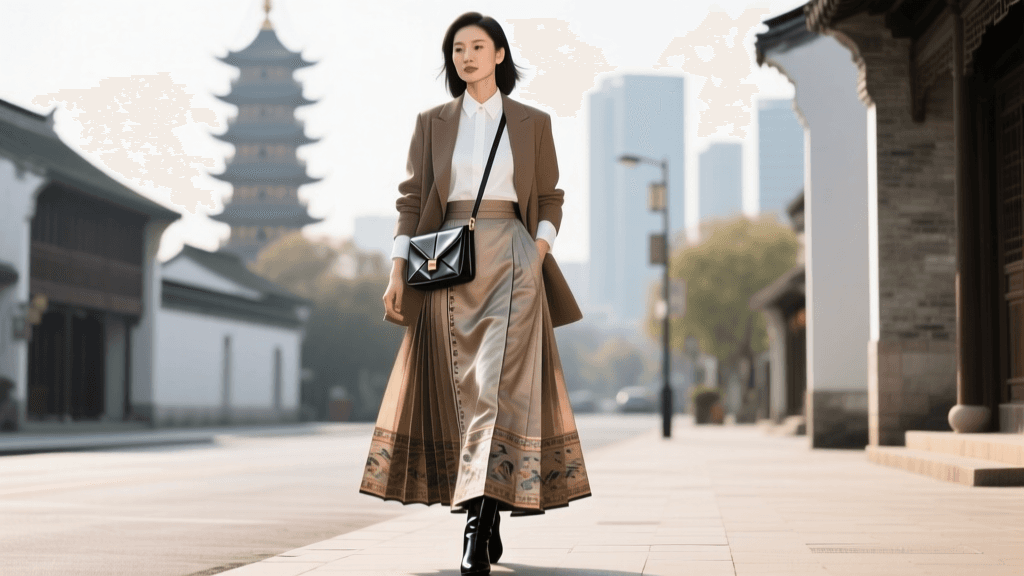
The structured nature of the Mamianqun makes it an exceptional replacement for the traditional office pencil skirt. To achieve a polished, boardroom-ready look, pair a midi-length, tone-on-tone jacquard Mamianqun (think deep navy, charcoal, or emerald green) with a crisp, oversized white poplin button-down shirt. The key to modernizing this look is the tuck: tightly tuck the shirt into the skirt's waistband to define your waist and prevent the outfit from looking overly costumed. Layer a structured, slightly boxy wool-blend blazer over the shoulders. Finish the look with pointed-toe kitten heels and a minimalist leather tote. The flat front panel of the skirt mimics the severity of corporate wear, while the side pleats offer dynamic movement as you walk through the office.
2. Streetwear Edge (Weekend & Casual)
The contrast of ancient pleats with modern streetwear grit is where the Mamianqun truly shines in 2026 youth culture. For a weekend look, pair a shorter, ankle-grazing Mamianqun featuring metallic thread-woven motifs with a cropped, vintage-wash graphic tee or a sleek, cropped tech-wear windbreaker. The boxy, abbreviated nature of the modern top perfectly balances the volume of the skirt's pleats. Footwear is where you make your boldest statement: opt for chunky, lug-sole platform boots or high-top retro sneakers. Add a crossbody nylon bag and a pair of geometric sunglasses to firmly anchor the skirt in the modern urban landscape.
3. Evening Elegance (Night Out & Events)
For evening wear, lean into the luxurious textures of the garment. A floor-length Mamianqun woven with gold or silver metallic threads catches the light beautifully in dim settings. Pair this with a modern, minimalist silk camisole, a structured corset top, or a sheer, long-sleeved mesh bodysuit. Because the skirt is highly ornate, keep the top sleek and unadorned. Strappy, minimalist heels and delicate jade or pearl drop earrings will bridge the gap between traditional Asian elegance and modern red-carpet minimalism.
2026 Fabric and Occasion Matrix
Choosing the right fabric is essential for ensuring your Mamianqun fits the occasion. The market in 2026 offers a wide array of textiles tailored to different lifestyles and budgets. Below is a guide to help you select the right material for your needs.
| Fabric Type | Best Modern Pairing | Ideal Season | Est. 2026 Cost (USD) |
|---|---|---|---|
| Woven Jacquard (Poly-blend) | Graphic Tees, Denim Jackets, Sneakers | Spring / Autumn | $85 - $140 |
| Heavy Brocade (Silk/Metallic) | Corsets, Silk Camisoles, Minimalist Heels | Winter / Evening | $250 - $450+ |
| Pleated Organza / Tulle | Merino Turtlenecks, Cropped Knits | Summer / Resort | $120 - $200 |
| Washable Crepe / Matte | Button-downs, Blazers, Loafers | Year-round (Office) | $90 - $160 |
Proportions, Fit, and Sizing
One of the most common mistakes when integrating traditional Asian garments into a Western wardrobe is misjudging proportions. The traditional waistband of a Mamianqun is designed to sit higher than modern low-rise or mid-rise jeans. It should rest comfortably at your natural waist, or slightly above the navel. This high-waisted placement elongates the legs and provides a secure anchor for the heavy pleats.
Regarding length, the 2026 streetwear standard favors the 'ankle-grazing' cut (approximately 95cm to 105cm, depending on your height). This length is highly practical; it prevents the hem from dragging on wet city streets or getting caught in escalators, while still allowing your footwear to be fully visible. If you are purchasing off-the-rack from contemporary heritage brands, many now offer adjustable side hooks or hidden elastic panels within the traditional waistband to accommodate modern sizing fluctuations without requiring a tailor.
Accessorizing the Neo-Heritage Look
Accessories serve as the bridge between the 14th century and the 21st. To avoid looking as though you are wearing a museum replica, you must introduce modern hardware and textures. In 2026, the trend of 'mixed-era styling' encourages the use of contemporary leather belts worn directly over or just below the skirt's fabric waistband. A thick, structured leather belt with a bold, geometric silver buckle instantly grounds the skirt in modern punk or avant-garde aesthetics.
When it comes to bags, avoid traditional embroidered clutches unless you are attending a specific cultural gala. Instead, opt for structured, architectural mini-bags, slouchy vegan leather hobo bags, or even utilitarian canvas messenger bags. The juxtaposition of a highly ornate, historically significant skirt with a mass-produced, modern utilitarian accessory is the hallmark of the 2026 neo-heritage aesthetic.
Sourcing and Caring for Heritage Pieces
As the demand for authentic yet wearable Hanfu elements has surged, the market has been flooded with fast-fashion imitations that lack the structural integrity of a true Mamianqun. To build a sustainable wardrobe, seek out specialized heritage studios and ethical brands that utilize computerized jacquard looms to replicate historical patterns with modern durability. As noted by the Victoria and Albert Museum's Asian textile collections, the preservation of traditional weaving techniques is vital, and supporting artisans who adapt these methods for contemporary use ensures their survival.
Caring for your Mamianqun requires a departure from standard laundry habits. Never machine-wash a brocade or metallic-threaded skirt, as the agitation will destroy the sharp, heat-set pleats. For daily maintenance, invest in a high-quality handheld garment steamer. Steaming not only removes wrinkles but also revives the volume of the side pleats without flattening them, a common issue when using traditional ironing boards. For storage, hang the skirt on a clip-hanger with wide, padded clips to avoid denting the waistband, or roll it loosely along the pleat lines and store it in a breathable cotton garment bag. For deeper insights into textile preservation, the Metropolitan Museum of Art's Asian textile and garment search archive provides excellent foundational knowledge on how natural and synthetic fibers age over time.
Conclusion
The Mamianqun is a testament to the fact that traditional Asian garments are not static relics; they are living, breathing components of global fashion. By understanding its unique architecture, balancing its volume with modern 2026 silhouettes, and treating the fabrics with the care they deserve, you can seamlessly integrate this stunning piece of history into your everyday wardrobe. Whether you are navigating the corporate world, exploring the city streets, or attending an evening gala, the horse-face skirt offers a powerful, elegant, and deeply personal sartorial statement.