Mamianqun in 2026 Global Fashion Media: Runway to Editorial Style
The Mamianqun’s Ascent in 2026 Global Fashion Media
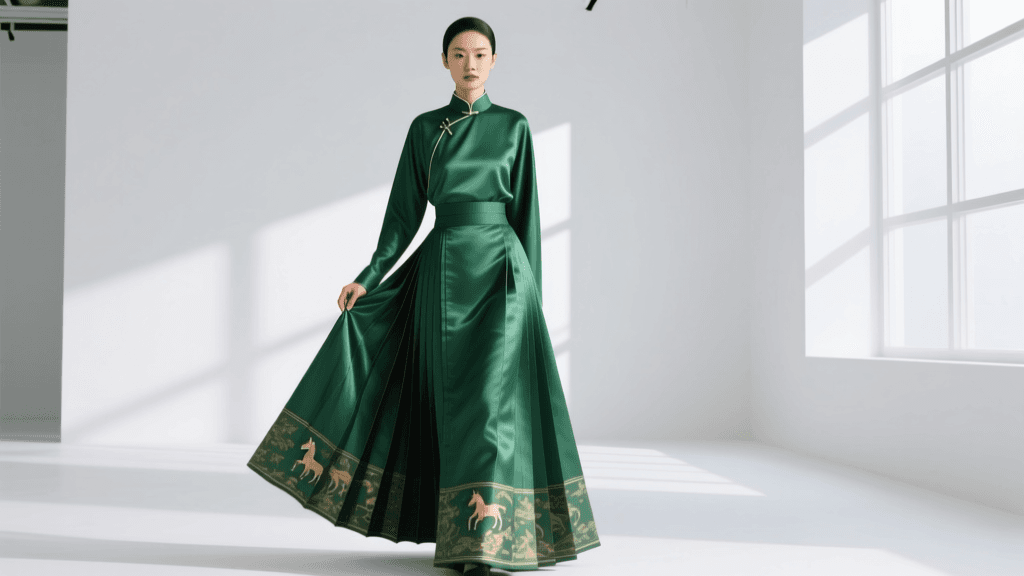
The Mamianqun, historically recognized as the "horse-face skirt," has completed a remarkable journey from a symbol of Ming and Qing dynasty heritage to a cornerstone of 2026 global high fashion. Following the cultural reclamation movements of the early 2020s, the 2026 fashion landscape has fully embraced the garment not merely as an exoticized trend, but as a masterclass in structural tailoring. Today, top-tier fashion media outlets—from Vogue France to Harper’s Bazaar China—are dedicating multi-page editorial spreads to the Mamianqun, celebrating its architectural pleats and rich textile history.
During the Spring/Summer 2026 runway shows in Paris and Milan, the narrative shifted from cultural appropriation to authentic collaboration. Leading design houses are now explicitly crediting traditional Chinese tailoring techniques in their show notes, working directly with heritage artisans from Nanjing and Suzhou. This editorial pivot reflects a broader industry demand for transparency, historical accuracy, and sustainable luxury.
Deconstructing the 2026 Runway Adaptations
Global fashion editors in 2026 are fascinated by the engineering of the Mamianqun. Unlike Western pleated skirts that rely on continuous gathering, the traditional horse-face skirt features flat, unpleated front and back panels (the "horse faces") flanked by intricate, overlapping side pleats. This design was originally engineered for ease of movement while horseback riding, but in 2026, it is being lauded for its kinetic elegance on the runway.
Pleat Engineering and Structural Integrity
In recent editorial features, stylists have highlighted how modern adaptations utilize heat-set memory fabrics to maintain the sharpness of the side pleats, even in high-humidity environments. The 2026 runway iterations often feature micro-pleating on the sides, contrasting with wide, sweeping front panels adorned with digital jacquard weaves that mimic traditional zhuanghua (brocade) motifs.
Waistband Modernization
Historically, the Mamianqun was secured with a white cotton or linen tie waistband, designed to be hidden beneath a top. However, 2026 editorial styling has transformed the waistband into a focal point. Runway adaptations now feature corseted waistbands, structured obi-inspired belts, and even elasticized hidden bands that allow the skirt to sit securely at the natural waist without the need for complex tying techniques.
Fabric and Textile Innovations in 2026
The foundational techniques of Chinese silk weaving, which birthed the original brocades used in these skirts, are deeply rooted in centuries of craftsmanship. As noted by UNESCO’s Intangible Cultural Heritage registry, the complexity of traditional silk craftsmanship remains a benchmark for luxury textiles today. In 2026, the fashion media is heavily focused on how heritage fabrics are being merged with next-generation sustainable materials.
- Peace Silk Brocade: Ahimsa (peace) silk is now the standard for high-end Mamianqun editorials, offering the lustrous sheen of traditional mulberry silk without harming the silkworm.
- Recycled Metallic Threading: Traditional gold and silver zari threads have been replaced in 2026 collections by recycled copper and aluminum yarns, reducing the environmental impact while maintaining the skirt's iconic light-catching properties.
- Vegan Leather Accents: Avant-garde editorials in Vogue Italia have recently showcased Mamianqun skirts crafted from mycelium-based vegan leather, offering a matte, structural alternative to flowing silk.
Comparison: Traditional vs. 2026 Editorial Mamianqun
To understand how global fashion media is framing the garment this year, it is essential to compare the historical artifact with its modern runway counterpart. The historical context of the garment's structure is meticulously preserved in institutions like The Metropolitan Museum of Art, which highlights the intricate layering and societal significance of Ming and Qing dynasty dress.
| Feature | Traditional Ming/Qing Mamianqun | 2026 Global Editorial Adaptation |
|---|---|---|
| Waistband | White cotton/linen tie waist, meant to be concealed | Structured corsetry, wide obi belts, or hidden elastic bands |
| Pleat Structure | Flat side pleats, smooth unpleated front and back panels | Heat-set permanent knife pleats, sometimes featuring micro-pleating |
| Primary Fabric | Heavy silk brocade, zhuanghua, kesi (silk tapestry) | Sustainable peace silk, recycled jacquard, mycelium leather |
| Length & Hem | Ankle-grazing or floor-sweeping, weighted hems | Midi, asymmetrical, or modular detachable lengths |
| Motifs | Dragons, phoenixes, peonies, auspicious clouds | Abstract geometric interpretations, digital jacquard florals |
Editorial Styling: How Top Magazines Frame the Skirt
In 2026, fashion editors are moving away from pairing the Mamianqun exclusively with traditional Hanfu tops (such as the ao or shan). Instead, the global fashion media is championing a "trans-historical" styling approach that blends the skirt with contemporary Western silhouettes.
The Power Suit Hybrid
A dominant trend in 2026 business-fashion editorials is pairing a midi-length, monochrome Mamianqun with an oversized, sharply tailored blazer. The contrast between the rigid, masculine shoulders of the blazer and the fluid, kinetic movement of the skirt's side pleats creates a striking visual tension that photographers favor for high-contrast studio shoots.
Eveningwear and Red Carpet
For red carpet coverage, global stylists are utilizing floor-length Mamianqun skirts crafted from deep jewel-toned silks. By pairing the skirt with a minimalist, backless silk camisole or a structured metallic bustier, the outfit bridges the gap between ancient ceremonial wear and modern Hollywood glamour. The flat front panel of the skirt provides a perfect, uninterrupted canvas for statement jewelry and bold belt buckles.
Actionable Styling Guide for the Modern Consumer
For readers looking to incorporate the Mamianqun into their 2026 wardrobes based on current editorial trends, precision in proportion and styling is key. Here is a practical guide to achieving the high-fashion editorial look.
Proportions and Measurements
The most flattering length for everyday editorial styling in 2026 is the "midi-drop." When shopping or commissioning a Mamianqun, request a length that hits exactly 2 to 3 inches below the calf muscle, grazing the top of the ankle bone. This prevents the heavy pleats from overwhelming the wearer's frame and ensures the skirt does not drag on urban pavements. Ensure the waistband sits precisely at the narrowest part of your natural waist, typically 1 to 2 inches above the navel, to maintain the garment's architectural integrity.
Top Layering Techniques
The way you layer over and under the Mamianqun dictates its fashion-forward appeal. In 2026, the "tucked-in" rule is paramount for maintaining the skirt's structural waistline. If wearing a lightweight cashmere turtleneck or a crisp poplin button-down, always execute a full French tuck or a complete tuck to avoid obscuring the waistband. For outerwear, cropped leather jackets that terminate exactly at the waistband's upper edge are highly favored in street-style photography, as they create a seamless horizontal line that emphasizes the skirt's sweeping A-line silhouette. Avoid long, duster-style coats that cover the pleats entirely, as this hides the garment's defining kinetic movement.
Footwear and Accessory Pairings
Footwear can make or break the modern Mamianqun silhouette. Avoid delicate, strappy sandals which clash with the skirt's visual weight. Instead, opt for:
- Chunky Chelsea Boots: A staple in 2026 street-style editorials, leather Chelsea boots ground the flowing silk and add an edge of modern grunge.
- Pointed-Toe Mules: For a sophisticated office-appropriate look, a structured pointed-toe mule with a modest 2-inch block heel elongates the leg line without hiding beneath the hem.
- Minimalist Sneakers: High-end, unbranded leather sneakers in stark white or matte black are frequently featured in off-duty model editorials, emphasizing the skirt's versatility.
Color Theory in 2026
While traditional red and gold remain popular for ceremonial wear, 2026 fashion media is heavily promoting "Xuan" (mysterious black) and "Yue Bai" (moon white, a pale icy blue) for everyday luxury. These muted, historically significant tones pair effortlessly with modern neutral palettes, allowing the intricate weave of the fabric to take center stage without clashing with contemporary outerwear.
Furthermore, 2026 has seen a resurgence in botanical dyeing techniques featured in niche fashion publications. Skirts dyed using traditional indigo or pomegranate rind offer subtle, organic color variations that mass-produced synthetic dyes cannot replicate. These naturally dyed pieces are highly sought after by collectors and sustainable fashion advocates alike, frequently appearing in curated capsule wardrobe editorials.
Conclusion
The Mamianqun’s dominance in 2026 global fashion media is a testament to the enduring power of Asian traditional garments when treated with respect, historical awareness, and innovative design. By understanding the structural genius of the horse-face skirt and embracing modern editorial styling techniques, fashion enthusiasts can participate in a global dialogue that honors the past while boldly dressing for the future.