2026 Mamianqun Fabric Guide: Drape and Comfort Analysis
The Evolution of the Mamianqun in 2026
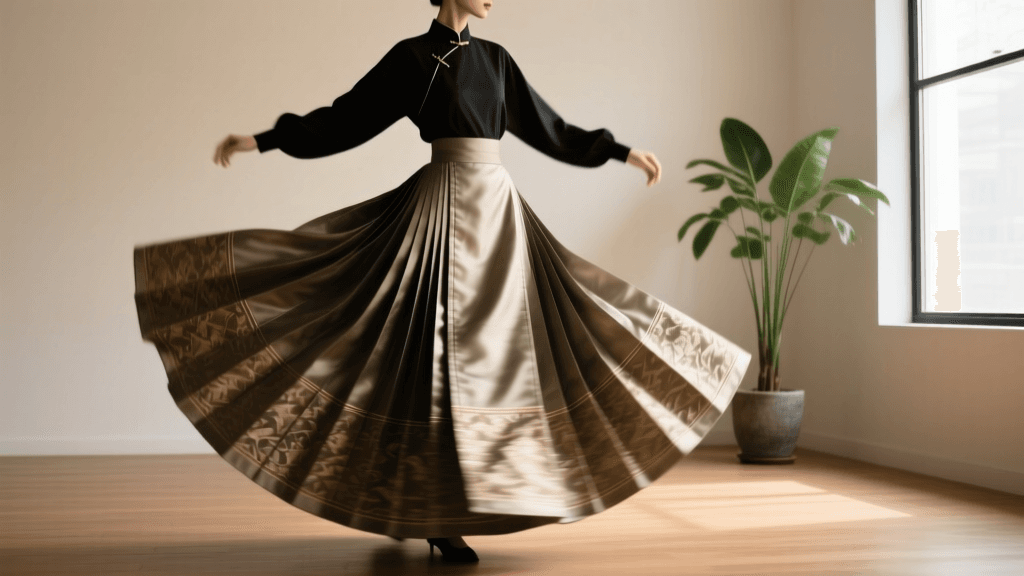
As the Hanfu movement matures in 2026, the Mamianqun (horse-face skirt) has transcended its status as a niche historical garment to become a staple of global neo-traditional fashion. However, the visual majesty of the Mamianqun relies entirely on its fabric. The signature 'waterfall' drape of the pleats and the structural rigidity of the flat front and back panels require a delicate balance of textile engineering. In 2026, advancements in digital jacquard weaving and sustainable bio-silk production have revolutionized the options available to consumers. This guide provides a comprehensive analysis of Hanfu fabric textures, focusing on drape mechanics, skin comfort, and practical wearability for the modern wardrobe.
The Physics of Drape: Bending Length and Shear Stiffness
To understand why certain fabrics succeed in a Mamianqun while others fail, we must look at the physics of textile drape. Drape is primarily governed by two factors: bending length (how far a fabric can extend before bending under its own weight) and shear stiffness (the resistance to diagonal distortion). For a horse-face skirt, the ideal fabric requires a high bending length to keep the flat panels structured, but a low shear stiffness to allow the side pleats to flow dynamically during movement.
Historically, this was achieved through dense, heavyweight silk weaves. According to historical textile analyses documented by The Metropolitan Museum of Art, traditional Chinese silk weaving techniques, such as the complex satin weaves of the Song and Ming dynasties, naturally provided this structural dichotomy. Today, 2026 textile manufacturers replicate this using variable-tension digital looms, allowing for intricate brocade patterns without the prohibitive weight of ancient hand-loomed textiles.
2026 Fabric Comparison Matrix
Below is a comparative analysis of the most prominent fabrics used in premium and everyday Mamianqun production this year. Prices reflect the average 2026 retail market per meter for authentic, high-grade materials.
| Fabric Type | Weight (GSM / Momme) | Drape Quality (1-10) | Breathability | Best Season | Avg. 2026 Price (USD/m) |
|---|---|---|---|---|---|
| Heavyweight Mulberry Silk | 22-30 Momme | 9.5 | High | Spring / Autumn | $85 - $140 |
| Xiangyunsha (Gambiered Gauze) | 19-24 Momme | 8.0 | Very High | Summer | $120 - $200 |
| Digital Jacquard Poly-Viscose | 180-220 GSM | 8.5 | Medium | All-Season | $15 - $30 |
| Ramie-Cotton Blend | 150-180 GSM | 6.5 | Excellent | Summer | $20 - $45 |
Deep Dive: Top Fabrics for Horse-Face Skirts
1. Heavyweight Mulberry Silk (22-30 Momme)
The gold standard for luxury Hanfu remains heavyweight mulberry silk. In 2026, the market has seen a surge in 'peace silk' (ahimsa silk) variants that offer the same luxurious drape without compromising ethical standards. A 30-momme silk twill or heavy satin provides the necessary weight to pull the pleats downward via gravity, ensuring the skirt never looks puffy or ballooned. The texture is buttery smooth, resulting in zero skin friction, which is crucial for the inner layers of the skirt that rest against the legs. However, silk requires meticulous care; it is prone to water spotting and requires professional dry cleaning or specialized hand-washing with pH-neutral enzymes.
2. Xiangyunsha (Gambiered Canton Gauze)
Recognized by UNESCO as an Intangible Cultural Heritage craft, Xiangyunsha is a marvel of natural textile engineering. Dyed with the tannin-rich juice of the shoulang yam and coated with iron-rich river mud, this fabric undergoes a unique chemical reaction that results in a dual-toned, crackled texture. For summer Mamianqun, Xiangyunsha is unparalleled. It is naturally antimicrobial, highly breathable, and possesses a slightly crisp, paper-like hand-feel that softens beautifully over time. While it lacks the heavy, liquid drape of thick satin, its structured stiffness creates a beautiful, architectural pleat that excels in humid climates.
3. Digital Jacquard Polyester-Viscose Blends
For everyday commuters and students, the 2026 market is dominated by advanced polyester-viscose jacquard blends. Modern textile mills have solved the 'plastic' feel of early 2010s Hanfu by integrating micro-fiber viscose, which mimics the moisture-wicking properties of natural cellulose. These fabrics are woven on high-speed digital jacquard looms, allowing for hyper-detailed motifs—such as intricate Ming dynasty cloud collars or woven gold-foil threads—at a fraction of the cost of silk. The drape coefficient is highly consistent, and the fabric is virtually wrinkle-proof, making it the ultimate 'pack and go' travel skirt. The primary drawback is reduced breathability in peak summer heat.
4. Ramie-Cotton Weaves
For those prioritizing eco-friendly, plant-based textiles, ramie-cotton blends offer a rustic, textured alternative. Ramie, one of the oldest fiber crops in Asia, provides natural luster and exceptional tensile strength, while cotton adds softness. The drape of ramie is inherently stiffer than silk, meaning the pleats will stand out more rigidly rather than cascading. This makes it an excellent choice for shorter, everyday 'mid-calf' Mamianqun styles, though it is less suited for formal, floor-sweeping lengths where a fluid silhouette is desired.
Comfort Analysis: Friction, Breathability, and Climate
When evaluating Hanfu for daily wear, comfort extends beyond mere temperature regulation. The 'stride comfort' of a Mamianqun is dictated by the fabric's surface friction. Skirts made from high-friction materials (like raw silk or unblended ramie) tend to 'grab' the legs or underlying trousers during walking, causing the pleats to tangle and requiring constant adjustment.
To mitigate this in 2026, leading Hanfu brands are applying nano-cellulose finishing treatments to the inner weaves of jacquard skirts. This microscopic coating reduces the coefficient of friction by up to 40%, allowing the skirt to glide smoothly over the legs. Furthermore, for winter wear, the integration of far-infrared thermal yarns into the weft of wool-blend Mamianqun has become a standard industry practice, providing lightweight insulation without destroying the critical bending length required for the skirt's drape.
Maintenance: Preserving the Drape in 2026
The longevity of a Mamianqun's silhouette depends heavily on storage and maintenance. The traditional method of folding the skirt along the pleat lines and storing it flat is no longer the only option. In 2026, specialized cylindrical Hanfu storage tubes have become popular, allowing the skirt to be rolled rather than folded, preventing permanent crease marks on the flat panels.
- Steaming over Ironing: Never use a flat iron on the pleated sections. Use a high-pressure vertical garment steamer to relax wrinkles while letting gravity pull the fabric into its natural drape.
- Pleat Setting: For silk and ramie skirts, utilize traditional bamboo pleat-clips during storage to maintain the sharpness of the side folds.
- Washing: Avoid machine washing entirely. The agitation destroys the shear stiffness of the weave, leading to a 'floppy' skirt that loses its structural integrity.
Conclusion
The perfect Mamianqun is a triumph of textile physics, balancing the rigid structure of the panels with the fluid dynamics of the pleats. Whether you are investing in heritage Xiangyunsha for a summer tea ceremony or opting for a digital jacquard blend for your daily office commute, understanding the drape and comfort metrics of these fabrics will ensure your Hanfu wardrobe in 2026 is both historically resonant and practically flawless.