Furisode vs Tomesode: The Complete Formal Kimono Guide 2026
Introduction to Japanese Formal Kimono in 2026
As we navigate the evolving landscape of global fashion in 2026, the enduring elegance of Japanese traditional garments continues to captivate both domestic wearers and international enthusiasts. Among the most prestigious and highly regulated categories of Japanese dress are the formal kimonos, specifically the furisode and the tomesode. Understanding the nuanced differences between these garments is essential for anyone attending a traditional Japanese wedding, a coming-of-age ceremony (Seijin-shiki), or a high-level tea ceremony. According to the Victoria and Albert Museum's extensive kimono archives, the structural and symbolic elements of these garments have been refined over centuries, yet they continue to adapt to modern sensibilities without losing their historical integrity.
In this comprehensive 2026 guide, we will break down the distinct characteristics, proper occasions, current market pricing, and modern styling techniques for both furisode and tomesode kimonos, ensuring you are fully prepared to select, wear, or purchase these magnificent silk garments.
What is a Furisode? The Pinnacle of Youthful Elegance
The furisode (振袖), literally translating to 'swinging sleeve,' is the most formal kimono worn by unmarried women. It is instantly recognizable by its exceptionally long, flowing sleeves, which can range from 85 centimeters to an astonishing 114 centimeters in length. Historically, the long sleeves were believed to ward off evil spirits and express deep emotions, particularly romantic interest.
In 2026, the furisode remains the undisputed sartorial choice for young women celebrating their 20th birthday at the Seijin-shiki (Coming of Age Day) ceremonies held every January. The garment is typically crafted from luxurious, brightly colored silk featuring expansive, continuous patterns (eba-moyo) that flow seamlessly across the seams. The vibrant motifs often include cranes, cherry blossoms, peonies, and flowing water, symbolizing longevity, beauty, and purity. Because of its highly decorative nature, the furisode is reserved strictly for joyous, celebratory events and is never worn to somber occasions like funerals.
What is a Tomesode? The Height of Married Formality
While the furisode represents youthful celebration, the tomesode (留袖), meaning 'fastened sleeve,' is the most formal kimono worn by married women. The defining characteristic of the tomesode is its shorter sleeve length (typically around 50 to 70 centimeters) and the placement of its patterns. Unlike the furisode, which is covered in designs from shoulder to hem, the tomesode features patterns exclusively below the waistline, leaving the upper half of the garment solid.
There are two primary types of tomesode:
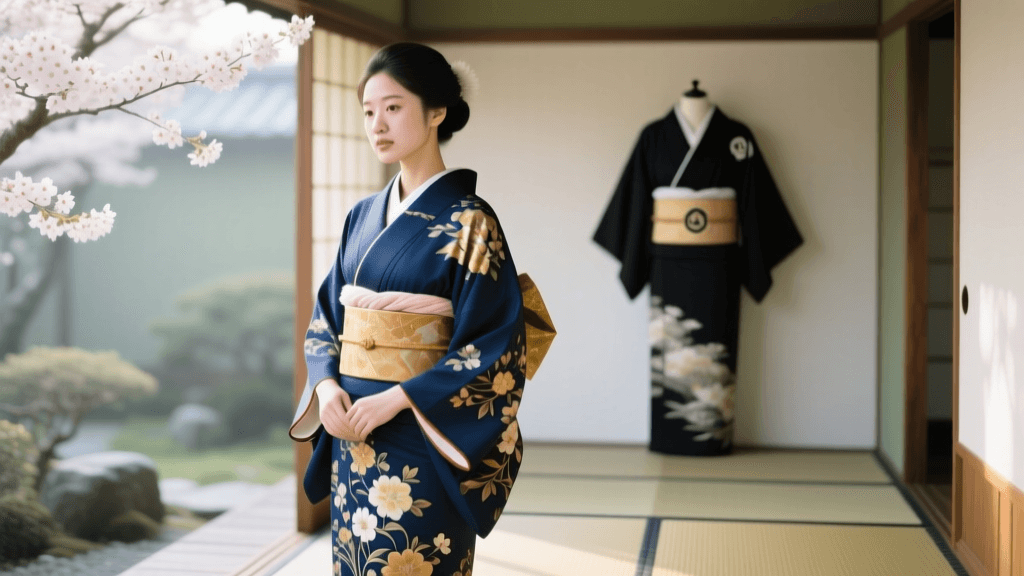
- Kurotomesode (Black Tomesode): The absolute highest level of formality for married women. It is dyed entirely black with patterns only at the bottom hem and features five family crests (kamon) dyed in white. It is traditionally worn by the mothers of the bride and groom at weddings.
- Irotomesode (Colored Tomesode): Featuring a solid colored background (such as deep navy, plum, or sage green) rather than black. It can have one, three, or five crests depending on the formality required. In 2026, the irotomesode has seen a surge in popularity among unmarried women who are close relatives of the bride or groom, serving as a sophisticated alternative to the more youthful furisode.
The Japan National Tourism Organization (JNTO) frequently highlights the tomesode in its cultural heritage guides, noting how the strict placement of the hemline patterns and the inclusion of the kamon (family crests) serve as a visual language of social standing and familial respect.
Furisode vs. Tomesode: 2026 Quick Comparison Chart
To easily distinguish between these formal garments, refer to the comparison table below:
| Feature | Furisode | Kurotomesode | Irotomesode |
|---|---|---|---|
| Primary Wearer | Unmarried women | Married women (close relatives) | Married & Unmarried (relatives) |
| Sleeve Length | 85cm - 114cm (Long) | ~50cm (Short) | ~50cm (Short) |
| Pattern Placement | All over the garment | Below the waist only | Below the waist only |
| Family Crests (Kamon) | Usually none or 3 | Always 5 (White on Black) | 1, 3, or 5 crests |
| Primary Occasion | Coming of Age, Tea Ceremony | Weddings (Mother of Bride/Groom) | Weddings, Formal Banquets |
| 2026 Avg. Rental Price | ¥20,000 - ¥40,000 | ¥15,000 - ¥25,000 | ¥15,000 - ¥25,000 |
2026 Pricing Guide: Buying vs. Renting Formal Kimonos
The economics of acquiring formal Japanese garments have shifted in 2026. With the rising costs of raw silk and the meticulous labor required for traditional Yuzen dyeing and Nishijin weaving, purchasing a brand-new, bespoke furisode or tomesode is a significant investment.
Rental Costs and Top 2026 Services
For most attendees, renting is the most practical and cost-effective option. As of early 2026, the average rental cost for a high-quality silk furisode package (which includes the kimono, obi, undergarments, and accessories) ranges from ¥20,000 to ¥40,000 ($135 to $270 USD). Tomesode rentals are slightly less expensive, averaging ¥15,000 to ¥25,000. Modern rental salons in Tokyo and Kyoto now offer AI-assisted virtual fitting rooms, allowing clients to preview how different color palettes and obi combinations will look against their skin tone before finalizing their booking.
Purchasing Authentic Silk Kimonos
If you are looking to purchase, expect to pay anywhere from ¥300,000 to over ¥1,000,000 for a new, custom-tailored silk furisode or kurotomesode from prestigious boutiques in Kyoto's Nishijin district. However, the 2026 vintage and upcycled market is thriving. Many young Japanese women are inheriting their mothers' and grandmothers' furisode, having them professionally cleaned, re-lined, and sometimes re-dyed to modernize the color palette. This sustainable approach not only preserves family history but also significantly reduces the environmental footprint associated with new silk production.
Essential Accessories: Completing the Formal Look
A kimono is never worn alone; it is a complex ensemble of layered textiles and accessories. According to the Smithsonian National Museum of Asian Art, the accessories are just as vital to the garment's formality as the silk robe itself.
- Obi (The Sash): For both furisode and tomesode, a Fukuro obi is mandatory. This is a long, wide, and heavily brocaded sash woven with gold or silver threads. In 2026, contemporary weavers are incorporating subtle metallic threads that catch the light beautifully in indoor banquet lighting.
- Obijime and Obiage: The obijime is a decorative braided cord tied over the obi, while the obiage is a silk scarf-like cloth that peeks out from the top of the obi knot. For formal wear, these must be pristine white, gold, or silver, often featuring auspicious motifs like tortoiseshell or pine needles.
- Zori and Tabi: Footwear consists of white split-toe socks (tabi) and formal sandals (zori) covered in gold, silver, or white brocade. The heel height of zori has trended slightly higher in 2026 to accommodate the trailing hemlines of formal kimonos, preventing the silk from dragging on the floor.
The Art of Kitsuke: Dressing Services in 2026
Putting on a formal kimono, known as kitsuke, is a highly specialized skill that takes professionals years to master. The process involves multiple layers, including the hadajuban (under-kimono), nagajuban (main under-robe), and various padding to create the traditional cylindrical silhouette. In 2026, professional dressing services at specialized salons cost between ¥8,000 and ¥15,000. Modern kitsuke artists now utilize breathable, moisture-wicking synthetic blends for the innermost layers, ensuring the wearer remains comfortable during long, multi-hour wedding receptions or outdoor shrine ceremonies, even in the sweltering Japanese summer.
Care and Maintenance of Silk Garments
Maintaining a formal silk kimono requires specialized care. The traditional method of arai-hari (taking the garment apart, washing the individual silk panels, and re-sewing them) is still practiced by master artisans, though it is time-consuming and expensive. In 2026, advancements in eco-friendly, waterless dry-cleaning technologies have provided a safer alternative for spot-cleaning delicate Yuzen dyes and metallic threads without the use of harsh, environmentally damaging chemicals. When storing a tomesode or furisode, it must be folded precisely along its seam lines and wrapped in tatoushi (special acid-free paper) inside a paulownia wood box to protect the silk from humidity and insects.
Conclusion
Whether you are selecting a vibrant, long-sleeved furisode to celebrate a milestone birthday, or a dignified, crested tomesode to honor a family wedding, understanding the rules and traditions behind these garments is crucial. In 2026, the Japanese kimono remains a living, breathing art form—one that respects its deep historical roots while gracefully adapting to the modern world. By choosing the right garment, respecting the dress codes, and investing in proper care, you participate in a beautiful cultural legacy that continues to define the pinnacle of Asian formal fashion.