Mamianqun in 2026 Global Fashion Media: Style & Sourcing Guide
The Mamianqun’s Ascent in 2026 Global Fashion Media
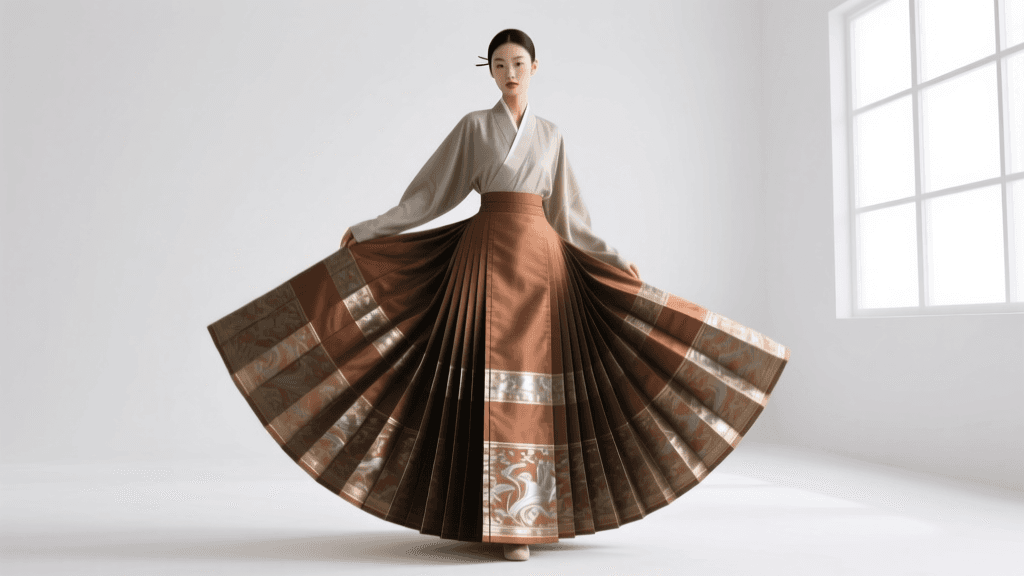
The global fashion landscape of 2026 has undeniably been captivated by the Mamianqun, traditionally known in English as the "horse-face skirt." Originating in the Song Dynasty and reaching its zenith during the Ming Dynasty (1368–1644), this structural masterpiece of Asian traditional garment design has transitioned from niche historical reenactment circles to the glossy pages of Vogue China, Harper's Bazaar, and international runway editorials. In 2026, high-fashion media is no longer merely appropriating Asian motifs; it is engaging in deep, artisan-led collaborations that honor the complex pleating and weaving techniques of the garment's heritage.
As covered by the Metropolitan Museum of Art's Heilbrunn Timeline, the Ming Dynasty was a period of immense cultural and textile flourishing, and the Mamianqun served as a canvas for the era's most exquisite silk weaving. Today, top-tier fashion editors are pairing authentic, artisan-woven Mamianqun with avant-garde contemporary tailoring, creating a "Neo-Heritage" aesthetic that defines the 2026 editorial season. For enthusiasts and collectors, understanding how to style, source, and care for these editorial-grade pieces is essential.
Deconstructing the Editorial Look: Anatomy of the Modern Mamianqun
To replicate the striking silhouettes seen in 2026 fashion media, one must first understand the garment's unique architecture. The Mamianqun is constructed from two overlapping panels of fabric. The front and back feature flat, unpleated sections known as the "horse faces" (mamian), which are often heavily embroidered or woven with metallic threads. The sides are composed of deep, structured pleats that remain hidden when standing still but explode into dynamic movement when walking.
Pleat Architecture and 2026 Measurements
Global fashion stylists in 2026 are favoring specific measurements to achieve the dramatic, sweeping looks seen in high-end editorials. When sourcing a piece for your own wardrobe, pay close attention to these specifications:
- Hemline Circumference: Standard commercial skirts often use 3 meters of fabric. However, 2026 editorial spreads heavily feature 5.5-meter to 6-meter hemlines, which provide the necessary volume for dramatic photography and fluid movement.
- Pleat Width: The current media preference leans toward 2.5 cm to 3 cm wide pleats. Narrower pleats (under 2 cm) tend to look overly fussy on camera, while wider pleats offer a bold, architectural drape that pairs beautifully with modern structured tops.
- Length: The "maxi" Mamianqun, measuring between 100 cm and 105 cm from waist to floor, is the undisputed star of 2026 gala and red-carpet styling, allowing the intricate bottom borders (lan) to graze the floor elegantly.
2026 Fabric Comparison Chart: What the Magazines Are Featuring
The visual impact of a Mamianqun in fashion media relies almost entirely on the textile. According to the UNESCO Intangible Cultural Heritage list, traditional Chinese sericulture and silk weaving remain vital, and 2026's top fashion houses are investing directly in these heritage crafts. Below is a comparison of the three primary fabrics dominating this year's editorials.
| Fabric Type | 2026 Market Price (USD) | Drape & Structure | Best Media Application |
|---|---|---|---|
| Nanjing Yun Brocade | $800 - $2,500+ | Highly structured, stiff, reflective metallic threads | High-fashion galas, magazine covers, avant-garde editorials |
| Song Brocade | $300 - $700 | Fluid, soft sheen, elegant and lightweight | Spring/Summer runway looks, romantic editorial styling |
| Modern Jacquard | $80 - $200 | Medium structure, durable, matte or slight sheen | Streetwear features, daily luxury, office-chic spreads |
How to Style the Horse-Face Skirt for 2026
Global fashion media has proven that the Mamianqun is not confined to traditional ceremonies. The 2026 styling playbook relies on high-contrast juxtapositions, blending centuries-old Asian traditions with cutting-edge contemporary fashion.
The High-Fashion Gala Look
For black-tie events or high-end editorial shoots, stylists are pairing heavy Yun brocade Mamianqun with modern corsetry. A structured, strapless architectural corset in a matte fabric (like heavy crepe or vegan leather) creates a striking visual contrast against the intricate, shimmering patterns of the skirt's "horse face" panels. Finish the look with minimalist metallic ear cuffs and a sleek, pulled-back chignon to ensure the garment's neckline and waistband remain the focal point.
Elevated Streetwear
The street-style photography of 2026 Fashion Weeks has been dominated by the "Neo-Street" Mamianqun. To achieve this, opt for a mid-calf length (approx. 75 cm) Jacquard skirt featuring subtle, tonal geometric patterns rather than traditional dragons or phoenixes. Pair it with an oversized, distressed leather bomber jacket and chunky, platform combat boots. The key to this look is the tension between the delicate, historical pleats and the aggressive, modern outerwear.
The Modern Office
For a sophisticated, boardroom-ready aesthetic featured in recent issues of global business-fashion magazines, choose a muted, solid-color Song brocade skirt with tone-on-tone weaving. Tuck in a crisp, oversized poplin button-down shirt, cinch the waist with a thin, contemporary leather belt over the skirt's waistband, and finish with pointed-toe slingback heels. This approach respects the garment's traditional roots while adapting it seamlessly for the modern professional environment.
Sourcing Authentic Pieces: A Buyer’s Guide
As the Mamianqun's popularity has surged in global media, the market has been flooded with mass-produced, inaccurate costumes. For readers looking to invest in authentic, media-grade pieces in 2026, it is crucial to know where and how to shop.
Identifying Authentic Construction
True Mamianqun construction requires the overlapping of two separate panels of fabric, not a single continuous tube of cloth with pleats ironed into the sides. When examining a piece online or in a boutique, look for the distinct flat front and back panels that overlap securely when wrapped. The waistband should traditionally be made of a different, more durable fabric (often white or unbleached cotton/linen) to prevent the silk from stretching and to provide grip against the wearer's top. Institutions like the Victoria and Albert Museum's Asia Collections frequently highlight these historical construction methods, which modern master artisans still strictly adhere to.
Where to Buy in 2026
- Direct from Artisan Studios (High-End): For authentic Yun and Song brocade, buyers are increasingly commissioning directly from heritage workshops in Nanjing and Suzhou. Expect a lead time of 4 to 8 weeks for hand-loomed pieces. Prices range from $800 to over $2,500.
- Curated Neo-Heritage Boutiques (Mid-Tier): Several specialized online boutiques based in Shanghai and Hangzhou have emerged as the go-to sources for global fashion editors. These shops offer high-quality Jacquard and blended-silk Mamianqun with accurate historical patterning, typically priced between $150 and $400.
- Mass Market (Caution Advised): While platforms like AliExpress and Temu offer skirts labeled as "Mamianqun" for under $40, these are almost exclusively made of cheap polyester, feature incorrect single-panel construction, and lack the structural integrity required for the garment to drape correctly. Avoid these if you are seeking the editorial look.
Caring for Editorial-Grade Silk
Maintaining the crisp, architectural pleats and pristine brocade of a high-end Mamianqun requires meticulous care. Never machine wash or tumble dry these garments. For authentic silk brocades, professional dry cleaning is the only safe option.
To maintain the pleats between wears, hang the skirt using a specialized multi-clip hanger that distributes the weight evenly across the waistband. If the pleats begin to soften, use a handheld garment steamer on a low-silk setting. Gently pull the pleats taut with your fingers while applying the steam, then allow the skirt to cool and set while hanging. Never use a traditional flat iron, as the direct pressure can crush the metallic threads and ruin the three-dimensional texture of the brocade.
"The Mamianqun is not merely a garment; it is a kinetic sculpture. When we feature it in 2026 editorials, we are capturing the intersection of ancient engineering and modern fluidity." — Senior Fashion Editor, Global Heritage Desk
Conclusion
The Mamianqun’s dominance in 2026 global fashion media represents a profound shift in how Asian traditional garments are perceived and consumed on the world stage. By understanding the intricate anatomy of the horse-face skirt, investing in authentic heritage textiles, and embracing high-contrast modern styling, you can seamlessly integrate this Ming Dynasty masterpiece into your contemporary wardrobe. Whether you are walking a red carpet or navigating the urban streetscape, the Mamianqun offers a powerful, elegant statement that bridges centuries of sartorial excellence.