Kimono On Global Runways: 2026 Fashion Week Trends
The Kimono Renaissance on 2026 Runways
The global fashion landscape in 2026 is witnessing a profound structural shift, with the traditional Japanese kimono serving as the ultimate blueprint for avant-garde and ready-to-wear collections. From the rain-slicked streets of Paris Fashion Week to the sun-drenched courtyards of Milan, designers are looking eastward, not for exotic costumes, but for masterclasses in zero-waste pattern making and geometric draping. The kimono, constructed from straight bolts of fabric (tanmono) without curved tailoring, perfectly aligns with the 2026 industry mandate for sustainable, low-waste luxury.
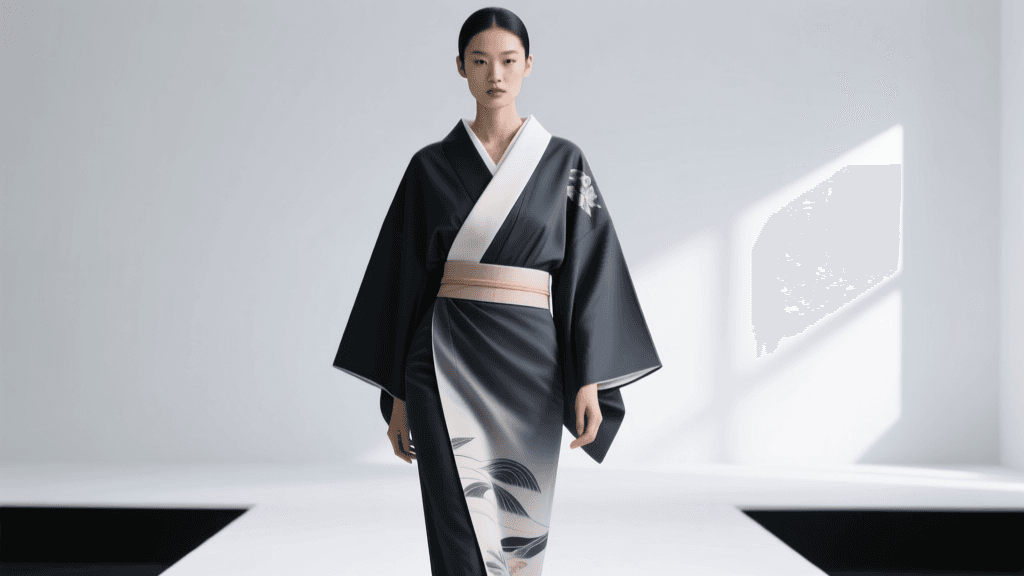
This year, the integration of Japanese traditional garments into high fashion has moved beyond superficial motifs. Instead of simply printing cherry blossoms onto Western silhouettes, top fashion houses are deconstructing the very architecture of the kimono. The T-shaped silhouette, the dropped shoulder, the overlapping front panels (okumi), and the dramatic, sweeping sleeves (furisode) are being reimagined in technical nylons, upcycled denim, and lab-grown silks. The result is a sophisticated fusion that honors centuries of Asian traditions while pushing the boundaries of contemporary wardrobe building.
The Structural Blueprint: What Designers Are Adapting
To understand the 2026 runway trends, one must understand the engineering of the traditional garment. According to the extensive archives at the Victoria and Albert Museum, the kimono's genius lies in its flat, two-dimensional construction that only comes to life when wrapped around the three-dimensional human form. This year, designers in Tokyo and Paris are focusing heavily on the 'miyatsukuchi'—the side slits in women's kimono that allow for movement and adjustability. Runway iterations in 2026 are using these slits to expose contrasting layers of sheer organza or structured mesh, creating a dynamic interplay of transparency and modesty.
Furthermore, the concept of 'kasane' (layering) has become a dominant theme for Autumn/Winter 2026 collections. Historically, the layering of kimono robes signaled seasonal awareness and social status. Today, global runways are showcasing modular layering systems inspired by the kimono, where lightweight silk crepe (chirimen) under-robes are paired with heavy, textured outer jackets, allowing the wearer to adapt to fluctuating urban climates without sacrificing elegance.
Runway to Real Life: Actionable Styling Guide
You do not need to attend a haute couture show to incorporate these Asian traditions into your daily life. The 2026 runways have provided highly actionable, wearable styling techniques that bridge the gap between traditional Japanese clothing and modern streetwear. Below is a comprehensive guide to integrating these elements into your wardrobe this year.
The Haori Jacket: Your 2026 Layering Essential
The haori, a traditional hip- or thigh-length jacket worn open over a kimono, has officially replaced the standard trench coat on the global style circuit. For 2026, the styling rule is contrast: pair a delicate, vintage silk haori with structured, utilitarian base layers.
- Measurements to Look For: Seek a haori with a back width (yuki) of 64cm to 68cm. This provides the oversized, dropped-shoulder drape that is highly favored in 2026.
- Fabric Choices: While vintage silk is prized, contemporary 2026 releases feature haori made from heavy-weight linen and hemp blends, which are machine-washable and perfect for transitional spring weather.
- Styling Technique: Leave the haori completely open to showcase the geometric back panels. Secure it loosely using a braided silk cord (haori himo) tied in a simple decorative knot, or leave the cords untied for a relaxed, avant-garde silhouette.
- Cost Expectations: Authentic vintage haori can be sourced from specialized online curators for $120 to $350. Contemporary designer interpretations on the 2026 market range from $600 to $1,500.
Obi Belt Cinching Techniques for Modern Tailoring
The obi, the wide sash used to secure the kimono, is being utilized in 2026 as a statement corset over oversized suiting and slip dresses. The runway trend focuses on the 'fukuro obi'—a formal, double-woven belt that is stiff enough to hold architectural shapes.
- Dimensions: A standard fukuro obi is approximately 30cm wide and 420cm long. This length is crucial for achieving the wrapped, corseted look seen in Milan.
- The 'Runway Wrap': Wrap the obi twice around the natural waist over an oversized 2026 blazer. Instead of tying a traditional back knot, bring the ends to the front and secure them with a sleek, matte-black leather obi clip (a modern accessory innovation launched this year).
- Care Instructions: Because these belts often contain metallic threads (kinran) and stiff inner linings, never fold them sharply. Roll them loosely and store them in acid-free tissue paper to maintain their structural integrity.
Comparison Chart: Traditional vs. 2026 Runway Adaptations
Understanding the differences between historical garments and their modern fashion week counterparts is crucial for the culturally conscious consumer. The following table breaks down how key elements have evolved for the 2026 market.
| Garment Element | Traditional Specification | 2026 Runway Adaptation | Modern Styling Tip |
|---|---|---|---|
| Sleeve (Sode) | Attached only at the shoulder and upper side; deep underarm drop. | Exaggerated volume with integrated elastic cuffs for practicality. | Push sleeves to the elbow for a casual, voluminous bracelet effect. |
| Collar (Eri) | Thick, padded, and worn pulled back at the nape to expose the neck. | Flattened, unlined, and worn close to the neck like a modern shawl collar. | Layer over a crisp white poplin shirt for a sharp, intellectual look. |
| Closure Method | Strictly left-over-right wrap; secured entirely by the obi sash. | Hidden magnetic clasps and internal drawstrings for zero-waste security. | Utilize internal ties to adjust the hemline asymmetrically. |
| Textile (Nuno) | Hand-dyed silk, yuzen painting, and gold leaf application. | Upcycled vintage silks, digital printing, and bio-engineered spider silk. | Mix digital-printed kimono fabrics with raw denim for texture contrast. |
Sourcing Authentic and Contemporary Pieces
As demand surges following the 2026 fashion weeks, sourcing high-quality pieces requires navigating both vintage archives and contemporary boutiques. For authentic vintage kimono and haori, reputable dealers in Kyoto and Tokyo have expanded their global e-commerce platforms, offering international shipping with climate-controlled packaging. When purchasing vintage, always request high-resolution photos of the 'kake-eri' (the replaceable collar lining) to check for discoloration, which is common in pre-1980s silk.
For contemporary, runway-inspired pieces, look for brands that prioritize ethical manufacturing. The Kyoto Costume Institute frequently highlights the importance of preserving traditional weaving techniques, such as Nishijin-ori and Oshima-tsumugi. In 2026, several heritage brands have partnered with modern streetwear labels to release limited-edition capsule collections that utilize these historic looms to create modern, durable garments suitable for daily wear.
Cultural Appreciation in the Modern Fashion Era
The integration of the kimono into global runways inevitably sparks conversations about cultural appropriation versus appreciation. In 2026, the fashion industry has largely moved toward a model of deep appreciation, driven by direct collaborations with Japanese artisans and historians. Rather than treating the kimono as a generic 'Asian' costume, designers are now explicitly crediting the specific regional techniques, dyeing methods, and historical periods that inspire their collections.
For the consumer, appreciation means educating oneself on the garment's history and respecting its foundational rules. For instance, while wearing a haori open over jeans is a celebrated modern styling technique, wearing a full kimono wrapped 'right-over-left' is strictly reserved for dressing the deceased in Japanese culture. By understanding these nuances, fashion enthusiasts can participate in the global kimono renaissance with respect, ensuring that these magnificent Asian traditions continue to thrive and evolve on the world stage.
Final Thoughts on the 2026 Silhouette
The kimono's presence on the 2026 global runways is a testament to its timeless engineering. It proves that true luxury lies not in restrictive tailoring, but in the fluid relationship between fabric and the human body. Whether you are investing in a vintage silk haori, experimenting with an obi belt over your favorite trench coat, or simply appreciating the zero-waste geometry of the T-shaped silhouette, the kimono offers endless avenues for sartorial expression. As we move through 2026, the boundary between traditional Japanese clothing and global high fashion will only continue to blur, creating a richer, more inclusive wardrobe for the modern world.