Mamianqun in 2026 Global Fashion Media: Runway to Street Style
The Renaissance of the Horse-Face Skirt in 2026
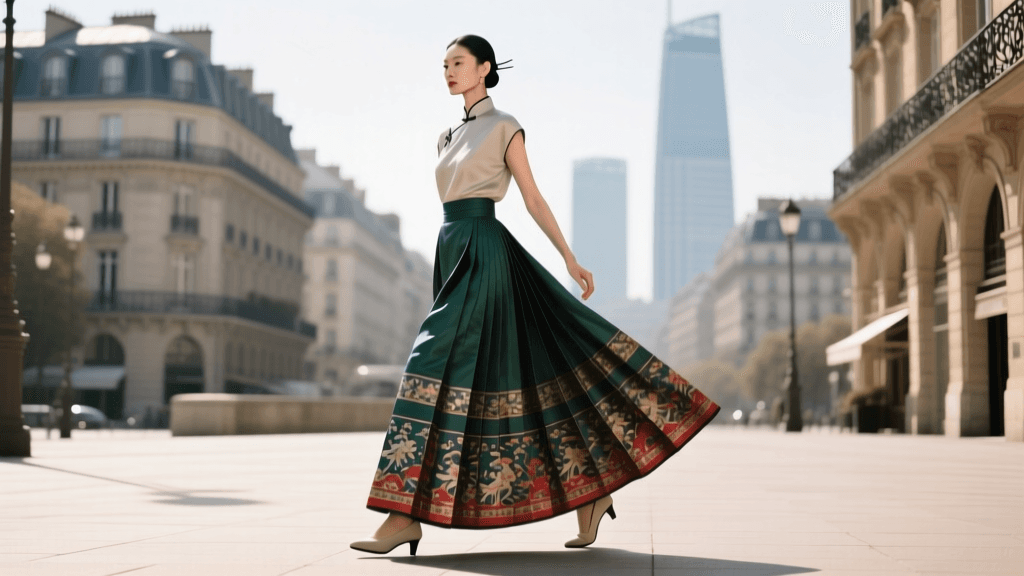
The Mamianqun, historically recognized as the 'horse-face skirt,' has transcended its Ming and Qing dynasty origins to become a formidable force in 2026 global fashion media. Characterized by its flat front and back panels flanked by intricate, overlapping pleats, this traditional Chinese garment has evolved from a niche historical reenactment piece into a highly coveted staple of contemporary haute couture and luxury streetwear. As we navigate the 2026 fashion landscape, top-tier publications like Vogue, Harper's Bazaar, and The Business of Fashion are dedicating extensive editorial spreads to the Mamianqun, celebrating its structural brilliance and its seamless integration into modern, global wardrobes.
According to comprehensive historical textile archives and guides on the Mamianqun, the garment's unique construction was originally designed for ease of movement, particularly for horseback riding, while maintaining an elegant, voluminous silhouette. Today, that same architectural ingenuity is being lauded by global fashion critics who view the skirt as a masterclass in zero-waste pattern making and dynamic drapery. In 2026, the narrative surrounding the Mamianqun has shifted from exoticism to profound respect for its engineering, with international fashion houses collaborating directly with heritage artisans in Suzhou and Hangzhou to produce authentic, modernized iterations.
How 2026 Fashion Media is Styling the Mamianqun
The editorial styling of the Mamianqun in 2026 reflects a mature, sophisticated approach to cultural integration. Gone are the days when traditional Asian garments were relegated to costume-like presentations or overly literal thematic editorials. Instead, 2026's leading fashion stylists are treating the Mamianqun as a versatile foundational piece, akin to the classic pleated midi skirt or the tailored wide-leg trouser.
In the pages of Vogue China and international editions of Elle this year, we are seeing the Mamianqun paired with hyper-modern, structured outerwear. The juxtaposition of the skirt's fluid, sweeping pleats against sharp, oversized blazers and architectural leather jackets has become a defining silhouette of the 2026 'New Chinese Style' (Xin Zhong Shi) movement. Fashion editors are heavily emphasizing the skirt's kinetic energy, utilizing high-speed photography and video editorials to capture the way the overlapping panels reveal intricate, contrasting linings and hidden embroidery as the wearer moves.
Furthermore, the global street style circuit—from the cobblestones of Paris Fashion Week to the neon-lit avenues of Tokyo and Shanghai—has fully embraced the Mamianqun. Influencers and fashion insiders are styling vintage-inspired silk jacquard skirts with minimalist tech-wear, chunky knitwear, and even upcycled denim corsets, proving the garment's remarkable adaptability to diverse subcultures and aesthetics.
2026 Runway and Editorial Interpretations
To understand how the global fashion industry is currently interpreting this historic garment, we must look at how major luxury houses and contemporary designers have adapted the Mamianqun for their 2026 collections. The following table highlights three distinct approaches that have dominated fashion media discourse this year.
| Brand / Designer | Fabric Innovation | Silhouette Modification | 2026 Media Consensus |
|---|---|---|---|
| Shiatzy Chen | Recycled Silk Jacquard with metallic thread weaving | Asymmetrical hemline with deconstructed pleats | Avant-garde elegance; praised for sustainable luxury |
| Gucci | Matte Vegan Leather paired with traditional brocade panels | Mini-skirt adaptation with exaggerated hardware | Bold streetwear fusion; highly commercial and editorial |
| Ming Ma | Stiffened Metallic Organza and Taffeta | Exaggerated volume and elongated trailing panels | Red-carpet triumph; celebrated for theatrical romance |
These interpretations demonstrate a vital trend in 2026: designers are no longer merely copying historical patterns. They are deconstructing the core mechanics of the Mamianqun—the flat panels and the pleated sides—and applying them to modern textiles and proportions, resulting in garments that feel entirely fresh while honoring their ancestral blueprint.
The Cultural Attribution Shift in Fashion Journalism
One of the most significant developments in 2026 global fashion media is the rigorous standard of cultural attribution. Following the intense industry reckonings of the early 2020s regarding cultural appropriation, fashion journalists and critics in 2026 demand transparency and proper credit. The discourse surrounding the broader Hanfu movement has deeply influenced how international media covers traditional Asian garments today.
When European luxury houses present Mamianqun-inspired pieces on the runway today, fashion critics actively scrutinize the show notes and press releases for acknowledgment of the garment's Chinese origins. In 2026, successful global brands are moving beyond mere acknowledgment; they are engaging in equitable partnerships with Chinese textile cooperatives. Editorials now frequently feature side-by-side comparisons of historical artifacts—such as those preserved in the Victoria and Albert Museum's Asian textile collections—alongside their modern runway counterparts, educating the consumer and celebrating the lineage of the design rather than obscuring it.
Fabric Innovations and Sustainable Practices in 2026
The Mamianqun is inherently a fabric-heavy garment, traditionally requiring between 4.5 to 6 meters of material to achieve the correct pleat depth and swing. In 2026, this high fabric yield has prompted a wave of sustainable innovations that are heavily covered in trade publications like The Business of Fashion.
- Temperature-Regulating Silks: Modern heritage brands are weaving phase-change materials into traditional silk jacquards, allowing the heavy skirts to be worn comfortably in both transitional spring weather and heated indoor environments.
- Botanical Dyeing Revivals: To combat the environmental impact of synthetic dyes, 2026's top Mamianqun artisans are reviving Ming-dynasty botanical dyeing techniques, utilizing indigo, pomegranate rind, and lotus plumules to achieve rich, colorfast hues that appeal to eco-conscious luxury consumers.
- Zero-Waste Pattern Cutting: Fashion media is highlighting how the traditional flat-panel construction of the Mamianqun naturally lends itself to zero-waste manufacturing, a major selling point for Gen Z and Alpha consumers demanding sustainable luxury.
Actionable Styling Guide for the Modern Wardrobe
For readers looking to incorporate the Mamianqun into their 2026 wardrobe, the key is to balance the skirt's inherent volume and historical weight with contemporary, grounded pieces. Here is a practical styling guide endorsed by current fashion editors:
1. The Structured Blazer Pairing
Anchor a mid-length silk jacquard Mamianqun with a sharply tailored, oversized wool blazer. Tuck a fitted, ribbed turtleneck into the skirt's flat front panel to define the waist. This look is perfect for the modern office or high-end gallery openings, bridging the gap between corporate power dressing and cultural appreciation.
2. Tech-Wear and Cyberpunk Influences
For a streetwear edge, pair a dark, muted-toned Mamianqun (such as charcoal or deep navy) with a cropped, technical nylon jacket and a utilitarian harness. The contrast between the ancient, flowing pleats and the rigid, futuristic hardware creates a striking, editorial silhouette that is dominating urban fashion hubs this year.
3. Footwear Selection
Avoid delicate, traditional slippers for everyday wear. In 2026, the media-approved footwear pairings for the Mamianqun include chunky leather loafers, knee-high riding boots, and architectural platform sneakers. The heavier footwear grounds the voluminous skirt and prevents the outfit from looking like a historical costume.
Sourcing, Pricing, and Authenticity in 2026
As demand has surged, the market has become saturated with both authentic masterpieces and cheap, fast-fashion knockoffs. Understanding the pricing tiers is crucial for consumers seeking quality and cultural authenticity.
Entry-Level and Machine-Woven ($60 - $150): These skirts are typically made from polyester blends or machine-woven cotton. While they capture the basic silhouette, they often lack the structural integrity and weight required for the pleats to swing correctly. They are suitable for casual experimentation but are not considered investment pieces.
Artisanal Silk Jacquard ($300 - $600): The sweet spot for serious fashion enthusiasts. These pieces are produced by specialized workshops in China, featuring high-density silk or viscose jacquards with intricate, woven motifs (such as traditional clouds, dragons, or floral patterns). The pleats are heat-set and hand-pressed to ensure longevity.
Bespoke and Heritage Couture ($800 - $2,500+): At the pinnacle of the market are bespoke Mamianqun crafted from hand-loomed silk, featuring real gold thread weaving (Kesi) and hand-embroidered details. These are museum-quality garments that serve as generational heirlooms and are frequently archived by global fashion institutions.
In 2026, the Mamianqun is no longer a fleeting trend or a mere costume; it is a celebrated, permanent fixture in the global fashion lexicon. By understanding its history, respecting its cultural origins, and styling it with modern intentionality, fashion lovers can participate in one of the most beautiful cross-cultural sartorial dialogues of our time.