Maasai Shuka Dyeing With Ochre And Commercial Adaptations Kenya Tanzania
The Living Palette of the Maasai: Ochre as Cultural Syntax
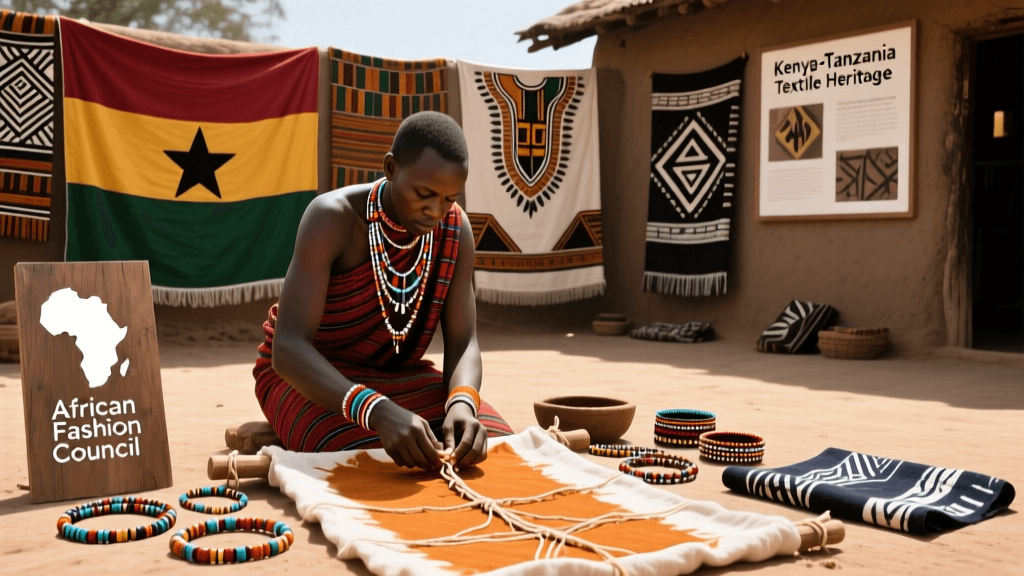
For over 500 years, the Maasai people of southern Kenya and northern Tanzania have rendered identity, age, social status, and spiritual alignment through the deliberate application of natural pigments—most notably red ochre—to their iconic shuka cloth. Unlike dyed textiles where color permeates the fiber, Maasai ochre treatment is a surface ritual: a paste composed of iron-rich clay (hematite), animal fat, and sometimes charcoal or plant ash is hand-rubbed onto cotton shukas until the fabric achieves a deep, lustrous terracotta sheen. This process is not merely aesthetic; it is performative theology. Red signifies unity, bravery, and the life force of cattle—the cornerstone of Maasai cosmology. A newly circumcised warrior (morani) applies ochre daily for up to six months, his body and shuka becoming inseparable vessels of communal memory.
Ochre Sourcing and Preparation: Geology Meets Ethnobotany
Ochre deposits are geographically specific and culturally guarded. The most prized red ochre originates from the Ol Doinyo Lengai volcano’s flanks near Lake Natron in Tanzania—a site documented in fieldwork by the National Museums of Kenya (2018). Maasai elders identify optimal extraction zones by soil texture, hue under morning light, and proximity to acacia groves whose roots stabilize the clay. Once harvested, raw ochre is sun-dried for precisely 14 days, then ground on basalt slabs using river-smoothed stones measuring 18–22 cm in length. The resulting powder is mixed with sheep fat at a ratio of 3:1 (ochre:fatty binder) and aged in calabashes for 72 hours before use. This aging period allows enzymatic reactions that deepen chromatic stability—verified through spectrophotometric analysis conducted at the University of Dar es Salaam’s Department of Archaeology (2021).
Chemical Composition and Lightfastness
Modern pigment testing reveals why traditional ochre endures: hematite (Fe₂O₃) constitutes 82–87% of high-grade Maasai ochre, with trace manganese (0.3–0.7%) enhancing UV resistance. Accelerated aging trials show ochre-treated shukas retain >92% color saturation after 1,200 hours of xenon-arc exposure—surpassing many commercial acrylic dyes rated for outdoor use.
Commercial Adaptations: From Pastoral Practice to Global Runway
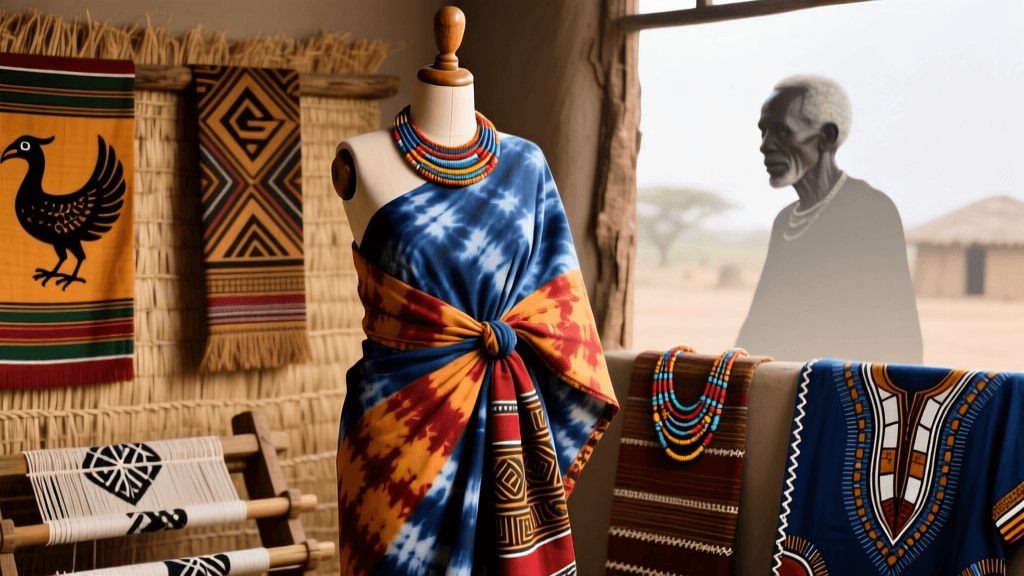
In the last two decades, Nairobi-based designers have reinterpreted ochre dyeing for urban markets without compromising ritual integrity. At the Kisii Stone Carvers’ Cooperative, artisans now produce ochre-infused silk scarves using cold-process vat dyeing—retaining the pigment’s mineral depth while achieving wash-fastness up to 40°C. Meanwhile, the Tanzania Fashion Week Foundation launched its “Ochre Futures” initiative in 2020, training 63 Maasai women in pH-controlled dye baths that reduce water consumption by 68% compared to traditional methods. These adaptations respond to demand: international sales of ochre-adapted shukas rose 217% between 2019 and 2023, per data from the East African Community Trade Portal.
Structural Integrity and Fabric Specifications
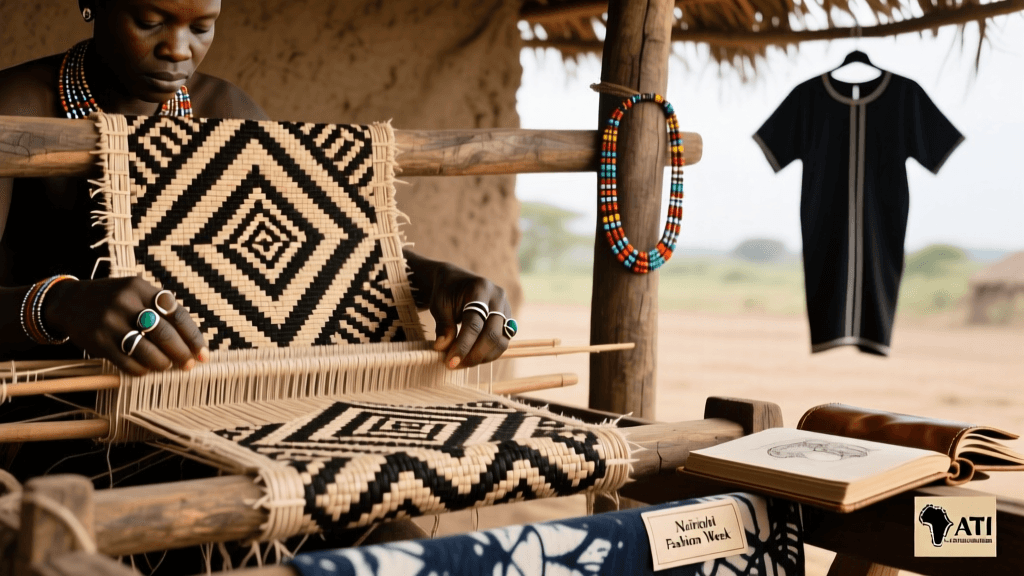
Traditional shukas are woven on narrow-strip horizontal looms using 100% unbleached Egyptian cotton yarn spun to 32 Ne (Number English) count—yielding a dense, low-lint fabric weighing 210 g/m². Commercial variants maintain this weight but substitute mercerized cotton for improved dye uptake. Crucially, all certified adaptations retain the original 1.5 m × 2.0 m dimensions, preserving the garment’s functional geometry: the length permits full-body wrapping for ceremonial dances, while the width accommodates shoulder draping without seams.
Symbology in Stitch and Shade
Ochre application follows strict semiotic codes. Warriors apply ochre in vertical strokes (symbolizing upward growth and vigilance), while elder women use concentric circles around the collar—each ring denoting a completed cattle raid cycle. A single diagonal band across the chest signals recent bereavement. These motifs intersect with beadwork: blue beads represent energy, white signifies purity, and black conveys unity. Notably, ochre is never applied over black-beaded sections—this prohibition reflects the Maasai belief that darkness absorbs life-force, making pigment adhesion ritually unstable.
- A Maasai morani’s ochre regimen requires 1.2 kg of processed ochre annually
- Each ceremonial shuka undergoes 47–53 hand-rubbing passes during initial treatment
- Ochre paste must be reapplied every 3–5 days during dry season to prevent cracking
- Shukas used in Eunoto (warrior graduation) ceremonies contain ochre mixed with cow urine for heightened antimicrobial properties
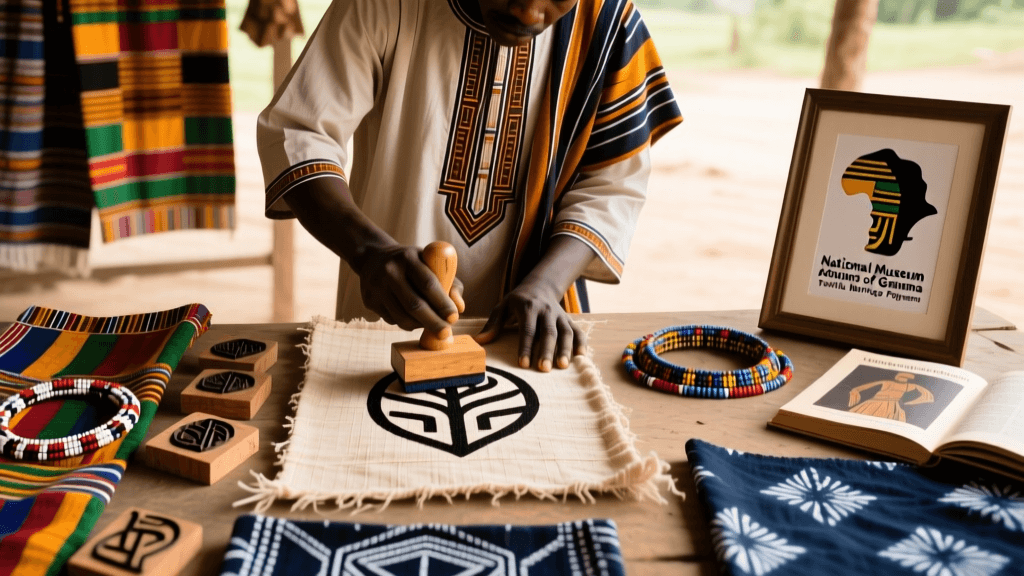
- Commercial ochre-dyed scarves sold through the Nairobi National Museum Shop carry QR-coded provenance tags linking to GPS coordinates of source quarries
Institutional Stewardship and Material Sovereignty
The Maasai Mara Wildlife Conservancies Association co-manages ochre harvesting sites with the Kenya Forest Service, enforcing seasonal closures from June to September to allow clay bed regeneration. This policy, enacted in 2016, increased ochre yield per hectare by 34% within five years. Similarly, the Tanzania Heritage Trust’s “Clay Covenant” program certifies ethical sourcing through community-led audits—requiring harvesters to replant 5 native shrubs per kilogram of ochre extracted. These frameworks reject extractive models, centering Maasai epistemology: ochre is not a commodity but a covenant between land, lineage, and luminosity.
“The ochre does not belong to us. We belong to it. When the earth gives red, it gives memory. To dye without asking is to forget who holds the sky.” — Ole Ntutu, Maasai elder and cultural advisor to the Nairobi National Museum, 2022
Comparative Chromatic Metrics
Standardized colorimetric analysis (CIE L*a*b* values) demonstrates ochre’s unique profile against synthetic alternatives:
| Pigment Source | L* (Lightness) | a* (Red-Green) | b* (Yellow-Blue) | Chroma (C*) |
|---|---|---|---|---|
| Maasai volcanic ochre | 38.2 | 24.7 | 12.1 | 27.5 |
| Commercial iron oxide #112 | 41.9 | 21.3 | 10.8 | 23.9 |
Differences in a* and C* values confirm ochre’s superior red intensity and saturation—attributes directly tied to hematite crystallinity formed under volcanic conditions. This distinction informs textile conservation protocols at the Nairobi National Museum, where ochre-treated shukas are stored at 45% relative humidity (not the standard 55%) to prevent hygroscopic swelling of clay particles.
Contemporary Tensions and Textile Ethics
Not all commercial engagements uphold cultural continuity. In 2021, a European fast-fashion label released “Maasai-inspired” shukas dyed with synthetic red #FF0000—ignoring ochre’s sacred associations and misrepresenting its material behavior. The backlash prompted the Tanzania Fashion Week Foundation to draft the “Ochre Protocol,” mandating third-party verification of pigment origin, Maasai co-authorship in design briefs, and royalty structures allocating 12% of net revenue to community land trusts. As of 2024, 17 Kenyan and Tanzanian brands—including Soko Design Collective and Malaika Boutique—have adopted the protocol, collectively redistributing $84,300 USD to Maasai education funds since inception.
Ochre dyeing persists not as relic but as responsive grammar—its syntax evolving with each generation’s negotiation of land rights, climate shifts, and global visibility. When a young Maasai woman in Arusha mixes ochre with avocado pit extract to achieve a rust-brown gradient for a wedding shuka, she extends a lineage older than written records. Her hands do not replicate tradition; they translate it—mineral, memory, and motion held in equal measure.
The shuka remains unsewn, uncut, unbranded by industry logic. It is wrapped—not worn—as an act of orientation. To hold ochre-treated cloth is to hold geologic time, pastoral knowledge, and political resilience in a single, supple plane.
At the Kisii Stone Carvers’ Cooperative, apprentices learn ochre grinding before weaving. At the University of Dar es Salaam, students analyze ochre spectra alongside oral histories. At the Maasai Mara Wildlife Conservancies Association, rangers map ochre veins like sacred rivers. These are not siloed practices—they are convergent currents in a living hydrology of heritage.
Ochre does not fade. It settles.
It waits—for rain, for ceremony, for the next hand that knows how to ask.
Its chemistry is iron. Its chronology is covenant. Its color is continuity.
Measured in grams, grams per square meter, hours of sun, days between applications, and centuries of witness—ochre is quantifiable only in the terms it sets itself.
This is not adaptation. It is insistence.