Luxury Ao Dai Fabrics 2026: Lotus Silk vs Mulberry Silk
The Evolution of Luxury Asian Textiles in 2026
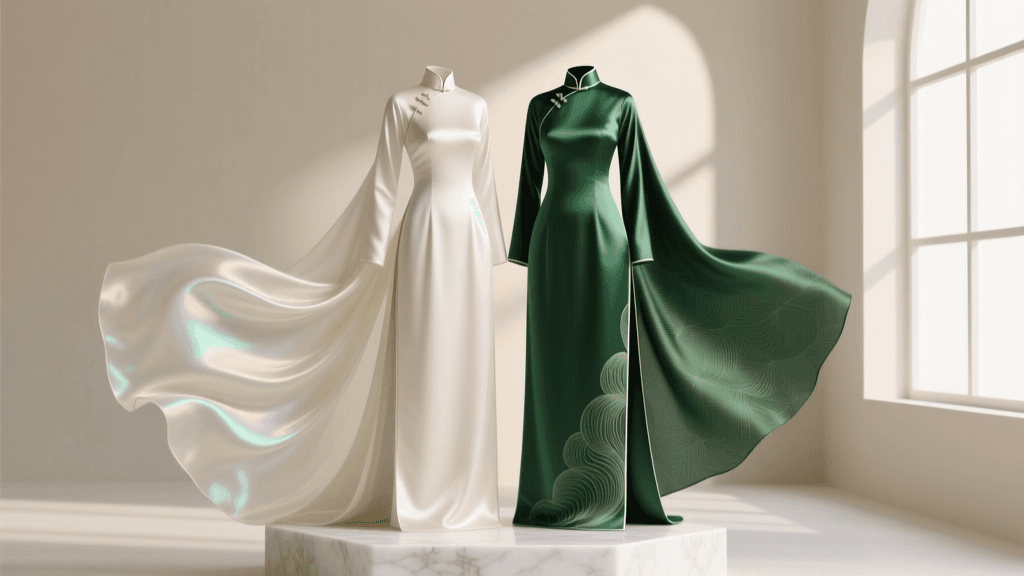
The Vietnamese Ao Dai is a masterpiece of sartorial engineering, characterized by its high mandarin collar, raglan sleeves, and dramatic side slits that flow over wide-legged trousers. As we navigate the fashion landscape of 2026, the conversation among haute couture tailors in Hanoi and Ho Chi Minh City has shifted dramatically toward sustainable luxury. Discerning clients are no longer satisfied with standard synthetic blends or mass-produced fabrics. Instead, the focus has narrowed to a fascinating textile rivalry: the ancient, painstakingly hand-woven lotus silk versus the time-honored, lustrous mulberry silk. Understanding the nuances between these two premium fibers is essential for anyone looking to commission a bespoke Ao Dai that balances cultural heritage with modern ecological consciousness.
According to the extensive Asian textile archives documented by the Victoria and Albert Museum, the evolution of traditional Asian garments is deeply intertwined with the regional availability of natural fibers and the technological advancements in weaving. In 2026, the integration of eco-conscious practices with traditional loom techniques has elevated both lotus and mulberry silks to new heights of global luxury. This comprehensive guide will break down the structural, aesthetic, and practical differences between these two elite fabrics to help you make an informed choice for your next traditional garment commission.
The Renaissance of Lotus Silk
Lotus silk is widely considered one of the rarest and most expensive natural textiles in the world. Extracted from the stems of the Nelumbo nucifera plant, the fiber requires immediate processing; the stems must be harvested, snapped, and the microscopic filaments rolled into threads within twenty-four hours of being cut, otherwise, the sap dries and the fibers become brittle. In 2026, cooperative weaving villages in the Mekong Delta and Myanmar have optimized this process using solar-powered micro-looms that maintain the delicate tension required for lotus threads without relying on fossil fuels.
The resulting fabric is highly prized for its unique tactile qualities. Unlike animal-based silks, lotus silk is a plant-based cellulose fiber, giving it a matte finish, a slightly nubby texture, and exceptional breathability. It feels remarkably similar to raw linen but possesses the lightweight drape of fine silk. The United Nations Environment Programme has frequently highlighted lotus silk as a premier example of circular, low-impact fashion, as the lotus plant requires no pesticides, minimal freshwater irrigation compared to cotton, and every part of the plant is utilized in local economies.
For an Ao Dai, lotus silk offers a distinctly understated, organic elegance. It is highly favored for daytime ceremonies, tea ceremonies, and outdoor summer weddings where heat and humidity are prevalent. However, because the fiber lacks natural elasticity, tailoring an Ao Dai from pure lotus silk requires absolute precision in measurements.
Traditional Mulberry Silk: The Enduring Gold Standard
While lotus silk represents the avant-garde of sustainable luxury, mulberry silk remains the undisputed gold standard for traditional Asian formalwear. Produced by the Bombyx mori silkworm, which feeds exclusively on the leaves of the white mulberry tree, this animal protein fiber has been cultivated for millennia. As noted by Encyclopedia Britannica, the continuous filament structure of mulberry silk gives it a tensile strength that rivals steel wire of the same diameter, alongside a natural triangular prism-like structure that refracts light, creating its signature iridescent sheen.
In 2026, the highest grade of mulberry silk available for luxury garments is Grade 6A, typically woven into heavy crepes, charmeuses, or intricate brocades ranging from 19 to 30 momme in weight. For the Ao Dai, a 22-momme silk crepe is often the preferred choice for the tunic, providing enough weight to drape beautifully over the body while resisting wrinkles. The trousers are frequently cut from a lighter 16-momme silk habotai or chiffon to ensure fluid movement.
Mulberry silk is highly adaptable to vibrant, complex dyeing techniques. In 2026, master dyers are utilizing advanced, color-fast botanical dyes derived from indigo, jackfruit wood, and lotus root, achieving rich jewel tones that do not degrade under UV exposure. The natural elasticity and bias stretch of mulberry silk make it incredibly forgiving during the tailoring process, allowing the garment to contour perfectly to the wearer's silhouette without restricting movement.
Head-to-Head Textile Comparison
To help you visualize the differences between these two exceptional materials, we have compiled a detailed comparison chart based on 2026 market data and textile engineering standards.
| Textile Feature | Lotus Silk (Nelumbo Nucifera) | Mulberry Silk (Bombyx Mori - Grade 6A) |
|---|---|---|
| Fiber Origin | Hand-extracted lotus stems (Plant Cellulose) | Silkworm cocoons (Animal Protein) |
| Visual Finish | Matte, organic, slightly nubby texture | High luster, iridescent, smooth |
| Breathability | Exceptional; highly moisture-wicking | Moderate; temperature regulating |
| Drape and Stretch | Fluid drape, zero natural stretch | Heavy drape, natural bias elasticity |
| 2026 Market Price | $180 to $350+ per meter | $60 to $120 per meter |
| Eco-Impact | Ultra-low impact, regenerative harvesting | Moderate impact, requires mulberry farming |
| Ideal Ao Dai Use | Daytime events, humid climates, minimalist designs | Evening galas, bridal wear, heavily embroidered pieces |
Tailoring Considerations for the Ao Dai
The construction of an Ao Dai is notoriously unforgiving. The tunic is designed to fit snugly across the bust and waist before flaring out dramatically at the hips. When commissioning a bespoke piece in 2026, your choice of fabric will dictate the tailoring methodology.
Working with Lotus Silk
Because lotus silk possesses virtually no mechanical stretch, tailors in Hanoi are increasingly utilizing 3D body-scanning technology to capture micro-measurements of the client's torso. If the garment is cut even a fraction of an inch too tight, the lotus silk will pull at the seams and distort the delicate weave. Furthermore, lotus silk is highly susceptible to needle marks; once a needle pierces the fabric, the hole is permanent. Therefore, master tailors will baste the garment together by hand and conduct multiple fittings using a muslin toile before ever cutting the precious lotus textile. Expect the tailoring process to take up to eight weeks, with bespoke labor costs ranging from $250 to $400.
Working with Mulberry Silk
Mulberry silk is a joy for traditional tailors. Its natural give allows for the classic tape-measure fitting method. The fabric can be easily eased into the curved seams of the raglan sleeves and the high mandarin collar. If you plan to incorporate heavy metallic embroidery, beadwork, or 3D floral appliques into your Ao Dai, mulberry silk is mandatory. The dense protein structure of the silk can support the weight of heavy embellishments without tearing or sagging, whereas lotus silk would buckle under the same decorative load.
Care, Maintenance, and Storage
Investing in luxury Asian textiles requires a commitment to proper garment care. The environmental conditions of 2026, including fluctuating urban humidity levels, demand specific storage protocols to preserve the integrity of natural fibers.
- Washing: Never machine wash either fabric. Lotus silk should be spot-cleaned or gently hand-washed in cold water using a pH-neutral, enzyme-free detergent specifically formulated for plant fibers. Mulberry silk requires a silk-specific wash to maintain its sericin coating and luster.
- Drying: Avoid direct sunlight entirely. UV rays will rapidly degrade lotus silk, causing it to become brittle, and will yellow white mulberry silk. Roll the garment in a clean, dry cotton towel to press out excess water, then lay it flat on a mesh drying rack in a shaded, well-ventilated room.
- Ironing: Use a professional steam press rather than a traditional contact iron. If you must use a home iron, set it to the lowest possible heat setting and always use a Teflon pressing cloth. For mulberry silk, iron on the reverse side while the fabric is still slightly damp to eliminate creases without scorching the fibers.
- Storage: Store your Ao Dai in a breathable, unbleached cotton garment bag. Avoid plastic covers, which trap moisture and encourage the growth of mildew. Insert acid-free tissue paper into the sleeves and the high collar to help the garment retain its structural shape over time. For lotus silk, include natural cedar blocks to deter insects without introducing harsh chemical odors into the porous cellulose fibers.
Conclusion: Choosing Your Signature Fabric
The decision between lotus silk and mulberry silk ultimately hinges on the intended use of your Ao Dai and your personal aesthetic philosophy. If you prioritize ecological sustainability, understated matte elegance, and unparalleled breathability for daytime wear, the investment in lotus silk is entirely justified. It represents the cutting edge of 2026 sustainable luxury, connecting the wearer directly to the aquatic landscapes of Southeast Asia. Conversely, if you require a garment with a brilliant sheen, the structural capacity for heavy embroidery, and the forgiving drape necessary for high-movement evening events, Grade 6A mulberry silk remains an unbeatable, timeless choice. By understanding the unique properties of these exceptional textiles, you ensure that your traditional garment is not only a beautiful piece of clothing but a lasting artifact of Asian cultural heritage.