2026 Kimono Auction Guide: Secondhand Value Appraisal
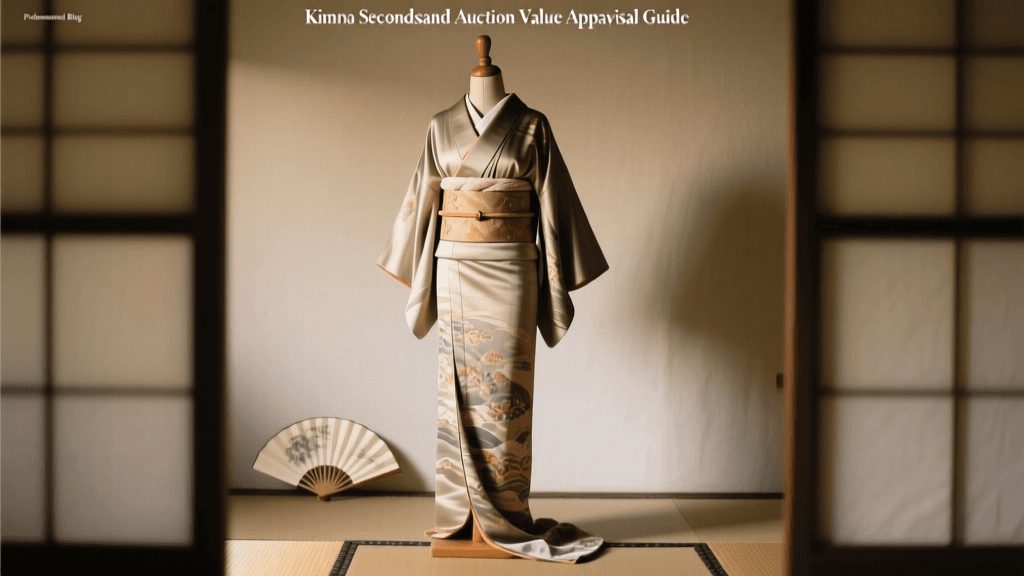
The 2026 Kimono Secondhand Market Renaissance
As we navigate the fashion landscape of 2026, the intersection of sustainable style and heritage craftsmanship has propelled the kimono secondhand market to unprecedented global heights. Driven by a worldwide shift toward circular fashion and a deep appreciation for slow, artisanal textiles, vintage and antique Japanese garments are no longer confined to local recycle shops in Kyoto or Tokyo. Today, international collectors, upcyclers, and fashion archivists actively participate in digital auctions to secure rare silks, intricate weaves, and historically significant pieces.
Understanding how to appraise the value of a secondhand kimono requires a nuanced grasp of textile history, condition grading, and current market demand. Whether you are bidding on a pristine Showa-era furisode or a durable, everyday Oshima Tsumugi, mastering the art of kimono appraisal is essential for navigating the 2026 auction environment successfully. According to the Victoria and Albert Museum's extensive textile archives, the kimono is not merely a garment but a complex canvas of cultural and technical evolution, making its secondhand valuation a highly specialized skill.
Primary Auction Platforms and Proxy Services
In 2026, the digital infrastructure for acquiring secondhand kimonos from Japan is more streamlined than ever. The primary battleground for serious collectors remains Yahoo! Auctions Japan, which hosts tens of thousands of kimono listings daily, ranging from unverified closet clear-outs to curated estate sales. Because direct bidding from overseas IP addresses is often restricted, international buyers rely heavily on advanced proxy services like Buyee, ZenMarket, and Neokyo.
These proxy platforms have evolved significantly by 2026, offering AI-driven translation of highly specific Japanese textile terminology, consolidated international shipping, and automated condition-report scanning. Additionally, specialized digital storefronts operated by established Japanese brick-and-mortar recycle chains, such as Tansu-ya and Komehyo, now feature dedicated global auction portals, allowing buyers to bid on professionally inspected and cleaned garments with greater confidence.
The Art of Kimono Value Appraisal
Appraising a kimono is fundamentally different from evaluating Western vintage clothing. The value is rarely dictated by a recognizable fashion brand logo; instead, it is rooted in the material, the weaving or dyeing technique, the region of origin, and the garment's physical integrity.
Fabric, Weave, and Material Authenticity
The foundation of any kimono appraisal is the fabric. Pure silk (shoken) commands the highest premiums, but not all silks are created equal. In 2026, highly prized regional weaves such as Oshima Tsumugi (a mud-dyed, ikat-woven silk from Amami Oshima) and Yuki Tsumugi (a lightweight, hand-spun silk pongee) remain at the apex of the market. The Japanese government's Ministry of Economy, Trade and Industry (METI) strictly regulates these Traditional Craft designations, and pieces bearing the official certification seals fetch top dollar at auction.
Conversely, synthetic blends or polyester kimonos, which became common in the late Showa era, hold minimal resale value unless they feature exceptionally rare modernist prints. Appraisers always check the interior seams and the eri (collar) for fabric stamps or burn-test indicators to verify material authenticity before placing a bid.
Decoding Condition Reports and Flaws
Condition is the most volatile variable in kimono valuation. Japanese sellers are notoriously meticulous about documenting flaws, using specific terminology that international buyers must understand to avoid costly mistakes. The most common condition issues that severely depress a kimono's 2026 auction value include:
- Shimi (Age Spots/Mold): Small, dark, or yellowish spots caused by moisture or improper storage. While minor shimi on the lower half of the skirt can be hidden by an obi, spots on the chest or sleeves drastically reduce value.
- Yake (Sun/Color Fading): Fading along the folds or the shoulders. Ori-yake (fold fading) appears as stark lines where the garment was stored, while hikari refers to the shiny, worn patches on the fabric surface caused by friction.
- Hikkake (Snags/Pulls): Pulled threads in delicate crepe silks (chirimen) or brocades. On a formal garment, even a single millimeter snag can downgrade it from 'excellent' to 'good' condition.
- Eri-yogore (Collar Stains): Makeup or skin oil stains on the inner collar. While easily replaceable if the inner lining (han-eri) is separate, deep stains on the main silk collar require expensive professional cleaning.
2026 Kimono Secondhand Value Matrix
The following table provides a baseline appraisal matrix for the 2026 international auction market. Prices are estimated in USD for garments in 'Excellent' to 'Very Good' condition, complete with standard measurements.
| Kimono Type | Era / Style | Key Appraisal Factor | Est. 2026 Auction Value (USD) |
|---|---|---|---|
| Furisode (Long Sleeve) | Mid-Showa (1950s-1970s) | Hand-painted yuzen, gold leaf, dynamic motifs | $350 - $1,200+ |
| Komon (Everyday) | Modern / Late 20th Century | Repeating stencil dye (Edo Komon), pure silk | $80 - $250 |
| Oshima Tsumugi | Vintage / Antique | METI certified, tight ikat weave, mud-dyed | $400 - $2,500+ |
| Meisen | Taisho to Early Showa | Bold, modernist geometric patterns, ikat weave | $200 - $800 |
| Haori (Jacket) | Various Eras | Hidden inner lining art (hakkake), silk brocade | $60 - $300 |
Crucial Measurements for the Global Buyer
Unlike Western clothing sized by S, M, or L, kimonos are tailored to the individual. When browsing auction listings in 2026, you must scrutinize the provided measurements. The most critical metric for international buyers is the Yuki (the length from the center back of the neck, across the shoulder, to the wrist). Historically, Japanese women were shorter, meaning many vintage kimonos have a yuki of 62-64cm. For modern global wearers, finding a vintage piece with a yuki exceeding 68cm is rare and commands a significant premium. Additionally, the Mitake (back length) must be sufficient to allow for the traditional ohashori (the folded tuck at the waist). If the mitake is too short, the kimono loses its structural elegance and its market value plummets.
Provenance, Artisan Marks, and Certificates
A kimono's value skyrockets when accompanied by verifiable provenance. High-end auction lots often include a shomeisho (certificate of authenticity) or a tatou-shi (a paper wrapper detailing the artisan and material). Furthermore, buyers should look for the rakkan or artisan stamp, usually found on the inner lining near the left hip or on the collar's edge.
As highlighted by The Metropolitan Museum of Art's historical textile records, the lineage of a garment—whether it was commissioned for a specific theatrical performance, a noble family's trousseau, or created by a Living National Treasure like the late Kunihiko Moriguchi—transforms the garment from mere apparel into a museum-grade investment. In 2026, digital verification of these artisan marks through specialized Japanese textile databases has become a standard practice for high-tier proxy buyers.
Strategic Bidding and 2026 Shipping Logistics
Winning a kimono auction requires more than just a high maximum bid; it requires strategic timing and an understanding of logistics. Many Japanese sellers list kimonos with a starting bid of just 1,000 JPY (roughly $7 USD) to generate algorithmic traction. The most competitive bidding wars occur in the final three minutes of an auction. Utilizing the automated 'sniping' features provided by 2026 proxy services ensures your bid is placed at the last possible second, preventing emotional bidding wars that artificially inflate the price.
Once won, logistics must be factored into your total appraisal cost. Silk is highly susceptible to humidity and temperature fluctuations. In 2026, premium proxy services offer climate-controlled consolidation, ensuring that your vintage silks are not exposed to extreme heat in cargo holds during summer transit. Furthermore, be acutely aware of your country's 2026 import duties on antique textiles. While garments over 100 years old can sometimes be classified as duty-free antiques under specific customs codes, proving the exact age of a Showa-era kimono requires the original certificate, which is rarely included in standard secondhand lots.
Conclusion
The 2026 kimono secondhand market is a vibrant, complex ecosystem that rewards patience, education, and a discerning eye. By understanding the nuances of regional weaves, mastering the Japanese terminology for garment flaws, and leveraging advanced proxy bidding strategies, collectors can uncover breathtaking pieces of wearable history. Whether you are acquiring a vibrant Meisen for upcycling into modern outerwear or preserving a pristine Oshima Tsumugi for your personal archive, the thrill of the auction lies in the deep, enduring connection to Asia's most iconic textile tradition.