Top Japanese Kimono Fashion Schools & Apprenticeships 2026
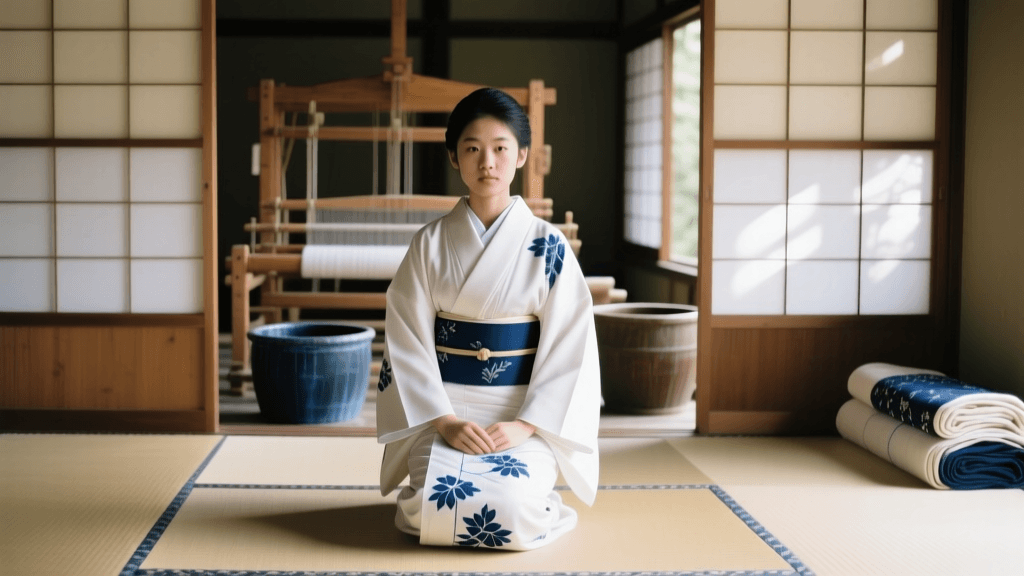
The Evolution of Japanese Fashion Education in 2026
The preservation of Japan's sartorial heritage has reached a critical and exciting juncture in 2026. As the generation of post-war master artisans continues to age, the transmission of traditional garment-making techniques—such as wasai (Japanese dressmaking), yuzen dyeing, and nishijin-ori (Nishijin weaving)—has shifted from purely informal family lineages to structured, institutionalized education. Today, aspiring designers and international students are flocking to Japan to study the intricate architecture of the kimono, hakama, and haori. The educational landscape in 2026 beautifully marries centuries-old handcraft with modern pedagogical tools, including 3D body scanning for custom kimono fitting and digital archiving of fragile Edo-period textile patterns.
For those seeking to immerse themselves in the world of traditional Asian garments, Japan offers two primary pathways: formal enrollment in specialized fashion and craft colleges, or the rigorous, deeply traditional deshi (apprenticeship) system under a recognized master. This comprehensive guide explores the premier institutions, the realities of the Kyoto apprenticeship model, and the practical steps to begin your journey in Japanese traditional fashion education this year.
Premier Institutions for Traditional Japanese Garments
Bunka Fashion College: Where Heritage Meets Innovation
Located in the heart of Tokyo's Shibuya district, Bunka Fashion College remains the most prestigious fashion institution in Japan. While globally renowned for its avant-garde and contemporary fashion programs, Bunka's Department of Traditional Japanese Clothing is a hidden gem for serious students of heritage garments. In 2026, the curriculum has been updated to include advanced modules on sustainable textile sourcing and the integration of digital pattern-making software specifically calibrated for the straight-line cutting method (chokusen-dachi) unique to kimono construction. Students learn to draft patterns for various kimono types, including the formal tomesode and the casual yukata, while mastering the invisible hand-stitching techniques that allow a kimono to be entirely disassembled, washed, and resewn.
Kyoto Traditional Arts Super College
For students whose primary interest lies in the creation of the textiles themselves rather than just the garment construction, the Kyoto Traditional Arts Super College is unparalleled. Supported by the local government and the Association for the Promotion of Traditional Craft Industries, this institution offers intensive, multi-year courses in Kyoto's signature crafts. The Yuzen dyeing program teaches the meticulous application of itome-nori (rice paste resist) to create crisp, intricate outlines before hand-painting vibrant botanical motifs. Similarly, the weaving department provides access to both traditional wooden jacquard looms and modern computerized looms, allowing students to understand the structural evolution of Nishijin brocade.
The Modern Deshi: Apprenticeships in 2026
While formal schooling provides a broad foundation, the deshi (apprenticeship) system remains the ultimate crucible for mastering a specific traditional craft. In 2026, the Japanese government, via the Agency for Cultural Affairs, has expanded its subsidy programs to encourage master artisans—some of whom hold the title of Living National Treasure—to accept both domestic and international apprentices. This initiative aims to combat the severe artisan shortage threatening the survival of regional crafts like Kanazawa gold leaf application and Arimatsu shibori.
Types of Apprenticeships
- Uchi-Deshi (Live-in Apprentice): The most traditional and demanding route. The apprentice lives in the master's workshop or home, dedicating 10 to 14 hours a day to the craft, household chores, and workshop maintenance. This path is rare for foreigners in 2026 but still exists in highly conservative weaving houses in rural Kyoto.
- Kayoi-Deshi (Commuting Apprentice): The more common model today. Apprentices commute to the atelier daily. The focus is strictly on skill acquisition, and the relationship, while deeply respectful, is more akin to a modern mentorship.
The Daily Routine of a Kyoto Yuzen Apprentice
Understanding the daily reality of an apprentice is crucial before committing to the path. A typical day for a te-yuzen (hand-yuzen) apprentice in Kyoto begins at 7:30 AM. The first hour is dedicated to soji (cleaning the workspace and washing brushes), a practice rooted in Zen spirituality that instills mindfulness and respect for the tools. From 9:00 AM to 12:00 PM, the apprentice practices kaki-e (brushwork) on scrap silk, focusing on the precise pressure required to create gradients (bokashi). Afternoons are spent assisting the master with steaming, washing, and stretching the dyed silk using shinshi (tenter hooks). Evenings often involve grinding natural pigments and preparing the rice paste for the next day's resist work.
2026 Curriculum and Pathway Comparison
Choosing between a formal school and a private apprenticeship depends on your career goals, language proficiency, and desired lifestyle. Below is a structured comparison of the primary educational pathways available in 2026.
| Feature | Bunka Fashion College (Tokyo) | Kyoto Traditional Arts Super College | Private Kyoto Atelier Apprenticeship |
|---|---|---|---|
| Primary Focus | Garment construction, pattern drafting, modern integration | Textile creation, dyeing, weaving, lacquerwork | Mastery of a single, hyper-specific artisan technique |
| Duration | 1 to 2 years (Diploma) | 2 to 4 years (Advanced Diploma) | 3 to 10+ years (Until master grants independence) |
| Language Requirement | JLPT N2 (or dedicated Japanese course) | JLPT N2 | JLPT N1 (Fluent conversational and technical) |
| Annual Tuition/Cost | Approx. ¥1,400,000 | Approx. ¥800,000 (Subsidized) | Often free, but apprentice pays for own tools/living |
| Visa Category | Student Visa | Student Visa | Designated Activities (Artisan) or Cultural Activities |
Essential Tools for the 2026 Traditional Garment Student
Whether you are enrolling in a college or entering an atelier, you will be expected to procure your own foundational tools. In 2026, while some digital tools are used for design, the physical crafting tools remain entirely traditional. Expect to invest in the following:
- Shaku (Japanese Ruler): Essential for measuring fabric in traditional units. A standard kujira-jaku (whalebone ruler) is used for kimono measurements, where 1 shaku equals approximately 37.8 centimeters.
- Hera (Spatulas): Bamboo and ivory spatulas of varying widths used for applying resist paste in yuzen dyeing or for manipulating threads in weaving.
- Kote (Craft Irons): Traditional soldering-iron-like tools with specialized metal tips used for melting wax in ro-kechi (wax-resist dyeing) or scoring leather.
- Harite (Tension Pins): Heavy, weighted pins used to hold silk taut on a yuzen frame without piercing the delicate fabric.
- Digital Tablet with Stylus: Increasingly mandatory in 2026 for drafting initial motifs and mapping color palettes before committing expensive, hand-woven silk to the dyeing process.
Application Requirements, Visas, and Practical Considerations
Securing a spot in a Japanese fashion school or an artisan's workshop requires meticulous planning, particularly for international applicants. For the 2026 academic year, most major institutions require applicants to hold a minimum of JLPT N2 certification, as technical terminology regarding textile grains, dye chemistry, and loom mechanics is highly specialized and rarely translated into English.
For those pursuing a private apprenticeship, the visa process is uniquely complex. The Japanese immigration system introduced expanded provisions under the 'Designated Activities' visa category specifically for foreign nationals studying under certified traditional craft masters. To qualify, the master must be recognized by a prefectural or national traditional craft association, and the applicant must submit a detailed 'Craft Preservation Study Plan' outlining the specific techniques to be learned over a minimum three-year period.
Financially, students must prepare for the high cost of materials. While tuition at subsidized Kyoto colleges is relatively reasonable, the cost of raw materials—such as authentic Oshima Tsumugi silk or natural indigo (sukumo)—can be prohibitive. Many students in 2026 offset these costs by applying for the Ministry of Education's MEXT scholarships or securing grants from international textile preservation societies.
Conclusion
Studying traditional Japanese fashion and garment construction in 2026 is an act of cultural preservation and profound personal discipline. Whether you choose the structured, innovative environment of Bunka Fashion College, the deeply specialized classrooms of the Kyoto Traditional Arts Super College, or the silent, demanding floor of a master artisan's atelier, you are participating in a vital continuum. The kimono is not merely a garment; it is a canvas of Japanese history, philosophy, and aesthetic sensibility. By dedicating yourself to its creation, you ensure that the rhythmic clack of the wooden loom and the quiet sweep of the yuzen brush will continue to resonate for generations to come.