Best Sustainable Silks for Kimono and Hanbok in 2026
The 2026 Shift Toward Ethical Textiles in East Asian Fashion
As we navigate the 2026 fashion landscape, the creation and preservation of traditional Asian garments are undergoing a profound material revolution. For centuries, the kimono of Japan and the hanbok of Korea have relied heavily on conventional mulberry silk (produced by the Bombyx mori silkworm) and, in recent decades, synthetic polyester blends. However, a growing demand for cruelty-free, eco-conscious, and sustainably harvested textiles has pushed artisans and modern wearers to explore remarkable alternatives. Today, the most sought-after fabrics for high-end traditional wear are lotus silk, Ahimsa (peace) silk, and advanced plant-based cupro linings.
This comprehensive guide explores the best sustainable fabric choices for kimono and hanbok in 2026, detailing their unique properties, current market pricing, and specific applications in traditional garment construction. Whether you are a textile collector, a bespoke tailor, or a cultural enthusiast, understanding these materials is essential for navigating the modern heritage fashion market.
Lotus Silk: The Aquatic Marvel for Summer Garments
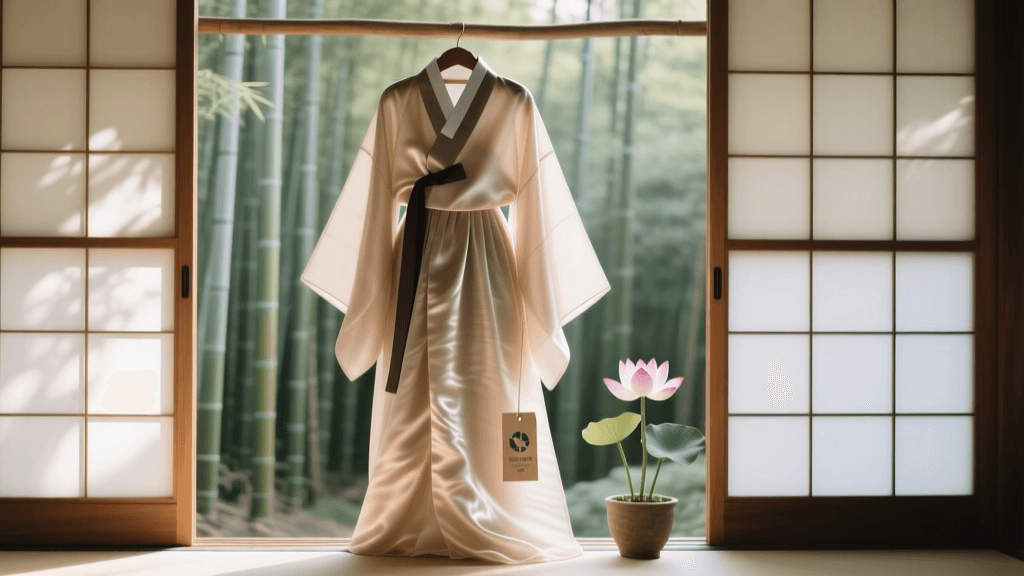
Lotus silk is an incredibly rare, plant-based fiber extracted from the stems of the lotus flower (Nelumbo nucifera). Historically confined to the lakes of Myanmar and Vietnam, lotus silk has seen a surge in global availability and refinement by 2026, thanks to improved, low-impact agricultural cooperatives. Unlike animal silk, lotus silk is entirely vegan and requires no boiling or chemical degumming processes.
The extraction process is painstakingly manual. Artisans score the lotus stems and pull out the delicate, spiderweb-like filaments, which are then hand-rolled and spun. The resulting yarn is naturally breathable, possesses a subtle matte luster, and feels like a hybrid between raw linen and fine cotton. In 2026, lotus silk is the premier choice for summer yukata, lightweight ro (gauze) kimono, and breathable summer jeogori (the traditional Korean jacket).
2026 Market Specifications and Pricing
- Average Cost: $140 to $185 USD per yard, reflecting the intense manual labor required.
- Weight & Drape: Lightweight (typically 3 to 4 oz per square yard). It offers a crisp, structured drape that holds pleats beautifully, making it ideal for wide hanbok sleeves and kimono collars.
- Dye Affinity: Takes natural indigo and botanical dyes exceptionally well, though it is often left in its natural, unbleached cream or soft beige state to highlight its organic origins.
Ahimsa (Peace) Silk: Cruelty-Free Elegance for Formal Wear
For formal garments that require the luxurious drape and warmth of traditional silk, Ahimsa silk—also known as peace silk—has become the gold standard in 2026. Ahimsa silk is produced by allowing the silkworm moth to naturally hatch and leave the cocoon before the silk is harvested. Because the emerging moth breaks the continuous silk filament, Ahimsa silk must be spun rather than reeled, resulting in a fabric with a slightly textured, 'slubby' appearance reminiscent of wild Tussah or Eri silk.
According to the Food and Agriculture Organization (FAO), advancements in non-violent sericulture have significantly improved the tensile strength of peace silk over the last five years, making it viable for heavy formal wear. In modern hanbok, Ahimsa silk is heavily utilized for the voluminous chima (skirt), providing a rich, heavy fall without the ethical concerns of conventional silk. In Japanese traditional dress, it is frequently woven into intricate obi (sashes) and used for the outer layers of formal houmongi kimono.
Texture and Weaving Innovations
The matte finish and slight irregularities of Ahimsa silk give it a rustic, wabi-sabi aesthetic that is highly prized in contemporary Japanese fashion. In 2026, weavers in the Nishijin district of Kyoto have successfully blended Ahimsa silk with recycled metallic threads to create stunning, cruelty-free brocades (kinran) for ceremonial obi.
Cupro and Bemberg: The Sustainable Lining Standard
No discussion of traditional garments is complete without addressing the lining. Historically, the inner layers of a kimono (nagajuban) or the lining of a winter hanbok were made of habutai silk or, more cheaply, polyester. In 2026, the industry has overwhelmingly adopted Cupro (often known by the brand name Bemberg) as the premier sustainable lining. Derived from cotton linter—a byproduct of the cotton industry—Cupro is a regenerated cellulose fiber that is fully biodegradable.
Cupro mimics the slippery, cooling touch of silk, allowing the heavy outer layers of traditional garments to glide easily over the wearer's undergarments. It is anti-static, moisture-wicking, and completely vegan, making it the undisputed champion of ethical garment construction this year.
2026 Fabric Comparison Chart
To help makers and buyers make informed decisions, the following table compares the leading sustainable textiles used in Asian traditional garments in 2026.
| Fabric Type | Source Material | 2026 Avg Cost/Yard | Texture & Drape | Best Traditional Application |
|---|---|---|---|---|
| Lotus Silk | Lotus plant stems | $140 - $185 | Crisp, breathable, matte, linen-like | Summer yukata, ro-gasane, jeogori |
| Ahimsa (Peace) Silk | Hatched silkworm cocoons | $65 - $95 | Soft, slubby, heavy drape, warm | Formal chima, houmongi, obi |
| Cupro (Bemberg) | Cotton linter (cellulose) | $18 - $28 | Slippery, cooling, fluid, anti-static | Nagajuban linings, hanbok under-layers |
| Conventional Mulberry Silk | Boiled silkworm cocoons | $35 - $60 | Smooth, high-luster, fluid | Standard formal wear (declining in ethical markets) |
Sourcing Authentic Sustainable Textiles in 2026
The rise in demand for ethical fabrics has unfortunately led to an increase in 'greenwashing.' The Textile Exchange frequently warns consumers about synthetic blends mislabeled as peace silk or lotus silk. When sourcing materials for your kimono or hanbok, transparency is key.
'The integrity of traditional East Asian garments relies not just on the silhouette, but on the soul of the textile. In 2026, choosing traceable, ethical fibers is the highest form of respect for the craft.' — Proceedings of the 2026 Kyoto Symposium on Sustainable Heritage Textiles.
For authentic lotus silk, buyers should look for certifications from recognized artisan cooperatives in Vietnam's Mekong Delta or Myanmar's Inle Lake region. For Ahimsa silk, reputable suppliers in India's Assam and Bihar regions now offer Global Organic Textile Standard (GOTS) certifications alongside peace silk guarantees. In Japan, the Metropolitan Museum of Art's historical archives on silk remind us of the deep historical roots of sericulture, but modern buyers should seek out Nishijin weavers who explicitly advertise 'cruelty-free' or 'vegan' silk blends for their obi and kimono bolts.
Care, Maintenance, and Storage
Sustainable textiles require specialized care to ensure their longevity, particularly when fashioned into complex, multi-layered garments like the hanbok or kimono.
- Washing: Lotus silk and Ahimsa silk should never be machine washed. Hand wash in cool water using a pH-neutral, enzyme-free detergent. Cupro linings can withstand gentle machine cycles but are best hand-washed to maintain their anti-static properties.
- Drying: Never wring lotus silk, as the plant fibers can snap when subjected to high torsion. Roll the garment in a clean cotton towel to press out moisture, then lay flat to dry away from direct sunlight. UV exposure degrades lotus silk much faster than animal silk.
- Storage: Traditional storage methods remain the best. Store folded kimono and hanbok in tansu (paulownia wood chests), which naturally regulate humidity and repel insects. If using modern storage, opt for unbleached, breathable cotton garment bags. Avoid plastic, which traps moisture and encourages mildew on organic fibers.
- Pressing: Use a low-heat steam iron. For Ahimsa silk, always use a pressing cloth to avoid flattening the natural, textured slubs that give the fabric its character.
Conclusion
The year 2026 marks a definitive turning point for Asian traditional garments. The choice to utilize lotus silk, Ahimsa peace silk, and cupro linings is no longer just a niche preference; it is a mainstream standard for high-quality, culturally respectful, and environmentally conscious fashion. By embracing these sustainable textiles, modern wearers and artisans ensure that the breathtaking silhouettes of the kimono and hanbok will continue to grace the world for generations, without compromising the ethical values of the present day.