Baltic Amber Jewelry for Lithuanian Folk Dress: 2026 Guide
The Enduring Legacy of Gintaras in Lithuanian Heritage
When discussing European folk dress, few materials possess the mythological and cultural weight of Baltic amber. Known as gintaras in Lithuanian, this fossilized tree resin has been a cornerstone of Baltic identity for millennia. In the context of the Lithuanian national costume (tautinis kostiumas), amber is not merely a decorative afterthought; it is a vital accessory that bridges ancient pagan traditions with centuries of agrarian life. As we navigate the 2026 landscape of traditional garment revival, understanding how to source, authenticate, and style Baltic amber jewelry is essential for anyone looking to honor this rich European heritage.
Historically, amber was believed to possess healing properties and a direct connection to the sun. According to the Encyclopedia Britannica, the Baltic region has been the world's primary source of high-quality amber since antiquity, with trade routes stretching back to the Roman Empire. Today, as modern artisans and cultural enthusiasts reconstruct historical folk dress, the demand for authentic, ethically sourced Baltic amber has surged. In 2026, navigating this market requires a keen eye for quality and a deep appreciation for regional styling nuances.
Core Amber Accessories in the Tautinis Kostiumas
The integration of amber into Lithuanian folk dress is highly specific, varying by garment type and the wearer's marital status. Here are the primary ways amber is utilized in traditional attire:
Kaklo Papuošalai (Necklaces)
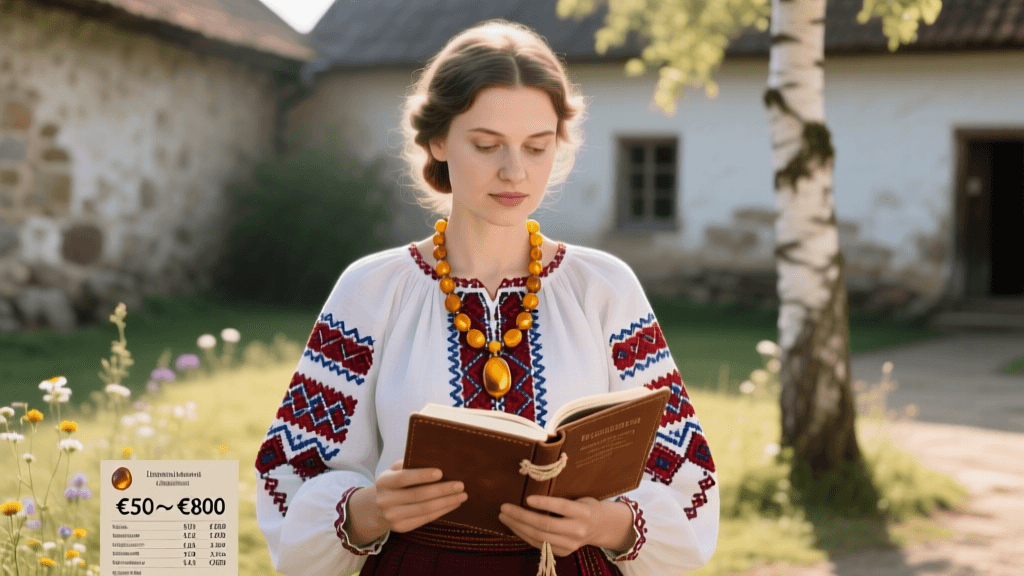
The most iconic amber accessory is the multi-strand necklace. Unlike modern, uniform bead strands, traditional folk necklaces often feature chunky, asymmetrical, and unpolished nuggets. These were historically strung on natural linen or hemp cord. In 2026, contemporary folk dress enthusiasts often opt for graduated baroque beads, which maintain a rustic aesthetic while offering a slightly more refined drape against the heavily embroidered linen collars of traditional blouses.
Segės (Brooches and Clasps)
While silver is the dominant metal for brooches (segės) used to fasten the heavy woolen shawls and aprons, amber cabochons are frequently set into the center of these intricate metalworks. The combination of oxidized silver and warm, honey-colored amber creates a striking contrast that anchors the visual weight of the costume.
Vainikai and Galvos Papuošalai (Headwear Accents)
For unmarried women, the vainikas (wreath or crown) is a crucial element of folk dress. While fresh flowers or silk ribbons are standard, small, polished amber beads are sometimes woven into the structural base of the headwear or used to accentuate the dangling ornaments of the kykas (a horned headdress worn by married women in certain regions). This subtle use of amber catches the light during traditional folk dances and festival celebrations.
2026 Market Trends and Sourcing Authentic Baltic Amber
The amber market has experienced significant shifts by 2026. Due to ongoing geopolitical tensions and strict export regulations surrounding the Kaliningrad enclave—which historically supplied a massive portion of the world's raw amber—buyers and artisans have pivoted heavily toward Lithuanian and Polish coastal sourcing. This shift has elevated the premium on locally harvested, storm-washed amber from the Curonian Spit and the Gdańsk Bay.
For those sourcing amber for folk dress in 2026, it is crucial to purchase from certified members of the Lithuanian Amber Association or established galleries in Vilnius and Klaipėda. The rise of sophisticated synthetic resins and pressed amber (ambroid) means that buyers must be more vigilant than ever. When sourcing for a historically accurate tautinis kostiumas, always request a certificate of authenticity and prioritize raw or lightly tumbled stones over heavily modified or heat-treated pieces, which look too modern and commercial for traditional attire.
Amber Authentication: Avoiding Fakes in 2026
With the influx of copal (immature resin) and plastic imitations, verifying your amber is critical. The Gemological Institute of America (GIA) outlines several non-destructive tests that collectors and costumers can use to verify Baltic amber:
- The Saltwater Test: Genuine Baltic amber will float in a saturated saltwater solution (1 part salt to 2 parts water), while most plastics and glass will sink. Copal may also float, so this test should be combined with others.
- The UV Light Test: Under ultraviolet light, authentic Baltic amber fluoresces a pale blue or milky green. Plastics and copal typically show little to no fluorescence or glow a stark, unnatural white.
- The Electrostatic Test: When rubbed vigorously against a natural wool cloth, genuine amber builds a static charge and can pick up small pieces of paper. This ancient test, first noted by the Greeks, remains a reliable quick-check in 2026.
- The Acetone Test: A drop of acetone (nail polish remover) on the surface will make copal and plastics tacky or sticky. Genuine, fully fossilized Baltic amber will remain completely unaffected.
Comparative Guide: Amber Types and 2026 Pricing
When budgeting for your folk dress accessories, understanding the current pricing structure is essential. The table below outlines the average 2026 market rates for authentic Baltic amber, categorized by finish and suitability for traditional costumes.
| Amber Type | Description | 2026 Avg. Price (per gram) | Folk Dress Suitability |
|---|---|---|---|
| Raw / Unpolished | Natural nuggets, lightly tumbled, retaining natural crust | €4.50 - €8.00 | High (Authentic pagan/rustic aesthetic) |
| Polished Baroque | Smooth, asymmetrical beads with high luster | €6.00 - €12.00 | Very High (Standard for necklaces) |
| Heat-Treated / Cognac | Enhanced clarity, deep red-brown color, often with sun spangles | €10.00 - €18.00 | Medium (Better for formal silver brooches) |
| Carved / Cameo | Intricate floral, animal, or mythological motifs | €25.00+ | Low (Too ornate and modern for traditional folk) |
Regional Styling: Matching Amber to Ethnographic Zones
Lithuania is divided into five distinct ethnographic regions, each with its own unique weaving patterns, color palettes, and silhouette rules. Styling amber jewelry correctly requires an understanding of these regional differences.
Aukštaitija (Highlanders)
The folk dress of Aukštaitija is characterized by its light, airy color palette, heavily featuring white linen and subtle red or silver accents. Here, amber provides a vital pop of warmth. A multi-strand necklace of polished baroque amber beads resting against a stark white linen collar creates a breathtaking, historically accurate contrast. Avoid overly dark cognac amber; stick to bright honey and butterscotch hues.
Žemaitija (Samogitians)
Žemaitija costumes are bold, featuring deep reds, vibrant greens, and heavy, striped woolen skirts. The warmth of the textiles pairs beautifully with richer, darker amber. Heat-treated cognac amber or raw, earthy nuggets complement the grounded, agrarian aesthetic of this western region. Amber brooches set in heavy, oxidized silver are particularly appropriate here to fasten the thick, woven sashes and shawls.
Dzūkija
Located in the heavily forested south, Dzūkija folk dress utilizes darker, more muted tones, with intricate, geometric linen weaves and dark blue or black aprons. The visual complexity of the textiles means jewelry should be understated. A single, heavy strand of large, unpolished amber nuggets is preferred over delicate, multi-strand arrangements, allowing the resin's natural glow to cut through the darker fabrics without competing with the intricate embroidery.
Suvalkija
Suvalkija is known for its wealthy agricultural history, reflected in its rich, saturated colors and elaborate floral brocade motifs. The amber used here should be of the highest clarity. Perfectly polished, symmetrical beads or large, flawless cabochons set into silver clasps reflect the region's historical prosperity. The golden hues of the amber harmonize beautifully with the deep crimsons and forest greens of the Suvalkijan skirts.
Mažoji Lietuva (Lithuania Minor)
The folk dress of Lithuania Minor, influenced by its proximity to Prussia and the coast, often features darker, more somber colors, including black, dark blue, and deep purple. Because the textiles are so dark, raw, light-colored amber provides a striking, almost luminescent contrast. Coastal storm-washed amber, with its natural, pitted texture, is the most historically resonant choice for this maritime region.
'Amber is the tears of the ancient Baltic pines, carrying the warmth of the sun and the memory of the earth. To wear it with our traditional dress is to wear our history.' — Lithuanian Proverb
Care and Preservation of Antique and Modern Amber
Whether you are wearing a family heirloom or a newly sourced 2026 piece, amber requires specific care to maintain its luster. As an organic gemstone, amber is relatively soft (2 to 2.5 on the Mohs scale) and can be easily scratched by metal zippers or harsh beads. The experts at the Palanga Amber Museum recommend storing amber jewelry in soft cloth pouches, separate from silver brooches or metal clasps.
Never clean amber with ultrasonic cleaners, steam, or harsh chemical detergents, as these can strip the natural oils and cause the surface to craze or crack. Instead, simply wipe the beads with a soft, lint-free microfiber cloth after wearing. If the amber becomes excessively dull over years of wear, a very light application of natural almond oil or olive oil, rubbed in gently and buffed off immediately, can restore its deep, sunlit glow.
Conclusion
Integrating Baltic amber into Lithuanian folk dress is a profound way to connect with European textile heritage. By understanding the distinct requirements of the five ethnographic regions, staying informed about the 2026 sourcing market, and rigorously authenticating your stones, you ensure that your tautinis kostiumas is not only visually stunning but culturally resonant. Whether you are attending a midsummer Joninės festival or participating in a global folk dance ensemble, authentic amber remains the ultimate, timeless accessory of the Baltic coast.