Best Hanfu for Tai Chi & Qigong Practice in 2026: Fit & Fabric
The Renaissance of Mindful Movement in Traditional Garments
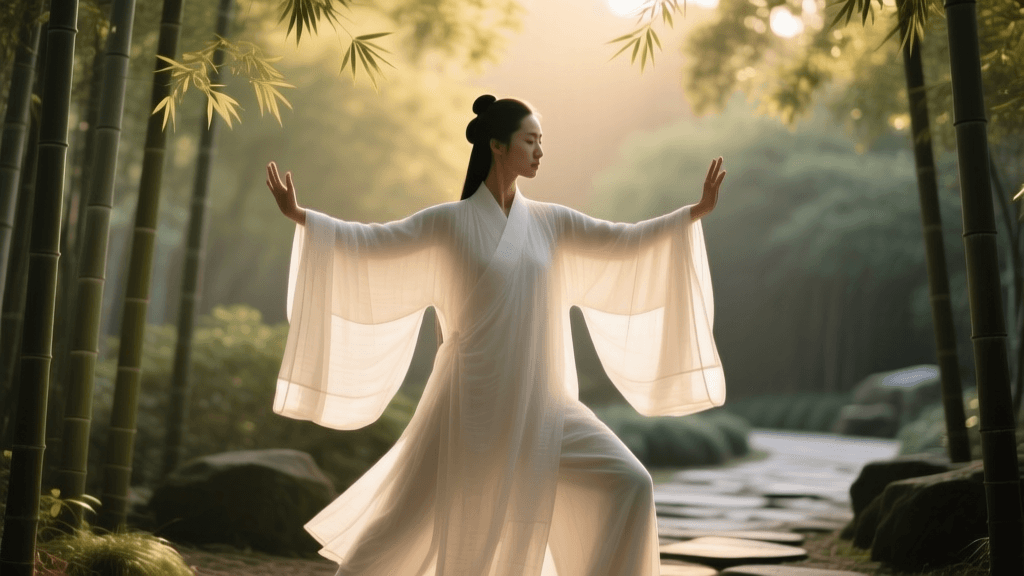
In 2026, the intersection of traditional Chinese clothing and holistic wellness has evolved from a niche hobby into a mainstream lifestyle movement. The Xin Zhongshi (new Chinese style) phenomenon has matured, with practitioners increasingly seeking garments that do not merely look historically accurate but actively support physical and spiritual well-being. For devotees of Tai Chi and Qigong, the clothing worn during practice is no longer an afterthought; it is considered an essential extension of the body's energy system. As the global wellness industry embraces Eastern practices, understanding how historical Hanfu silhouettes and natural textiles facilitate internal martial arts has become paramount for modern practitioners.
According to Harvard Health Publishing, Tai Chi is often described as 'medication in motion,' offering profound benefits for balance, cardiovascular health, and stress reduction. However, to fully realize these benefits, the physical environment—including the garments worn—must support unrestricted movement and thermoregulation. Synthetic, fast-fashion interpretations of traditional wear often trap heat and restrict the micro-movements required for deep Qigong breathing. This guide explores the most effective Hanfu styles, natural fabrics, and tailoring specifications for Tai Chi and Qigong practice in 2026.
Why Garment Cut Matters for Qi Flow
Traditional Chinese Medicine (TCM) posits that the body's vital energy, or Qi, flows through a network of meridians. Many of these primary meridians run along the inner arms, the sides of the torso, and the legs. Modern athletic wear, with its tight cuffs, compressive waistbands, and synthetic elasticity, can inadvertently constrict these pathways, creating tension that contradicts the core principles of internal martial arts: relaxation (Song) and rootedness.
Authentic Hanfu construction relies on flat-pattern cutting and geometric seams that drape naturally over the body without clinging. The absence of darts and restrictive tailoring allows the garment to move with the practitioner rather than against them. Furthermore, the World Health Organization increasingly recognizes the value of holistic, traditional health practices, emphasizing the mind-body connection. Wearing garments that align with these historical wellness philosophies enhances the psychological grounding necessary for deep meditative movement.
Top Hanfu Silhouettes for Tai Chi and Qigong
Not all Hanfu styles are suited for the dynamic stances and sweeping arm movements of Tai Chi. While grand ceremonial robes are visually stunning, they are impractical for daily wellness routines. In 2026, practitioners favor three specific historical silhouettes that balance elegance with kinetic freedom.
1. Song Dynasty Beizi (褙子) and Pleated Skirts
The Song Dynasty Beizi is a straight-collared, open-front jacket that typically features high side slits (kaicha) extending up to the underarm. This design is exceptionally well-suited for Qigong forms that require deep breathing and expansive arm circles, such as 'Ba Duan Jin' (Eight Brocades). The open front prevents the fabric from pulling across the chest during inhalation, while the side slits allow the garment to drape cleanly over the legs during low stances like 'Ma Bu' (Horse Stance). When paired with a lightweight, pleated Song-style skirt (Baizhequn), the practitioner enjoys a full range of motion without the risk of tripping.
2. Ming Dynasty Daopao (道袍) with Modified Sleeves
Despite its name, which translates to 'Taoist robe,' the Daopao was widely worn by scholars and commoners alike during the Ming Dynasty. It features a crossed collar and distinctive hidden side panels (anbai) that maintain modesty and coverage even when the legs are spread wide. For Tai Chi practitioners, the traditional Daopao's voluminous 'pipa' sleeves can be cumbersome during 'Push Hands' (Tui Shou) partner drills. In 2026, bespoke tailors offer a 'wellness modification,' tapering the sleeve width from the traditional 60cm down to a more manageable 35cm, or integrating subtle internal silk ties to secure the sleeves to the forearm during vigorous practice.
3. Early Ming Duanru (Short Jacket) and Ku (Trousers)
For outdoor practice, sword forms, or more athletic Wushu-influenced Tai Chi styles, the combination of a Duanru and wide-legged Ku is the gold standard. The short jacket ends at the hips, preventing any fabric bunching around the waist during deep lunges. The trousers are cut with a wide, gusseted crotch and a drawstring waist, allowing for extreme flexibility and grounding. This silhouette is the historical precursor to modern martial arts uniforms and remains the most practical choice for high-intensity internal training.
2026 Fabric Guide: Breathability, Drape, and Skin Health
The textile you choose dictates how your body regulates temperature during the slow, heat-generating movements of Qigong. The The Metropolitan Museum of Art notes that historical Chinese textiles were deeply integrated with environmental harmony, a philosophy that resonates with today's eco-conscious wellness community. Below is a comparison of the top fabrics recommended for wellness Hanfu in 2026.
| Fabric Type | Breathability | Drape Quality | Best Use Case | 2026 Avg. Price (USD/meter) |
|---|---|---|---|---|
| Xiangyunsha (Gambiered Silk) | Exceptional | Fluid, slightly crisp | Summer outdoor Qigong; sweat-wicking | $150 - $320 |
| Summer Ramie (Xia Bu) | Very High | Structured, airy | Hot climates; forms requiring sharp lines | $45 - $90 |
| Organic Linen-Cotton Blend | High | Soft, relaxed | Daily morning Tai Chi; travel-friendly | $30 - $65 |
| Heavy Mulberry Silk (Su Duan) | Moderate | Heavy, luxurious | Indoor winter meditation; joint warmth | $120 - $260 |
Xiangyunsha, often referred to as 'soft gold,' is a silk dyed with yam juice and mud, resulting in a fabric that is naturally antibacterial, UV-resistant, and cool to the touch. It is the premier choice for serious practitioners in humid climates. Summer Ramie, woven from the nettle plant, offers a beautiful, slightly stiff drape that makes the geometric lines of Hanfu stand out beautifully during slow movements, while allowing maximum airflow to the skin.
Footwear: Grounding Your Practice
A critical, often overlooked aspect of Tai Chi is the connection between the foot and the earth. Modern rubber-soled shoes insulate the body and disrupt the sensory feedback required for proper weight distribution and rooting. In 2026, traditional cloth shoes (Buxie) with 'thousand-layer soles' (Qiancengdi) have seen a massive resurgence in the wellness community.
These soles are made from dozens of layers of cotton cloth stitched tightly together with hemp thread. They provide a firm yet slightly yielding base that stimulates the Yongquan (Kidney 1) acupressure point on the sole of the foot. This stimulation is believed in TCM to draw excess energy down from the head, calming the mind and improving balance. For practitioners training on rough outdoor surfaces like stone or gravel, modern bespoke shoemakers now offer thousand-layer soles reinforced with a thin, flexible layer of natural crepe rubber, preserving the grounding feel while extending the shoe's lifespan.
Color Theory and Natural Dyes in Wellness
The visual and chemical properties of your Hanfu also play a role in your mental state during practice. The 2026 wellness market has seen a strong pivot away from harsh, synthetic chemical dyes toward traditional botanical dyes, which offer subtle, earthy tones that promote psychological tranquility.
- Indigo (Lan Cao): Naturally antibacterial and insect-repellent, indigo-dyed ramie is ideal for outdoor summer practice in parks or forests. The deep blue hue is associated with the water element, promoting calmness and deep breathing.
- Madder Root (Qian Cao): Yielding warm terracotta and soft red tones, madder is traditionally associated with blood circulation and warmth. Garments dyed with madder are highly recommended for early morning winter Qigong sessions to visually and energetically support the body's warming processes.
- Lotus Stem Silk: An ultra-premium, naturally beige textile that requires no dyeing. It is incredibly lightweight and revered for its pure, unadulterated connection to nature, making it a favorite for advanced meditation retreats.
Sourcing Authentic Wellness Hanfu in 2026
As the demand for wellness-oriented Hanfu grows, so does the market for misleading 'natural' garments. When sourcing your practice wear, always verify the fiber content. A genuine Xiangyunsha silk will have a distinct, earthy scent and a unique crackling sound when gently rubbed, whereas synthetic imitations will feel uniformly smooth and trap heat. Look for tailors who specialize in 'Yansheng Hanfu' (wellness Hanfu) and offer custom measurements for sleeve pitch and gusset depth. Investing in a properly tailored, naturally dyed garment is not merely a purchase of clothing; it is an investment in your daily physical health, mental clarity, and connection to centuries of mindful movement.