Kabuki, Noh & Bunraku Theater Kimono Costumes 2026
The Living Textiles of Japanese Classical Theater
In the realm of traditional Japanese performing arts, the kimono is never merely clothing; it is a vital storytelling device, a marker of social status, and a canvas for profound symbolism. As we navigate the 2026 theater seasons across Japan, the costumes of Kabuki, Noh, and Bunraku continue to captivate global audiences. However, the textiles, layering techniques, and structural engineering of these garments differ vastly between the three art forms. For textile enthusiasts, fashion historians, and cultural travelers, understanding the nuances of these theatrical kimono offers a masterclass in Asian sartorial traditions.
This comprehensive guide explores the distinct costume philosophies of Japan's three classical theater forms, highlighting the 2026 advancements in textile preservation and offering actionable insights for experiencing these magnificent garments firsthand.
Noh Theater: The Subtle Elegance of Karaori and Surihaku
Noh, the oldest of the three forms, relies on the aesthetic principle of yugen—a profound, mysterious sense of beauty. The costumes, known collectively as shozoku, are designed to reflect this subtlety while allowing the masked actor to transform into gods, demons, or grieving spirits.
Masterful Weaving Techniques
The crown jewel of the Noh wardrobe is the karaori (Chinese-style weaving). Despite its name, this technique was perfected in Kyoto's Nishijin district. A karaori garment features intricate brocade patterns that appear embroidered but are actually woven into the silk using floating weft threads. In the 2026 National Noh Theatre repertoire, lead actors playing noblewomen often wear karaori with motifs of autumn grasses or flowing water, symbolizing the fleeting nature of life.
Another vital textile is the surihaku, a garment where gold or silver leaf is imprinted directly onto the silk using a specialized paste. Unlike woven gold threads, surihaku catches the dim stage lighting in a way that creates an ethereal, otherworldly glow, essential for portraying deities or spirits.
2026 Preservation of Antique Noh Garments
Many Noh schools still utilize Edo-period garments that are over 300 years old. According to conservation reports from the Tokyo National Museum, 2026 has seen the implementation of advanced micro-climate display cases and specialized LED lighting that emits zero ultraviolet radiation. This ensures that when these fragile, centuries-old silks are exhibited prior to performances, the natural indigo and safflower dyes do not degrade.
Kabuki: Extravagance, Hikinuki, and Dynamic Silhouettes
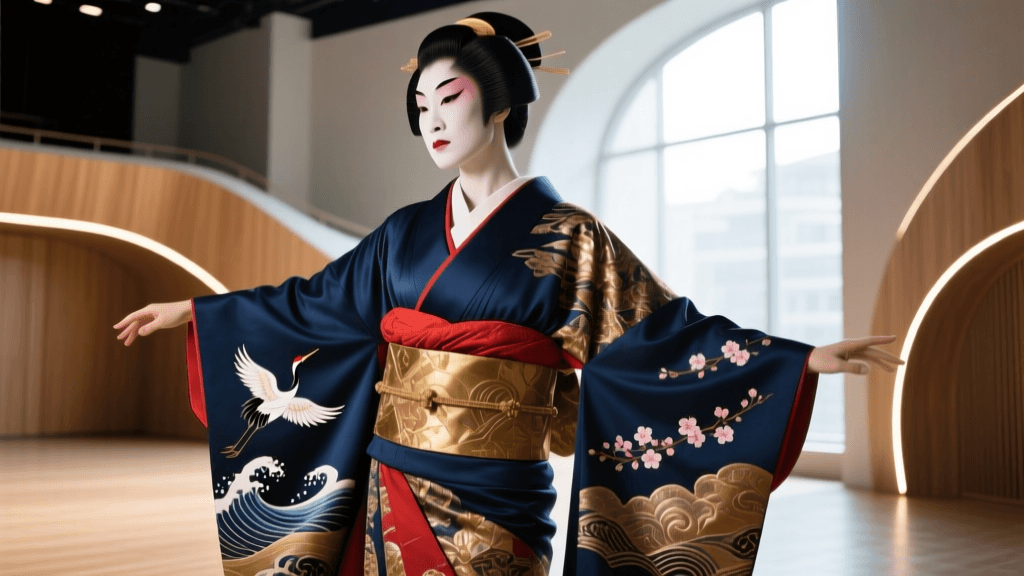
If Noh is a whisper, Kabuki is a shout. Born from the vibrant pop culture of the Edo period, Kabuki relies on visual spectacle, exaggerated makeup (kumadori), and dynamic movement. The kimono in Kabuki must be as loud and expressive as the acting itself.
The Magic of Hikinuki (Quick Change)
One of the most thrilling aspects of Kabuki is the hikinuki, a stage technique where an actor's outer kimono is instantly transformed into a completely different costume in full view of the audience. This is achieved through meticulous structural engineering. The kimono is held together by basting threads (chidori-gake). At the climax of a scene, stage assistants (kurogo) pull these threads, causing the outer layer to drop away and reveal a contrasting inner kimono.
In 2026, Kabuki costume designers have begun integrating ultra-fine, high-tensile synthetic threads for these basting stitches, ensuring that the quick-change mechanism never fails during high-stakes performances at the Kabukiza Theatre, while maintaining the authentic silk exterior.
The Oiran and the Weight of Spectacle
The costumes for the oiran (high-ranking courtesan) in the famous Oiran Dochu parade scenes are legendary for their sheer scale. An oiran's ensemble can weigh up to 30 kilograms (66 pounds). It consists of multiple layers of heavily brocaded uchikake (outer robes) tied with a massive, front-facing obi. To help actors manage this immense weight and the heat of modern stage lighting, 2026 productions increasingly utilize breathable, moisture-wicking bamboo-blend under-layers (juban) that remain entirely hidden beneath the historic silk facades.
Bunraku: Puppetry and the Illusion of the Kimono
Bunraku, the classical puppet theater of Japan, presents a unique sartorial challenge. The puppets, which are two-thirds the size of a human, must wear garments that mimic the drape, weight, and movement of real kimono, despite being manipulated by bamboo frames and pulleys.
Dressing the Ningyo (Puppet)
As detailed by the National Theatre of Japan, Bunraku puppets are not carved with detailed clothing. Instead, the ningyotsukai (puppeteers) dress the bare wooden and bamboo frames in actual, albeit modified, silk kimono. The garments are stuffed with cotton and paper to create the illusion of a human body beneath the fabric.
The textiles used for Bunraku must be exceptionally high quality but slightly scaled down or draped in a way that accommodates the mechanical joints of the puppet. The main puppeteer (omozukai), who controls the head and right arm, wears a specific black kimono and hood to blend into the shadows, ensuring the audience's focus remains entirely on the vibrant, animated silks of the puppet.
Comparative Analysis: Theatrical Kimono Characteristics
To understand the functional and aesthetic differences across these three art forms, refer to the comparative table below outlining the primary textile characteristics as observed in the 2026 performance seasons.
| Feature | Noh Theater | Kabuki Theater | Bunraku Puppetry |
|---|---|---|---|
| Primary Aesthetic | Subtle, ethereal, symbolic (Yugen) | Bold, extravagant, dramatic | Realistic drape, scaled illusion |
| Key Textile Type | Karaori (brocade), Surihaku (gold leaf) | Nishijin-ori, heavy brocade, Yuzen dye | Lightweight silk, modified scale |
| Garment Weight | Light to medium (allows slow, gliding steps) | Extremely heavy (up to 30kg for Oiran) | Light (stuffed with cotton/paper) |
| Movement Function | Wide, stiff sleeves amplify subtle gestures | Engineered for quick-change (Hikinuki) | Draped over bamboo armatures |
| Common Motifs | Pine, bamboo, autumn grasses, clouds | Swallows, peonies, bold geometric checks | Matching the human character's status |
Reading the Motifs: Symbolism on the Stage
Across all three forms, the motifs woven or dyed into the kimono are never arbitrary. In 2026, theater programs and digital companion apps provided by venues like the National Noh Theatre offer real-time translations of these motifs for international audiences.
- Shochikubai (Pine, Bamboo, and Plum): A ubiquitous motif representing resilience, longevity, and prosperity. Often worn by characters of high noble birth or in auspicious opening dances.
- Tsuru (Cranes): Symbolizing a thousand years of life and marital fidelity. Frequently seen on the uchikake of brides in both Kabuki and Bunraku.
- Seigaiha (Ocean Waves): Representing the ebb and flow of fortune, or the turbulent emotions of a ghost or spirit unable to pass into the afterlife.
- Katabami (Creeping Wood Sorrel): A common family crest (kamon) motif used to instantly identify a character's clan or samurai lineage to the audience.
Experiencing Theatrical Kimono in 2026: A Traveler's Guide
For those visiting Japan in 2026, witnessing these garments in person is an unforgettable experience. Here is how to integrate theatrical kimono appreciation into your travel itinerary:
1. Attend a Performance with English Guidance
All three major theaters—Kabukiza in Tokyo, the National Noh Theatre in Tokyo, and the National Bunraku Theatre in Osaka—now offer advanced 2026 augmented reality (AR) glasses or smartphone apps that provide real-time English subtitles and pop-up explanations of the costumes being worn on stage. Book single-act tickets (hitomaku-mi) if you are short on time; they are perfect for catching a spectacular costume change or a specific dance piece.
2. Visit the Backstage and Costume Exhibitions
The Kabukiza Theatre frequently hosts gallery exhibitions in its basement and upper floors, displaying the actual kimono used in recent productions. Look for the 2026 spring exhibition focusing on the evolution of the aragoto (rough style) superhero costumes, which feature massive, padded shoulders and striking red and black Kumadori-matching textiles.
3. Explore Kyoto's Nishijin District
To see where the magic is manufactured, visit the Nishijin Textile Center in Kyoto. In 2026, they offer specialized workshops where you can observe artisans weaving the exact karaori brocades used in Noh theater, and even try your hand at operating a traditional Jacquard loom.
Conclusion
The kimono of Kabuki, Noh, and Bunraku are far more than historical artifacts; they are dynamic, engineered marvels that breathe life into Japan's most enduring stories. Whether it is the quiet, woven poetry of a Noh spirit, the explosive, thread-pulling drama of a Kabuki hero, or the miraculous, silk-draped illusion of a Bunraku puppet, these garments represent the absolute pinnacle of Asian textile artistry. As preservation technologies advance and global appreciation grows in 2026, the stage remains a vibrant, living museum for the world's most magnificent traditional garments.