Best Hanfu Styles for Tai Chi and Qigong Practice 2026
The 2026 Intersection of Heritage Garments and Holistic Wellness
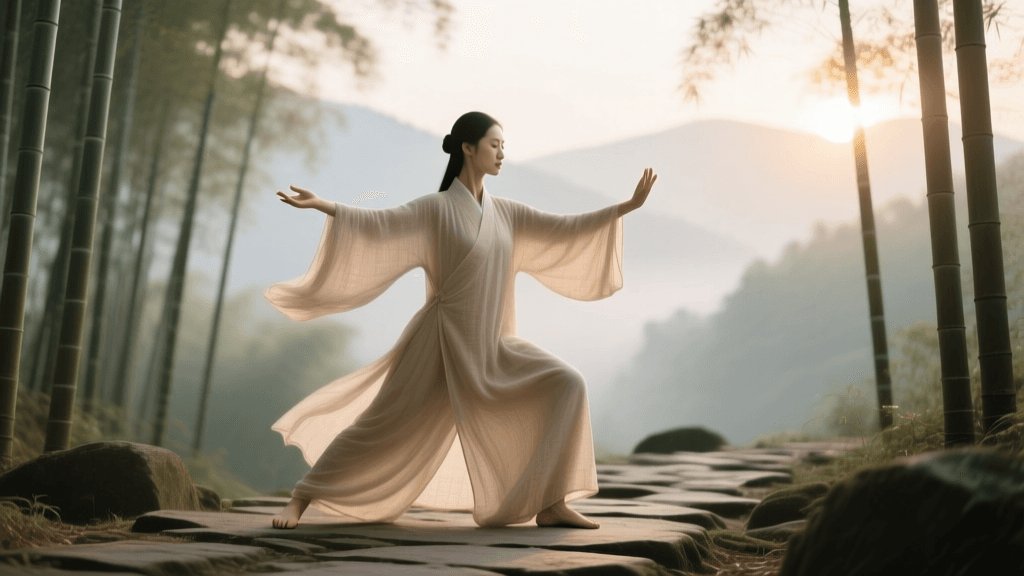
In 2026, the global wellness movement has deeply intertwined with cultural heritage, giving rise to a specialized niche within the Xin Zhongshi (New Chinese Style) fashion renaissance. Practitioners of Tai Chi and Qigong are increasingly rejecting synthetic, mass-produced activewear in favor of authentic, breathable Hanfu designed specifically for mindful movement. This shift is not merely aesthetic; it is rooted in the traditional Chinese philosophy that the garments we wear should facilitate, rather than restrict, the natural flow of qi (vital energy) and blood. As modern textile innovations meet ancient weaving techniques, selecting the right traditional Chinese clothing for your daily wellness routine has never been more nuanced or rewarding.
The Biomechanics of Qigong: Why Silhouette Matters
Tai Chi and Qigong require a unique range of motion that differs vastly from modern gym workouts. Deep stances like ma bu (horse stance) and gong bu (bow stance) demand complete freedom around the hips, knees, and ankles. Furthermore, the expansive arm sweeps and torso rotations require fabrics that do not bind at the shoulders or chest. While heavily embroidered brocades and structured pleated skirts like the mamianqun are stunning for festivals and formal photography, they are entirely impractical for the low center of gravity required in martial wellness practices.
According to principles outlined by the National Center for Complementary and Integrative Health, the physical postures of Qigong are designed to optimize bodily alignment and encourage deep, diaphragmatic breathing. If a garment's waistband is too rigid, or its sleeves too narrow, it physically impedes the Tu Na (breath work) essential to the practice. Therefore, the 2026 standard for wellness Hanfu prioritizes fluid drape, gusseted crotches in trousers, and relaxed shoulder seams.
Premium 2026 Textiles: Ramie, Bamboo-Silk, and Cupro
The fabric you choose dictates your thermal regulation during a 45-minute morning form. In 2026, three primary textiles dominate the wellness Hanfu market:
- Enzyme-Washed Ramie (Xia Bu): Historically known as 'summer cloth,' ramie is a bast fiber native to East Asia. Traditional Xia Bu from Jiangxi province was prized for its cooling properties but could be stiff. In 2026, artisanal weavers use bio-enzyme washing techniques to break down the rigid pectin in the fibers, resulting in a linen-like textile that is exceptionally soft, highly moisture-wicking, and possesses a beautiful, structured drape that moves elegantly with the wind.
- Bamboo-Silk Blends: A modern innovation that has matured beautifully by 2026. By weaving mulberry silk with processed bamboo viscose, manufacturers have created a fabric that offers the luxurious, frictionless sheen of silk but with the antibacterial and sweat-wicking properties of bamboo. This is the premier choice for indoor Tai Chi practice where temperature control is stable.
- Cupro-Cotton Weaves: For cooler autumn and winter months, a heavy cupro-cotton blend provides the necessary insulation without the suffocating weight of wool. Cupro, a regenerated cellulose fiber, mimics the drape of heavy silk, allowing the garment to swing and settle gracefully during slow-motion forms.
Comparison Chart: Optimal Hanfu Configurations for Mindful Movement
Choosing the right silhouette is critical. Below is a comprehensive guide to the most functional Hanfu styles for Tai Chi and Qigong practitioners in 2026, including current market pricing for high-quality, ethically sourced garments.
| Silhouette Name | Components | Best Practice Style | 2026 Avg Price (USD) | Recommended Fabric |
|---|---|---|---|---|
| Jiaoling Ruqun (Modified) | Cross-collar top + Songku (wide-leg pants) | Ba Duan Jin (Eight Brocades) | $85 - $145 | Enzyme-Washed Ramie |
| Daopao (Taoist Robe) | Wide-sleeved wrap robe with inner ties | Yang Style Tai Chi | $130 - $220 | Bamboo-Silk Blend |
| Beizi & Duijin | Open-front jacket + base layer + trousers | Zhan Zhuang (Standing Meditation) | $75 - $125 | Organic Linen-Cotton |
| Yese (Deep Cross-Collar) | Wrap top with secured cuffs + tapered pants | Chen Style Tai Chi (Martial focus) | $95 - $160 | Stretch-Woven Cupro |
Drape Analysis: The Cross-Collar and Diaphragmatic Breathing
The jiaoling youren (cross-collar, right lapel) is the most iconic Hanfu neckline, and it serves a distinct biomechanical purpose for Qigong practitioners. Unlike modern crewnecks or tight mandarin collars that can press against the trachea and restrict the upper chest, the deep V-shape of the cross-collar leaves the neck and upper sternum entirely open. This structural openness visually and physically encourages the practitioner to drop their breath deep into the dantian (the energy center located just below the navel).
Furthermore, the Songku (wide-leg trousers) utilized in 2026 wellness sets feature a hidden diamond gusset in the crotch seam. This traditional tailoring technique, revived by modern heritage brands, prevents the fabric from pulling tight against the thighs during deep lunges, ensuring that your focus remains on your internal alignment rather than external physical restriction.
A 15-Minute Morning Ba Duan Jin Routine in Traditional Attire
To fully appreciate the synergy between your garment and your practice, try this abbreviated morning routine wearing a lightweight Ramie Jiaoling top and Songku:
- Wu Ji Stance (2 Minutes): Stand with feet shoulder-width apart. Allow the wide legs of the Songku to drape naturally over your feet. Feel the grounding connection to the earth. The loose linen should feel like a gentle, cooling second skin.
- Two Hands Hold up the Heavens (3 Minutes): As you raise your arms and interlock your fingers, observe the sleeves of your top. The natural stiffness of the Ramie will cause the sleeves to cascade beautifully down your forearms, providing a visual representation of sung (active relaxation and sinking of the joints).
- Drawing the Bow to Shoot the Eagle (5 Minutes): Sink into a wide horse stance. The gusseted Songku will accommodate your stance without resistance. As you pull the imaginary bowstring, the cross-collar will shift slightly, allowing complete expansion of the ribcage for deep inhalation.
- Closing Form (5 Minutes): Slowly lower your arms, guiding the qi back to the dantian. The breathable nature of the ramie ensures that even as your core temperature rises, the fabric wicks moisture away, leaving you comfortable and centered.
As noted by experts at Harvard Health Publishing, the slow, deliberate movements of Tai Chi and Qigong act as a form of moving meditation that significantly reduces stress and improves proprioception. When paired with the tactile, grounding sensation of natural plant fibers, the psychological benefits of the practice are profoundly amplified.
Garment Care: Preserving Natural Dyes and Woven Integrity
Wellness Hanfu in 2026 frequently utilizes traditional botanical dyes, such as indigo (for calming, cooling energy) and madder root (for warming, grounding energy). To maintain the structural integrity of Ramie and the vibrancy of natural dyes, strict care protocols must be followed:
- Washing: Always hand-wash in cool water (below 30°C/86°F) using a pH-neutral, plant-based detergent. Never use bleach or harsh enzymatic cleaners, which will strip botanical dyes instantly.
- Drying: Ramie and linen are highly susceptible to UV degradation when wet. Always dry your wellness Hanfu in the shade. The natural stiffness of Ramie will return once dry; simply wear the garment for ten minutes, and your body heat will soften the fibers back to their comfortable, worn-in state.
- Storage: Store your Daopao and wrap robes flat or rolled. Hanging heavy, wet, or even dry woven garments on thin wire hangers will distort the shoulder seams, ruining the precise drape required for elegant Tai Chi forms.
Conclusion
The integration of Hanfu into Tai Chi and Qigong is more than a passing trend; it is a holistic return to the roots of Asian wellness traditions. By selecting the proper silhouettes—like the unrestrictive Songku and the breathable Jiaoling top—and investing in advanced 2026 natural textiles like enzyme-washed Ramie and bamboo-silk blends, practitioners can achieve a deeper, more embodied mindfulness. When your clothing moves in perfect harmony with your breath and your body, the boundary between the garment and the self dissolves, leaving only the pure, unobstructed flow of qi.