Buying Authentic Kanchipuram Sarees Online in 2026
The 2026 Landscape of Kanchipuram Silk Saree E-Commerce
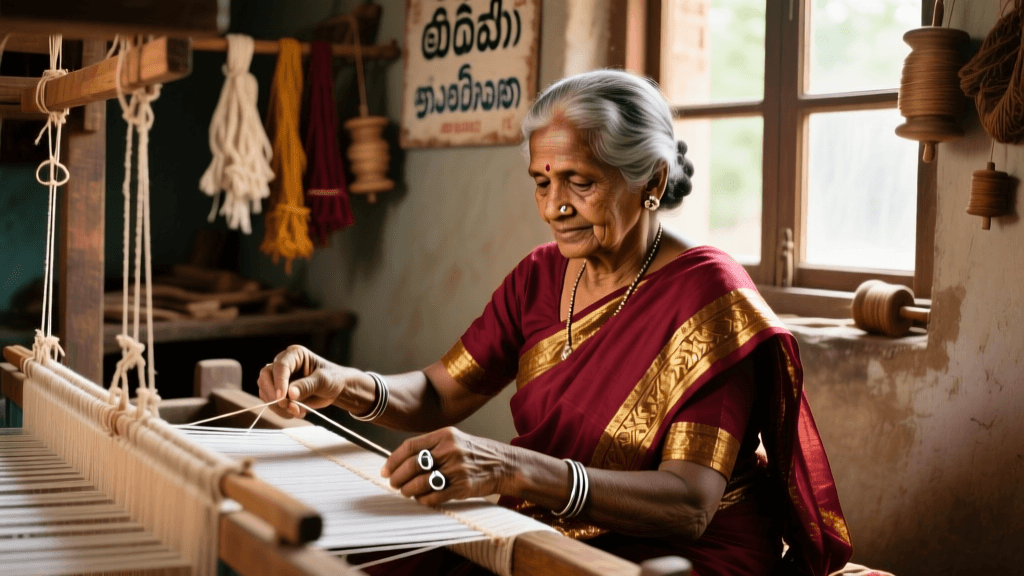
The digital marketplace for traditional Asian garments has evolved dramatically. As of 2026, sourcing an authentic Kanchipuram silk saree online is more accessible than ever, yet it remains fraught with sophisticated counterfeits. The legendary six-yard garment, woven in the Kanchipuram district of Tamil Nadu, India, is celebrated for its heavy silk, vibrant contrasting colors, and intricate pure zari (gold and silver thread) work. However, the surge in global demand for South Asian bridal and ceremonial wear has led to an influx of powerloom replicas flooding international e-commerce platforms.
For the discerning buyer, navigating this digital landscape requires a blend of traditional textile knowledge and modern verification techniques. Whether you are shopping for a wedding trousseau, a major cultural festival, or an investment piece, understanding how to authenticate weaver credentials, decode digital Silk Marks, and evaluate high-resolution weave structures is essential in 2026.
Decoding Authenticity: The Silk Mark and GI Tag
The cornerstone of buying authentic Indian silk online relies on two major certifications: the Silk Mark and the Geographical Indication (GI) tag. According to the Ministry of Textiles, Government of India, the Silk Mark is a quality assurance label that guarantees the textile is 100% pure natural silk. In 2026, the Silk Mark Organization of India (SMOI) has fully transitioned to blockchain-backed QR codes, allowing international buyers to scan the hangtag upon delivery and trace the silk's origin back to the specific reeling center.
Furthermore, the Kanchipuram saree holds a prestigious GI tag, a legal certification that protects the intellectual property of regional artisans. The World Intellectual Property Organization (WIPO) notes that GI tags ensure that only products genuinely originating in a specific territory, possessing qualities or a reputation due to that origin, can bear the name. When shopping online in 2026, legitimate sellers will display a scannable GI certificate linked to their specific weaving cooperative or registered loom number. If an online vendor cannot provide a verifiable GI registration number or a digital Silk Mark QR code, consider it a major red flag.
Visual Verification: Spotting Korvai and Petni Online
Because you cannot physically touch the fabric when shopping online, you must rely on high-resolution macro photography to verify traditional weaving techniques. Authentic Kanchipuram sarees are woven using the korvai and petni techniques, which powerlooms struggle to replicate perfectly.
- Korvai (Interlocking Border): The border and the body of the saree are woven separately and interlocked together. In a genuine handloom piece, the reverse side of the interlocking joint will show a distinct, slightly irregular zigzag pattern. Powerloom fakes often feature a straight, uniform line or a printed border.
- Petni (Interlocking Pallu): The pallu (the decorative end piece) is often a contrasting color to the body. The petni technique involves interlocking the pallu and body threads. Look for the tiny, uneven interlocking threads on the reverse side of the saree near the pallu.
"In 2026, reputable online weavers provide 4K macro-zoom images of the reverse side of the korvai joints. If a marketplace listing only shows the front of the saree or uses heavy filters, the seller is likely hiding powerloom uniformity." — Master Weaver Cooperative Guidelines, 2026.
Top Online Marketplaces for Authentic Kanchipuram Sarees
Choosing the right platform is critical. Below is a comparison of the primary online avenues for purchasing Kanchipuram silk sarees in 2026, categorized by their business model and authenticity guarantees.
| Platform Type | Examples in 2026 | Authenticity Guarantee | Price Range (USD) | Best For |
|---|---|---|---|---|
| Government Cooperatives | Co-optex, Handloom Export | 100% Guaranteed (State-backed GI & Silk Mark) | $120 - $800 | Traditional motifs, fair-trade pricing, investment pieces. |
| Heritage Retailers | Nalli, Sundari Silks | High (In-house quality control, verified zari) | $200 - $2,500+ | Bridal collections, contemporary color palettes, luxury gifting. |
| Direct Weaver D2C | Verified Instagram/Weaver Portals | Variable (Requires buyer to verify QR/Silk Mark) | $150 - $1,200 | Custom orders, supporting individual artisan families directly. |
| Global Aggregators | Etsy, Amazon Handmade | Low to Moderate (High risk of powerloom fakes) | $40 - $300 | Budget buyers, fusion styling, casual silk blends. |
Direct Weaver Cooperatives vs. Aggregators
When purchasing from global aggregators like Etsy or Amazon, the risk of encountering 'tested zari' (synthetic threads electroplated to look like gold) or blended silk is exceptionally high. In 2026, the safest route for international buyers remains purchasing directly from the digital storefronts of Tamil Nadu state cooperatives or established heritage houses that ship globally via insured DHL or FedEx.
Red Flags: Avoiding Powerloom Fakes
Powerloom technology has advanced, but it still leaves telltale signs. Here is a checklist to evaluate a digital listing before adding a Kanchipuram saree to your cart:
- The Weight Discrepancy: A pure silk Kanchipuram saree with pure zari is heavy, typically weighing between 600 and 900 grams. If the product description lists the weight as 300 grams, it is likely a powerloom weave using synthetic blends or art silk.
- The 'Pure Zari' Claim: Genuine pure zari consists of a silk core wrapped in flattened silver wire, which is then dipped in gold. It does not tarnish quickly and has a deep, muted metallic sheen. Powerloom fakes use 'tested zari' or plastic threads coated in metallic paint, which appear overly shiny and plastic-like in flash photography.
- Uniformity of the Reverse Side: Handloom weaving naturally produces minor irregularities on the reverse side of the fabric. A perfectly neat, identical reverse side is a hallmark of jacquard powerloom weaving.
- Pricing that Defies Logic: The raw materials for a single pure silk and pure zari Kanchipuram saree cost a minimum of ₹12,000 to ₹15,000 INR (approximately $145 to $180 USD) in 2026 before labor is factored in. Any listing offering a 'Pure Kanchipuram' saree for $50 USD is unequivocally a fake.
Sizing, Tailoring, and Draping Services
Buying the saree is only half the process; the accompanying blouse piece and tailoring are equally important. Most authentic online retailers in 2026 offer an additional 0.8 meters of running blouse fabric attached to the saree. When ordering online, you must specify if you require the 'fall' (a heavy cotton strip sewn to the bottom hem to help the saree drape correctly) and 'pico' (hemming) services.
Many premium heritage retailers now offer virtual measurement sessions via video call, utilizing AI-assisted body scanning apps to ensure your custom-stitched blouse fits perfectly upon arrival. If you are buying from a cooperative that only sells the unstitched fabric, you will need to factor in the cost and time of local tailoring in your home country, which can range from $50 to $150 USD depending on the complexity of the blouse design.
Pricing Expectations and Shipping Timelines for 2026
Budgeting for an authentic Kanchipuram silk saree requires an understanding of the current market rates. In 2026, a standard pure silk saree with a half-fine zari border will start around $180 USD. Bridal pieces featuring full-body pure zari vannakkam (intricate motifs) and heavy korvai borders will easily range from $800 to over $3,000 USD.
Shipping from Tamil Nadu to North America or Europe typically takes 7 to 12 business days via express international couriers. Always ensure the seller provides a commercial invoice detailing the silk and zari content to avoid customs delays or unexpected import duties on luxury textiles. By prioritizing verified cooperatives, demanding digital Silk Mark authentication, and closely inspecting macro photos of the weave, you can confidently invest in a genuine piece of Asian textile heritage from anywhere in the world.