Top Hanfu Styles for Qigong and Meditation in 2026
The Intersection of Hanfu and Chinese Wellness
As we navigate the global wellness landscape of 2026, the integration of traditional garments into daily mindfulness routines has evolved from niche historical appreciation to a mainstream holistic health practice. Hanfu, the traditional clothing of the Han Chinese, is experiencing a massive renaissance among modern practitioners of Qigong, Tai Chi, and seated meditation. Unlike contemporary synthetic activewear, which often compresses the body and restricts natural energy pathways, traditional Hanfu is engineered around the principles of flow, breathability, and harmony with nature. For practitioners seeking to deepen their mind-body connection, selecting the right heritage garment is no longer just an aesthetic choice; it is a functional necessity for optimal Qi (vital energy) circulation.
Why Garment Choice Matters in Qigong and Meditation
In traditional Chinese medicine and martial arts, the physical body is viewed as a vessel for Qi. Any restriction—whether from tight waistbands, rigid synthetic fabrics, or constrictive cuffs—can create blockages that hinder the meditative state. According to the National Center for Complementary and Integrative Health (NCCIH), practices like Qigong and Tai Chi are widely recognized for improving balance, reducing stress, and enhancing overall mental well-being through gentle, flowing movements and deep breathing. To fully realize these benefits, the attire must move seamlessly with the practitioner.
Furthermore, research highlighted by Harvard Health Publishing notes that the meditative movement inherent in these practices acts as 'medication in motion.' When practicing this 'medication in motion,' the tactile feedback of your clothing plays a crucial role in sensory grounding. The soft rustle of raw silk or the cool, textured touch of organic ramie against the skin serves as a tactile anchor, pulling the wandering mind back to the present moment and enhancing the depth of your meditation.
Top Hanfu Silhouettes for Mind-Body Practices
Not all Hanfu styles are suited for wellness practices. Highly formal garments with heavy layers and floor-sweeping sleeves are best reserved for ceremonies. For Qigong and meditation, practitioners in 2026 are favoring specific historical silhouettes that prioritize mobility and comfort.
1. Duan Da (Short Attire) for Active Qigong
For active practices like Ba Duan Jin (Eight Brocades) or Wu Qin Xi (Five Animal Frolics), the Duan Da is the undisputed champion. Historically worn by martial artists and laborers, this style consists of a cross-collared top (Yi) that ends at the hips or upper thighs, paired with loose-fitting trousers (Ku). In 2026, modern wellness brands have adapted the Duan Da by incorporating hidden elasticized waistbands beneath traditional drawstrings, ensuring the pants stay securely in place during deep stances and wide leg sweeps without digging into the abdomen. The sleeves are typically tailored to end at the wrist or mid-forearm, preventing them from slipping over the hands during intricate finger mudras and wrist rotations.
2. Shenyi (Deep Robe) for Seated Meditation
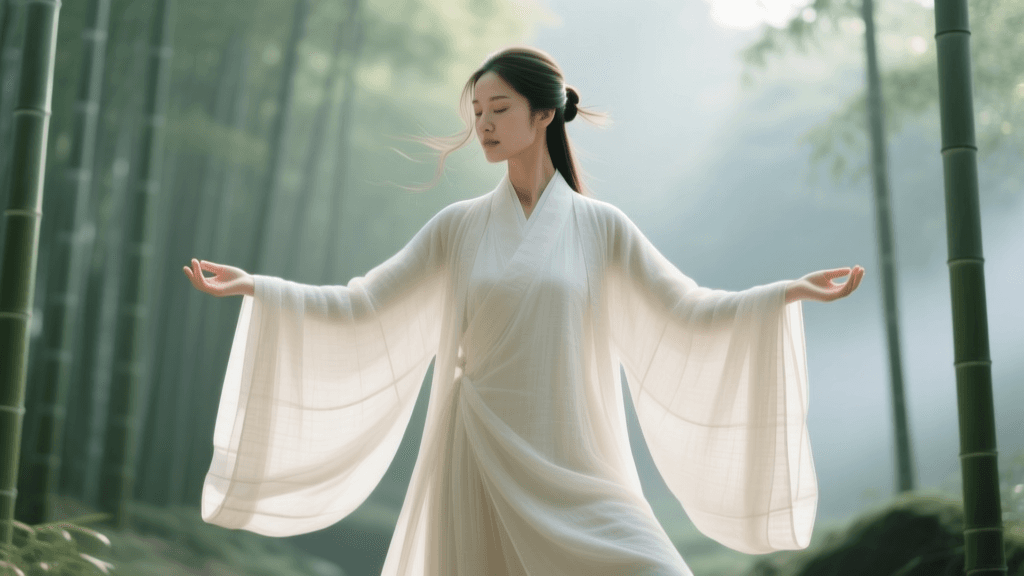
When transitioning to seated meditation or slow, standing Zhan Zhuang (pole standing), the Shenyi or a simplified Daopao (Taoist robe) is highly preferred. These one-piece robes wrap securely around the body, providing a cocoon-like sensation that promotes psychological safety and warmth. The wide, flowing sleeves allow for unrestricted chest expansion during deep diaphragmatic breathing. Because seated meditation requires minimal limb articulation, the longer hemlines and broader cuts of the Shenyi drape beautifully over crossed legs, creating a grounded, triangular base that visually and physically stabilizes the practitioner.
3. Banbi (Half-Sleeve) for Layering
Studio environments and early morning outdoor practices often require adaptable layering. The Banbi, a short-sleeved jacket worn over a long-sleeved inner garment, is perfect for regulating body temperature. As your Qigong practice generates internal heat, the Banbi can be easily untied and removed without disrupting the inner layers, allowing for seamless temperature regulation.
2026 Fabric Innovations: What to Wear for Optimal Breathability
The year 2026 has brought remarkable advancements in eco-friendly, natural textile processing. Modern practitioners are moving away from heavy, traditional brocades and embracing innovative, sustainably sourced natural fibers that wick moisture and regulate temperature. Below is a comparison of the top fabrics dominating the wellness Hanfu market this year.
| Fabric Type | Breathability | Drape & Weight | Best Practice | 2026 Avg Price (USD) |
|---|---|---|---|---|
| Enzyme-Washed Ramie | Very High | Crisp, Lightweight | Active Qigong, Summer Tai Chi | $95 - $130 |
| Bamboo-Linen Blend | High | Soft, Medium Weight | Flow States, Outdoor Meditation | $110 - $150 |
| Peace Silk (Ahimsa) | Medium | Fluid, Heavy Drape | Seated Meditation, Yin Yoga | $180 - $250 |
| Organic Cotton Gauze | High | Airy, Structured | Layering, Indoor Zhan Zhuang | $75 - $100 |
Enzyme-washed ramie has become a standout favorite in 2026. Historically, ramie was prized for its cooling properties but criticized for its stiffness. Modern enzymatic washing techniques have broken down the rigid fibers, resulting in a fabric that retains the cooling, antibacterial properties of traditional ramie but feels as soft as worn-in cotton. Peace silk, harvested without harming the silkworm, remains the premium choice for deep meditation, offering a heavy, grounding drape that feels luxurious against the skin and naturally regulates body heat.
Sizing, Fit, and the Art of the Pankou Knot
When purchasing a Hanfu specifically for wellness practices, standard sizing charts are often insufficient. You must pay attention to specific garment measurements to ensure unimpeded movement.
- Sleeve Drop and Width: For Qigong, look for a sleeve width that allows you to easily fit two fists inside the cuff. This ensures that when you raise your arms above your head in movements like 'Two Hands Hold Up the Heavens,' the fabric does not pull at the underarm or restrict blood flow.
- The Rise and Inseam: For Duan Da trousers, a high rise is essential. The waistband should sit at or slightly above the navel (the Dan Tian, the body's energetic center). A low-rise pant will slip during deep horse stances (Ma Bu) and disrupt your focus.
- Closures: Traditional Hanfu utilizes Pankou (knotted buttons) or internal tie-strings. For wellness wear, internal cotton tie-strings are vastly superior to rigid Pankou knots, which can press uncomfortably into the sternum or abdomen during deep breathing exercises or when lying flat during Savasana-style restorative practices.
Caring for Your Wellness Hanfu
To maintain the energetic and physical integrity of your natural fiber garments, proper care is essential. In 2026, the standard for washing heritage textiles involves cold-water hand washing with pH-neutral, plant-based detergents. Avoid wringing out ramie or silk; instead, press the water out gently and lay the garment flat to dry in the shade. Sun-drying can degrade natural plant dyes and weaken silk proteins over time. Storing your Hanfu folded neatly in a cedar-lined drawer not only protects the fabric from pests but also infuses the garment with a subtle, grounding aroma that can trigger a Pavlovian relaxation response the moment you dress for your morning practice.
Conclusion
The fusion of Hanfu and Chinese wellness practices represents a beautiful synthesis of cultural heritage and modern holistic health. By thoughtfully selecting garments like the Duan Da for active flow or the Shenyi for still meditation, and by prioritizing 2026's innovative natural fabrics, practitioners can create a deeply immersive mind-body experience. When your clothing breathes, moves, and grounds you, the boundary between the garment and the self dissolves, allowing your Qi to flow as freely as the ancient traditions intended.