The Ultimate Guide to Chinese Wedding Attire: Qungua, Hanfu, Qipao
Introduction to Chinese Bridal Fashion
Chinese weddings are a vibrant tapestry of symbolism, ancestral reverence, and joyous celebration. At the heart of these ceremonies is the bridal attire, which serves not merely as fashion, but as a wearable blessing for the couple's future. While the white Western wedding gown has become a staple for the main ceremony, modern Chinese brides typically undergo three to four outfit changes throughout the day, honoring both regional traditions and historical revivals. According to BBC Culture's report on the Hanfu movement, there has been a massive resurgence in young Chinese couples embracing historical garments, blending ancient aesthetics with modern matrimonial rituals.
For brides navigating the complex world of Chinese wedding attire, the choices can be overwhelming. From the heavily embroidered Cantonese Qungua to the flowing sleeves of the Xiuhefu and the sleek elegance of the Qipao, each garment carries distinct cultural weight, price points, and tailoring requirements. This comprehensive guide breaks down the essential ceremonial garments, offering actionable advice on measurements, timing, and budgeting.
The Qungua (裙褂): The Cantonese Masterpiece
The Qungua is a traditional two-piece bridal outfit originating from the Guangdong region, consisting of a jacket (gua) and a long skirt (qun). It is renowned for its intricate, dense embroidery featuring dragons and phoenixes (longfeng), symbolizing the balance of yin and yang, and the harmonious union of the bride and groom.
Understanding Embroidery Density and Pricing
The value and formality of a Qungua are determined by the density of its gold and silver thread embroidery. When shopping or renting, you will encounter specific industry terms:
- Xiao Wu Fu (小五福): 30% embroidery density. The most affordable option, featuring more visible red silk base fabric.
- Zhong Wu Fu (中五福): 50% embroidery density. A balanced choice for moderate budgets.
- Da Wu Fu (大五福): 70% embroidery density. Highly luxurious, with the red silk barely visible.
- Gua Huang (褂皇): 95% to 100% embroidery density. The 'Emperor of Jackets,' completely covered in gold and silver thread. These are masterpieces that can take over a year to hand-stitch.
Practical Advice: A basic Xiao Wu Fu can be purchased or rented for $300 to $1,500. However, a bespoke, hand-embroidered Gua Huang can cost upwards of $30,000. Because of the immense labor involved, bespoke Qungua orders require a lead time of 6 to 12 months.
Xiuhefu (秀禾服): The Modern Hanfu-Inspired Favorite
While often mistaken for ancient Hanfu, the Xiuhefu is actually a modern invention. It gained widespread popularity after being featured in the 2001 television drama Orange Turned Red, where the protagonist, Xiuhe, wore a distinctively styled jacket and skirt. Today, it is the most popular choice for the morning tea ceremony and gatecrashing games.
Silhouette and Styling
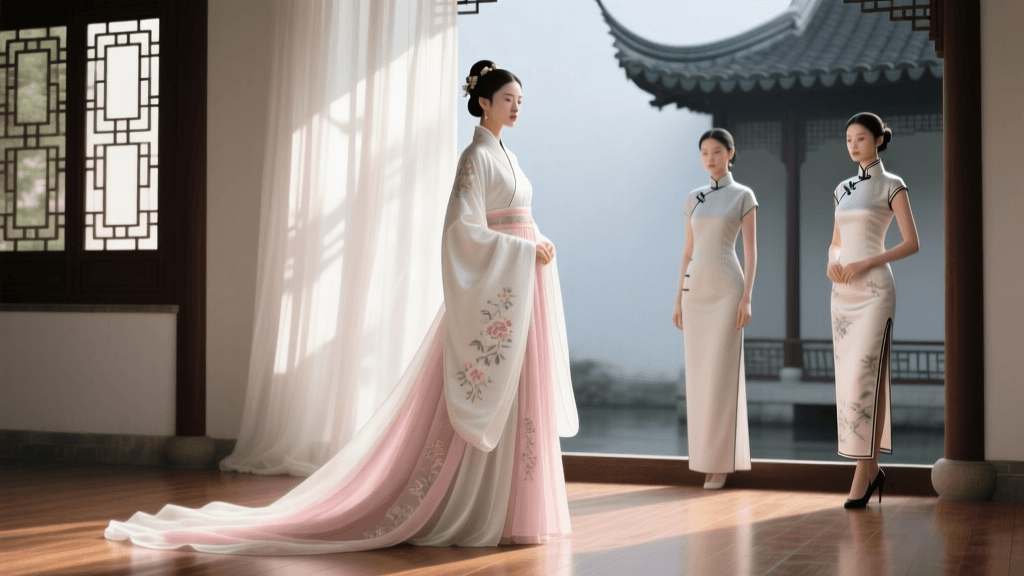
Unlike the straight, structured cut of the Qungua, the Xiuhefu features an A-line skirt and wide, flowing sleeves. This relaxed silhouette is incredibly forgiving and comfortable, making it ideal for brides who will be sitting on the marital bed for traditional rituals or participating in active morning games. The embroidery motifs are more diverse, often featuring peonies, lotus flowers, and bats (symbolizing good fortune), rather than strictly dragons and phoenixes.
Practical Advice: Xiuhefu is generally more affordable and accessible. Ready-to-wear or semi-bespoke pieces range from $300 to $2,500. Lead times are much shorter, typically 1 to 3 months, as many are machine-embroidered with hand-finished details.
The Qipao (Cheongsam): Elegant and Form-Fitting
For the evening banquet or the cocktail hour, many brides transition into a Qipao. Evolving in 1920s Shanghai, the Qipao represents a fusion of traditional Manchu robes and Western tailoring. As highlighted by The Metropolitan Museum of Art's 'China: Through a Looking Glass' exhibition, the Qipao remains one of the most globally recognized symbols of Chinese sartorial elegance.
Tailoring and Fabric Selection
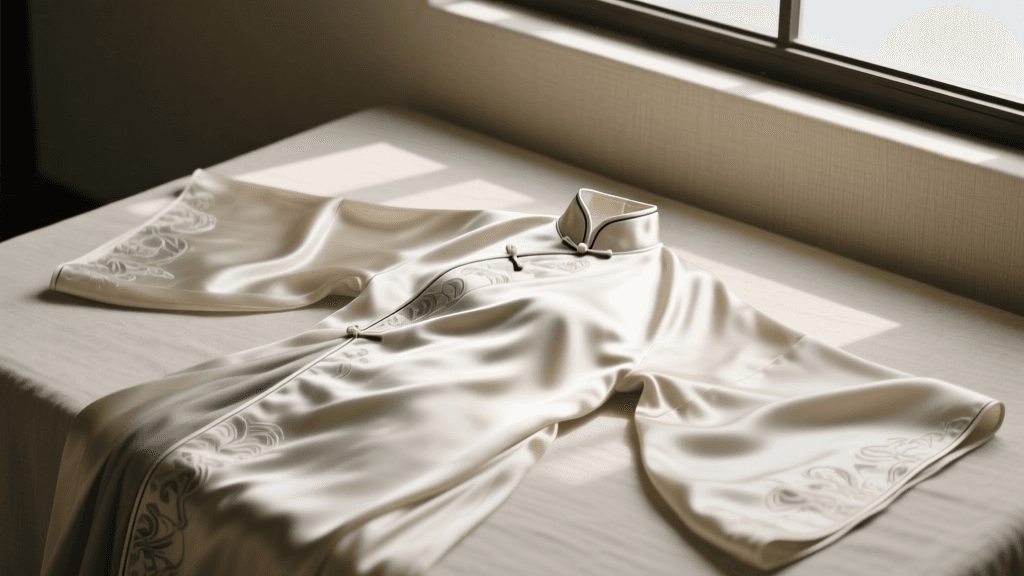
A traditional Shanghai-style Qipao features a high Mandarin collar, asymmetric side fastenings (pankou), and side slits. For a wedding, brides typically opt for luxurious fabrics like silk brocade, velvet, or heavy crepe, adorned with subtle floral or avian embroidery. Because the Qipao is form-fitting, the tailoring must be impeccable.
Practical Advice: A bespoke silk Qipao from a master tailor will cost between $800 and $5,000. You must order at least 2 to 4 months in advance to allow for multiple fittings, as the garment must contour perfectly to the body without restricting movement.
Comparison Chart: Qungua vs. Xiuhefu vs. Qipao
| Feature | Qungua (裙褂) | Xiuhefu (秀禾服) | Qipao (Cheongsam) |
|---|---|---|---|
| Silhouette | Straight, structured, modest | A-line, relaxed, wide sleeves | Form-fitting, tailored, side slits |
| Best For | Formal tea ceremony, family photos | Morning rituals, bed sitting, games | Evening banquet, cocktail hour |
| Price Range | $1,500 - $30,000+ | $300 - $2,500 | $800 - $5,000 |
| Lead Time | 6 - 12 months (bespoke) | 1 - 3 months | 2 - 4 months |
| Embroidery | Dense gold/silver thread (Longfeng) | Colorful silk threads, floral motifs | Subtle, localized, or fabric-woven |
Beyond the Han: Ethnic Minority Bridal Traditions
China's sartorial landscape extends far beyond Han traditions. The country's diverse ethnic groups possess breathtaking ceremonial attire, heavily documented in the Victoria and Albert Museum's Asian textile archives.
Miao (Hmong) Silver and Pleated Skirts
In Miao weddings, the bride's attire is a display of familial wealth and artisanal mastery. The outfit consists of a heavily cross-stitched jacket and a stiff, pleated indigo skirt. The most striking element is the silver jewelry—elaborate horned headdresses, chest plates, and bangles. A full bridal silver set can weigh up to 10 kilograms and cost thousands of dollars, often passed down through generations.
Tibetan Chuba and Amulets
Tibetan brides wear a Chuba, a long-sleeved, wrap-style robe made of sheepskin, wool, or silk brocade, secured with a vibrant woven sash. The ceremonial look is completed with a Gau (amulet box) and heavy necklaces made of natural turquoise, coral, and amber, which are believed to offer spiritual protection and signify the family's social standing.
Practical Guide: Tailoring, Timing, and Budgeting
Ordering traditional Chinese wedding attire requires meticulous planning. Follow this timeline and measurement guide to ensure a flawless fit.
The Bridal Timeline
- 9 Months Prior: Research and decide on your garments. Book consultations with bespoke tailors, especially for Qungua or custom Qipao.
- 6 Months Prior: Finalize designs, select fabrics, and place your order. Pay the initial deposit (usually 50%).
- 3 Months Prior: First fitting. For the Qipao, the tailor will pin the garment to your exact contours. For the Xiuhefu, sleeve lengths and jacket hems are adjusted.
- 1 Month Prior: Final fitting. Bring your wedding shoes and undergarments to ensure the hemlines and silhouettes are perfect. Settle the final balance.
Crucial Measurements for Bespoke Orders
When ordering online or visiting a tailor, ensure you provide the following precise measurements (in centimeters):
- Bust, Waist, and Hips: Measured at the fullest/widest points.
- Shoulder Span: From the edge of one shoulder bone to the other.
- Sleeve Length: From the shoulder seam down to the wrist bone (crucial for Xiuhefu wide sleeves).
- Hollow-to-Hem: From the base of the neck to the desired skirt length, factoring in the exact heel height of your bridal shoes.
Essential Accessories
No Chinese bridal look is complete without traditional accessories. Budget an additional $500 to $2,000 for gold jewelry, specifically the Longfeng (dragon and phoenix) bangles and necklaces gifted by the groom's family during the tea ceremony. Additionally, invest in a pair of red embroidered silk shoes (xié), which symbolize a harmonious and enduring marriage.
Conclusion
Choosing Chinese wedding attire is a deeply personal journey that connects modern brides to centuries of cultural heritage. Whether you opt for the regal weight of a Cantonese Gua Huang, the romantic flow of a Xiuhefu, or the sophisticated allure of a bespoke Qipao, each garment tells a unique story of love and tradition. By understanding the nuances of embroidery, respecting the tailoring timelines, and embracing the rich symbolism of these garments, you ensure that your wedding day is not only visually stunning but culturally profound.