Exploring China's Top Hanfu Museums and Heritage Exhibitions
The Renaissance of Hanfu Through Institutional Preservation
The modern Hanfu movement has transformed from a niche internet subculture into a mainstream cultural phenomenon, with millions of young Chinese embracing traditional garments for daily wear, festivals, and travel. However, to truly understand the structural complexity, historical evolution, and textile mastery behind these garments, one must look beyond social media and step into China's premier cultural institutions. Museums and living heritage sites serve as the custodians of intangible cultural heritage, offering unparalleled insights into the craftsmanship that defines traditional Chinese attire.
For Hanfu enthusiasts, historians, and cultural travelers, visiting these institutions is not merely about viewing static mannequins; it is an immersive educational experience. From the intricate looms of Nanjing brocade to the sprawling silk archives of Hangzhou, these sites provide the foundational knowledge necessary to appreciate the drape, weave, and symbolism of historical clothing. According to UNESCO's Intangible Cultural Heritage registry, the sericulture and silk craftsmanship of China encompass the entire lifecycle of silk production, a tradition meticulously preserved and displayed in these national museums.
Premier Hanfu and Textile Museums in China
China boasts several world-class institutions dedicated to the preservation of historical textiles and garments. These museums offer curated exhibitions that trace the evolution of the shenyi (deep robe), ruqun (blouse and skirt), and mamianqun (horse-face skirt) across various dynasties.
China National Silk Museum (Hangzhou)
Located near the scenic West Lake, the China National Silk Museum (CNSM) is the largest silk-themed museum in the world. It is an essential pilgrimage site for anyone studying the fabrics that make up historical Hanfu. The museum's 'Silk Road' exhibition showcases archaeological textile fragments dating back to the Han and Tang dynasties, revealing the vibrant dyes and complex weaves that have long since faded from extant garments.
- Highlights: The restoration laboratory, where experts conserve fragile archaeological textiles, and the comprehensive loom exhibition demonstrating the evolution of weaving technology.
- Practical Details: Admission is free, but advance booking via the museum's official WeChat Mini Program is mandatory. Allocate at least 3 to 4 hours for a thorough visit. The museum gift shop offers high-quality silk scarves and woven bookmarks (ranging from 50 to 300 RMB) that make excellent, authentic souvenirs.
Nanjing Yunjin Museum
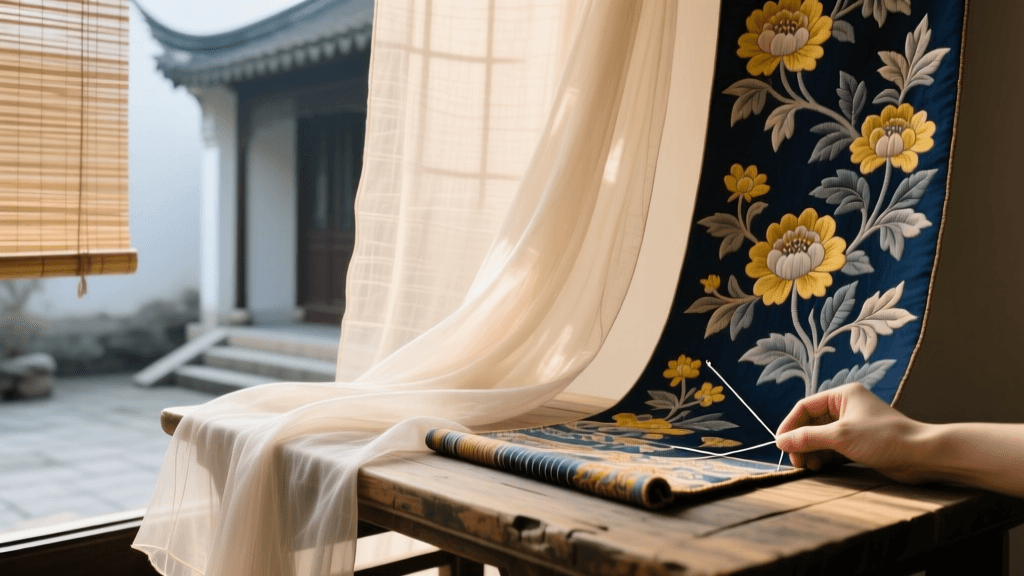
Yunjin, or 'cloud brocade,' represents the pinnacle of Chinese silk weaving, historically reserved for imperial dragon robes and high-ranking court officials' attire. The Nanjing Yunjin Museum is dedicated to this specific, highly complex craft. As noted by UNESCO, the craftsmanship requires a massive, two-story wooden loom operated by two artisans simultaneously, producing fabrics so intricate that they cannot be replicated by modern machinery.
- Highlights: Live weaving demonstrations on traditional drawlooms and exhibitions of Ming and Qing dynasty court garments featuring real gold thread and peacock feather yarns.
- Practical Details: Located in the Jianye District of Nanjing. While authentic handmade Yunjin fabric can cost upwards of 10,000 RMB per meter, the museum shop sells exquisite, smaller woven accessories and fabric swatches for 100 to 500 RMB, allowing enthusiasts to own a piece of imperial textile history.
Chengdu Shu Brocade Museum
Shu brocade, originating from Sichuan, is one of the oldest silk weaving crafts in China, heavily influencing the vibrant color palettes of Han and Tang dynasty fashion. The Chengdu Shu Brocade Museum not only displays historical garments but also functions as a working factory and research institute. Visitors can observe the dyeing process using traditional botanical dyes, such as indigo and madder root, which are essential for achieving the authentic colors seen in historical Hanfu reproductions.
Living Heritage Sites and Cultural Exhibitions
Beyond traditional glass-case museums, China offers 'living' heritage sites where historical garments are integrated into the architectural and cultural landscape. These locations provide context to how Hanfu moves, drapes, and interacts with the environment.
Xi'an Tang Paradise and City Wall Exhibitions
Xi'an, the ancient capital of Chang'an, is the epicenter of the Tang dynasty Hanfu revival. While not a traditional museum, the cultural exhibitions held along the Xi'an City Wall and within the Tang Paradise theme park function as open-air, living history museums. During the annual Lantern Festival and the Xi'an Hanfu Cultural Week, thousands of attendees wear historically accurate Tang-style Qixiong Ruqun (chest-high skirts) and Yuanlingpao (round-collar robes). The park's curated pavilions often host pop-up exhibitions featuring museum-grade replicas and artisan demonstrations of hairpin forging and silk flower making.
Wuzhen Water Town Textile Workshops
In the Jiangnan region, the water town of Wuzhen preserves the traditional indigo dyeing and calico weaving techniques that were the backbone of commoner clothing during the Ming and Qing dynasties. The Hongtai Dyeing Workshop serves as a living museum where visitors can see vast courtyards draped in drying blue-and-white patterned cloth. This provides vital context for Hanfu enthusiasts interested in the everyday, non-aristocratic garments of historical China, highlighting the beauty of modest, plant-dyed cotton and linen.
Museum Comparison Chart for Hanfu Enthusiasts
| Institution | Primary Focus | Best For | Admission & Booking | Recommended Visit Time |
|---|---|---|---|---|
| China National Silk Museum | Comprehensive silk history, archaeological textiles | Fabric researchers, pattern historians | Free (WeChat reservation required) | Tuesday mornings (3-4 hours) |
| Nanjing Yunjin Museum | Imperial brocade, complex loom technology | Ming/Qing court fashion enthusiasts | Free (ID/Passport required at door) | Weekday afternoons (2 hours) |
| Chengdu Shu Brocade Museum | Botanical dyeing, Han/Tang brocades | Color theory, early dynasty fashion | ~30 RMB (Ticket office or online) | Any time (2-3 hours) |
| Shanghai Textile Museum | Modern intersection of traditional textiles | Design students, modern Hanfu fusion | Free (Walk-in usually accepted) | Weekend mornings (2 hours) |
Practical Guide: Visiting Museums in Traditional Attire
Many Hanfu enthusiasts wish to wear their traditional garments while visiting these cultural sites to create a harmonious aesthetic and pay homage to the history. However, doing so requires adherence to specific museum etiquette and practical planning.
Dress Codes and Preservation Etiquette
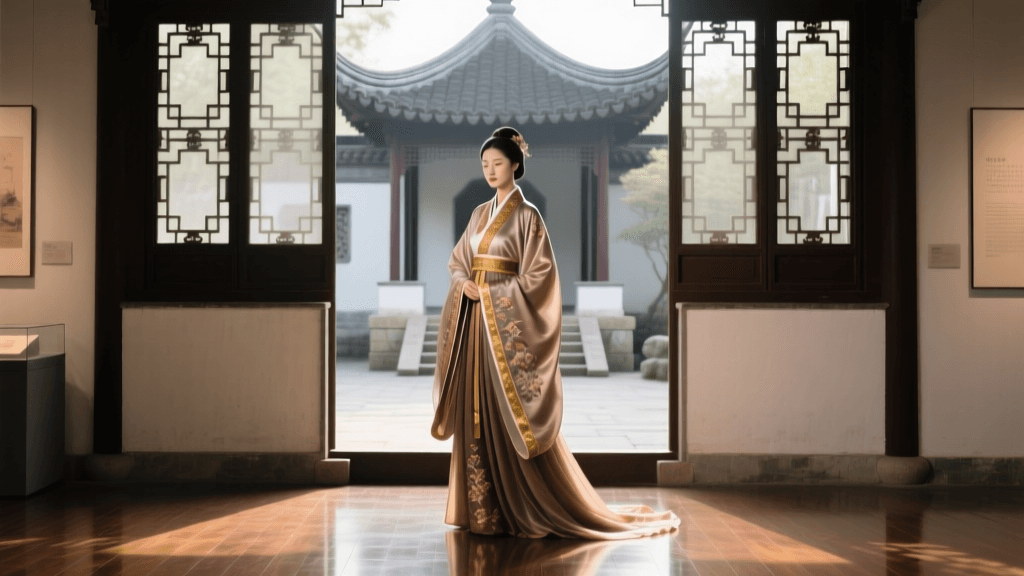
While Chinese museums are highly welcoming of Hanfu, the preservation of the artifacts must remain the priority. If you are wearing a mamianqun or a long trailing robe, be acutely aware of your hemline. Museum floors, especially in older heritage sites, can be uneven or dusty. Ensure your skirt is properly hitched or tailored to avoid dragging on the ground, which can soil the garment and trip you in crowded exhibition halls. Furthermore, avoid wearing garments with excessive, loose metallic embellishments that could accidentally scrape against glass display cases.
Photography Rules and Lighting
Photography is generally permitted in Chinese museums, but the use of flash, tripods, and selfie sticks is strictly prohibited to protect light-sensitive silk dyes. As highlighted in research regarding the conservation of historical silk, prolonged exposure to intense light causes irreversible degradation of protein-based fibers. When photographing your Hanfu inside the museum, rely on natural light from atriums or the ambient museum lighting. Never use a ring light or flash near the textile exhibits.
Booking, Timing, and Accessibility
Most national and provincial museums in China require advance booking via WeChat Mini Programs, often requiring a Chinese ID card or a passport number. International travelers should ask their hotel concierge to assist with booking 3 to 5 days in advance, as weekend slots fill up within minutes. For the best photographic conditions and a quieter educational experience, visit on Tuesday or Wednesday mornings right at opening time (usually 9:00 AM). Finally, while modern museums are wheelchair accessible, living heritage sites like Wuzhen or the Xi'an City Wall feature cobblestones and steep stairs; opt for flat, embroidered cloth shoes rather than elevated traditional wooden clogs for safety and comfort.
Conclusion
Exploring China's Hanfu museums and heritage exhibitions offers a profound bridge between the ancient artisans who wove the fabric of history and the modern enthusiasts who wear it today. By visiting institutions like the China National Silk Museum and the Nanjing Yunjin Museum, travelers gain a tactile, visual, and historical understanding of traditional garments that no digital medium can replicate. Armed with practical knowledge, respectful etiquette, and an appreciation for intangible cultural heritage, your journey through the atlas of Asian traditions will be both visually stunning and deeply educational.