Top Hanfu Styles for Qigong & Meditation Practice in 2026
The Intersection of Sartorial Mindfulness and Qi Flow
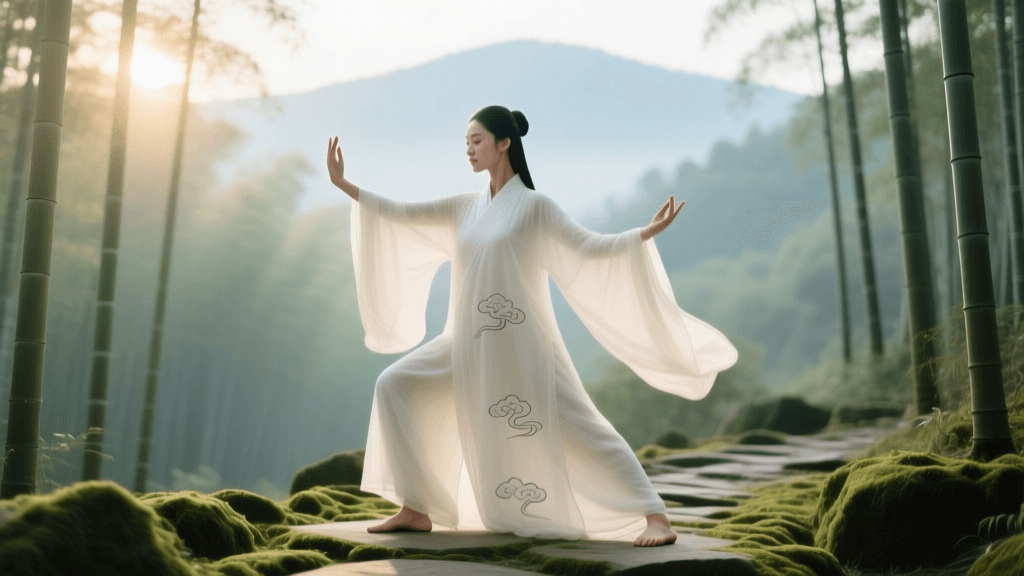
In 2026, the global wellness movement has fully embraced the concept of 'sartorial mindfulness'—the practice of aligning our clothing choices with our mental and physical well-being. For practitioners of traditional Chinese wellness arts, this means looking beyond modern athleisure and returning to the roots of movement-based meditation. The integration of Hanfu (traditional Han Chinese clothing) into daily Qigong, Tai Chi, and seated meditation routines has surged, driven by a deeper understanding of how garment structure influences the body's energy pathways.
According to the National Center for Complementary and Integrative Health, mind-body practices like Tai Chi and Qigong rely heavily on relaxed, uninterrupted breathing and fluid joint movement. Traditional Chinese medicine (TCM) dictates that Qi (vital energy) flows through meridians located just beneath the skin and along the joints. Restrictive modern clothing, tight waistbands, and synthetic fabrics can impede this flow and trap heat, disrupting the meditative state. Hanfu, with its emphasis on flat-pattern cutting, generous ease, and natural fibers, offers a historically grounded solution to modern wellness needs.
Top Hanfu Silhouettes for Wellness Practices in 2026
Selecting the right Hanfu for wellness requires matching the garment's silhouette to the specific physical demands of your practice. Here are the top three styles dominating the 2026 wellness wardrobe.
1. The Daopao (Daoist Robe) for Deep Meditation
The Daopao is a full-body, cross-collared robe with exceptionally wide sleeves and side slits for ease of movement. Historically worn by scholars and Daoist monks, its voluminous cut creates a microclimate of air around the body, which is ideal for seated meditation where the body's metabolic heat needs to dissipate slowly without causing chills.
- Key Feature: The jiaoling youren (cross-collar right over left) wraps securely around the torso, providing gentle, comforting compression across the lower abdomen (the Dantian), which is the focal point of diaphragmatic breathing.
- Best For: Seated meditation, restorative Yin Yoga, and slow, static Qigong forms like Zhan Zhuang (standing like a tree).
- 2026 Styling Tip: Look for a Daopao with a sleeve drop of at least 45cm to allow your hands to rest in your lap without the fabric pulling at the shoulders.
2. The Duanhe (Short Jacket) for Active Qigong
For more dynamic practices, the Duanhe is the ultimate choice. This is a shorter, hip-length jacket paired with loose-fitting trousers. Unlike the sweeping robes of the elite classes, the Duanhe was historically the garment of the working class and martial artists, designed for maximum mobility.
- Key Feature: Bound cuffs and a secure waist tie prevent excess fabric from interfering with complex arm rotations and deep stances.
- Best For: Active Tai Chi routines, Ba Duan Jin (Eight Brocades), and dynamic stretching.
- 2026 Styling Tip: Ensure the hemline rests exactly 2cm above the hip crease when seated to prevent bunching during deep horse stances.
3. The Song-Style Beizi for Transitional Layering
The Beizi is a parallel-collared, open-front coat that became highly popular during the Song Dynasty. Its straight, unrestrictive silhouette makes it the perfect outer layer for transitioning between indoor and outdoor meditation spaces.
- Key Feature: The open front allows for immediate temperature regulation, while the side slits ensure the garment drapes beautifully over crossed legs without pulling.
- Best For: Walking meditation, morning outdoor Qigong, and layering over a simpler inner garment (Zhongyi).
2026 Fabric Guide: Natural Fibers and Eco-Friendly Dyes
The material of your wellness Hanfu is just as critical as the cut. In 2026, the market has seen a massive shift toward sustainably sourced, organically dyed heritage textiles that support both skin health and environmental wellness.
Ramie (Xia Bu) and Hemp
Ramie and hemp are the undisputed champions of summer Qigong. These bast fibers possess natural antibacterial properties and a hollow core that wicks moisture away from the skin. A 2026 textile analysis confirmed that high-grade organic ramie allows for 30% more airflow than standard linen, making it essential for outdoor morning practices in humid climates.
Peace Silk (Ahimsa Silk)
For cooler weather or indoor meditation, peace silk offers unparalleled thermoregulation. Unlike conventional silk, peace silk is harvested after the moth has naturally emerged from the cocoon, aligning with the ahimsa (non-violence) principles often held by dedicated meditation practitioners. It provides a soft, frictionless surface that prevents sensory distraction during deep focus.
Natural Eco-Friendly Dyeing Methods
Synthetic dyes can cause contact dermatitis, which is highly disruptive during stillness. The 2026 wellness Hanfu market heavily favors botanical dyes. Indigo is prized not only for its deep, calming blues but also for its traditional insect-repellent properties, perfect for outdoor forest bathing. Madder root yields warm terracotta tones and is historically believed in TCM to possess warming properties that stimulate blood circulation when worn against the skin.
Comparison Chart: Selecting Your Wellness Hanfu
Use the table below to identify the optimal Hanfu configuration for your specific wellness routine in 2026.
| Garment Style | Best Practice Match | Ideal 2026 Fabric | Avg. Cost (USD) | Cuff / Sleeve Design |
|---|---|---|---|---|
| Daopao (Robe) | Seated Meditation, Zhan Zhuang | Peace Silk, Heavy Linen | $120 - $180 | Wide, unbound (45cm+ drop) |
| Duanhe (Jacket) | Tai Chi, Ba Duan Jin | Organic Ramie, Hemp Blend | $85 - $140 | Bound cuffs, narrow sleeve |
| Beizi (Coat) | Walking Meditation, Layering | Lightweight Cotton, Gauze | $90 - $150 | Straight, open sleeve |
| Zhongyi (Inner) | Base Layer for all practices | Undyed Mulberry Silk | $60 - $95 | Fitted, comfortable wrist |
A Practical Morning Routine: Dressing for the Elements
To fully integrate Hanfu into your wellness routine, consider the environmental shifts of a typical morning practice. Here is a step-by-step guide to dressing for a 6:00 AM outdoor Qigong session in early autumn.
- 5:30 AM (Base Layer): Begin with an undyed, lightweight cotton or silk Zhongyi (inner garment). This layer sits against the skin, wicking away the initial chill and absorbing any light perspiration generated during warm-up.
- 5:45 AM (Active Layer): Don your Duanhe jacket and trousers. The bound cuffs will keep the morning breeze from traveling up your arms, protecting the Pericardium meridian located on the inner arm.
- 6:00 AM (Outer Layer): Wrap your Beizi over the jacket. As you begin your forms, the open front allows you to easily push the garment off the shoulders if your core temperature rises, without needing to fully undress and break your meditative focus.
- Post-Practice (Grounding): After your cool-down, wrap a woven hemp sash around your lower back and kidneys. In TCM, the lower back is the 'mansion of the kidneys' and must be kept warm post-practice to retain the cultivated Qi.
The Cultural Resonance of Movement
Wearing Hanfu during wellness practices is not merely an aesthetic choice; it is a profound reconnection with cultural heritage. The fluid movements of Tai Chi and Qigong were historically developed and refined while wearing these exact silhouettes. The way a wide sleeve catches the air during a 'Cloud Hands' movement provides immediate biofeedback on the smoothness and continuity of your motion. If your movement is jerky, the heavy fabric will snap; if your Qi is flowing, the sleeve will ripple like water.
This deep cultural and physical synergy is why practices like Taijiquan have been globally recognized for their profound impact on human well-being. As noted by UNESCO's Intangible Cultural Heritage registry, Taijiquan is built upon the cyclical concepts of yin and yang, requiring a harmony of mind, body, and environment that is beautifully amplified by traditional dress.
Sourcing and Caring for Your Wellness Wardrobe
When sourcing your 2026 wellness Hanfu, prioritize artisans who utilize flat-pattern cutting. Modern tailoring often introduces darts and curved seams that alter the natural drape of the fabric, restricting the flow of the garment during deep stances. Seek out specialized heritage brands that offer custom measurements, specifically asking for a 'wellness ease' allowance, which typically adds 4 to 6 inches to the standard chest and hip measurements.
Care Instructions: To maintain the integrity of natural botanical dyes and delicate fibers, never machine wash your wellness Hanfu. Hand wash in cool water using a pH-neutral, plant-based detergent. For indigo-dyed ramie, add a splash of white vinegar to the rinse water to lock in the color. Always dry your garments flat in the shade; direct sunlight will rapidly degrade natural hemp fibers and fade madder root dyes.
By thoughtfully selecting and maintaining your Hanfu, you transform the simple act of getting dressed into the very first step of your daily meditation, grounding your practice in centuries of wisdom and intentional living.
For further reading on the physiological benefits of these movements, Harvard Health Publishing offers extensive clinical insights into how these traditional practices lower blood pressure, improve balance, and reduce stress, proving that the ancient integration of mindful movement and intentional living is more relevant today than ever before.