Vintage Silk Kimono Archival Storage & Stain Removal 2026
The Delicate Art of Preserving Heirloom Silk Kimonos
Owning a vintage Meiji (1868–1912) or Taisho (1912–1926) era silk kimono is akin to holding a piece of woven history. These garments, often featuring intricate yuzen dyeing, delicate chirimen (silk crepe), and lustrous rinzu (silk satin damask), are masterpieces of Japanese textile art. However, silk is a protein fiber that is inherently vulnerable to environmental degradation, light exposure, and improper handling. As we navigate the preservation landscape in 2026, the standards for caring for these heirloom garments have evolved, blending traditional Japanese wisdom with cutting-edge conservation science.
Whether you are a private collector, a museum curator, or an enthusiast who has inherited a family treasure, understanding the modern protocols for archival storage, climate monitoring, and professional stain removal is critical. This comprehensive guide outlines the 2026 best practices for ensuring your vintage silk kimonos survive for future generations.
Upgrading from Traditional Tatou to 2026 Archival Standards
Historically, kimonos were stored using tatou—traditional paper wrappers designed to protect the garment from dust and light while allowing the silk to 'breathe.' While tatou are culturally significant, standard commercial papers available today often contain lignin and acidic sizing agents. Over time, these acids migrate into the silk, causing catastrophic yellowing, brittleness, and permanent fiber degradation.
In 2026, the global conservation standard strictly prohibits the use of non-archival paper for long-term textile storage. Instead, preservationists recommend a layered approach using chemically stable materials:
- Inner Wrapping: Use unbuffered, acid-free tissue paper (pH 7.0–7.5). Buffered tissue (which contains calcium carbonate) should be avoided for silk, as the alkaline reserve can damage protein fibers over decades.
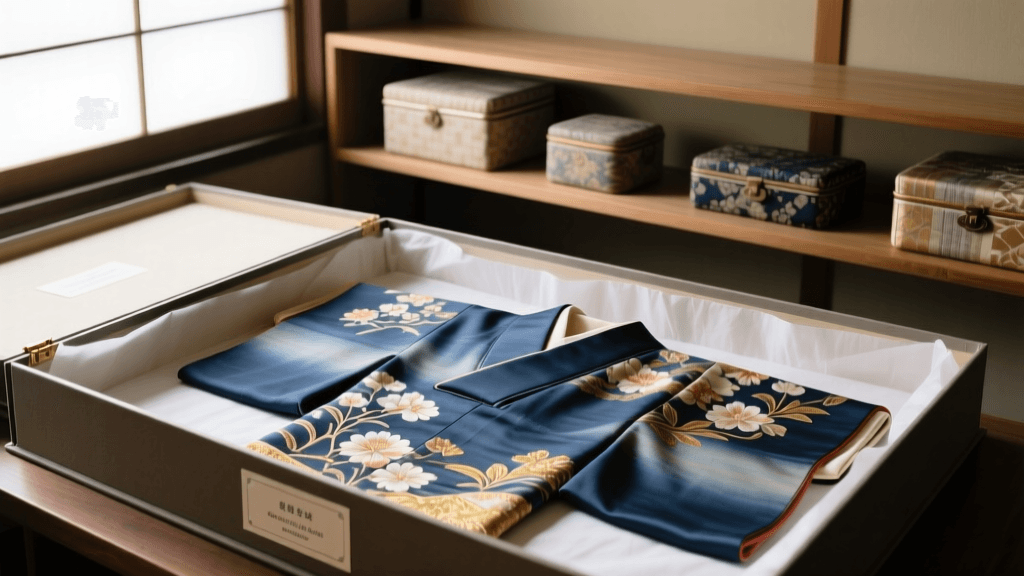
- Outer Enclosure: Wrap the tissue-covered kimono in washed, unbleached cotton muslin. The muslin acts as a physical barrier against dust and light while buffering rapid fluctuations in humidity.
- Storage Boxes: Store the wrapped garments in custom-fitted, acid-free corrugated board boxes or inert polypropylene plastic bins. If using plastic bins, ensure they are lined with acid-free paper to prevent static buildup and off-gassing.
For authoritative guidelines on textile housing, the Victoria and Albert Museum's textile conservation guidelines emphasize the necessity of acid-free barriers to prevent dye transfer and fiber weakening in historic garments.
The Hon-Tatami Folding Method
How you fold a kimono is just as important as what you wrap it in. The traditional hon-tatami (standard folding) method is engineered to align the seams and distribute the weight of the fabric evenly, preventing permanent creases and stress on the silk threads. When folding, place sheets of acid-free tissue paper along the fold lines to pad the creases. This prevents sharp folds that can lead to 'crease-cut,' a phenomenon where the silk fibers physically snap along the fold line over time.
Climate Control: Monitoring Micro-Environments
Silk is highly hygroscopic, meaning it readily absorbs and releases moisture from the surrounding air. Fluctuations in relative humidity (RH) cause the fibers to expand and contract, leading to structural fatigue and the flaking of metallic threads or applied pigments.
The ideal micro-environment for vintage silk kimonos in 2026 is a stable temperature of 65°F to 68°F (18°C to 20°C) with a relative humidity strictly maintained between 45% and 55%. To achieve this, modern collectors rely on smart environmental monitoring. Wi-Fi-enabled thermo-hygrometers, such as the latest 2026 firmware models from Govee or SensorPush, allow collectors to track real-time data and receive smartphone alerts if the climate in a storage closet or display case drifts outside the safe parameters.
Avoid storing kimonos in attics, basements, or exterior-facing closets, as these areas are prone to drastic temperature swings and dampness. If you must use a cedar chest, ensure the interior is lined with a barrier film, as the natural acidic oils in cedar wood can stain and degrade silk upon direct contact.
Professional Shimi-Nuki: Stain Removal in the Modern Era
One of the most common issues with vintage kimonos is the presence of shimi (stains and spots). These can range from water-soluble stains (sweat, sake, tea) to oil-soluble stains (sebum, cosmetics) and the dreaded 'age spots' caused by the oxidation of metallic salts used in historical black dyes.
DIY stain removal is strongly discouraged. Water can cause yuzen dyes to bleed, and commercial spot removers often leave chemical residues that attract more soil or degrade the silk. In 2026, the gold standard for kimono restoration is professional shimi-nuki (stain removal) performed by trained artisans, particularly those operating in Kyoto's Nishijin district.
Modern shimi-nuki artisans utilize a combination of traditional techniques and 2026 bio-enzymatic technology. They employ ultrasonic misting tables and localized, pH-neutral enzymatic cleaners to gently lift decades-old oxidation without disturbing delicate kinpaku (gold leaf) or surihaku (gold foil) applications. For heavily soiled garments, a maruarai (whole garment wash) using specialized volatile solvents may be performed, followed by yushinoshi (steam re-tensioning) to restore the silk's original luster and drape.
2026 Pricing Expectations: Professional restoration is an investment. Basic localized shimi-nuki typically starts around ¥12,000 to ¥18,000 ($80–$120 USD). A full maruarai and re-tensioning can range from ¥45,000 to ¥85,000 ($300–$570 USD), depending on the complexity of the dyes and the condition of the metallic threads.
Pest Prevention Without Damaging Metallic Threads
The webbing clothes moth (Tineola bisselliella) and the carpet beetle are the natural enemies of silk and wool. Historically, collectors relied on camphor (shono), naphthalene, or paradichlorobenzene mothballs to deter pests. However, in 2026, these chemical fumigants are considered obsolete and highly dangerous for heirloom garments.
The off-gassing from traditional mothballs reacts with the metallic salts in gold and silver threads (kinsha and ginsha), causing them to tarnish, blacken, and become irreversibly brittle. Furthermore, the strong odors can become permanently trapped in the silk fibers.
Modern pest management relies on Integrated Pest Management (IPM) and physical barriers:
- Anoxia Treatment: For active infestations, the 2026 standard is oxygen deprivation. The garment is sealed in a specialized oxygen barrier film (such as Escal) along with an Ageless oxygen absorber. This reduces the oxygen level below 0.1%, safely eliminating pests at all life stages without chemical residues.
- Freezing Protocols: Alternatively, garments can be sealed in polyethylene bags and placed in a chest freezer at -20°C (-4°F) for 72 hours to kill larvae and eggs. The garment must remain sealed until it reaches room temperature to prevent condensation from forming on the silk.
- Pheromone Traps: Use non-toxic pheromone traps in the storage room to monitor for male moths, providing an early warning system without exposing the textiles to chemicals.
For deeper insights into non-chemical pest eradication for historic textiles, the Smithsonian Institution's Museum Conservation Institute provides extensive, peer-reviewed protocols on freezing and anoxia treatments.
2026 Storage Material Comparison Chart
Selecting the right materials is paramount. Below is a comparison of traditional versus modern archival storage methods for silk kimonos.
| Storage Component | Traditional / Outdated Method | 2026 Archival Standard |
|---|---|---|
| Inner Wrapping | Standard Tatou paper (acidic, contains lignin) | Unbuffered, acid-free tissue paper (pH 7.0-7.5) |
| Outer Cover | Synthetic polyester covers or plastic dry-cleaning bags | Washed, unbleached cotton muslin |
| Storage Container | Unlined cedar chests or standard cardboard boxes | Acid-free corrugated board or inert polypropylene bins |
| Pest Deterrent | Naphthalene mothballs or natural camphor | Anoxia barrier films, pheromone traps, and strict IPM |
| Folding Technique | Arbitrary folding to fit small drawers | Hon-tatami folding with tissue-padded creases |
Conclusion: A Commitment to the Future
Preserving a vintage silk kimono is an act of cultural stewardship. By abandoning outdated, acidic storage methods and embracing the 2026 standards of archival housing, precise climate monitoring, and professional shimi-nuki restoration, collectors can halt the march of time on these delicate textiles. Whether you are safeguarding a single family heirloom or curating a vast collection of Meiji-era masterpieces, the meticulous application of these modern conservation techniques ensures that the artistry, history, and beauty of the kimono will continue to inspire for centuries to come.