2026 Mamianqun Skirts in Global Fashion Media & Styling
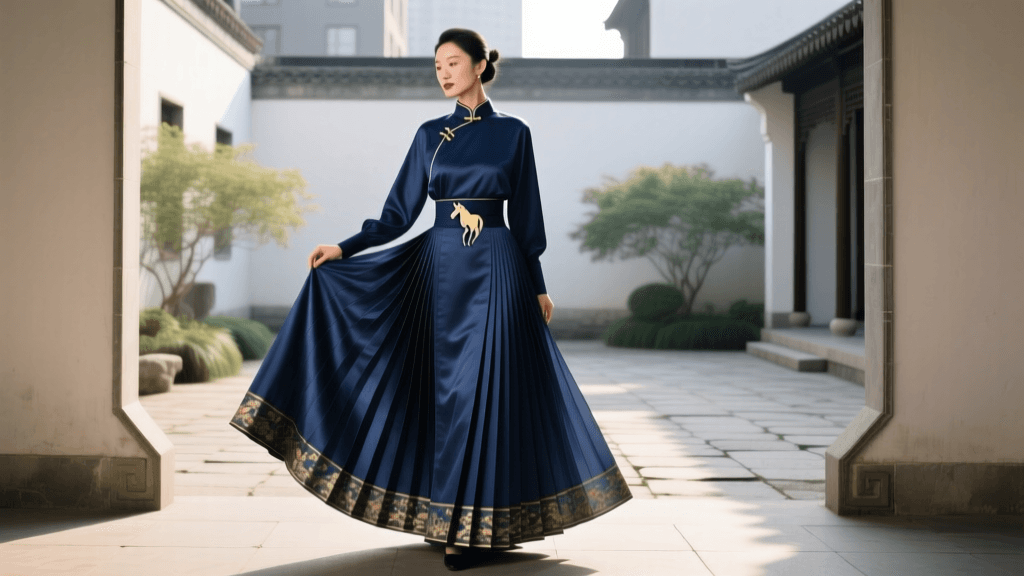
The Mamianqun Takes Center Stage in 2026 Global Fashion Media
The global fashion landscape has undergone a profound transformation in recent years, and as we navigate the Spring/Summer 2026 runway season, one traditional Asian garment is unequivocally dominating the editorial pages of high-fashion magazines: the Mamianqun (horse-face skirt). Once confined primarily to historical dramas and niche Hanfu enthusiast circles, this Ming Dynasty staple has evolved into a cornerstone of modern luxury fashion. Top-tier publications like Vogue and Harper's Bazaar are now regularly featuring authentic Mamianqun skirts in their 2026 global fashion spreads, celebrating the garment's intricate pleating, luxurious silk brocades, and structural elegance.
This mainstream media embrace marks a significant turning point. To understand the current 2026 media landscape, we must acknowledge the pivotal cultural conversations of the past. The watershed moment occurred when Chinese netizens and Hanfu scholars called out a major French luxury house for appropriating the Mamianqun's distinct silhouette without proper attribution, a controversy thoroughly documented by the South China Morning Post. Rather than retreating, the global fashion media responded by educating audiences and pivoting toward authentic collaborations. Today, in 2026, fashion editors are actively commissioning genuine heritage brands and traditional textile artisans to dress top models, ensuring that the cultural origins of the horse-face skirt are respected, credited, and accurately represented on the world stage.
Deconstructing the 2026 Editorial Look
When you flip through the glossy pages of a 2026 fashion editorial, the Mamianqun featured is rarely a simplified, mass-market interpretation. Stylists and fashion historians are working together to source pieces that adhere to traditional construction while utilizing contemporary, sustainable textile innovations. The hallmark of the 2026 editorial Mamianqun is its zhamao (woven metallic thread) detailing and the use of heavy, 30-momme silk brocades that provide a dramatic, architectural drape when the model is in motion.
The media's fascination lies in the skirt's unique engineering. Unlike Western pleated skirts, the Mamianqun is constructed from two overlapping panels of fabric. It features flat, unpleated sections at the front and back (the qunmen, or 'horse faces'), flanked by meticulously knife-pleated sides. This design was originally engineered for ease of movement while horseback riding during the Ming and Qing dynasties, but in 2026, it is celebrated for its striking kinetic geometry on the red carpet and the runway.
Key Measurements and Construction Details for Sourcing
If you are looking to replicate the high-fashion editorial look or commission a custom piece that mirrors the quality seen in 2026 media campaigns, you must understand the precise measurements and construction metrics required by authentic Hanfu tailors:
- Pleat Count: While historical artifacts vary, the 2026 editorial standard favors a 24-pleat or 32-pleat construction per side. This high pleat count ensures the skirt remains closed when walking, a common issue with cheaper, fast-fashion knockoffs that feature only 8 to 12 pleats.
- Fabric Weight: To achieve the structural stiffness seen in magazine spreads, request a silk brocade or jacquard with a weight of at least 25 to 30 momme. Lighter fabrics (16-19 momme) will cling to the legs and fail to produce the iconic trapezoidal silhouette.
- The Yaotou (Waistband): Authentic Mamianqun do not use zippers or elastic. They are secured with extended cotton or silk ties. For a modern, comfortable fit that mimics editorial styling, measure your natural waist and add exactly 15 centimeters to the waistband length to allow for a secure, overlapping double-tie knot that sits flush against the body.
- Skirt Length: The 2026 media trend heavily favors the 'floor-grazing' length. Measure from your natural waist down to exactly 2 centimeters above the floor while wearing your intended heel height. The standard editorial length currently ranges between 105cm and 115cm.
Styling the Mamianqun for the Modern 2026 Wardrobe
Global fashion media has completely dismantled the outdated notion that traditional garments must be worn head-to-toe in historical reenactment styles. The 2026 styling ethos is all about juxtaposition—pairing the ancient, intricate craftsmanship of the Mamianqun with sharp, modern, and minimalist Western silhouettes. According to recent cultural fashion analyses highlighted by Vogue, the modern Hanfu movement thrives on this exact type of cross-cultural sartorial integration.
Here is how top global stylists are integrating the Mamianqun into contemporary 2026 wardrobes:
- The Power Suit Hybrid: Swap out standard tailored trousers for a dark, monochromatic Mamianqun (such as deep navy or charcoal with subtle tonal jacquard weaving). Pair it with an oversized, structured wool blazer and a crisp white poplin shirt. This look has become a staple in 2026 corporate and creative-director fashion editorials.
- Evening Wear Juxtaposition: For red-carpet events, stylists are pairing heavily embroidered, metallic-thread Mamianqun skirts with simple, backless silk halter tops or structured leather corsets. The contrast between the edgy, modern bodice and the traditional, flowing skirt creates a striking visual tension that photographers love.
- Transitional Autumn Layering: In cooler climates, the skirt is being styled with chunky, sustainable cashmere turtlenecks and knee-high leather boots. The flat front panel of the skirt accommodates the bulk of tucked-in knitwear without adding unnecessary volume to the waistline.
Sourcing Authentic Pieces: Heritage Brands vs. Fast Fashion
As the Mamianqun's popularity surges in global media, the market has been flooded with both authentic heritage pieces and inaccurate fast-fashion imitations. For the serious collector or the fashion-forward individual seeking the genuine 2026 editorial look, knowing where to invest your money is crucial. Below is a comprehensive comparison of the current market landscape.
| Brand / Category | Construction Quality | Primary Materials (2026) | Price Range (USD) | Media & Editorial Presence |
|---|---|---|---|---|
| Minghuatang (Heritage) | Hand-finished hems, 32+ pleats, historical accuracy | Heavy silk brocade, genuine metallic threads | $450 - $1,200+ | Frequent features in high-end luxury editorials and museum collaborations. |
| Shisanyu (Accessible Authentic) | Machine-pleated but structurally sound, 24 pleats | Silk-polyester blends, high-quality jacquard | $120 - $280 | Popular in street-style photography and youth-focused fashion magazines. |
| Independent Artisans (Custom) | Bespoke measurements, hand-woven textiles, natural dyes | Organic peace silk, hand-loomed cotton | $600 - $2,500 | Highly sought after for exclusive Met Gala and Cannes red-carpet styling. |
| Fast-Fashion Knockoffs | Elastic waists, 8-12 pleats, glued hems, inaccurate panels | Thin polyester, cheap synthetic prints | $35 - $80 | Routinely criticized by fashion critics and excluded from serious editorial coverage. |
When sourcing your garment, always verify the presence of the overlapping flat panels. Many Western fast-fashion brands mistakenly produce a standard pleated midi skirt and market it as a 'horse-face skirt' to capitalize on the 2026 trend. A true Mamianqun will always have the distinct, unpleated qunmen at the front and back, and it will rely on waist ties rather than a zipper closure.
Care and Maintenance for Editorial-Grade Silk
Investing in an authentic, heavy-silk Mamianqun requires a commitment to proper garment care. The intricate pleats and delicate metallic threads seen in 2026's top-tier designs can be easily ruined by improper handling. To maintain the structural integrity and visual brilliance of your skirt, follow these expert maintenance guidelines:
- Cleaning: Never machine wash or hand wash a heavy silk brocade Mamianqun. The water will distort the pleats and cause the metallic threads to tarnish or bleed. Always seek out a dry cleaner who specializes in traditional Asian garments or haute couture. For minor surface stains on the flat panels, use a specialized silk spot-cleaner foam, but avoid the pleated sections entirely.
- Storage: Do not hang your Mamianqun on standard wire or velvet hangers. The sheer weight of a 30-momme silk skirt will cause the waistband to stretch and the pleats to pull out of alignment over time. Instead, fold the skirt along its natural pleat lines, wrap it in acid-free tissue paper, and store it flat in a cedar-lined archival box.
- Pleat Maintenance: If the pleats begin to lose their sharpness after a season of wear, do not attempt to iron them yourself with a standard household iron. The heat distribution is too uneven and will scorch the brocade. Professional steam-pressing by a tailor who understands Hanfu construction is required to reset the knife pleats.
The Future of Traditional Garments in the Media Spotlight
The elevation of the Mamianqun in 2026 global fashion media represents a broader, much-needed shift in how the fashion industry interacts with traditional Asian dress. It is no longer acceptable for Western media to treat these garments as mere costumes or exotic props. As institutions like the Victoria and Albert Museum have long documented through their extensive textile archives, garments like the Mamianqun are triumphs of historical engineering, textile artistry, and cultural identity.
By demanding authenticity, understanding the precise tailoring requirements, and embracing modern, cross-cultural styling, fashion enthusiasts and editors alike are ensuring that the horse-face skirt is respected for its true heritage. As we look toward the upcoming Fall/Winter 2026 collections, the Mamianqun stands as a powerful testament to the fact that true style transcends time, provided it is rooted in respect, quality, and an unwavering commitment to cultural accuracy.