Japanese Kimono Types and Formality Rules: 2026 Guide
The Enduring Hierarchy of Japanese Garments in 2026
In 2026, the Japanese traditional garment ecosystem continues to experience a vibrant renaissance, blending centuries-old sartorial rules with modern sustainable practices and contemporary styling. Understanding the nuanced hierarchy of wafuku (traditional Japanese clothing) is essential for anyone looking to wear, collect, or study these textiles. The formality of a kimono is not determined by a single factor but by a complex interplay of fabric type, pattern placement, sleeve length, and the presence of kamon (family crests). According to the Victoria and Albert Museum's comprehensive guide to Kimono, the evolution of these garments reflects deep societal shifts, yet the core rules of formality remain remarkably intact, serving as a visual language for ceremonies, festivals, and daily life.
The Core Kimono Types: From Casual to Ceremonial
Navigating the world of kimono requires an understanding of the specific categories designed for different seasons, genders, and social occasions. Below is a detailed breakdown of the primary garment types recognized in modern wear.
Yukata: The Gateway to Summer Festivals
The yukata is the most casual and accessible form of traditional Japanese dress. Originally worn as a bathing robe by the nobility during the Heian period, it evolved into the quintessential summer festival garment. In 2026, yukata are predominantly made from breathable cotton, linen, or advanced moisture-wicking synthetic blends that cater to increasingly hot summers. They are unlined, feature shorter sleeves, and are worn directly over basic undergarments. The obi worn with a yukata is typically a hanhaba (half-width) obi, tied in simple bows or modern, origami-inspired knots.
Komon and Edo Komon: Everyday Elegance
Komon translates to 'fine pattern' and refers to kimono featuring a repeating design that covers the entire garment. These are considered casual or 'street' wear, suitable for shopping, casual dining, or attending a tea practice session. A highly prized subset is the Edo Komon, which features micro-patterns so incredibly fine that from a distance, the fabric appears to be a solid color. Historically reserved for the samurai class, Edo Komon remains a hallmark of refined, understated elegance in 2026, often paired with a nagoya obi for semi-formal daytime events.
Homongi and Tsukesage: The Semi-Formal Standards
Homongi ('visiting wear') is a highly versatile semi-formal to formal kimono worn by both married and unmarried women. Its defining characteristic is the eba-moyo technique, where the pattern is dyed across the seams so that it flows continuously over the shoulders, sleeves, and hem when the garment is laid flat. Tsukesage is slightly less formal, with patterns that are confined within the boundaries of the fabric panels and do not cross the seams. Both are standard choices for attending weddings as a guest, participating in formal tea ceremonies, or celebrating milestone birthdays.
Furisode: The Pinnacle of Unmarried Formality
The furisode is easily recognizable by its dramatically long, swinging sleeves, which can measure anywhere from 85 to over 110 centimeters in length. Historically, the swinging sleeves were believed to ward off evil spirits and express romantic interest. Today, the furisode is the undisputed formal wear for unmarried women, most famously worn during Seijin no Hi (Coming of Age Day) and at weddings by the bride's unmarried sisters or attendants. In 2026, rental markets for furisode have expanded to include digital customization of inner linings and 3D-printed decorative obijime cords.
Kurotomesode and Irotomesode: Married Women's Formal Wear
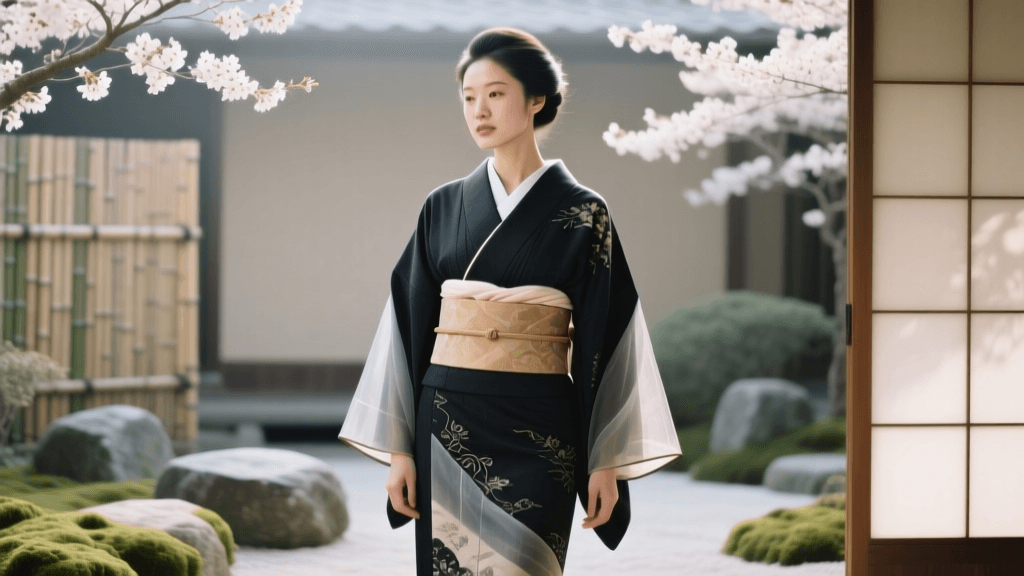
The tomesode is the most formal kimono for married women. The kurotomesode is a black silk garment featuring patterns only below the waistline (the eba-moyo technique) and always bears five kamon (family crests) placed on the back, chest, and sleeves. It is the equivalent of a Western black-tie gown and is traditionally worn by the mother of the bride or groom. The irotomesode is a colored version of the same garment, which can feature one, three, or five crests, making it slightly more versatile and suitable for a wider range of formal celebrations.
Hakama: Academic and Martial Ceremonial Trousers
While technically a divided skirt or pleated trouser worn over a kimono, the hakama is an essential component of traditional Japanese formal wear. In 2026, women predominantly wear the andon-bakama (lantern hakama, which lacks a crotch gusset) over a standard komon or homongi for university graduation ceremonies. Men wear the umabakama (horse-riding hakama) for martial arts, Shinto weddings, and formal tea ceremonies. The number of pleats (traditionally seven) represents the seven virtues of the samurai.
2026 Pricing, Sourcing, and Material Guide
The market for traditional garments has shifted significantly. While vintage silk remains highly sought after, 2026 has seen a surge in sustainable, washable silk alternatives and ethically sourced organic cottons. Below is a comparative guide to help buyers navigate the current market.
| Garment Type | Formality Level | Primary 2026 Materials | Avg. Retail Price (USD) | Recommended Obi Type |
|---|---|---|---|---|
| Yukata | Casual | Organic Cotton, Linen | $45 - $180 | Hanhaba (Half-width) |
| Komon | Casual / Everyday | Silk, Washable Polyester | $150 - $600 | Nagoya |
| Homongi | Semi-Formal / Formal | Crepe Silk, Rinzu (Satin) | $800 - $3,500 | Fukuro |
| Furisode | Formal (Unmarried) | Heavy Silk, Brocade | $1,200 - $5,000+ | Maru or Fukuro |
| Kurotomesode | Ultra-Formal (Married) | Black Habutai Silk | $1,500 - $6,000 | Fukuro (Gold/Silver) |
| Hakama Set | Graduation / Martial | Wool Blend, Polyester | $120 - $450 | Kaku Obi (Men) / Nagoya |
Essential Layering: The Architecture of Wafuku
A kimono is never worn directly against the skin. The layering system, known as shitagi, protects the expensive outer silk from sweat and oils while providing the garment with its distinct cylindrical silhouette. The Metropolitan Museum of Art's Heilbrunn Timeline of Art History notes that the evolution of these underlayers was just as critical to Japanese fashion as the outer robes themselves.
- Nagajuban: The primary under-robe, usually made of cotton, hemp, or synthetic silk. It features a removable collar (han-eri) which can be swapped out to match the season or the formality of the outer kimono.
- Susuyoke and Hadajuban: A half-slip and camisole worn beneath the nagajuban to absorb moisture and ensure the outer layers drape smoothly over the hips.
- Date-jime and Koshi-himo: These are the binding ties. Koshi-himo are thin cotton cords used to secure the kimono at the waist, while the date-jime is a wider, stiffer sash used to flatten the torso and prepare the base for the obi.
- Obi-ita and Obi-makura: Accessories used specifically for the obi. The obi-ita is a stiff board inserted between obi folds to prevent wrinkling, while the obi-makura is a small pillow used to give volume and shape to complex knots like the otaiko.
Modern Styling and Footwear in 2026
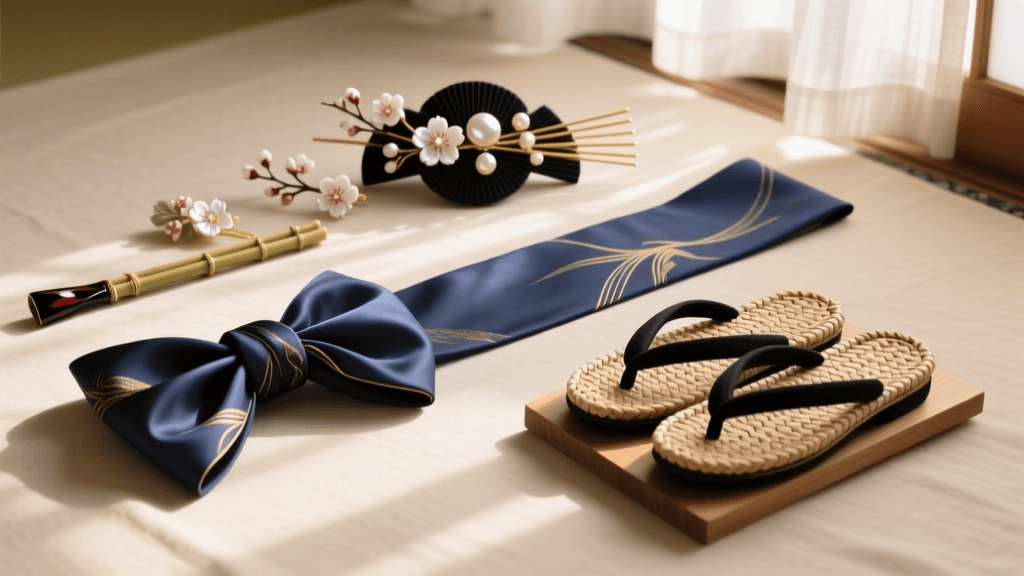
Footwear is strictly dictated by the garment. Zori are formal, flat-soled sandals made of brocade, leather, or vinyl, worn exclusively with tabi (split-toe socks). Geta are elevated wooden clogs worn with yukata and casual kimono, traditionally without tabi, though modern street-style in 2026 frequently pairs lace-up tabi boots with casual komon for a neo-traditional aesthetic.
The Japan Foundation's traveling exhibitions on traditional arts frequently highlight how contemporary artisans are reimagining these accessories. Today, you can find 3D-knit tabi that offer athletic support, and zori crafted from recycled ocean plastics that mimic the sheen of traditional tatami-omote (woven rush grass).
Garment Care and Maintenance Innovations
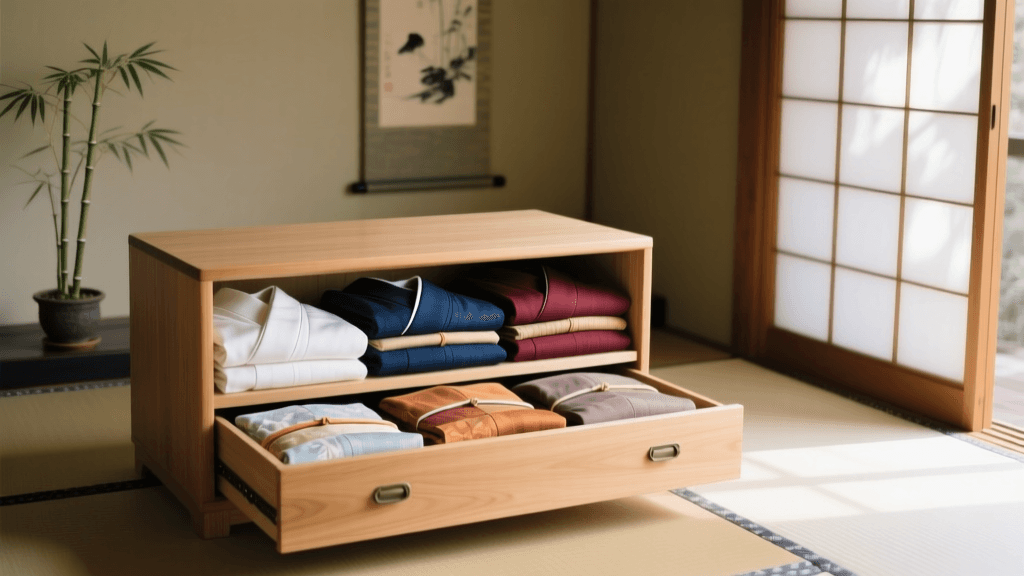
Historically, maintaining a silk kimono required complete disassembly, washing, and re-sewing—a process known as arai-hari. While this artisanal service still exists in Kyoto and Tokyo, 2026 has introduced practical alternatives for the modern global wearer. Many contemporary manufacturers now offer 'washable silk' treated with advanced protein-binding polymers that prevent shrinkage and water spotting. For vintage silk garments, spot-cleaning with specialized enzymatic solutions and storing them in acid-free, unbleached cotton tatoshi (wrapping paper) remains the gold standard to prevent the yellowing of silk fibers over time.
Conclusion: Wearing Heritage in the Modern Era
The Japanese kimono is not a relic of the past; it is a living, breathing garment system that continues to adapt. Whether you are tying a simple yukata for a summer fireworks display or donning a five-crested kurotomesode for a wedding, understanding the rules of formality, layering, and material care ensures that you honor the deep cultural heritage woven into every thread. As we move through 2026, the global appreciation for these garments continues to grow, supported by sustainable innovations and a renewed dedication to the artisans who keep these traditions alive.