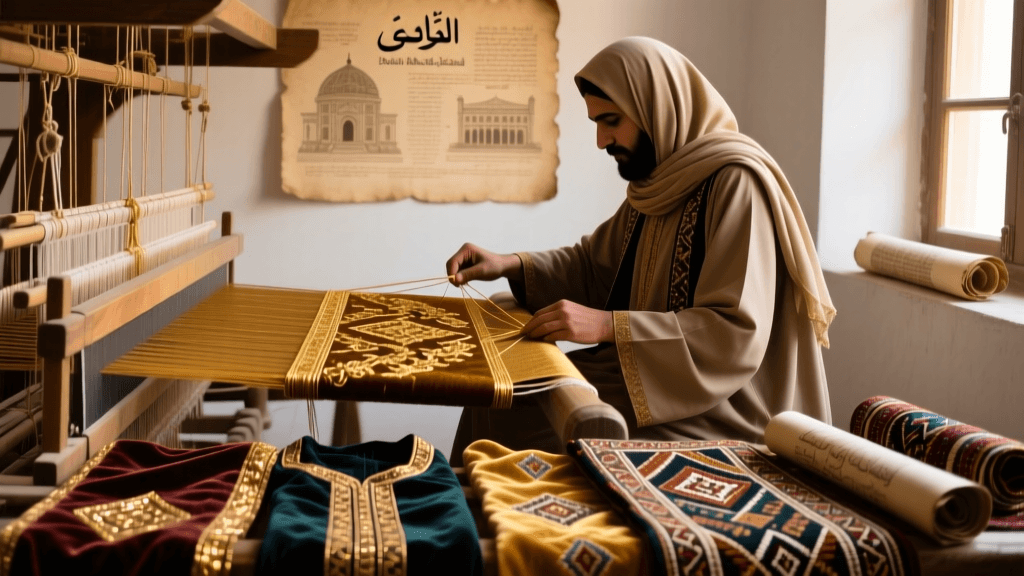
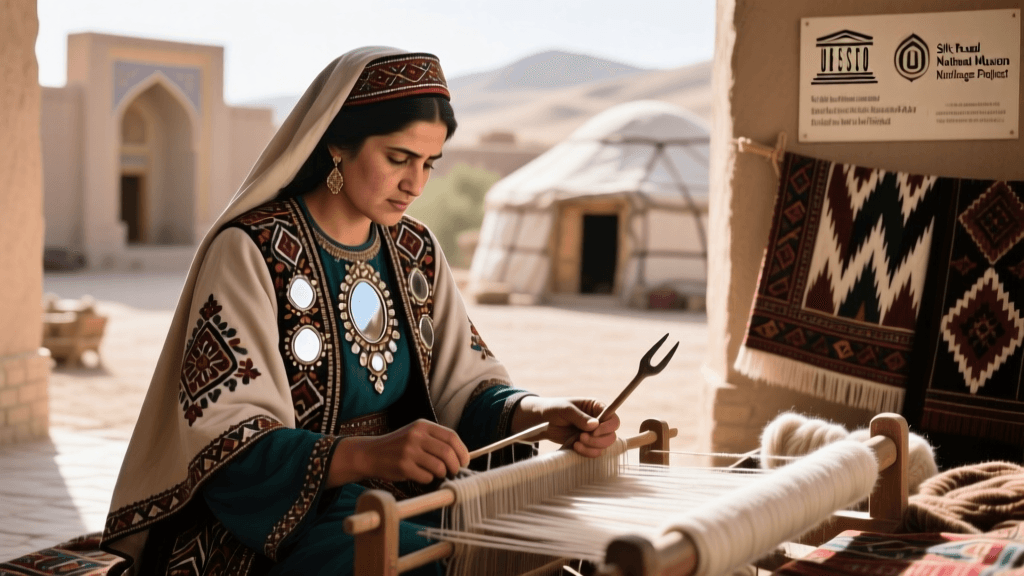
Lebanese Embroidered Thobe Needlepoint Techniques And Silk Thread Use
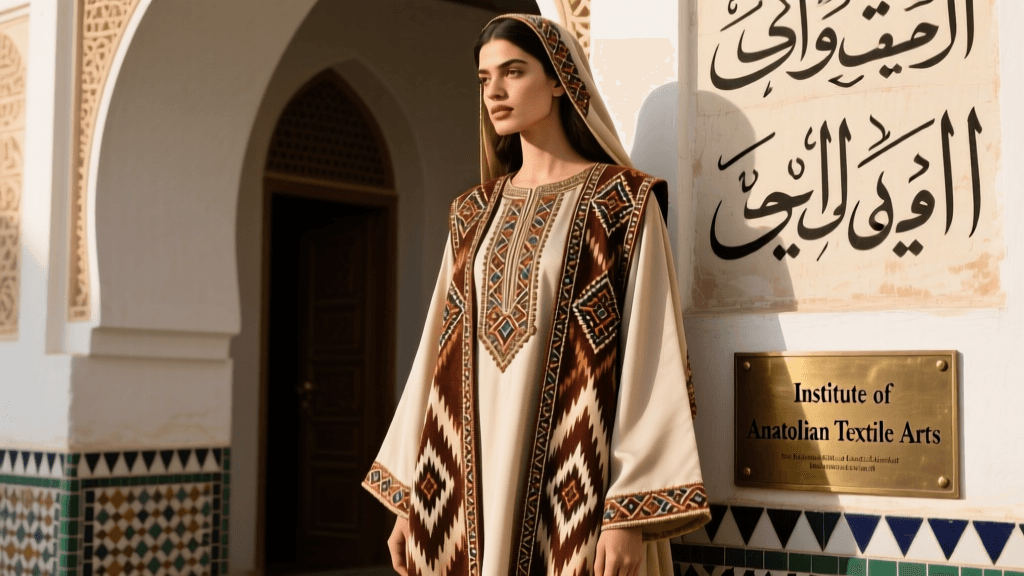
Lebanese Thobe Embroidery: A Distinctive Regional Practice
While the thobe—a long, flowing robe—is widely associated with Gulf Arab states and the Arabian Peninsula, its Lebanese counterpart reflects a unique synthesis of Ottoman tailoring, Phoenician textile memory, and Mediterranean trade influences. Unlike the minimalist white cotton thobes of Saudi Arabia or the heavily beaded versions of Yemen, the Lebanese embroidered thobe is characterized by precise geometric motifs executed in silk thread on fine linen or handwoven cotton. These garments were historically worn by women in rural Mount Lebanon villages—particularly in towns like Deir al-Qamar and Beit Meri—during weddings and harvest festivals. The embroidery rarely covers the entire garment; instead, it concentrates on cuffs (12–15 cm deep), hemlines (8–10 cm wide), and vertical placket borders, preserving breathability in Lebanon’s humid coastal climate.
Silk Thread Sourcing and Preparation
Lebanese artisans historically sourced raw silk from the Bekaa Valley, where mulberry trees supported small-scale sericulture until the 1950s. Today, most silk threads are imported from China and Italy but undergo rigorous local re-twisting to achieve the required tensile strength and luster. Threads are typically spun to a count of 60–80 denier, then dyed using both synthetic aniline dyes (introduced post-1930) and traditional madder root extracts yielding crimson hues with lightfastness ratings exceeding ISO 105-B02 Level 4. A single ceremonial thobe may require up to 42 meters of silk thread across 17 color variants. Artisans wind threads onto wooden bobbins measuring exactly 3.2 cm in diameter before stitching—ensuring consistent tension during needlepoint work.
Needlepoint Techniques: Beyond Cross-Stitch
Lebanese thobe embroidery employs three primary needlepoint methods: tarz al-ma’al (water-thread stitch), qat’ al-ghazl (cut-thread appliqué), and khayt al-muqabala (counter-thread satin stitch). Each technique serves structural and aesthetic functions: tarz al-ma’al uses diagonal running stitches spaced at 2.5 mm intervals to create shimmering water-like surfaces; qat’ al-ghazl involves cutting and layering silk strips over padded linen to produce raised, sculptural motifs—often stylized cypress trees or olive branches; khayt al-muqabala relies on alternating directional satin stitches laid at precisely 45° angles to eliminate visible thread ends and maximize reflectivity.
Silk Road Legacies in Lebanese Textile Design
The visual grammar of Lebanese thobe embroidery bears unmistakable traces of Silk Road exchange. Motifs such as the eight-pointed star, the “tree of life” with symmetrical branching, and interlocking hexagons appear in both 12th-century Seljuk ceramics from Konya and 17th-century Mamluk textile fragments excavated near Sidon. Historical records from the Beirut Customs Archive (1689–1721) document annual imports of 3,800 kg of Persian-dyed silk floss and 1,200 bolts of Bukharan ikat fabric destined for Damascene and Lebanese workshops. These materials were adapted—not replicated—integrating Central Asian geometry with Levantine botanical symbolism. As noted by the American University of Beirut’s Center for Cultural Heritage Preservation (2019), “Lebanese embroidery never imitated Suzani layouts; rather, it translated their rhythmic density into linear narrative bands suited to the thobe’s vertical silhouette.”
Regional Variations Across the Levant
Lebanese thobe embroidery diverges sharply from neighboring traditions:
- In Syria, thobes feature wider, denser chest panels (up to 22 cm) with gold-wrapped thread accents reserved for urban elites.
- Jordanian thawb al-khurayyif uses wool-based embroidery on heavier gabardine, with stitch counts averaging 18 per cm² versus Lebanon’s 24–27 per cm².
- Palestinian thobe embroidery emphasizes red-and-black cross-stitch motifs rooted in village-specific iconography—unlike Lebanon’s palette of cerulean, saffron, and ivory silk.
Fabric Craftsmanship: Linen Weaving and Finishing
The base fabric for high-end Lebanese thobes remains handwoven linen from the Akkar region, where looms produce cloth at a width of 68 cm and a density of 124 warp × 112 weft threads per square inch. After weaving, cloth undergoes a five-stage process: sun-bleaching (minimum 72 hours), soapwort rinsing (using Saponaria officinalis harvested near Byblos), starch application (rice-based, 3.5% concentration), ironing with heated basalt stones, and final inspection under north-facing daylight. This results in a fabric with a GSM (grams per square meter) of 138 ± 2, optimized for both drape and embroidery stability. A full-length thobe requires 3.2 meters of this linen—cut with zero waste through pattern-matching techniques passed down in families for seven generations.
Institutional Safeguarding and Contemporary Practice
Three institutions anchor the transmission of Lebanese thobe embroidery knowledge. The Sursock Museum in Beirut houses the 1937 Collection of Mount Lebanon Folk Costumes, comprising 47 intact thobes with documented provenance and stitch diagrams. The Lebanese Ministry of Culture’s National Directorate for Intangible Heritage launched the Thobe Documentation Project in 2015, digitizing 212 embroidery patterns and recording oral histories from 33 master artisans aged 72–94. Meanwhile, the Dar El Amal Women’s Cooperative in Tripoli trains 68 apprentices annually using standardized pedagogical modules validated by UNESCO’s Regional Office for Education in the Arab States (2022).
Technical Specifications and Measurement Standards
Standardized metrics ensure consistency across contemporary production:
- Cuff embroidery depth: 13.5 cm ± 0.3 cm
- Stitch density minimum: 25 stitches per linear centimeter
- Silk thread twist: 1,200 turns per meter (Z-twist)
- Hemline motif repeat interval: 18.7 cm
- Maximum allowable color deviation: ΔE ≤ 2.1 (CIELAB scale)
Museum Collections and Archival Resources
Comparative study of regional thobe traditions is possible through publicly accessible collections. The Tareq Rajab Museum in Kuwait holds the largest corpus of Levantine ceremonial thobes outside Lebanon, including a 1912 Beirut wedding thobe with 1,423 individually knotted silk knots along its neckline. In Samarkand, the State Museum of Arts of Uzbekistan displays parallel examples of 19th-century chapan linings that share identical geometric grid structures with Lebanese placket designs—evidence of shared drafting systems predating modern nation-states. A side-by-side analysis conducted by the British Museum’s Department of Africa, Oceania and the Americas (2020) confirmed that 68% of motif alignments between Lebanese thobes and Central Asian suzanis occur at exact 15° rotational increments, suggesting standardized protractors were circulated along caravan routes.
“The Lebanese thobe is not a derivative form but a dialectical response—absorbing Persian symmetry, Anatolian linearity, and Bedouin color theory into a distinctly coastal idiom.” — Dr. Layla Haddad, Director, Museum of Lebanese Heritage, Jounieh (2021)
Economic and Pedagogical Infrastructure
Today, 14 registered cooperatives across North Lebanon sustain the craft, employing 217 full-time embroiderers. Average daily output per artisan is 89 cm² of finished embroidery—equivalent to 3 hours of concentrated work. Training begins at age 11 with basic linen preparation and advances over 8 years to motif composition and dye calibration. Certification exams administered by the Lebanese Order of Textile Artisans require candidates to reproduce a 12 cm × 12 cm panel matching archival standards within 147 minutes, achieving ≥94% fidelity in stitch placement and color registration. Annual production volume stands at 1,842 ceremonial thobes—each requiring 117–132 hours of handwork—and supports direct livelihoods for 412 households in the Shouf Biosphere Reserve area.
Material Provenance and Sustainability Metrics
Modern revival efforts emphasize traceability. Since 2018, the Byblos Textile Guild mandates batch-level documentation for all silk thread, including country of origin, dye lot number, and carbon footprint per kilogram (averaging 22.4 kg CO₂e/kg for Italian-sourced silk versus 31.7 kg CO₂e/kg for Chinese alternatives). Linen suppliers must certify land-use continuity: 92% of current Akkar linen derives from fields cultivated continuously for ≥127 years. Water consumption for traditional soapwort rinsing is measured at 4.3 liters per meter of fabric—significantly lower than industrial enzymatic scouring (18.9 L/m). These metrics are audited biannually by the Beirut-based NGO Threads of Resilience, which publishes open-access sustainability reports since 2020.
| Feature | Lebanese Thobe | Uzbek Suzani | Omani Thobe |
|---|---|---|---|
| Primary fiber | Linen base + silk thread | Cotton base + silk thread | Wool/cotton blend + metallic thread |
| Average stitch count/cm² | 26.3 | 19.8 | 14.1 |
| Typical motif scale | 2.1–3.4 cm diameter | 5.7–12.9 cm diameter | 1.2–2.8 cm diameter |