Learn Wasai: 2026 Kyoto Kimono Sewing Workshops & Tools Guide
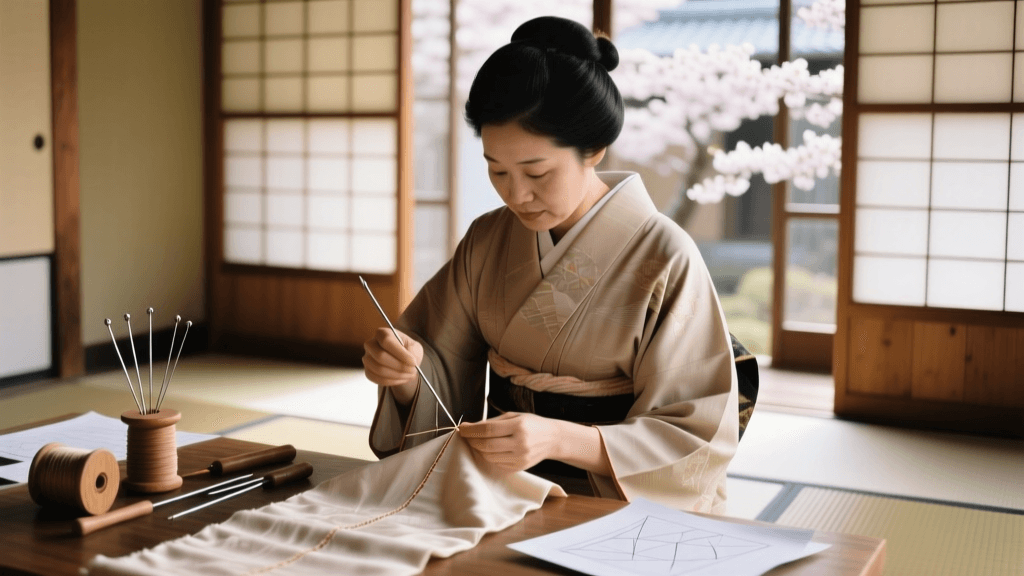
The Renaissance of Wasai in 2026
Traditional Japanese garment construction, known as Wasai, is experiencing a profound renaissance in 2026. As the global fashion industry pivots towards sustainability, modularity, and zero-waste patterns, the kimono’s inherently mathematical, straight-line cutting method has captured the attention of international designers, textile conservators, and heritage enthusiasts. Unlike Western tailoring (Yosai), which relies on complex curved seams, darts, and bias cutting to contour the human body, Wasai respects the absolute integrity of the woven textile. The fabric is cut exclusively in straight lines and folded, meaning a kimono can be entirely disassembled, washed, re-sewn, or repurposed into a completely different garment without wasting a single thread.
According to the frameworks established by the UNESCO Intangible Cultural Heritage division, preserving these traditional craftsmanship techniques is vital for maintaining global cultural diversity and sustainable material practices. In 2026, Japan’s Agency for Cultural Affairs has heavily subsidized vocational seminars in Kyoto to attract both foreign and domestic apprentices, ensuring these ancient, meditative skills survive well into the late 21st century.
The Philosophy of Zero-Waste Pattern Drafting
Before a single stitch is cast, Wasai students must master the philosophy of the tan-mono (the traditional bolt of fabric). A standard kimono bolt is approximately 36 centimeters wide and 12 meters long. In Western sewing, patterns are laid out on wide fabric, and the negative space between the curved pattern pieces is discarded as waste. In Wasai, the 36cm width dictates the entire design. The sleeves, body panels, and collars are engineered to utilize 100% of the textile. During 2026 seminars, instructors emphasize that this constraint is not a limitation, but a catalyst for profound design innovation. Learning to draft a kimono from a tan-mono teaches students to think in terms of modular geometry, a skill that is increasingly sought after by modern zero-waste fashion brands worldwide.
Navigating Kyoto’s 2026 Workshop Landscape
When searching for educational opportunities in Kyoto, it is crucial to distinguish between superficial tourist experiences and rigorous vocational seminars. A standard 'kimono making experience' in the Gion district might teach you to sew a simple pouch or a modernized, simplified yukata in three hours. However, true Wasai workshops are intensive, multi-week or multi-month commitments often located near the historic Nishijin textile weaving district or the Kyoto Costume Institute archives.
In 2026, premier institutions have fully embraced hybrid seminar models. These allow international students to complete the theoretical, historical, and mathematical foundations of kimono drafting online via high-definition virtual classrooms before arriving in Kyoto for the hands-on sewing intensive. This hybrid approach significantly reduces accommodation costs and allows students to maximize their time in the physical workshops, focusing purely on stitch execution, fabric manipulation, and the physical mastery of traditional tools.
Core Curriculum: Stitching, Folding, and Ironing
The anatomy of a kimono is deceptively simple yet mathematically rigorous. A standard women's kimono consists of four main body panels, two sleeve panels, two overlapping front panels (okumi), and a collar. During a comprehensive 2026 seminar, students learn the precise art of Hon-bari (the main straight seam) and Kuke (the invisible blind hem). The seam allowances are never cut away; they are folded inside the garment, providing structural weight and allowing for future alterations as the wearer's body changes over decades.
Students also master Mitsu-ori, a triple-fold technique used for hems that ensures the silk drapes flawlessly without stiff interfacings. Furthermore, seminars teach the meticulous process of Yu-noshi, the traditional steam-ironing method that sets the seams without crushing the delicate silk fibers. In Wasai, mastery of the iron is considered just as important as mastery of the needle. Students learn to use specialized wooden blocks and bamboo mats to press seams open and flat, creating the crisp, architectural lines that define the kimono silhouette.
Essential Wasai Toolkit for the Modern Artisan
To practice Wasai authentically, one must abandon Western sewing notions. The tools of the trade are specialized, often handcrafted by multi-generational artisans, and designed specifically for handling slippery, delicate silks like chirimen and tsumugi. Below is the essential 2026 toolkit required for any serious Wasai student.
| Tool Name | Japanese Term | Purpose & 2026 Context | Estimated Cost (USD) |
|---|---|---|---|
| Bamboo Ruler | Shaku | Used for measuring and marking silk. Bamboo prevents static cling, unlike plastic or metal rulers. | $45 - $80 |
| Silk Needles | Nu-bari | Extremely fine, sharp needles with small eyes to prevent snagging delicate weaves. | $15 - $30 |
| Traditional Iron | Kote | Modern 2026 versions feature precise digital temperature controls and specialized steam vents for silk. | $120 - $250 |
| Cream Spatula | Hera | A bamboo or bone spatula used to crease folds sharply before stitching or ironing. | $20 - $40 |
| Thread Conditioner | Ito-wax | Natural beeswax used to strengthen silk thread and reduce friction during the blind hemming process. | $10 - $15 |
Sourcing Authentic Textiles in 2026
A critical component of any advanced workshop is learning how to source materials. Kyoto remains the epicenter of silk commerce, but the market has evolved. Students are taught to navigate the wholesale houses in the Muromachi district to procure Tango Chirimen (crepe silk from the Tango peninsula) and Nishijin-ori (intricate brocade). In 2026, there is a strong emphasis on traceable, eco-conscious sericulture. Many workshops now partner with local cooperatives that practice sustainable mulberry farming and natural plant dyeing (shokubutsu-zome). Understanding how to inspect the weave for tension inconsistencies and how to pre-shrink the silk using traditional water-misting techniques is a fundamental skill taught early in the seminar.
Logistics: Visas, Language, and Ergonomics
For international enthusiasts planning to attend an immersive seminar in 2026, navigating Japanese immigration and language barriers requires foresight. Students enrolling in programs longer than 90 days must apply for a 'Cultural Activities' visa, which requires a certificate of eligibility from the hosting vocational school. The Japan National Tourism Organization provides updated guidelines for cultural exchange visas, making the application process smoother than in previous decades.
While many top-tier Kyoto workshops now offer English-language instruction or real-time AI-assisted translation earpieces, learning basic Japanese sewing terminology is highly recommended and often a mandatory prerequisite module. Terms such as nam-nui (running stitch), kaeshi-nui (backstitch), and kuke (blind hem) are used constantly in the studio. Furthermore, students should budget for the physical toll of the work; traditional Wasai is historically done seated on the floor (seiza). To accommodate modern bodies and international students, many 2026 seminars now incorporate ergonomic seating options, low tables, and daily stretching routines to prevent joint strain during the intensive eight-hour sewing days.
Post-Seminar: Maintaining Your Practice Abroad
Completing a Kyoto workshop is only the beginning of your Wasai journey. Upon returning home, students face the challenge of sourcing authentic materials and maintaining their tools outside of Japan. The 2026 digital landscape has made this easier, with specialized online guilds and forums connecting global Wasai practitioners. These communities organize virtual 'sewing circles' where artisans can troubleshoot complex collar attachments or share sources for high-quality silk threads. Embracing Wasai is not merely about learning to sew a garment; it is about adopting a philosophy of profound respect for materials, time, and heritage. As you thread your needle and fold your first silk panel, you are participating in a continuous, living lineage of Asian tradition that bridges the ancient past with a deeply sustainable future.