LDS Temple Garments 2026: Sacred Meaning & Styles
Understanding the Spiritual and Cultural Significance
Within the diverse tapestry of religious dress in the Americas, few garments carry as deeply personal and sacred a significance as the temple garments worn by endowed members of The Church of Jesus Christ of Latter-day Saints. Often referred to simply as 'garments' or 'temple clothing,' these undergarments are not merely functional; they are profound spiritual artifacts. For millions of Latter-day Saints across North America, Latin America, and the globe, the garment serves as a daily, physical reminder of the covenants made with God inside the temple.
Unlike clerical vestments worn by religious leaders during services, LDS temple garments are worn beneath everyday clothing by lay members of the congregation. This egalitarian approach to sacred dress underscores a core theological tenet of the faith: that the priesthood and the associated covenants are available to all worthy adult members, regardless of social or economic status. The garment acts as a spiritual armor, a boundary marker of modesty, and a private sanctuary of faith that the wearer carries with them into the secular world.
As we navigate through 2026, the cultural landscape of the Church continues to expand globally, bringing diverse climatic and lifestyle needs to the forefront of garment design. Yet, the foundational meaning remains unchanged. According to the Church's Gospel Topics essays on Temples, the garments are intrinsically linked to the endowment ordinance, representing a commitment to live a Christ-centered life and maintain personal purity.
The Sacred Symbolism and Covenant Reminders
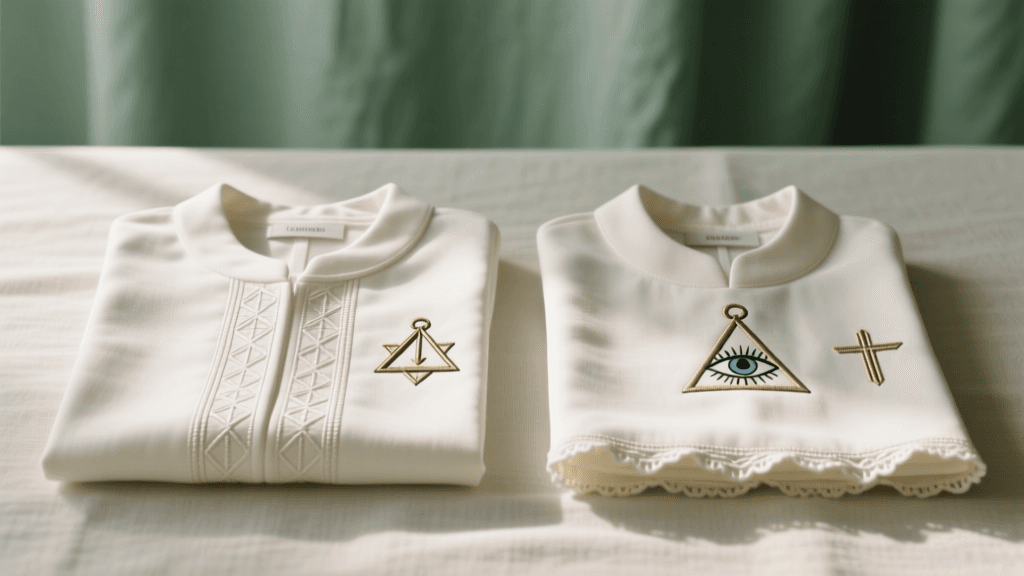
The design of the temple garment includes specific marks woven or embroidered into the fabric. While the exact nature of these marks is considered sacred and is not discussed casually by members, their symbolic meanings are well-documented in LDS theology. Historically and presently, these symbols include representations of the fig leaf (reminding the wearer of the Fall of Adam and Eve and the need for the Atonement), the compass (symbolizing a desire to keep one's life within the bounds of righteousness), and the square (representing honor, integrity, and exactness in keeping covenants).
For the wearer, touching or seeing these marks throughout the day serves as a tactile prompt for prayer, repentance, and mindfulness. In a fast-paced, modern world, the garment provides a grounding mechanism. It is a private expression of faith that requires no outward display, aligning with the Savior's teachings in the Sermon on the Mount regarding private devotion and humility.
The Evolution of Garment Styles for 2026
The physical design of the garment has evolved significantly since the 19th century. Early iterations resembled full-length union suits, which were practical for the agrarian and frontier lifestyles of early pioneers in the American West. However, as the 20th and 21st centuries introduced new textiles, shifting modesty standards, and a global membership base, the Church's distribution services adapted.
In 2026, the emphasis is on inclusive sizing, climate adaptability, and seamless integration into modern wardrobes. The transition to a two-piece garment (a top and a bottom) was solidified decades ago, but recent years have seen a massive expansion in neckline options, sleeve lengths, and hemlines to accommodate contemporary fashion while strictly maintaining the required coverage of the shoulders, midriff, and upper thighs.
For women, 2026 styles include rounded and V-necklines, camisoles, cap sleeves, and short sleeves, allowing for compatibility with a wide range of outerwear, from professional blouses to athletic wear. Men's options feature crew necks, V-necks, and varying inseam lengths, including the popular Bermuda style for warmer climates or active lifestyles. The Church has also made significant strides in offering maternity panels and adaptive designs for members with physical disabilities, ensuring that the covenant is accessible to all.
2026 Fabric Technologies and Pricing Guide
One of the most practical considerations for members in 2026 is selecting the right fabric. The Official Church Distribution Store offers a variety of textile blends engineered for specific environments and skin sensitivities. Below is a comparison of the primary fabric options available this year.
| Fabric Type | Best Climate / Use Case | 2026 Est. Price (Set of 2 Tops & 2 Bottoms) | Key Features |
|---|---|---|---|
| 100% Cotton | Temperate Climates / Sensitive Skin | $34.00 | Breathable, traditional feel, highly durable, hypoallergenic. |
| Cotton-Modal Blend | Everyday Wear / Office Environments | $38.00 | Stretch-fit, resists shrinking, incredibly soft, drapes well. |
| Performance Mesh | Tropical Climates / High-Activity / Athletics | $44.00 | Moisture-wicking, ultra-lightweight, rapid-dry cooling technology. |
| Thermal Fleece | Cold Climates / Winter Months | $46.00 | Insulating, brushed interior, wind-resistant, retains body heat. |
Note: Prices are estimates based on early 2026 distribution center pricing and may vary slightly by region and shipping costs.
How to Purchase Garments in 2026
Purchasing temple garments is a restricted process, reserved exclusively for members who have received their temple endowment. The Church maintains strict privacy and reverence regarding the distribution of these sacred items. Here is the actionable, step-by-step process for acquiring garments in 2026:
- Step 1: Account Verification: You must have an active Church Account (formerly LDS Account) linked to your membership record. The system automatically verifies your endowed status.
- Step 2: Choose Your Platform: Garments can be purchased online via the official Church store, through the 'Member Tools' app, or in person at a local Deseret Book or Church Distribution Center.
- Step 3: Fitting and Sizing: If you are purchasing for the first time or have experienced body changes, it is highly recommended to visit a physical Distribution Center. Trained staff can provide private fitting rooms and measuring tape to ensure the garment fits correctly—snug enough to remain in place, but loose enough for comfort. A poorly fitted garment can lead to chafing and discomfort, which distracts from its spiritual purpose.
- Step 4: Select Styles and Quantities: Most members purchase garments in sets. It is generally recommended to own enough sets to last 1 to 2 weeks to allow for regular laundry cycles without running out.
Proper Care, Repair, and Respectful Disposal
Caring for temple garments requires both practical laundry knowledge and spiritual mindfulness. The Church General Handbook provides clear guidelines on how members should treat these sacred items.
Washing and Drying: Garments should be washed with regular laundry, though many members prefer to wash them separately or in mesh delicates bags to preserve the elastic and fabric integrity. Avoid using harsh bleach, which can degrade the elastic fibers and cause the sacred marks to deteriorate prematurely. Tumble drying on low heat or air-drying is recommended, especially for the Modal and Performance Mesh blends, which are prone to heat damage.
Repairs: If a garment tears or the elastic wears out, it is perfectly acceptable to mend it. Simple sewing repairs to hems or leg openings do not invalidate the garment. However, if the garment becomes excessively worn, thin, or loses its ability to provide the required coverage, it should be retired.
Respectful Disposal: When a garment reaches the end of its usable life, it must be disposed of respectfully. Members are instructed to carefully cut out the sacred marks with scissors. The marks should be destroyed (cut into pieces) and disposed of in the regular trash. The remaining fabric, now stripped of its sacred markings, can be discarded or repurposed as cleaning rags. This process ensures that the symbols are never subjected to disrespect or public exposure.
Conclusion: A Living Covenant in the Modern World
As the Church of Jesus Christ of Latter-day Saints continues its global expansion in 2026, the temple garment remains a unifying thread among its diverse membership. From the freezing winters of Patagonia to the humid summers of Central America, the adaptive fabrics and inclusive styles ensure that every endowed member can honor their covenants comfortably. More than just a piece of clothing, the garment is a quiet, steadfast companion—a daily embrace of faith, modesty, and devotion in an ever-changing world.