Haudenosaunee & Diné Garments: 2026 Sourcing Guide
The Living Tapestry of Indigenous North American Dress
Indigenous North American dress traditions are as diverse as the landscapes from which they originate. Far from being a monolith, Native American and First Nations clothing reflects thousands of years of adaptation, trade, spiritual practice, and artistic innovation. As we navigate the fashion and textile landscape in 2026, there is a growing, vital interest in authentic Indigenous garments—not as costumes or fast-fashion appropriations, but as masterworks of wearable art and cultural preservation. For collectors, cultural enthusiasts, and individuals seeking to ethically support Native artisans, understanding the distinct regional differences is paramount.
This comprehensive guide focuses on two highly revered, yet vastly different, garment traditions: the intricate raised beadwork and velvet regalia of the Haudenosaunee (Iroquois) Confederacy in the Northeast, and the masterful hand-woven wool garments of the Diné (Navajo) Nation in the Southwest. By exploring the materials, techniques, and 2026 market realities of these traditions, buyers can make informed, respectful, and authentic purchasing decisions.
Haudenosaunee Raised Beadwork and Velvet Regalia
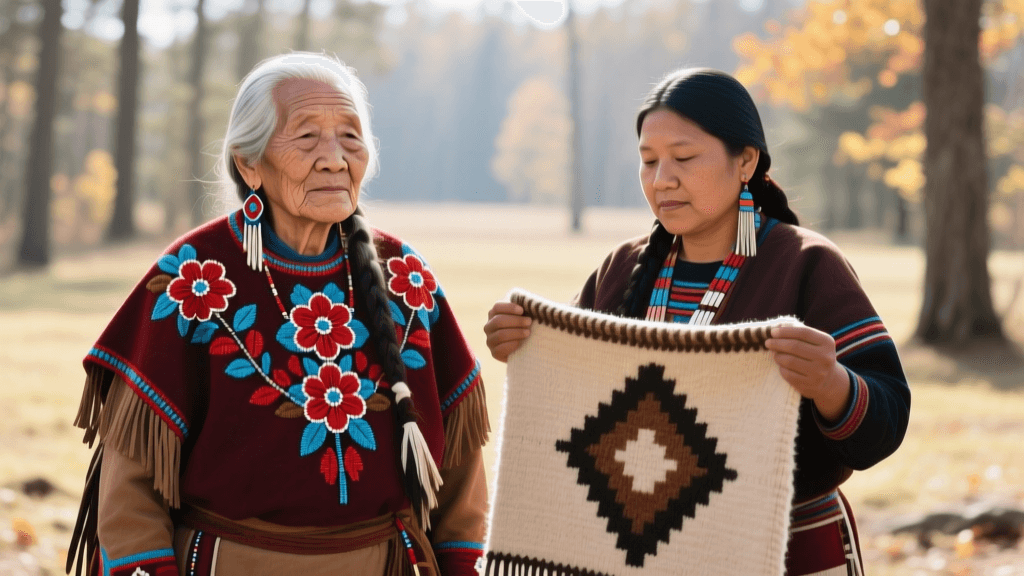
The Haudenosaunee people, whose ancestral homelands span across present-day New York State and into Canada, are globally celebrated for their distinctive 'raised beadwork.' This technique, which gained immense popularity in the 19th century and continues to evolve in 2026, involves stitching glass seed beads over a stuffed or layered backing to create a striking three-dimensional, embossed effect. The designs predominantly feature lush, symmetrical floral motifs, strawberries, and birds, reflecting a deep spiritual connection to the natural world.
While early trade introduced European glass beads and cotton velvet to the region, Haudenosaunee artisans completely indigenized these materials. Today, the velvet vest, skirt, and matching accessories (such as pincushions and purses) remain central to both ceremonial regalia and contemporary cultural expression. In 2026, master beadworkers are utilizing premium Czech glass seed beads, primarily in sizes 11/0 and 15/0, prized for their uniform shape and vibrant, light-fast colors. While traditional cotton velvet remains popular, many contemporary artisans are now incorporating sustainable, cruelty-free velvet alternatives and upcycled vintage textiles to align with modern eco-conscious values without sacrificing the luxurious drape required for the heavy beadwork.
Commissioning a fully beaded Haudenosaunee velvet vest in 2026 is a significant investment in time and artistry. Due to the meticulous nature of raised beadwork—where a single square inch can require hours of labor and thousands of individual stitches—prices reflect the artisan's expertise. A standard custom-beaded vest typically ranges from $1,400 to $3,800, while highly complex, fully covered ceremonial coats can exceed $6,000. Lead times for custom commissions from renowned artists in New York and Ontario frequently span eight to fourteen months.
Diné (Navajo) Woven Wool Garments and Textiles
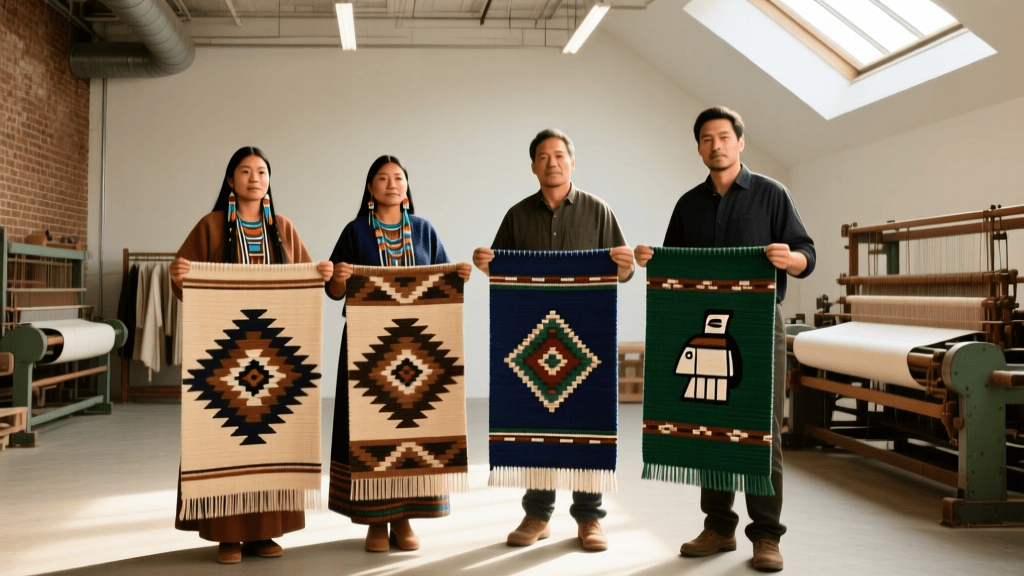
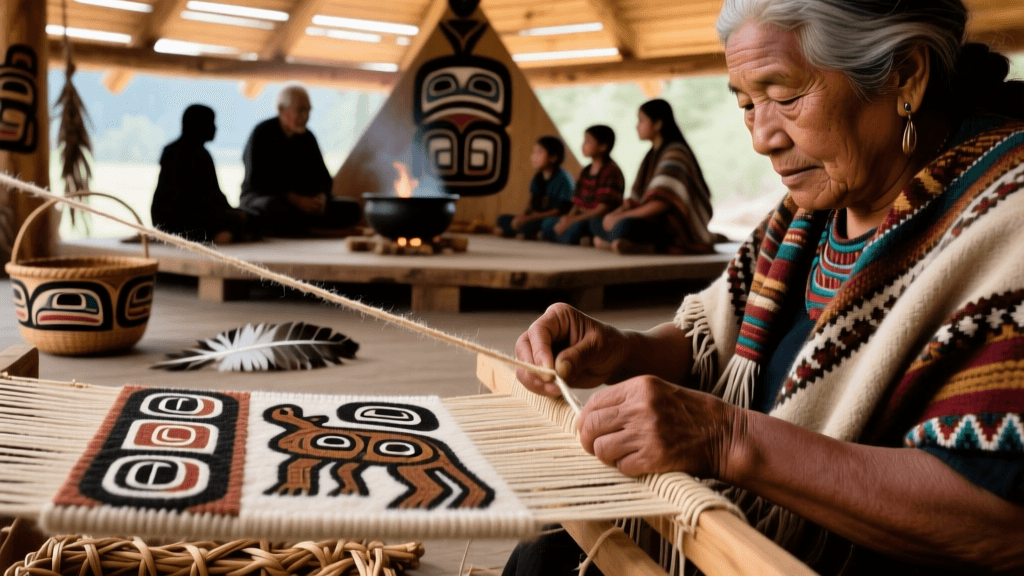
Traveling thousands of miles to the arid high deserts of the Southwest, we encounter the Diné (Navajo) weaving tradition. Diné weaving is deeply intertwined with the Navajo-Churro sheep, a hardy breed introduced by Spanish colonizers in the 16th century and subsequently transformed into a sacred cornerstone of Diné culture and survival. The upright loom, the continuous warp technique, and the spiritual songs sung during the shearing and spinning processes make Diné weaving a profoundly holistic practice.
While Diné textiles are often recognized as rugs or wall hangings, their original and most vital purpose was as wearable garments. The 'biil' (two-piece dress), wearing blankets, and ponchos were historically essential for survival in the harsh desert winters. In 2026, there has been a massive resurgence in the creation and wearing of traditional Diné wool garments, driven by younger generations reclaiming their sartorial heritage and a broader appreciation for sustainable, slow fashion.
The Navajo-Churro Sheep Project and various regional shearing cooperatives have successfully stabilized flock numbers by 2026, ensuring a steady supply of the long-staple, low-lanolin wool that is ideal for hand-spinning. Artisans today are heavily favoring natural, botanical dyes. Walnut hulls yield deep, rich browns; wild indigo provides striking blues; and cochineal (sourced from insects on prickly pear cacti) creates brilliant crimsons. A hand-spun, naturally dyed Diné wearing blanket or heavy poncho in 2026 starts around $2,800 and can easily surpass $9,000 for pieces crafted by master weavers utilizing complex patterns like the Two Grey Hills or Teec Nos Pos styles. These garments are highly breathable, naturally water-resistant, and built to last generations.
Regional Comparison: Northeast vs. Southwest Textiles
Understanding the functional and aesthetic differences between these two regional powerhouses is crucial for collectors and ethical consumers. The table below outlines the primary distinctions between Haudenosaunee and Diné garment traditions as they stand in the current 2026 market.
| Feature | Haudenosaunee (Northeast) | Diné (Southwest) |
|---|---|---|
| Primary Material | Cotton Velvet & Czech Glass Beads | Navajo-Churro Sheep Wool |
| Core Technique | Raised 3D Beadwork & Appliqué | Upright Loom Weaving & Hand-Spinning |
| Design Motifs | Floral, Strawberry, Avian, Curvilinear | Geometric, Stepped Diamonds, Lightning |
| Primary Function | Ceremonial Regalia, Cultural Celebration | Thermal Protection, Daily Wear, Ceremony |
| 2026 Avg. Cost | $1,400 - $3,800 (Vests/Jackets) | $2,800 - $9,000+ (Blankets/Ponchos) |
| Commission Time | 8 - 14 Months | 6 - 12 Months |
Ethical Sourcing and Authenticity in 2026
The most critical aspect of acquiring Indigenous North American garments is ensuring authenticity and ethical compensation. The mass market is unfortunately saturated with 'Native-inspired' fast fashion that plagiarizes sacred designs and undercuts living Indigenous economies. In the United States, the Indian Arts and Crafts Act (IACA) makes it illegal to offer or display for sale any art or craft product in a manner that falsely suggests it is Indian-produced. The Indian Arts and Crafts Board provides extensive resources and a directory of verified Native American artisans and tribal enterprises.
When sourcing Haudenosaunee beadwork or Diné textiles in 2026, buyers should prioritize direct-to-artisan purchases, verified tribal cooperatives, or highly reputable institutional vendors. Museum shops associated with major cultural institutions, such as the Smithsonian National Museum of the American Indian or the Heard Museum in Phoenix, rigorously vet their inventory to ensure every garment is created by an enrolled member of a state or federally recognized tribe. When buying online or at major markets like the Santa Fe Indian Market, always request a certificate of authenticity and verify the artist's tribal enrollment.
Practical Guide to Commissioning Custom Garments
If you are looking to commission a custom piece directly from an artisan, proper etiquette and clear communication are essential. Here is a step-by-step approach for navigating the commissioning process in 2026:
- Initial Inquiry and Respect: Reach out via the artist's preferred professional channel (often a dedicated business email or official website form). Acknowledge their specific tribal affiliation and express genuine appreciation for their unique regional style.
- Measurements and Fit: For garments like velvet vests or wool ponchos, provide precise measurements. Artisans will typically request chest, waist, hip, shoulder width, and desired garment length. Do not guess; use a soft measuring tape over the clothing you intend to wear beneath the garment.
- Design Collaboration: While you may request specific color palettes (e.g., 'earth tones' or 'deep blues'), allow the artisan creative freedom regarding the specific floral or geometric motifs. These designs are often family-owned or spiritually significant.
- Deposits and Milestones: Expect to pay a non-refundable deposit of 30% to 50% upfront to cover the cost of premium materials (like Czech beads or raw Churro fleece). The remainder is usually due upon completion, prior to shipping.
- Patience and Timelines: Authentic, handcrafted Indigenous garments are not produced on an industrial timeline. Respect the artist's schedule, which may be interrupted by seasonal cultural obligations, community ceremonies, or material sourcing delays.
Specialized Care for Beadwork and Handspun Wool
Once you have acquired an authentic Indigenous garment, proper preservation is vital. Haudenosaunee velvet beadwork is heavy and delicate. The raised beads can snag, and the velvet can crush. Store beaded vests flat in acid-free tissue paper inside a breathable cotton garment bag. Never hang a heavily beaded velvet garment for long periods, as the weight of the glass beads will stretch and distort the velvet fibers over time. If the velvet becomes dusty, use a soft, natural-bristle brush to gently sweep the surface; never submerge raised beadwork in water, as it can dissolve the internal structural backing or cause the thread to rot.
Diné handspun wool garments require a different approach. Navajo-Churro wool is naturally lanolin-rich and somewhat water-resistant, but it is highly susceptible to moth damage. Store wool ponchos and blankets with natural cedar blocks or dried lavender sachets—avoid chemical mothballs, which will permanently taint the wool with a harsh odor and degrade the natural fibers. If the garment requires cleaning, do not use standard commercial detergents. Instead, consult a professional textile conservator who specializes in Indigenous hand-woven textiles, or gently hand-wash in cool water using a specialized, pH-neutral wool wash like Eucalan, laying it completely flat to dry out of direct sunlight.
Conclusion
The garment traditions of the Haudenosaunee and the Diné represent two distinct, brilliant expressions of Indigenous North American resilience and artistry. Whether you are drawn to the lush, three-dimensional floral beadwork of the Northeast or the geometric, earth-toned mastery of Southwest wool weaving, purchasing these garments in 2026 is an act of cultural support. By prioritizing ethical sourcing, understanding regional distinctions, and committing to the proper care of these masterworks, collectors and wearers help ensure that these vital Indigenous textile traditions continue to thrive for generations to come.