LDS Temple Garments in 2026: Sacred Symbolism & Meaning

The Sacred "Second Skin": Understanding LDS Temple Garments
Within the diverse tapestry of religious and traditional clothing across the Americas, few garments carry as much intimate, spiritual weight as the temple garment worn by members of The Church of Jesus Christ of Latter-day Saints (LDS). Often misunderstood by those outside the faith, the temple garment is far more than a simple undergarment; it is a profound religious artifact, a "second skin" that serves as a constant, tactile reminder of sacred covenants. As we navigate 2026, the cultural significance of the garment continues to evolve, intersecting with global modesty standards, modern textile technology, and the rich Indigenous heritage of the Americas.
For millions of Latter-day Saints, the garment represents a portable temple. While the physical temples are majestic structures of stone and glass dotting the landscapes from Utah to Mexico City, the garment allows the sanctity of the temple to accompany the wearer into the mundane realities of daily life. This article explores the deep religious meaning, historical roots, and contemporary cultural significance of LDS temple garments in 2026, with a special focus on how they resonate within the diverse Indigenous and Latin American communities of the Americas.
Historical Roots and the Endowment Ceremony
The origins of the temple garment trace back to the 1840s in Nauvoo, Illinois, when the religion's founder, Joseph Smith, introduced the "endowment" ceremony. According to Encyclopædia Britannica, the endowment is a sacred ritual involving covenants, blessings, and the bestowal of sacred clothing. The garment was initially designed as a one-piece union suit, reflecting the modesty standards and practical needs of the 19th-century American frontier.
Historically, the design of the garment draws parallels to the priestly garments described in the Book of Exodus, where Aaron and his sons were clothed in linen to signify their consecration to God. Over the decades, as the Church expanded across the Americas and the globe, the physical design of the garment transitioned from the heavy, full-length union suits of the pioneer era to the modern, two-piece styles (a t-shirt and boxer-brief or knee-length short) that are standard in 2026. Despite these sartorial shifts, the core religious meaning remains entirely unchanged: it is an outward expression of an inward commitment.
Decoding the Symbolism: Marks and Covenants
What truly separates the temple garment from ordinary modest clothing is the inclusion of specific symbolic marks woven or embroidered into the fabric. These marks are not magical talismans, but rather mnemonic devices—visual reminders of the covenants made during the temple endowment. The primary marks include:
- The Compass: Located on the left breast, it symbolizes the desire to keep one's life aligned with the true path and to keep desires within the bounds the Lord has set.
- The Square: Located on the right breast, it represents virtue, exactness in keeping covenants, and the honor and integrity that should govern all interactions.
- The Mark of the Navel: Symbolizes the need for continual spiritual nourishment and the connection between the physical and spiritual realms.
- The Mark of the Knee: Located near the hem, it serves as a reminder of the willingness to bow the knee and pray, acknowledging God as the source of all strength.
In 2026, these marks are carefully integrated into the manufacturing process by Church Distribution Services, ensuring they remain durable through countless wash cycles while maintaining a low profile beneath modern clothing.
Intersection of Indigenous Identity and the Sacred Garment
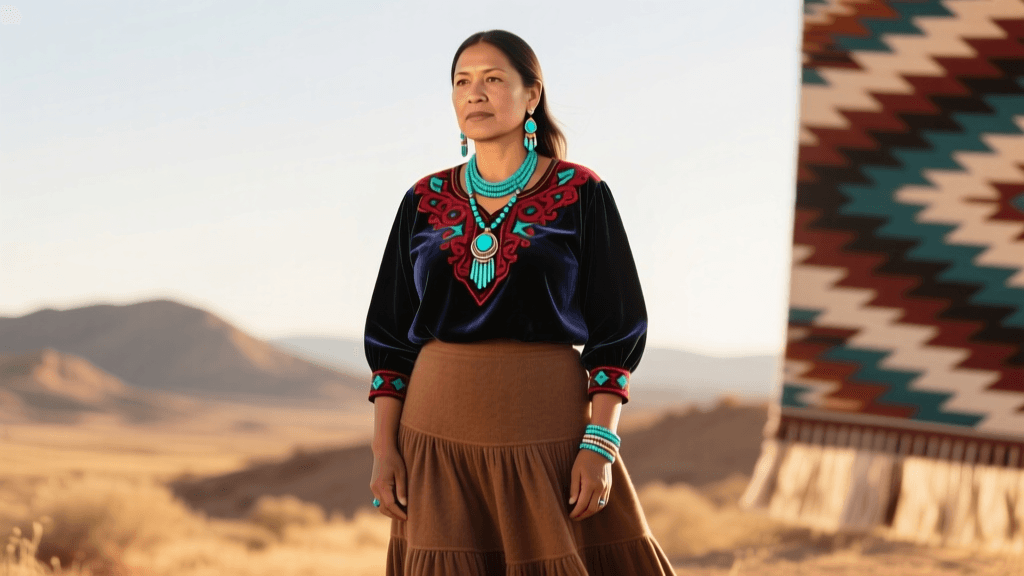
The Americas are home to a vast array of Indigenous cultures, each with its own rich textile traditions and spiritual regalia. For Indigenous Latter-day Saints—such as the Navajo (Diné) in the American Southwest, the Maya in Guatemala, and the Quechua in the Andes—the temple garment introduces a fascinating intersection of cultural identity and religious devotion.
In many Indigenous American cultures, clothing is deeply communicative. Textiles tell stories of lineage, community, and spiritual protection. When an Indigenous member of the Church participates in the endowment, the white temple garment takes on a layered significance. It harmonizes with pre-existing cultural understandings of sacred dress. For example, among the Diné, the concept of Hózhó (balance, beauty, and harmony) is central to spiritual life. Many Diné Latter-day Saints view the wearing of the garment as a physical anchor for Hózhó, a way to maintain spiritual equilibrium while navigating the modern world.
Furthermore, the strict modesty requirements associated with the garment often align seamlessly with traditional Indigenous modesty norms. In regions of Latin America where traditional garments like the huipil or heavy woven skirts are worn, the LDS garment fits naturally beneath these cultural textiles, allowing Indigenous women to honor both their ancestral heritage and their religious covenants without conflict.
Modern Garment Styles and Global Adaptations in 2026
The Church has made significant strides in adapting garment styles to accommodate the diverse climates, body types, and fashion needs of its global membership. In 2026, the catalog of available garments is more inclusive and technologically advanced than ever before. The introduction of ultra-lightweight stretch meshes, moisture-wicking modal blends, and specialized maternity cuts has revolutionized how members experience the garment in their daily lives.
For women, the 2026 catalog offers varied necklines (round, V-neck, and Carmen) and sleeve lengths (cap, short, and elbow) to accommodate different outerwear styles while maintaining the sacred coverage required by the covenant. For men, options range from traditional cotton boxers to athletic compression shorts designed for high-intensity activities.
| Style Name | Material Composition | Best Use Case / Climate | Cultural / Practical Note |
|---|---|---|---|
| Stretch Mesh (Performance) | Polyester/Spandex Blend | Hot, humid climates (e.g., Central America, Southeast Asia) | Highly breathable; dries rapidly after washing; popular among younger demographics and athletes. |
| Classic Cotton | 100% Combed Cotton | Temperate climates; sensitive skin | Offers a traditional feel; preferred by older generations and those with textile allergies. |
| Modal Luxe (Women's) | Micro-Modal / Elastane | Professional settings; formal wear | Ultra-smooth finish prevents visible lines under modern professional attire; available in Carmen and V-neck. |
| Maternity Panel | Cotton / Spandex Blend | Pregnancy and postpartum | Features an over-belly stretch panel; accommodates changing body shapes without compromising sacred marks. |
The Lifecycle of a Sacred Garment: Care and Disposal
Because of its sacred nature, the temple garment is treated with a level of respect that transcends ordinary laundry routines. Members are instructed to wash garments separately from regular clothing, treating the process as an act of reverence. When a garment becomes worn, faded, or damaged beyond repair, it cannot simply be thrown in the trash or donated to a thrift store.
The proper disposal protocol requires the member to carefully cut out the sacred marks (the compass, square, navel, and knee). These marks are destroyed or disposed of privately. The remaining fabric, now stripped of its sacred symbols, can be discarded in the regular trash or repurposed as cleaning rags. This meticulous process underscores the belief that the sanctity lies in the covenants and the symbols, not merely in the cotton or mesh itself.
Conclusion: A Covenant Woven into Daily Life
As of 2026, the LDS temple garment remains a cornerstone of Latter-day Saint identity. It is a garment of profound duality: deeply hidden from the public eye, yet entirely central to the wearer's spiritual existence. For the Indigenous and diverse populations across the Americas, the garment serves as a unifying thread, weaving together personal devotion, cultural modesty, and a shared spiritual heritage. It stands as a testament to the enduring human desire to carry the sacred into the secular, wrapping the wearer in a daily reminder of their highest spiritual aspirations.