Diné Velvet Shirts & Tiered Skirts: 2026 Regalia Guide
The Enduring Legacy of Diné Traditional Attire
The Diné (Navajo) people possess one of the most recognizable and deeply cherished traditional clothing styles in North America. In 2026, as Indigenous fashion continues to influence global runways and cultural revitalization movements gain momentum, the traditional Diné velvet shirt and tiered skirt remain paramount. Worn at graduations, powwows, chapter meetings, and weddings, these garments are not merely historical artifacts; they are living, breathing expressions of Diné identity, resilience, and artistry. For those looking to understand, source, or respectfully wear these garments today, navigating the intersection of traditional craftsmanship and modern availability is essential.
Historical Origins: From the Long Walk to Trading Posts
To understand the contemporary Diné wardrobe, one must look back to the mid-to-late 19th century. Following the tragic forced relocation known as the Long Walk (Hwéeldi) to Bosque Redondo in the 1860s, the Diné were introduced to new materials through government rations and subsequent trading posts. Victorian-era fabrics, including velveteen, calico, and rickrack, were integrated into Diné culture. Diné women masterfully adapted these foreign textiles, transforming them into the tiered skirts and high-collared blouses that are now considered strictly traditional. According to historical archives maintained by the National Museum of the American Indian, this synthesis of Euro-American materials and Indigenous design sensibilities birthed a unique sartorial tradition that has survived for over a century and a half.
Anatomy of the Modern Diné Regalia
The Velvet Shirt
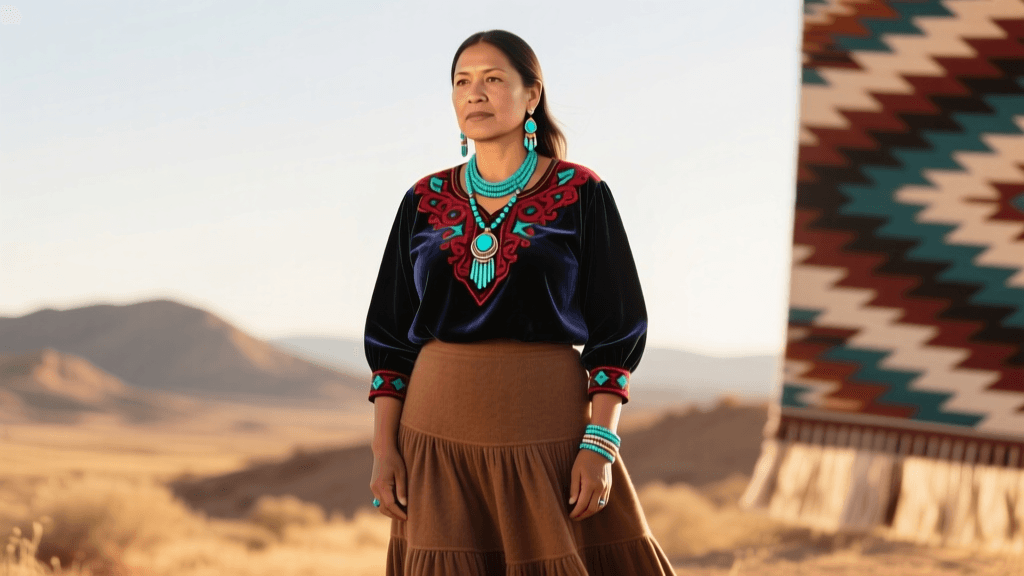
The traditional velvet shirt, worn by both men and women, is a cornerstone of Diné formal and ceremonial wear. In 2026, the demand for high-quality, breathable cotton velvet (often referred to as velveteen) has surged, as artisans prioritize comfort during long summer powwows and outdoor ceremonies. The men's shirt typically features a mandarin or high stand-up collar, a button-down front, and long sleeves with buttoned cuffs. The defining characteristic, however, is the silverwork. Authentic shirts are adorned with hand-stamped sterling silver buttons, often featuring turquoise or coral inlays. Women's velvet blouses follow a similar silhouette but may incorporate delicate lace trim at the collar or cuffs, reflecting the ongoing Victorian influence. Sourcing these shirts requires seeking out specialized Native seamstresses who understand the precise drape and tailoring required to make the heavy velvet sit correctly on the body without restricting movement.
The Tiered Skirt
The Diné tiered skirt is a marvel of geometric precision and textile manipulation. Traditionally made from calico or velvet, the skirt consists of three to four distinct tiers, each gathered to create a full, flowing silhouette. The seams separating each tier are meticulously covered with rickrack or contrasting ribbon. In 2026, contemporary Diné designers are experimenting with sustainable, locally dyed cottons and upcycled vintage velvets, though traditional floral calico and rich jewel-toned velvets remain the most popular choices for significant life events. The hemline is typically finished with a wide ruffle and additional rickrack, ensuring that the skirt moves beautifully during the traditional Diné shuffle step in social dances.
Essential Accessories: Turquoise, Silver, and Moccasins
No Diné regalia is complete without its accompanying silver and turquoise jewelry. The squash blossom necklace, featuring the iconic naja (crescent) pendant, is perhaps the most globally recognized piece of Native American jewelry. In 2026, with the rising cost of raw turquoise and silver, authentic, handcrafted squash blossom necklaces are considered significant investments, often ranging from $2,500 to over $15,000 depending on the silversmith and the quality of the stones. Concho belts, featuring large, hand-stamped silver ovals linked together or strung on leather, are worn by both men and women to cinch the waist and add a striking metallic contrast to the dark velvet. Finally, traditional Diné moccasins, characterized by their distinct two-piece construction, hard rawhide soles, and uppers dyed with natural red ochre or commercial rust-colored dyes, ground the outfit in the earth.
2026 Sourcing Guide: Materials and Authentic Artisans
When purchasing these items, it is critical to ensure you are buying from authentic Native artisans. The Indian Arts and Crafts Board (IACB), a division of the U.S. Department of the Interior, provides strict guidelines and resources for verifying the authenticity of Native-made goods. Under the Indian Arts and Crafts Act, it is illegal to market art or craftwork as Native American if it is not made by a member of a federally or state-recognized tribe. In 2026, the proliferation of overseas knockoffs on major e-commerce platforms makes due diligence more important than ever.
| Garment / Accessory | 2026 Material Standards | Estimated Cost (USD) | Sourcing Advice |
|---|---|---|---|
| Velvet Shirt | 100% Cotton Velveteen | $150 - $450 | Commission from Diné seamstresses; avoid synthetic poly-blends that trap heat. |
| Tiered Skirt | Cotton Calico or Velvet | $200 - $600 | Look for hand-sewn rickrack seams; machine-made fast-fashion versions lack durability. |
| Squash Blossom Necklace | Sterling Silver, Natural Turquoise | $2,500 - $15,000+ | Verify the silversmith's tribal enrollment and request mine-origin documentation for stones. |
| Concho Belt | Heavy Gauge Sterling Silver | $1,200 - $8,000 | Ensure stamp work is done by hand; cast reproductions lack traditional value and detail. |
| Traditional Moccasins | Brain-tanned Deerhide, Rawhide Sole | $350 - $800 | Purchase directly from reservation-based cobblers to support local economies. |
Buyers should look for artisans who are transparent about their tribal enrollment and who source their turquoise from verified North American mines, such as the Sleeping Beauty or Kingman mines. Publications like ICT (formerly Indian Country Today) frequently highlight emerging and master Indigenous designers, offering a reliable starting point for finding reputable creators.
Preserving Your Regalia: Care and Maintenance in 2026
Investing in traditional Diné clothing requires a commitment to proper preservation. Velvet is a delicate pile fabric that can easily crush or fade if mishandled. When storing velvet shirts and skirts, never use wire hangers, as they will distort the shoulder seams and leave permanent creases. Instead, use wide, padded wooden hangers and store the garments in breathable cotton garment bags away from direct sunlight, which can bleach the rich jewel tones over time. For cleaning, professional dry cleaning by a specialist who understands vintage and heavy textiles is highly recommended over home washing.
Silver and turquoise jewelry require equally careful maintenance. The natural oils from your skin will help polish the silver in high-friction areas, but the deep stamp work will naturally oxidize and darken, which is a desired patina in Native jewelry. Never use chemical silver dips or ultrasonic cleaners on turquoise jewelry. Turquoise is a porous, relatively soft stone that can absorb chemicals, change color, or crack under ultrasonic vibrations. Instead, use a soft, untreated jewelry polishing cloth to gently buff the raised silver areas, leaving the dark oxidation in the recessed stamp work to highlight the artisan's craftsmanship.
Cultural Etiquette and Avoiding Appropriation
Wearing and purchasing Diné traditional clothing comes with a responsibility to respect the culture. While non-Native individuals may appreciate the beauty of these garments, purchasing and wearing sacred or strictly traditional regalia can cross the line into cultural appropriation. However, supporting Native artisans by purchasing contemporary Indigenous fashion that is explicitly designed for a broader audience is a wonderful way to show solidarity and appreciation. If you are invited to a Diné wedding or cultural event and are unsure about the dress code, it is always best to ask your hosts or opt for formal Western wear accented with authentic Native-made jewelry, such as a simple turquoise pendant or silver bolo tie.
Conclusion
The Diné velvet shirt and tiered skirt represent a profound narrative of survival, adaptation, and beauty. As we move through 2026, the dedication of Diné artisans to preserving these sewing and silversmithing techniques ensures that future generations will continue to wear their history with pride. Whether you are a collector, a student of Indigenous textiles, or a community member seeking to commission your own regalia, prioritizing authenticity, quality materials, and direct support of Native makers will keep this vibrant tradition thriving for centuries to come.